 Lynden Siding
 Why Maple Falls Roofs Age Differently
Maple Falls sits back in the tree line east of Lynden, in the shadow of the foothills leading up toward Mount Baker. That setting is beautiful, but it's tough on a roof. Heavy tree cover means more shade, more falling debris, and slower drying times after every storm. Add in the steady rain and moisture-laden marine air that moves through Whatcom County most of the year, and you've got the exact conditions that shorten a roof's useful life: prolonged dampness, moss and algae growth, and slow, quiet water intrusion that homeowners often don't notice until there's a stain on a ceiling.
A roof in a drier, more open part of the state might get another five to seven years out of the same shingle before it needs replacing. Out here, a roof that isn't ventilated, flashed, and maintained correctly gets shortchanged fast. That's the reason a "roof replacement" job in Maple Falls isn't just swapping old shingles for new ones — it has to be built to shed water aggressively and dry out quickly between rains.
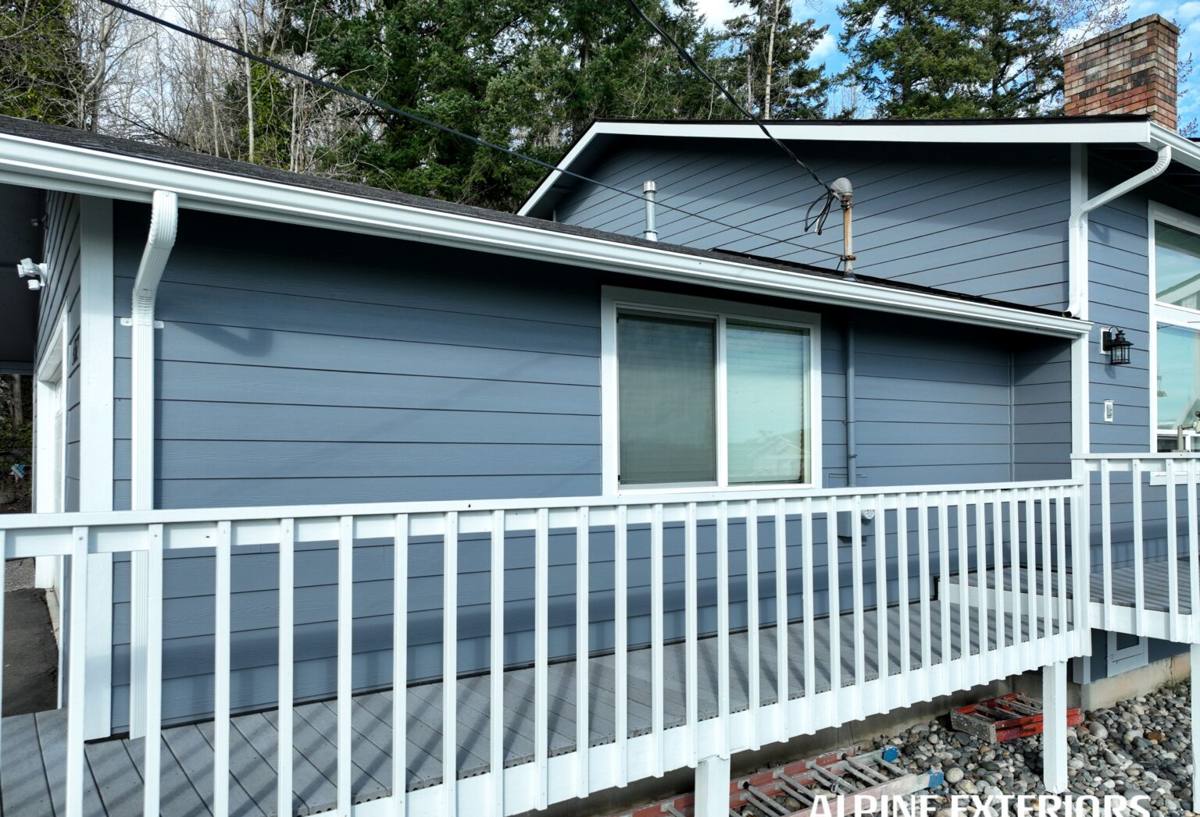
Signs a Maple Falls Home Needs a Full Replacement (Not Just a Repair)
Not every roof problem calls for a full tear-off. But when several of these show up together, patching is usually just delaying a bigger bill:
- Granule loss heavy enough that you're finding grit in the gutters or downspouts every time it rains
- Moss or algae established across large sections of the roof, not just along the shaded north side
- Shingles that are curling, cupping, or cracking, especially on south- and west-facing slopes
- Soft spots or sagging when walked on, which usually means the decking underneath has taken on moisture
- Daylight visible through the roof deck from inside the attic, or insulation that's damp or matted
- Repeated leaks around the same valley, chimney, or vent after storms, even after prior patch jobs
- A roof that's 20+ years old for asphalt shingle, or showing wear well ahead of its expected lifespan
If you're only seeing one of these — a single cracked shingle, a small leak around one vent boot — that's usually a repair, not a replacement. We'll tell you honestly which category your roof falls into.
What a Correct Roof Replacement Actually Involves
Tear-Off and Deck Inspection
Every layer of old roofing comes off down to the deck. This matters more here than in drier climates, because it's the only way to find rot, soft plywood, or hidden moisture damage that's been building under the surface — problems that get sealed in and made worse if a crew just re-roofs over the old layer.
Underlayment and Ice-and-Water Protection
Given how much rain Whatcom County sees, the underlayment layer matters as much as the shingle itself. Valleys, eaves, and any area prone to ice damming or wind-driven rain should get a self-adhering waterproof membrane, not just standard felt, with synthetic underlayment across the rest of the field for a tighter water barrier than old-style felt paper.
Flashing
Flashing around chimneys, skylights, vents, and roof-to-wall transitions is where most leaks actually start — not in the open field of shingles. New flashing, properly stepped and sealed, is a non-negotiable part of any replacement we do, even if the existing flashing "looks fine" from the ground.
Ventilation
A roof deck that can't breathe traps moisture underneath it, which rots plywood from below and feeds moss growth from above. Balanced intake (soffit) and exhaust (ridge or box vents) ventilation is part of doing this correctly in a shaded, humid setting like Maple Falls — not an upsell.
Choosing a Roofing Material for This Setting
There's no single "best" roofing material for every home, but some perform noticeably better than others under heavy tree cover and constant moisture. Here's how the common options stack up for a property like yours:
| Material | Moss/Algae Resistance | Typical Lifespan | Best Fit |
|---|---|---|---|
| Architectural asphalt shingle | Good with algae-resistant granules; still needs periodic cleaning under heavy shade | 25–30 years | Most Maple Falls homes — balance of cost and durability |
| Standard 3-tab asphalt shingle | Lower — thinner profile sheds debris less effectively | 15–20 years | Budget-driven projects; not our first recommendation in this climate |
| Metal (standing seam or panel) | Excellent — sheds moss and debris, dries fast | 40–50+ years | Owners planning to stay long-term or wanting minimal moss maintenance |
| Synthetic/composite shake | Good, with more upfront cost than asphalt | 30–50 years | Homes wanting a wood-shake look without wood's moisture sensitivity |
We steer most homeowners here toward a heavier architectural shingle with algae-resistant granules as the practical middle ground, and toward metal when the budget allows and the owner wants to largely stop thinking about moss treatments. We don't push wood shake in this climate — it demands more upkeep to manage moisture and moss than most owners want to take on, and we'd rather be upfront about that trade-off than sell a product that creates ongoing maintenance headaches.
Our Roof Replacement Process
1. On-Site Inspection and Written Estimate
We walk the roof (weather permitting) and the attic, check the decking, flashing, and ventilation, and put together a written scope and price — no guessing from a satellite photo.
2. Scheduling and Material Order
We confirm material choice, color, and delivery timing before a crew is scheduled, so the job isn't sitting half-done waiting on shingles.
3. Site Protection
Landscaping, siding, gutters, and anything below the roofline get covered or protected before tear-off starts.
4. Tear-Off, Deck Repair, and Installation
Full removal, deck inspection with any damaged sheathing replaced, then underlayment, flashing, ventilation, and the new roofing system installed in sequence.
5. Cleanup and Walkthrough
Magnetic sweep for nails, full debris haul-away, and a walkthrough so you know exactly what was done and what to watch for going forward.
Dealing With Shade, Trees, and Moisture Long-Term
A well-installed roof doesn't erase the fact that a heavily treed lot in Maple Falls holds moisture longer than an open one. A few things go a long way after installation: keeping overhanging branches trimmed back so shingles get some sun and airflow, keeping gutters clear so water isn't backing up under the eaves, and having moss treated before it takes hold rather than after it's matted into the shingle surface. None of this is unique to us telling you — it's just what actually keeps a roof in this setting performing closer to its full expected lifespan instead of falling short of it.
What Drives the Cost of a Roof Replacement Here
We're not going to quote a number without seeing the roof, but the honest cost drivers are consistent from job to job:
| Factor | Why It Matters |
|---|---|
| Roof size and number of facets | More squares and more valleys/hips mean more material and labor |
| Roof pitch and access | Steeper roofs and homes with limited driveway or equipment access take longer and cost more to work safely |
| Decking condition | Rotted or soft plywood found during tear-off has to be replaced, which isn't always visible until the old roof is off |
| Material choice | Standard asphalt, upgraded architectural shingle, and metal each carry a different material cost |
| Layers being removed | Tearing off two layers of old roofing costs more in labor and disposal than one |
Broadly, a full tear-off and asphalt shingle replacement on an average home runs into the mid five figures range depending on size and complexity, with metal roofing costing more upfront in exchange for a much longer service life. Your written estimate will break down exactly where the money goes — no vague lump-sum numbers.
Why It Matters That We Already Work in Maple Falls
A crew that's already familiar with this area knows what to expect before they show up: narrow or gravel driveways that affect how a dumpster or material delivery gets staged, tree cover that changes how tear-off and cleanup get sequenced, and the reality that a roof out here has usually been fighting moss and shade for years longer than it looks like from the ground. That familiarity saves time on-site and avoids surprises mid-job. It also means we're a known, findable name in Whatcom County if you ever have a warranty question five or ten years down the road — not a crew that drove in from out of the area for one job and is hard to track down later.
Ready for a Straight-Up Assessment?
If your roof is showing its age, holding moss, or you just want an honest read on whether repair or full replacement makes sense, we're happy to take a look. Fill out the form below for a free, no-pressure estimate — we'll tell you what we actually see, not just what's easiest to sell.