 Lynden Siding
 Why Windows Take a Different Kind of Beating Out Here
Homes in the Acme area sit in a stretch of Whatcom County where the weather doesn't do anything halfway. You get salt-tinged marine air drifting in off the Sound, driving rain that comes sideways for days at a time, and a wet season long enough to grow a respectable coat of moss on anything that holds still. Windows are one of the first things on a house to show the wear from that combination — not because the glass fails, but because the seals, frames, and flashing around it slowly give up.
An energy-efficient window isn't just about a lower heating bill, though that's real. Out here it's just as much about keeping bulk water out of the wall cavity, keeping condensation off the glass in January, and not having to fight a stuck or swollen sash every winter. We treat those as one job, not two, because in this climate they are.
What the Local Climate Actually Does to a Window
Salt-laden air accelerates corrosion on hardware, hinges, and lesser-grade fasteners faster than it would further inland. Driving rain finds any gap in flashing or caulking and pushes water uphill against gravity under wind pressure — a phenomenon called wind-driven rain intrusion, and it's the single biggest cause of rot we find around older window openings. And a long damp season means anything with a north or west exposure holds moisture longer, which is exactly where moss and algae take hold on sills, trim, and cladding.
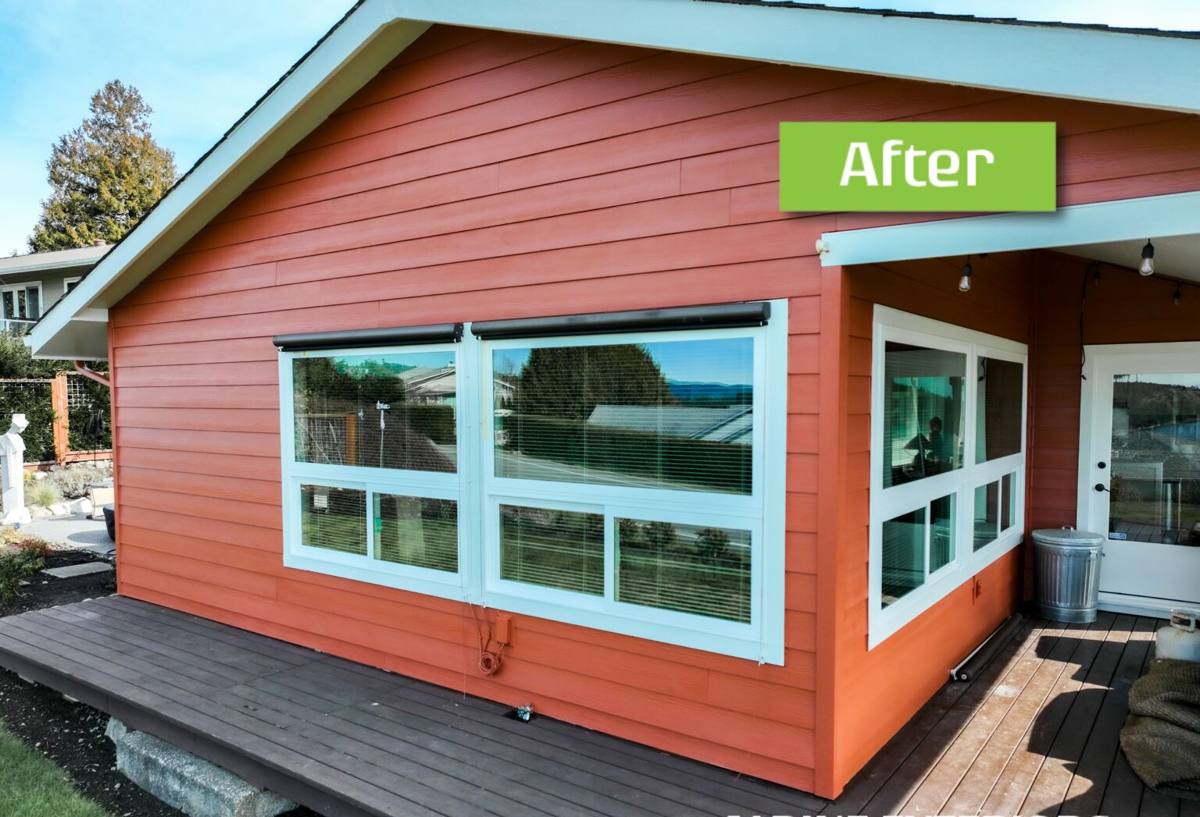
What "Energy-Efficient" Actually Covers
The term gets used loosely, so here's what it actually means when we spec a window for a home in this area:
- U-factor — how well the window resists heat transfer. Lower is better for our climate; this matters more here than solar heat gain since we're not fighting intense summer sun.
- Multi-point locking hardware — pulls the sash tight against the weatherstripping on all sides, which matters more when wind is pushing rain at the glass rather than just falling straight down.
- Warm-edge spacer systems — the strip between panes of glass; a poor one is where condensation and fogging start first in a wet, cool climate.
- Frame material and drainage design — how well the frame sheds the water that inevitably reaches it, rather than trapping it.
None of these show up in a showroom photo. They show up five winters later, in whether the window still locks tight and whether the sill is soft.
Glass and Gas Fill Options, Honestly Compared
| Option | What It Does | Where It Matters Most in Acme |
|---|---|---|
| Double pane, argon-filled | Standard efficient baseline for most replacements | Solid all-around choice for typical exposures |
| Triple pane | Extra insulating layer, better sound dampening | Worth discussing for north/west walls that catch the worst of the wind and rain |
| Low-E coating (soft-coat) | Reflects radiant heat while keeping visible light | Keeps interior surfaces warmer, which cuts down on condensation on cold, damp mornings |
| Krypton fill | Marginal efficiency gain over argon, higher cost | Rarely worth the added cost for typical Whatcom County homes |
Signs Your Current Windows Are Working Against You
Most homeowners in the Acme area don't call us because they read a spec sheet — they call because something's been bugging them. If any of these sound familiar, it's worth having someone look:
- Sashes that have swollen shut or won't latch tight anymore, especially after a wet stretch
- Visible fogging or a haze between the panes — a sign the seal has failed and the insulating gas is gone
- A cold draft you can feel standing near the window even with it closed
- Soft or discolored wood on the sill or the trim below the window
- Green or black growth on the sill, frame, or the siding just below the window
- Condensation collecting on the inside of the glass most mornings through fall and winter
What a Correct Installation Actually Involves
The window itself is maybe a third of the job. The other two-thirds is everything around it, and in a climate that drives rain sideways, that's where a job holds up or fails.
The Parts That Don't Show
Proper flashing integration ties the new window into the existing weather-resistive barrier so water sheds down and out, not into the wall. Sill pans catch anything that does get past the primary seal and route it back outside instead of letting it pool. Backer rod and the right sealant — not just a bead of caulk over a gap — handle the joint between the window frame and the rough opening. Skip any one of these and you can install the most efficient window on the market and still get rot in the wall within a few years.
Common Mistakes We See on Older Retrofits
The most frequent problem we run into on older homes in this area is a window that was simply caulked into an opening with no sill pan and no real flashing plan — fine for a few dry years, then a slow leak that isn't obvious until the interior trim or the wall below starts to fail. We also see hardware that's corroded well ahead of schedule because it wasn't rated for a coastal-adjacent, salt-air environment. Both are avoidable with the right materials and sequence, not extra cost.
Frame Material: What Actually Holds Up Here
| Frame Material | Strengths | Trade-Offs in This Climate |
|---|---|---|
| Vinyl | Low maintenance, good value, won't rot | Can flex over time on larger openings; quality varies a lot by manufacturer |
| Fiberglass | Very stable, holds paint well, strong seal life | Higher upfront cost |
| Wood, unclad | Traditional look, repairable | Needs consistent upkeep to fend off rot and moss staining in a wet climate — a real commitment out here |
| Wood with aluminum or fiberglass cladding | Interior wood look with an exterior that sheds weather | Cladding detail at the sill needs to be done right or water gets trapped behind it |
We don't push one material on every home. What we won't do is install an unclad wood window on an exposed west or north wall in this area without a clear conversation about the maintenance that comes with it — that's a standard we hold to, not a knock on the product.
Our Process, Start to Finish
- Walkthrough and assessment — we look at each opening, note exposure and existing damage, and talk through what you actually need versus what's optional.
- Honest estimate — line items you can read, not a single lump number with no explanation.
- Removal and inspection — once the old window is out, we check the rough opening for hidden rot before anything new goes in. This is where problems from the last install, if there were any, show up.
- Flashing and sill pan installation — the part that determines whether this job lasts.
- Window set, shimmed, and secured — level, plumb, and square, checked before anything is sealed up.
- Air sealing and insulation around the frame — done right, this closes the draft path without over-packing the gap.
- Exterior trim and sealant — sized and applied for a coastal-influenced climate, not a generic bead.
- Walkthrough with you — we check operation, locking, and finish before we call it done.
Why It Matters That We Already Work in Acme
A crew that's worked homes throughout the Acme area and greater Lynden already knows which exposures take the worst of the driving rain, which older homes tend to have a particular flashing style that needs extra attention, and how moss and algae behave on north-facing walls through the wet months. That's not something you can fully substitute with a general checklist — it's pattern recognition built from doing this work, on these kinds of houses, in this specific stretch of Whatcom County, season after season.
It also means a shorter distance to travel for the initial estimate, for the install itself, and if something ever needs a follow-up look after the first hard winter.
Living With New Windows in a Wet, Salty Climate
Energy-efficient windows cut down on maintenance, but they don't eliminate it. A little attention keeps them performing the way they should for the long haul:
- Rinse salt residue and grime off exterior glass and frames a couple of times a year, more often if you're on a more exposed lot
- Keep gutters and downspouts clear so overflow isn't running down past window heads
- Brush or wash moss and algae off sills and trim before it takes hold — it's much easier to remove early
- Check that weep holes (the small drainage openings at the base of the frame) stay clear of debris so the window can shed water the way it's designed to
- Operate locking hardware a few times through the year so hinges and latches don't seize up from disuse and moisture
None of this is a big time commitment — it's the difference between windows that look and perform the same in year ten versus windows that started fighting you by year three.
If your windows in the Acme area are fogging, sticking, drafting, or just costing more to heat around than they should, we're happy to come take a look. The estimate is free, there's no pressure, and you'll get a straight answer about what your home actually needs — just fill out the form below.