 Lynden Siding
 Why Acme-Area Homes Are Hard on Windows
Acme sits in the wooded foothill country southeast of Lynden, where the land climbs toward the Nooksack River valley and the tree cover thickens. That setting is beautiful, but it's also demanding on a home's windows in ways that flatter, more open parts of Whatcom County don't experience as intensely. Mature tree canopy means many Acme homes get long stretches of shade, which slows evaporation after every rain. Add in valley fog that settles overnight and doesn't burn off until midday, and you have windows that stay damp far longer than windows on an open lot a few miles away.
Across Whatcom County generally, homes deal with a mix of driving rain off Pacific weather systems, salt-influenced air moving in from the coast, and a moss season that can run eight or nine months out of the year. In the wooded, river-adjacent conditions around Acme, that moisture problem is compounded by shade and ground-level humidity. Wood trim swells and shrinks, vinyl frames can develop condensation between panes years before they should, and moss and algae find a foothold in any spot where water lingers instead of draining. Windows are one of the first places all of that shows up, because every window is a seam in the building envelope — a spot where the wall was cut open and has to be sealed back up correctly.
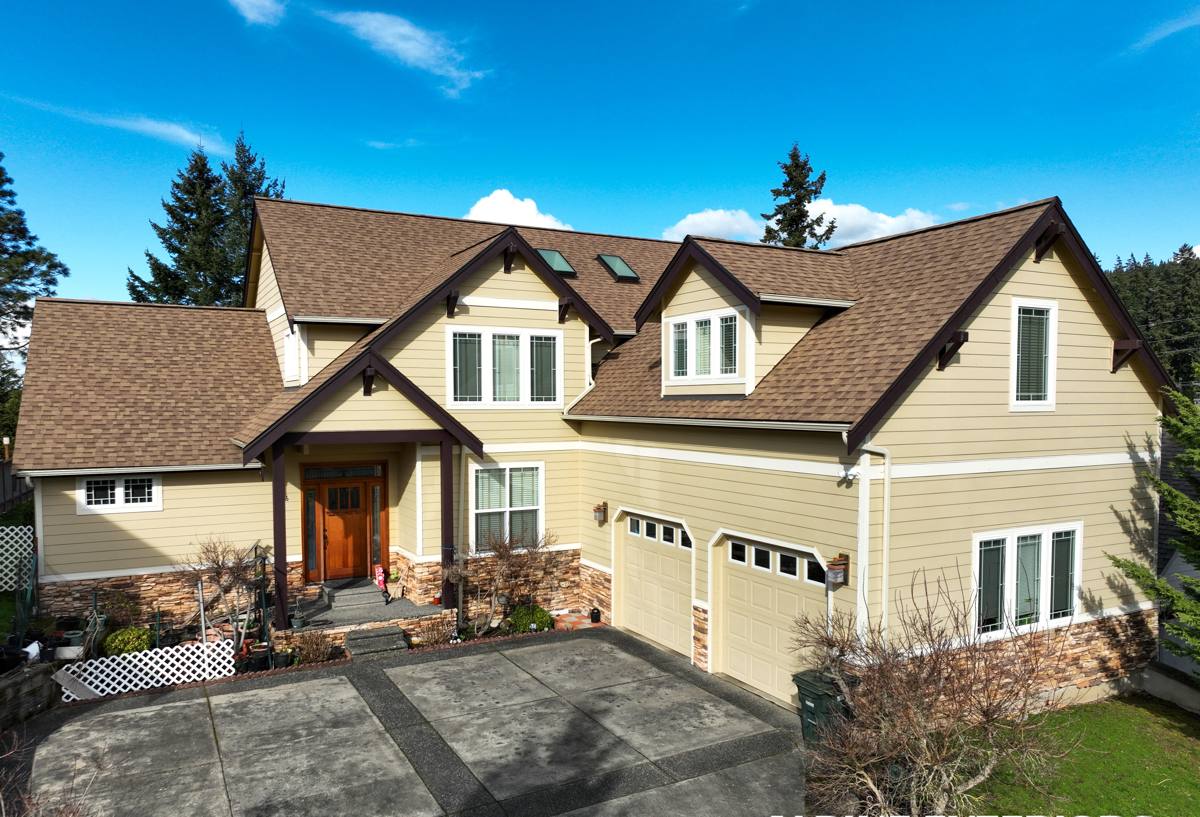
Signs an Acme Home's Windows Need Attention
Most homeowners don't think about their windows until something forces the issue — a draft, a stuck sash, or a utility bill that's crept up. In this area, we typically see a few patterns show up before the obvious failures do:
- Fogging or a persistent haze between the panes of a double-pane window — the seal has failed and the gas fill (or just dry air) has been replaced by moisture
- Soft or spongy wood at the sill or lower corners, often hidden under paint that still looks fine from a few feet away
- Visible moss or dark streaking on the exterior trim or sill, especially on north- and east-facing walls that get the least direct sun
- Windows that are noticeably harder to open than they used to be, or that no longer latch tightly
- A cold draft near the frame on a windy day, even with the window fully closed and locked
- Interior condensation on the glass or frame during colder mornings, which usually points to a failing seal or an old single-pane unit
None of these are emergencies on their own, but they're all signs that moisture is getting past the glass and into the framing — and framing damage is what turns a window job into a larger repair.
Why Shaded, River-Valley Lots Wear Faster
A window on a sun-exposed wall dries out between storms. A window tucked under fir or cedar canopy, which describes a good share of Acme properties, may stay damp for days. That extended wet time is exactly what lets moss establish on sills and trim, and it's what slowly breaks down old caulk and flashing faster than the manufacturer's warranty assumes. It's not a flaw in the home — it's just what the site does to the building, and it's worth planning around rather than ignoring.
What a Correct Window Replacement Job Actually Involves
Swapping the glass unit itself is the easy part. The work that actually determines whether a window lasts is everything around it — and it's also the work that's easiest for a rushed crew to shortcut.
Removing the Old Window Without Hidden Damage
We take the old window out carefully and check the rough opening before anything new goes in. This is the point where hidden problems — soft framing, old flashing that was never installed correctly, insulation that's compressed or missing — actually get found. Skipping this step is how a new window ends up installed over a problem that was there all along.
Flashing and Weather Barrier
Every opening needs to shed water down and out, never sideways into the wall cavity. That means flashing tape or pan flashing at the sill, proper integration with the house wrap, and a drainage path so any water that does get behind the trim has somewhere to go. This detail matters more in Acme's shaded, damp conditions than almost anywhere else in the region, because any mistake here has more time to do damage before it dries out.
Setting, Shimming, and Sealing
The new window has to be plumb, level, and square in the opening — not just eyeballed into place. We shim it correctly, fasten it per the manufacturer's specifications (so the warranty stays valid), insulate the gap around the frame without overpacking it, and finish with the right exterior sealant at the right joints. Over-caulking everything isn't a fix — it can trap moisture instead of letting it drain.
Interior and Exterior Trim
The trim isn't just cosmetic. It's part of what keeps water out and covers the transition between the window and the siding. We match the reveal and finish so the new window looks like it belongs, not like a patch.
Choosing Materials That Hold Up in Foothill Conditions
There's no single "best" window material — the right choice depends on the home, the budget, and how much shade and moisture the specific opening deals with. Here's how the common options compare for a property like the ones we see around Acme:
| Material | Moisture Behavior | Maintenance | Typical Fit |
|---|---|---|---|
| Vinyl | Won't rot; seals can fail over time in constant damp shade | Low — occasional cleaning | Most homes; best value |
| Fiberglass composite | Very stable in wet/dry cycling; resists warping | Low | Shaded or high-exposure walls, longer-term ownership |
| Wood (clad exterior) | Interior warmth, but exposed wood needs protection from prolonged damp | Higher — finish upkeep | Character homes, interior-focused aesthetic |
| Aluminum | Durable but conducts cold; condensation risk in damp, shaded spots | Low | Less common for residential re-fit here |
For homes tucked under tree cover near Acme, we lean toward vinyl or fiberglass on the exterior-exposed sides, since neither one rots and both hold up to years of shade-driven dampness with minimal upkeep. Wood-clad windows still make sense where the look matters most, as long as the homeowner understands the exterior finish needs periodic attention — sitting under a canopy accelerates that timeline.
Glass Packages Worth Considering
Double-pane, low-E glass is the standard now for good reason — it cuts heat loss and reduces condensation risk compared to older single-pane units. On homes that get little direct sun, a low-E coating tuned for heat retention (rather than heat rejection) usually makes more sense than the coatings built for sun-drenched climates. We'll walk through the glass package options for your specific exposure rather than defaulting to one answer for every wall.
Our Process, Start to Finish
- On-site assessment — we look at every window being considered, not just the ones that are obviously failing, and check for framing or moisture issues while we're there
- Honest recommendation — which windows need full replacement now, which can wait, and which are fine as-is
- Written estimate — clear pricing by window, not a vague lump sum
- Scheduling around weather — we plan install days with Whatcom County's rain patterns in mind so openings aren't sitting exposed longer than necessary
- Installation — removal, opening inspection, flashing, setting, insulating, sealing, and trim, done one opening at a time so your home is never left wide open
- Walkthrough and cleanup — we check operation on every window before we consider the job done, and we clean up debris and old materials
What Affects the Cost of a Window Replacement
| Factor | Why It Matters |
|---|---|
| Window size and count | Larger openings and whole-house projects have different economies of scale than a single window |
| Frame material | Vinyl, fiberglass, and wood-clad windows carry different unit costs |
| Condition of the existing opening | Rot or old flashing problems found during removal add repair time |
| Glass package | Standard low-E double-pane vs. upgraded coatings or triple-pane glass |
| Access and site conditions | Second-story openings, tight tree-lined access, or older trim work can add labor time |
We don't quote a per-window "starting at" number and hope it holds — every home is different, and the honest number comes from actually looking at your windows and your openings.
Why It Matters to Hire a Crew That Already Works in This Area
A contractor who mostly works flatter, more open parts of Whatcom County can still do a technically fine window install — but they may not think to ask about canopy shade, valley fog, or how long a given wall stays wet after a storm. Those details change decisions: which glass package makes sense, how much drying time to build into a schedule, and where extra attention to flashing and drainage actually pays off. A crew that's worked openings in Acme and the surrounding foothill communities has already seen what the local conditions do to a window over five or ten years, and builds the install around that instead of a generic checklist.
Keeping New Windows Performing Long-Term
A correct install is the foundation, but a little ongoing attention keeps windows performing for their full service life — especially on a shaded or river-valley lot:
- Rinse sills and tracks a couple of times a year to keep moss and debris from building up where water needs to drain
- Check exterior caulking annually for cracking or gaps, particularly after a hard winter
- Keep gutters and downspouts clear so roof runoff isn't sheeting down across window openings
- Trim back branches or foliage that keep a window in constant shade and slow down drying
- Operate each window a few times a year, even the ones you don't normally open, so hardware doesn't seize up
Rural Properties and Practical Considerations
Many Acme-area homes sit on larger, wooded lots rather than tight in-town parcels, which affects a few practical things: site access for equipment and material staging, longer driveways or gravel access that our crew accounts for when scheduling, and in some cases older construction where the rough openings weren't built to today's standards. None of that is a problem — it's just information that changes the plan, which is exactly why an in-person assessment matters more than a phone-quoted number.
If you're weighing whether it's time to replace windows on an Acme-area home, we're glad to take a look and give you a straight answer — including telling you if a window doesn't need replacing yet. The estimate is free, there's no pressure attached to it, and you can use the form below to get started.