 Lynden Siding
 Why Aldergrove Homes Need a Roof Built for This Climate
Aldergrove sits close enough to the water and far enough into the Fraser Valley that its homes get hit with a specific combination of weather stresses: salt-laden air moving in off the coast, long stretches of driving rain in the fall and winter, and a moss season that can run the better part of eight months. Any one of these on its own is manageable. Together, they shorten the life of a roof that wasn't built with this exact climate in mind.
We work on both sides of the border out of Lynden, so we see the same weather pattern hit homes in Whatcom County and homes in Aldergrove. The moisture doesn't care where the line on the map is. What matters is whether the roof over your head was installed with the right materials, the right fasteners, and the right drainage details for a place that rarely gets a long dry stretch to let things fully dry out.
What "salt air, rain, and moss" actually does to a roof
Salt air accelerates corrosion on anything metal that isn't rated for it — fasteners, flashing, and unprotected panel edges. Driving rain finds every weak seam, every under-lapped flashing detail, and every fastener that wasn't set correctly, and it finds them from angles that vertical-only water testing misses. Moss and lichen hold moisture against the roof surface for weeks at a time, which on the wrong material means slow surface degradation, trapped damp, and in shaded, north-facing sections, a steady buildup that can lift shingles or work into seams if it's never addressed.
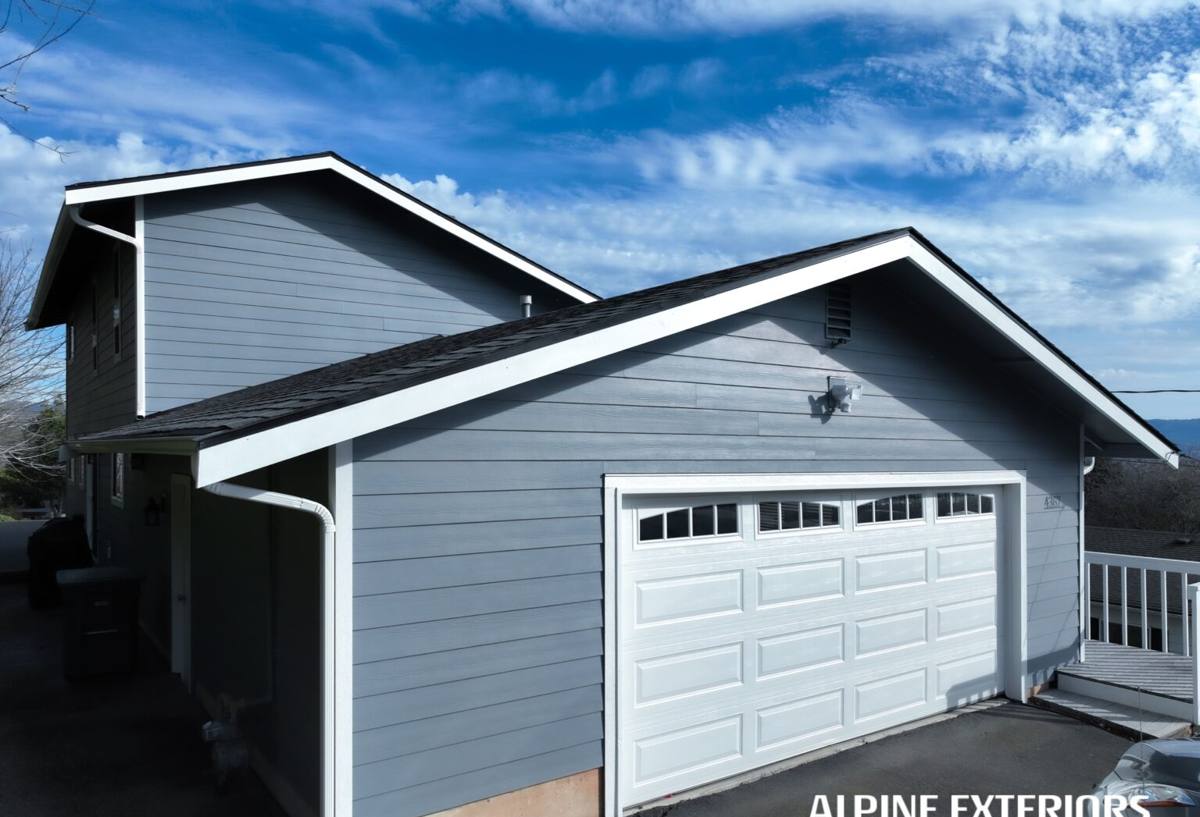
Why Metal Roofing Is a Strong Fit for This Area
Metal roofing isn't the right call for every home or every budget, and we'll say so plainly if that's the case for yours. But for a lot of Aldergrove properties, it solves the three problems above better than most alternatives:
- Modern coated steel and aluminum panels resist moss growth far better than organic-surfaced materials because there's no granule bed for spores to root into
- Properly installed metal roofing sheds driving rain fast, with fewer horizontal seams for wind-driven water to exploit
- Quality coatings and, where appropriate, aluminum or coated steel resist the corrosive effects of salt air much longer than bare or poorly finished metal
- Steep, well-designed metal roof systems shed snow load and ice more predictably than some low-slope alternatives
The trade-off is upfront cost and installation sensitivity — metal roofing punishes shortcuts more than some other systems do, which is exactly why the crew matters as much as the material.
What a Correct Metal Roofing Job Actually Involves
Tear-off and deck inspection
We don't install new metal roofing over old, wet, or rotted decking. Given how much rain this region sees, it's common to find soft spots, especially around old flashing points, valleys, and anywhere moss has been sitting for years. Any compromised sheathing gets replaced before a single panel goes down — installing a premium roof over a bad substrate just hides the problem, it doesn't fix it.
Underlayment matched to the climate
In an area that gets extended wet stretches, we use a high-temperature, self-adhering or synthetic underlayment appropriate to metal roofing, with extra attention to ice-and-water protection at eaves, valleys, and any low-slope transitions. This is the layer that protects your home if wind-driven rain ever gets past the panels, and it's not a place to save money.
Panel selection and fastening
Fastener choice and spacing matter enormously with metal roofing. We use corrosion-resistant fasteners rated for coastal-influenced climates, and we follow manufacturer spacing specs rather than "close enough." Panels are matched to your roof's pitch, span, and exposure — a standing-seam profile behaves differently than an exposed-fastener panel, and each has a correct use case.
Flashing and penetrations
Most roof failures we're called out to inspect start at flashing, not the field of the roof. Chimneys, vents, skylights, and valleys all get custom-formed flashing, properly lapped and sealed, not generic trim pieces stretched to fit. This is the detail work that determines whether a roof handles thirty years of Fraser Valley rain or starts leaking in year six.
Ventilation
A metal roof without correct attic ventilation can trap moisture underneath it just as easily as any other roofing material. We check and correct intake and exhaust ventilation as part of the job, because condensation from below causes damage that looks identical to a leak from above — and it's entirely preventable.
Metal Roofing Options: A Practical Comparison
There's no single "best" metal roofing product — the right choice depends on your home's style, budget, and how long you plan to own it. Here's how the common options stack up for a climate like Aldergrove's:
| System | Corrosion Resistance | Moss/Algae Resistance | Typical Lifespan | Best For |
|---|---|---|---|---|
| Standing seam steel (coated) | Very good | Excellent | 40-60+ years | Homes wanting a clean, modern look and minimal maintenance |
| Exposed-fastener steel panels | Good, fastener-dependent | Excellent | 30-45 years | Budget-conscious projects, outbuildings, simpler rooflines |
| Aluminum panel systems | Excellent (won't rust) | Excellent | 40-60+ years | Properties closest to salt-air exposure |
| Stone-coated steel | Good | Very good | 40-50 years | Homeowners wanting a traditional shingle or tile look |
We'll walk through which of these fits your specific roofline, budget, and how close your property sits to the more salt-influenced side of the area — that last factor genuinely changes which coating and fastener spec we recommend.
Our Process for Aldergrove Projects
Because we're a cross-border crew working out of Lynden, we've built a process that doesn't waste your time or ours:
- On-site inspection — we look at your current roof, the decking condition where accessible, ventilation, and any moss or moisture patterns that tell us where past problems have been
- Honest scope and material recommendation — we tell you what your roof actually needs, not the most expensive option available
- Written estimate — clear line items, no vague allowances buried in fine print
- Scheduling around the weather window — metal roofing installation has real weather dependencies, and we plan around the wetter stretches rather than fighting them
- Tear-off, deck repair, and installation — done in the sequence described above, with flashing and ventilation treated as first-class parts of the job, not afterthoughts
- Final walkthrough — we go over the finished roof with you before considering the job done
Maintenance That Actually Matters in This Climate
Metal roofing is low-maintenance compared to most alternatives, but "low" isn't "none" — especially with a long moss season working against you. A simple annual routine goes a long way:
- Clear debris and moss buildup from valleys and low-slope sections before it has a chance to hold moisture against the panels
- Check gutters and downspouts for blockages before the fall rains — overflowing gutters push water back under eave flashing
- Look at flashing around chimneys, vents, and skylights for any lifted or loose sections after major wind events
- Trim overhanging branches that shade the roof and extend how long moss and moisture sit on the surface
- Have a professional check fastener condition and coating integrity every few years, especially on exposed-fastener systems
Why Hiring a Crew That Already Works This Area Matters
Metal roofing forgives almost nothing when it's installed wrong — panels that aren't seated correctly, fasteners driven too tight or too loose, flashing details that were cut to save time instead of shaped correctly. A crew unfamiliar with how driving rain moves across a roof in this specific climate can make choices that look fine on installation day and fail two winters later.
We're not a national crew rotating through the region on a schedule. We're based in Lynden, and Aldergrove is part of the area we work regularly. That means we've seen how roofs in this specific stretch of the Fraser Valley and Whatcom County borderlands actually perform over time — which flashing details hold up, which ventilation setups keep moisture out of attics, and which coating and fastener choices are worth the extra cost given how much salt air and rain this area sees. That local track record is not something you can get from a crew passing through once.
Getting Started
If your current roof is showing moss buildup that keeps coming back, granule loss, soft spots near valleys, or you're simply planning ahead of a needed replacement, a metal roof built for this climate is worth a serious look. We're happy to come take a look, tell you honestly what your roof needs, and put together a clear, no-pressure estimate. Use the form below to get in touch and we'll set up a time to come out.