 Lynden Siding
 Storm Damage Roof Repair for Aldergrove, BC Homes
Aldergrove sits in the Fraser Valley just across the border from Whatcom County, and the weather doesn't stop for the checkpoint. The same Pacific storm systems that soak Lynden roll straight through Aldergrove, bringing the same driving rain, the same wind gusts off the valley, and the same damp, mossy winters. A roof here takes a beating in ways that homeowners in drier climates never have to think about, and when a storm damages that roof, patching it wrong is often worse than not patching it at all.
This page is about one thing specifically: repairing storm-damaged roofs on homes in and around Aldergrove, BC. Not a general roofing pitch — the actual signs of damage to look for, what a correct repair involves, how we approach the work, and why it matters to hire a crew that already understands this specific stretch of the Fraser Valley.
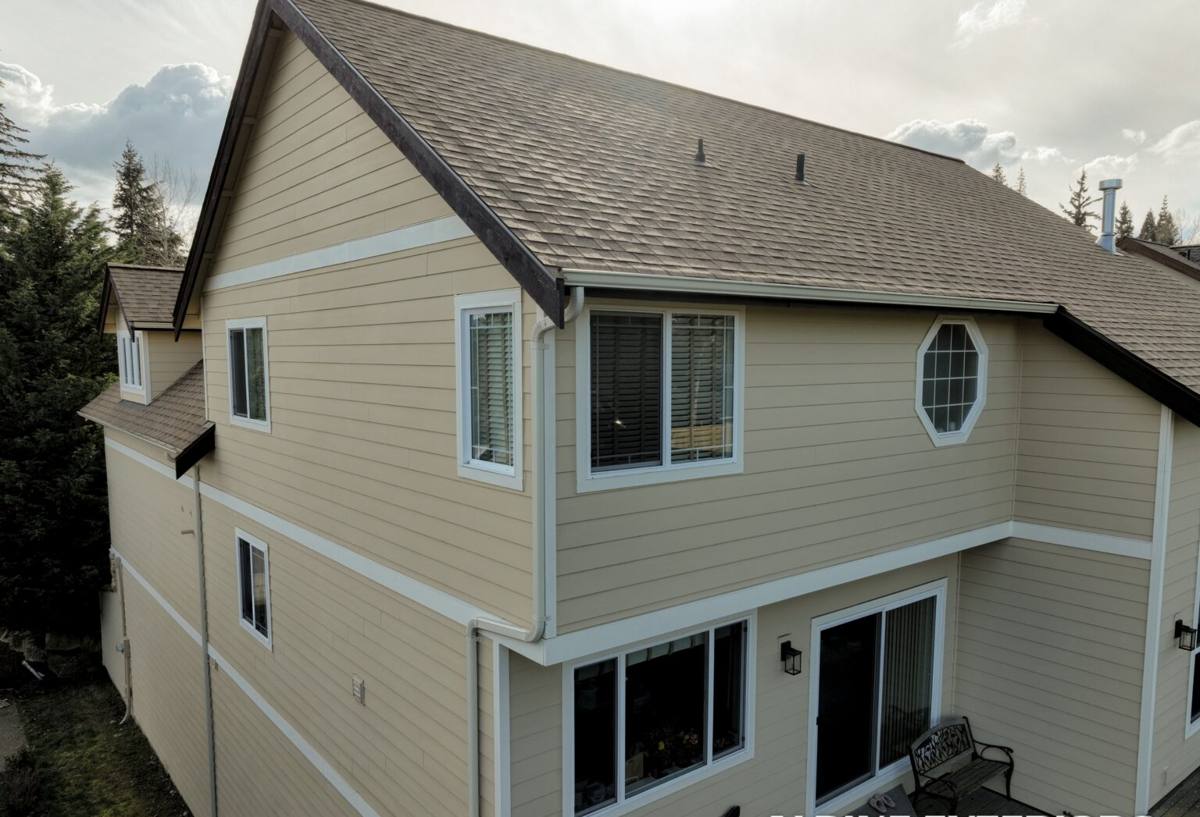
What the Local Climate Does to a Roof
Three climate factors do most of the damage to roofs in this area, and they compound each other over time.
Salt Air and Coastal Moisture
Aldergrove isn't right on the coast, but Fraser Valley weather systems carry salt-laden moisture inland off the Strait of Georgia and Puget Sound. That moisture settles on roofing metal — flashing, vents, gutters, fasteners — and accelerates corrosion over years. It's slow and easy to ignore until a fastener lets go or a flashing seam starts leaking during the next hard rain.
Driving Rain and Wind-Driven Water
Storms here rarely come straight down. Wind pushes rain sideways and forces water up under shingle tabs, around flashing edges, and into any gap a calm-weather rain would never find. A roof that's watertight in a light drizzle can still leak badly in a wind-driven storm because the water is attacking from an angle the roofing system wasn't sealed against.
A Long Moss Season
Between the shade from mature trees common in this area and months of damp, mild weather, moss and moisture-loving growth get a long runway to establish themselves on north-facing and shaded roof slopes. Moss holds water against the roofing surface far longer than bare shingles would dry out on their own, which softens shingle mat, lifts edges, and works fasteners loose from underneath — often before a homeowner ever sees a leak indoors.
None of these factors cause dramatic failure on their own. What they do is quietly weaken a roof so that when an actual storm event hits — a windstorm, a heavy rain system, a load of wet snow — the roof has less margin left to absorb it.
Signs Your Roof Has Storm Damage
Storm damage isn't always obvious from the ground, and it isn't always a leak right away. Homeowners in Aldergrove should watch for:
- Shingles that are cracked, curled, creased, or missing entirely after a windstorm
- Granules collecting in gutters or at downspout outlets — a sign of shingle wear from wind and hail impact
- Lifted or bent flashing around chimneys, vents, skylights, or roof-to-wall transitions
- Damp spots, staining, or sagging on interior ceilings, especially after a storm
- Visible gaps or daylight through the roof deck when viewed from the attic
- Moss buildup combined with soft or spongy-feeling shingles underfoot on inspection
- Debris, branches, or impact marks on the roof surface after a storm event
Some of these are urgent — active leaks and missing shingles need attention before the next weather system arrives. Others, like early moss growth or minor granule loss, are worth documenting and addressing before they become urgent.
What a Correct Storm Damage Repair Actually Involves
A rushed storm repair often just covers the visible symptom — a tarp, a bead of sealant, a few replacement shingles nailed over the damaged area. That approach can mask a problem instead of fixing it. A correct repair works from the deck outward:
1. Assess the Deck, Not Just the Surface
Water that got past storm-damaged shingles may have already reached the roof deck. Before any new material goes down, the deck underneath needs to be checked for soft spots, staining, or rot. Covering a compromised deck with new shingles just delays the failure.
2. Match the Underlayment to the Exposure
Given how often wind-driven rain is the actual cause of leaks in this area, the underlayment and flashing details at vulnerable points — valleys, eaves, wall transitions — matter as much as the shingles themselves. A repair that skips proper underlayment at these spots is a repair that will fail the same way again.
3. Address the Cause, Not Just the Symptom
If moss contributed to the damage, the repair should include removing the growth and addressing what's keeping that section of roof damp — shade, poor airflow, debris buildup — not just replacing the shingles it damaged.
4. Blend the Repair Into the Existing Roof
Shingle color and profile shift over time with sun exposure. A competent repair uses matching materials and ties new work into existing courses correctly, so the repaired section sheds water the way the rest of the roof does, not as a patch that creates its own new water path at the edges.
Our Storm Damage Repair Process
When we're called out to a storm-damaged roof in Aldergrove, we follow the same process every time:
- Inspection. We walk the roof and the attic where accessible, checking not just the obvious damage but the surrounding area a storm typically affects — flashing, valleys, eaves, and any shaded slopes prone to moss.
- Documentation. We record what we find in enough detail to support an insurance claim if you're pursuing one, including the likely cause and extent of damage.
- Temporary protection. If there's active exposure — a hole, missing shingles, exposed deck — we get the roof weathertight first, even if the full repair has to wait a day or two for materials.
- Repair plan. We explain what needs to happen, why, and what it will cost, in plain terms, before any work begins.
- The repair itself. Deck check, proper underlayment and flashing at vulnerable points, matched roofing material, and a clean tie-in with the surrounding roof.
- Final check. We walk the completed repair with you and point out what we did and what to watch for going forward.
Repair vs. Replacement: How We Make the Call
Not every storm-damaged roof needs full replacement, and not every roof can be reasonably patched. Here's how we think through it:
| Factor | Favors Repair | Favors Replacement |
|---|---|---|
| Extent of damage | Localized to one section or slope | Widespread across multiple slopes |
| Roof age | Well within its expected service life | Already near the end of its lifespan |
| Deck condition | Solid, dry decking underneath | Soft, rotted, or repeatedly wet decking |
| Moss/moisture history | First significant issue in that area | Recurring moss or leak problems over years |
| Material availability | Matching shingles still available | Discontinued material, visible mismatch |
| Insurance scope | Claim covers a defined repair area | Adjuster scopes full replacement |
We'll always recommend the option that actually solves the problem — not the more expensive one by default. If a repair is the honest answer, that's what we'll propose.
Materials and Methods We Use for Lasting Repairs
Given the salt-air corrosion and moss pressure common to this area, we lean toward materials and details that hold up specifically to those conditions rather than generic minimum-code solutions:
- Corrosion-resistant flashing and fasteners at vulnerable points, given the slow metal corrosion salt-laden moisture causes over time
- Ice-and-water or self-sealing underlayment at eaves, valleys, and wall transitions, where wind-driven rain is most likely to find a gap
- Shingle matching by manufacturer and lot where possible, to keep color and profile consistent
- Attention to ventilation during repairs, since poor attic airflow contributes to both moss growth and premature shingle aging from the underside
We're upfront when a repair has trade-offs — for instance, an older or discontinued shingle line may not match perfectly no matter what we do, and we'll tell you that before starting rather than after.
Insurance and Storm Claims: What Homeowners Should Know
Many storm repairs in this area go through homeowners insurance, whether on the BC or Washington side of the border. A few things make that process go more smoothly:
- Document the damage and the approximate date of the storm event as soon as you notice it
- Get an independent inspection and written scope of damage before the adjuster's visit, if possible, so you have your own record to compare against
- Ask any contractor for an itemized estimate that separates repair scope from anything unrelated, so it's easy to see what the claim should actually cover
- Be cautious of anyone pressuring you to sign a contract before an adjuster has seen the roof
We can provide documentation and estimates that support a claim, but the claim itself is between you and your insurer — we won't make promises about what a policy will or won't cover.
Why a Crew That Already Works Aldergrove, BC Matters
Aldergrove sits in a slightly unusual spot — a BC community close enough to Whatcom County that a Lynden-based crew can reach it easily, but distinct enough in its own microclimate and housing stock that generic advice doesn't always apply. A crew that regularly works this specific area brings a few real advantages:
- Familiarity with how local homes are built and which roof details tend to fail first in this climate
- An eye for the difference between long-term moss and moisture wear versus fresh storm damage, which affects both the repair plan and the insurance conversation
- Realistic scheduling around the region's storm patterns, so temporary protection and permanent repair don't get stretched out over weeks
- A working knowledge of cross-border logistics for materials and scheduling, so a repair on the BC side of the line doesn't get treated as an afterthought
A roofer who only occasionally crosses into this area is starting from scratch on all of that every time. A crew that's already familiar with Aldergrove and the surrounding Fraser Valley isn't guessing.
Protecting Your Roof Between Storms
Most storm damage is made worse by small maintenance items that went unaddressed. A short seasonal checklist goes a long way:
- Clear gutters and downspouts before the fall rain season starts
- Remove moss buildup on shaded slopes before it spreads or softens shingles
- Trim back tree limbs that overhang the roof, which reduce airflow and drop debris
- Check attic ventilation is clear and functioning, especially before winter
- Have flashing around chimneys, vents, and skylights inspected every couple of years
- Walk the roofline visually after any major windstorm to catch obvious damage early
Catching small issues in this routine is almost always cheaper and less disruptive than dealing with them after a storm has turned a small gap into an active leak.
Get an Honest Look at Your Roof
If a recent storm has left you with missing shingles, a new leak, or just a nagging feeling something's not right up there, it's worth having it looked at before the next system rolls through. We offer free, no-pressure estimates for storm damage roof repair in Aldergrove, BC — just fill out the form below and we'll take a look.