 Lynden Siding
 Why Birch Bay Decks Take a Different Kind of Beating
A deck built a few miles inland in Lynden and a deck built in Birch Bay are not really the same project, even if the plans look identical on paper. Birch Bay sits right on the water, which means salt-laden air moves through the neighborhood constantly, driving rain comes in sideways off the Strait of Georgia during winter storms, and the combination of moisture and shade keeps moss and algae active for most of the year. None of that is a reason to avoid building outdoor living space here — it just means the deck has to be built with that environment in mind from the framing up, not treated the same as a project in a drier, more sheltered part of Whatcom County.
We've built and repaired decks across this area long enough to know which shortcuts show up as problems in year two versus year twelve. Salt air accelerates corrosion in hardware that would otherwise last decades. Driving rain finds gaps in flashing that would never leak in a calmer climate. And moss doesn't just look bad — on a deck surface it holds moisture against the wood or composite and makes footing dangerously slick, especially on stairs. A deck designed for Birch Bay has to account for all three from the start.
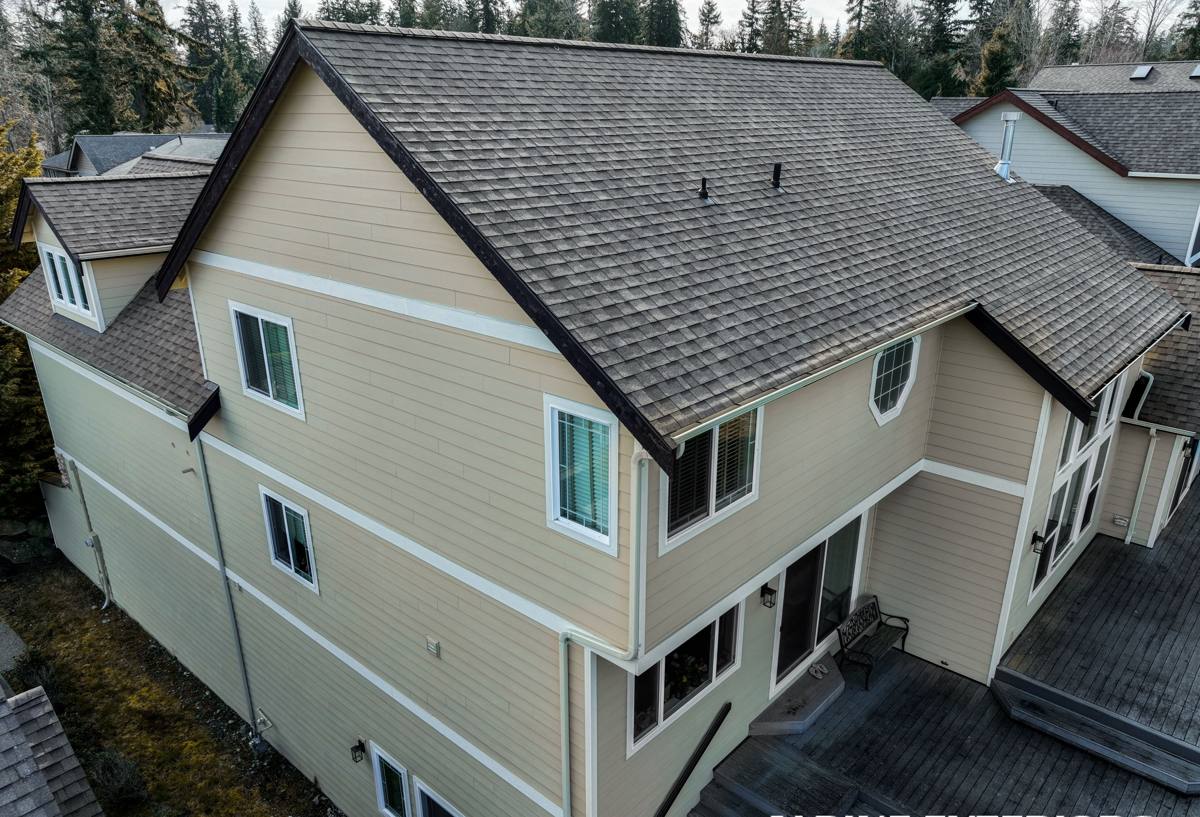
What a Coastal Deck Needs Below the Surface
The parts of a deck that fail first in this climate are rarely the parts homeowners think about — it's the fasteners, the ledger attachment, and the framing details that determine whether a deck stays solid or starts sagging and rusting within a few years.
Fasteners and Hardware
Standard galvanized fasteners are rated for general outdoor use, but they're not built for sustained salt exposure. In a coastal setting like Birch Bay, we use stainless steel or high-grade coated fasteners and structural connectors rated for corrosive environments, especially anywhere metal is in direct contact with pressure-treated lumber, which speeds up corrosion on its own. Cutting corners on hardware is one of the most common reasons an otherwise good-looking deck develops rust streaks, loose railings, or squeaky boards well before it should.
Ledger Attachment and Flashing
The ledger board — where the deck attaches to the house — is the single most important structural and moisture detail on the whole project. Done wrong, it's both a safety issue and a slow-motion water intrusion problem behind your siding. We flash it properly with materials suited to sustained wet weather, not just a quick bead of sealant, because sealant alone is the first thing driving rain defeats. This matters more in Birch Bay than almost anywhere else in the county, given how much wind-driven rain the area sees off the water.
Choosing Decking Material for Salt Air and a Long Moss Season
There's no single "best" decking material — there's a best material for your budget, your maintenance appetite, and your specific exposure. Here's how the common options actually hold up in a Birch Bay setting.
| Material | How it handles salt air | How it handles moss/moisture | Maintenance |
|---|---|---|---|
| Pressure-treated wood | Good if hardware is corrosion-rated; wood itself is unaffected by salt | Needs regular cleaning and sealing or moss gets a foothold fast | Annual cleaning, re-sealing every 1-2 years |
| Cedar | Naturally rot-resistant, ages to a silver-gray patina | Still needs cleaning; moss will grow on it like anything else if shaded and damp | Periodic cleaning, optional staining |
| Capped composite (e.g. Trex, TimberTech, Fiberon) | Excellent — won't rust, rot, or absorb salt | Resists moisture absorption well; surface can still get slick with algae film if never cleaned | Occasional washing, no sealing or staining |
| PVC decking | Excellent — fully synthetic, unaffected by salt exposure | Very low absorption; easiest surface to keep moss-free | Lowest of the group; occasional washing |
For homeowners who want the lowest long-term maintenance in this specific environment, capped composite or PVC decking generally makes the most sense — the upfront cost is higher than wood, but you're not fighting the same battle with sealing and moss every year. That said, plenty of Birch Bay homeowners still prefer the look and feel of real wood and are happy to keep up with the maintenance it needs. Our job is to lay out the honest trade-offs so you're choosing based on what you actually want to deal with, not guessing.
Design Choices That Matter on a Birch Bay Lot
Beyond material selection, a few design decisions have an outsized effect on how well a deck performs here.
Wind and Orientation
Waterfront and near-waterfront lots see more sustained wind than inland properties. Railing design, post spacing, and even the layout of any built-in seating or privacy screening need to account for that, both for comfort and for structural load.
Drainage and Grading
Standing water under or around a deck is a moss and rot generator. Proper spacing between boards, correct slope away from the house, and thoughtful footing placement all reduce how much water sits and lingers after Whatcom County's long stretches of winter rain.
Sun and Shade Patterns
Decks tucked under tree cover or on the north side of a house stay damp longer and grow moss faster. We take actual sun exposure into account when planning board spacing and material choice — a shaded deck may be a better candidate for composite or PVC simply because it dries out slower.
How We Build a Custom Deck, Start to Finish
- On-site consultation — we look at your lot, sun exposure, drainage, and how you actually want to use the space before talking materials.
- Design and material selection — layout, railing style, and decking material chosen together, with honest trade-offs explained up front.
- Permitting — most elevated decks in Whatcom County require a building permit; ground-level platform decks sometimes don't, depending on height and footprint. We handle this either way.
- Framing and structural work — corrosion-rated hardware, proper footings, and correctly flashed ledger attachment.
- Decking, railing, and finish work — installed to manufacturer specifications so warranties stay valid.
- Final walkthrough — we go over care and maintenance specific to the material you chose and this climate.
Keeping a Birch Bay Deck Ahead of Moss and Mildew
Whatever material you choose, a little seasonal attention goes a long way in this climate. A deck that gets ignored over a wet winter will show it by spring.
- Sweep debris and standing leaves off the deck regularly in fall — trapped organic material is what moss needs to get started
- Wash the surface at least once or twice a year with a deck-safe cleaner, more often in shaded areas
- Check that gaps between boards are clear so water drains through instead of pooling
- Inspect stairs and high-traffic areas for slickness before winter rains set in — this is where moss becomes a safety issue, not just a cosmetic one
- For wood decks, plan on re-sealing or staining every one to two years depending on sun exposure
- Check railing hardware and structural connectors periodically for early signs of corrosion, especially on older installations
Why Local Experience in Birch Bay Actually Matters
A lot of general contractors can frame a deck. Fewer have built enough of them specifically along the Whatcom County coastline to know how differently this environment treats a structure compared to a few miles inland. We've seen what happens when decks are built to a generic spec in a place like Birch Bay — the hardware rusts early, moss takes over shaded sections, and homeowners end up doing repairs years ahead of schedule. Building it right the first time, with the right hardware, flashing, and material choices for this specific exposure, costs less over the life of the deck than fixing avoidable problems later.
We're a Lynden-based crew that works this area regularly, which means we're not guessing at how salt air and driving rain behave here — we're accounting for it in the plan before the first post goes in the ground.
What Custom Decks Typically Cost in Birch Bay
Every project is different, and we'd rather give you a real number after seeing your lot than a made-up estimate here. That said, a few factors consistently move the price up or down.
| Factor | Effect on cost |
|---|---|
| Decking material (wood vs. composite vs. PVC) | Composite and PVC cost more upfront, less over time in maintenance |
| Deck height and footing requirements | Elevated decks need more structural work and typically a permit |
| Size and layout complexity | Multi-level decks, built-in seating, and custom railing add labor and material |
| Corrosion-rated hardware | A modest add on cost, but essential for coastal durability — not optional in our process |
| Site access and grading | Sloped or hard-to-access lots near the water can add setup time |
The honest answer is that a simple ground-level deck and a large multi-level custom build with built-ins can differ by a wide margin, so the only way to give you a real number is to see the site.
If you're planning a new deck or replacing one that hasn't held up to the Birch Bay weather, we're happy to take a look and put together a free, no-pressure estimate — just fill out the form below.