 Lynden Siding
 Roof Repair Built for Birch Bay's Coastal Climate
Birch Bay sits right on the water in Whatcom County, and that changes what a roof has to survive compared to a roof a few miles inland in Lynden. Salt-laden air coming off the bay, wind-driven rain that arrives sideways during winter storms, and a shoulder season long enough to grow a thick coat of moss on any shaded slope aren't abstract risks out here — they're the normal working conditions for a Birch Bay roof. A repair that would hold up fine in a drier inland neighborhood can fail early on the coast if it isn't done with that exposure in mind.
This page is about roof repair specifically — patching, resealing, fixing leaks, replacing damaged sections — not tearing off and replacing an entire roof. Most homes in Birch Bay don't need a full new roof; they need targeted work done correctly, with materials and methods suited to a marine environment. That's the job described below, along with what to watch for and how we approach it.
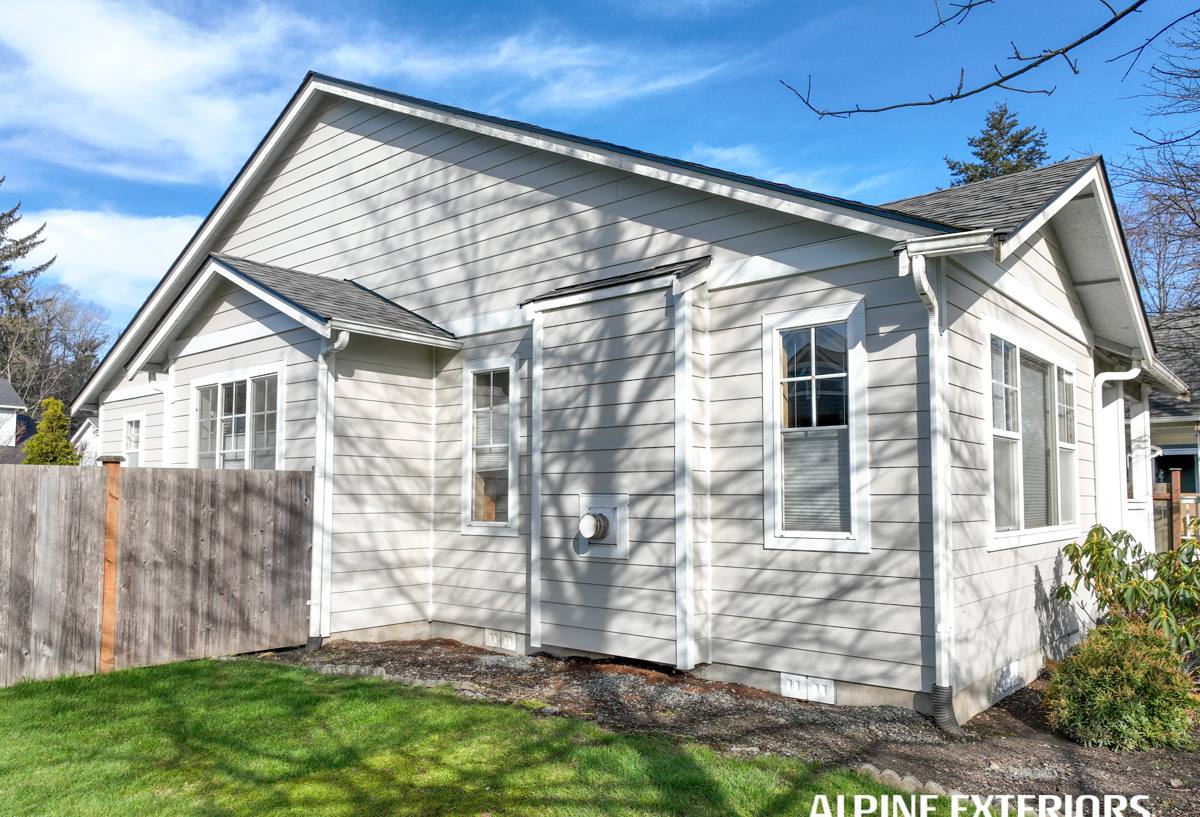
What Salt Air, Rain, and Moss Actually Do to a Roof
These three factors don't act alone. They compound each other, which is why coastal roofs age differently than roofs a short drive inland.
Salt Air and Metal Components
Salt in the air speeds up corrosion on anything metal — flashing, exposed fasteners, vent caps, valley metal, gutter hardware. Standard-grade fasteners can start rusting and losing their grip years before they would in a non-coastal setting. Once a fastener corrodes, the seal around it weakens, and that's often where a small leak starts.
Wind-Driven Rain and Underlayment
Rain falling straight down mostly runs off a healthy roof surface without issue. Rain pushed sideways by wind off the water is a different problem — it finds its way under shingle laps, around flashing edges, and into fastener penetrations that would otherwise stay dry. This is why underlayment quality and lap technique matter more here than they do in a more sheltered inland lot.
Moss, Shade, and Trapped Moisture
Moss takes hold in shaded, damp spots — north-facing slopes, areas under overhanging trees, roof valleys that stay wet longer than the rest of the field. Once established, moss holds moisture against the roofing material and keeps that section from drying out between rain events. Left long enough, that constant dampness breaks down shingle granules and can lead to rot in the decking underneath, which turns a surface repair into a structural one.
Signs a Birch Bay Roof Needs Repair, Not Just a Cleaning
Not every roof issue is a full-blown emergency, but ignoring the early signs almost always makes the eventual repair bigger and more expensive. Here's what we ask homeowners to watch for:
- Water stains on ceilings or in the attic, especially after a windy rainstorm rather than a calm one
- Shingles that are cracked, curling at the edges, or visibly missing granules
- Moss or dark streaking concentrated in one area rather than spread evenly across the roof
- Rusted or lifting flashing around chimneys, skylights, and roof-to-wall transitions
- Sagging in any part of the roofline, which can indicate decking damage underneath
- Granules collecting in gutters or at the base of downspouts
- Daylight visible through the roof deck from inside the attic
- A noticeable jump in how often you're clearing debris or moss off one particular section
Any one of these on its own might just need monitoring. Two or three together, especially on a home that's been through a few winters without attention, usually means it's time for an actual inspection rather than a wait-and-see approach.
Repair or Replace? How We Make the Call
Homeowners often assume any leak means a new roof. That's rarely true. The honest answer depends on the roof's age, how localized the damage is, and what's happening underneath the surface layer.
| Situation | Repair usually makes sense | Replacement usually makes sense |
|---|---|---|
| Roof age | Roof is within its expected service life and damage is isolated | Roof is near or past its expected lifespan and problems are spreading |
| Extent of damage | One slope, valley, or penetration point is affected | Multiple areas across the roof show similar wear or granule loss |
| Decking condition | Decking underneath is sound once the surface is opened up | Decking shows soft spots, rot, or repeated water damage |
| Moss history | Moss was caught early and hasn't compromised the shingle mat | Long-term moss growth has degraded shingles across large areas |
| Underlying cause | A single identifiable defect — cracked flashing, a failed seal | Systemic aging of the roofing material itself |
We won't recommend a full replacement when a repair will genuinely hold up, and we won't patch a roof that's clearly past the point where repairs are a good use of money. That call should be based on what we find on the roof and in the attic, not on a sales target.
What a Proper Roof Repair Actually Involves
A repair that's done right addresses the cause of the problem, not just the visible symptom. On a Birch Bay roof, that usually means checking several things even when the homeowner only reported one issue:
- Diagnosis first. We trace leaks to their actual source, which is often several feet away from where the water stain shows up inside the house.
- Flashing before shingles. Chimney, skylight, and wall-transition flashing fail more often than shingle fields do, especially in salt air. We check and reseal or replace flashing as part of any repair near those areas.
- Underlayment integrity. If the underlayment beneath the damaged shingles has been compromised by wind-driven rain, replacing shingles alone won't fix the leak.
- Decking condition. Any soft or discolored decking gets replaced before new roofing goes back down — covering rotten decking with new shingles just hides the problem.
- Matching materials. We match shingle type, color, and profile as closely as possible so a repair doesn't stand out as a patch job.
- Fastener and sealant choice. Corrosion-resistant fasteners and sealants rated for the exposure the roof actually faces, not just whatever's cheapest.
Our Birch Bay Roof Repair Process
We keep the process straightforward so homeowners know what to expect at each stage:
- Initial contact and scheduling. You describe the issue — a leak, a stain, visible damage — and we schedule an on-site look, not a phone-only estimate.
- On-roof inspection. We physically walk the roof and check the attic from the inside, looking for the actual source of the problem and any related issues nearby.
- Written scope and estimate. You get a clear explanation of what's wrong, what we recommend, and a written cost estimate before any work starts — no verbal-only agreements.
- The repair itself. We complete the agreed work, including any flashing, underlayment, or decking repairs uncovered along the way, and flag anything additional before proceeding rather than after.
- Cleanup and haul-away. Old materials, nails, and debris are cleared from the property and roofline, including a magnetic sweep of the ground near the work area.
- Final walkthrough. We go over the completed work with you so you know exactly what was done and what to watch for going forward.
Materials and Methods We Rely On
In a marine climate, the materials that hold up best aren't always the cheapest or the most heavily marketed ones. Our standard for Birch Bay repair work leans toward products with a track record in coastal exposure: corrosion-resistant flashing and fasteners, self-adhering underlayment at eaves and valleys where wind-driven rain concentrates, and sealants rated for continuous damp exposure rather than general-purpose use.
Where we steer away from certain products, it's a maintenance and moisture-behavior judgment, not a knock on the manufacturer. Some materials require more frequent upkeep to perform well in salt air and constant dampness than a homeowner may want to take on, or they're more sensitive to installation technique in wind-exposed conditions. We'd rather use something that performs predictably here with reasonable upkeep than something that looks good on paper but needs a level of maintenance most homeowners don't have time for.
Cost Factors for Roof Repair in Birch Bay
Every repair is different, so we don't quote numbers before seeing the roof. What we can share is what typically moves the cost up or down, so you know what questions to ask when you get an estimate:
| Factor | How it affects cost |
|---|---|
| Size of the affected area | A single leak point costs less to fix than damage spread across a slope |
| Decking condition | Rotted decking adds material and labor beyond the surface repair |
| Roof pitch and access | Steep or hard-to-access roofs take longer and require more safety setup |
| Flashing complexity | Chimneys, skylights, and multiple roof planes mean more flashing work |
| Material match | Discontinued or unusual shingle profiles can be harder and costlier to match |
| Moss and debris removal | Heavy moss buildup adds cleanup time before repair work can even start |
Broadly, small isolated repairs — a section of flashing, a handful of shingles, a resealed penetration — are a modest expense. Repairs involving decking replacement or multiple problem areas cost more, simply because there's more material and labor involved. We'll walk through exactly what's driving the price on your specific roof before any work is approved.
Why Local Whatcom County Experience Matters
A roofer who mostly works inland neighborhoods can still do competent work, but they may not think to check for corrosion on fasteners that are only two years old, or recognize how quickly moss can take hold on a shaded slope this close to the water. Working in Birch Bay and around Whatcom County regularly means we know which parts of a roof fail first out here, what the wind-driven rain actually gets into, and how long a given repair should realistically last given the exposure.
It also means we're not far away if something needs a second look after a storm. That matters more on the coast than it does further inland, where roofs simply see less abuse over the same span of years.
Simple Maintenance That Extends a Repair's Life
A good repair lasts longer with a small amount of upkeep in between. None of this requires climbing on the roof yourself — most of it is about knowing what to watch for and calling before a small issue grows:
- Keep gutters and downspouts clear so water isn't backing up under roof edges
- Trim back tree limbs that keep a section of roof shaded and slow to dry
- Have moss addressed while it's still light, before it thickens and holds moisture
- Check the attic after major windstorms for new stains or damp spots
- Have flashing and seals inspected every couple of years, not just when a leak appears
If you're noticing signs of trouble on your roof, or it's simply been a while since anyone's taken a real look at it, we're glad to come out for a free, no-pressure estimate. Use the form below to get started, and we'll tell you honestly what your roof needs — nothing more.