 Lynden Siding
 Birch Bay's Climate Is Harder on Siding Than Most of Whatcom County
Birch Bay sits right on the water, and that changes the math on siding compared to homes further inland around Lynden. Salt-laden air corrodes fasteners and finishes faster than dry inland air does. Wind-driven rain off the water hits walls at an angle, not straight down, which pushes moisture into seams, laps, and trim joints that a purely vertical rain never reaches. Add in the long gray stretch from fall through spring when siding rarely gets a chance to fully dry out, and you have a recipe for moss, mildew, and slow water damage creeping in behind the surface long before anything looks obviously wrong from the curb.
None of this means Birch Bay homes need exotic materials or unusual construction. It means the ordinary rules of good siding work — drainage planes, flashing, fastener choice, product exposure ratings — matter more here, and get punished harder when they're skipped.
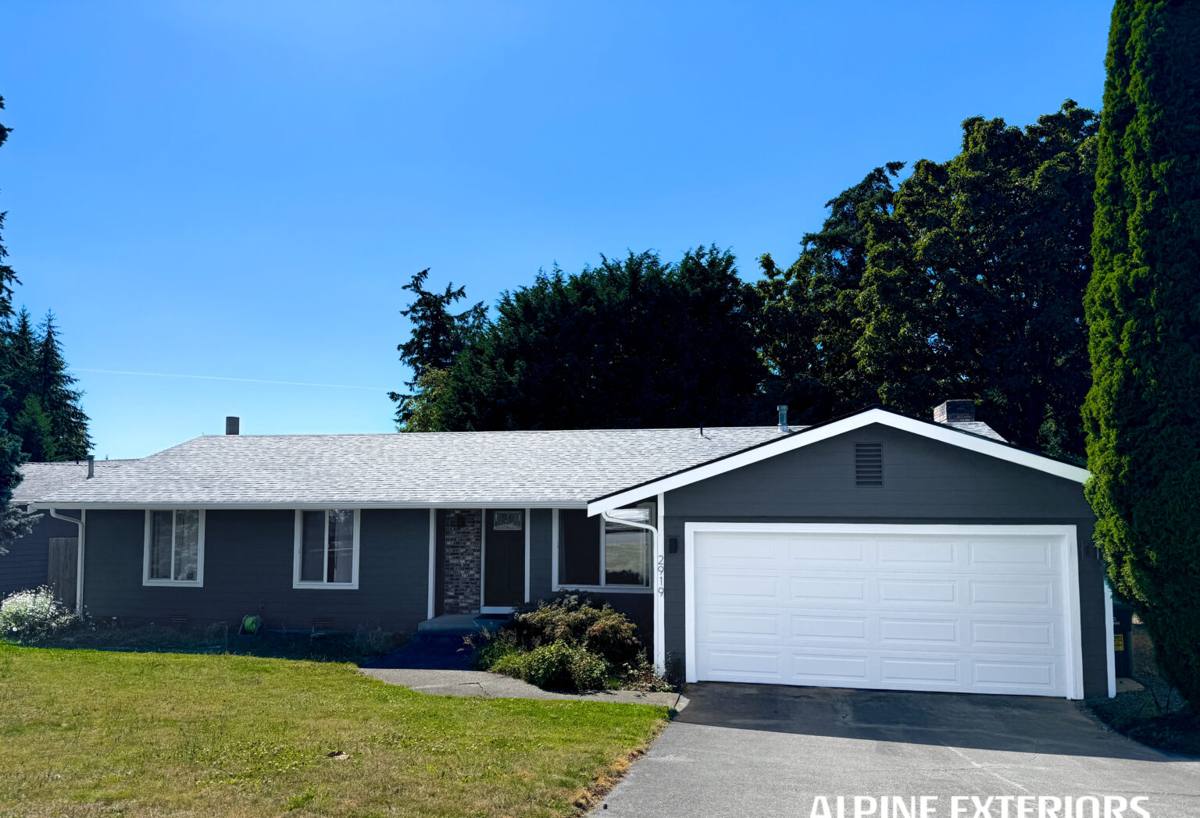
How This Shows Up on Birch Bay Homes
We see a fairly consistent pattern on older siding in this area:
- Moss and algae staining on north- and west-facing walls that stay shaded and damp longest
- Corroded or rust-streaked fasteners, especially on homes with standard (non-coated) nails or staples original to the siding
- Soft or delaminating spots near ground level, deck ledgers, and anywhere trim meets siding without proper flashing
- Paint failure that shows up years earlier than the same product would fail inland — salt air breaks down field-applied paint faster than a factory finish
- Warped or bowed panels on wood-based or engineered-wood siding that has taken on repeated moisture cycles
Any one of these can look cosmetic at first glance. The problem is what's usually happening behind the panel by the time these signs are visible on the surface.
Repair vs. Replacement
Not every issue means a full tear-off. Isolated damage — a cracked panel from a stray branch, one bad seal around a fixture — can often be repaired. Replacement becomes the honest recommendation when the damage is spread across multiple walls, when moisture has reached the sheathing or framing, or when the siding itself (material and installation both) is past the point where patching buys you more than a year or two. We'll tell you straight which situation you're in — there's no reason to sell a full replacement to a homeowner who only needs a repair.
What a Correct Siding Replacement Actually Involves
Siding replacement is not just swapping old panels for new ones. Done right, in a coastal environment like Birch Bay, it includes several layers most homeowners never see once the job is finished:
- Full tear-off and sheathing inspection — old siding comes off and the sheathing underneath gets checked for rot, soft spots, or existing water damage before anything new goes up
- Repair of any damaged sheathing or framing — covering over a soft spot with new siding just hides the problem; it has to be cut out and replaced
- A continuous weather-resistive barrier installed correctly, lapped shingle-style so water sheds outward at every seam
- Correct flashing at every window, door, deck ledger, and roof-to-wall intersection — this is where wind-driven rain finds its way in if it's skipped or done carelessly
- Rainscreen or proper drainage gap where called for, so any moisture that does get behind the cladding has somewhere to go instead of sitting against the sheathing
- Corrosion-resistant fasteners rated for the exposure the wall actually sees, not just whatever's cheapest
- Manufacturer-spec installation of the siding itself — nailing pattern, gapping, clearance from grade and roof lines, and joint treatment all done to the product's actual installation manual, not general habit
Every one of these steps is invisible once the job is done. That's exactly why the contractor doing them matters more than the brand name on the panel.
Why We Install Only James Hardie Fiber Cement
We standardized on James Hardie fiber cement siding for every job we take on, including here in Birch Bay, and we don't install vinyl, LP SmartSide, cedar, primed spruce, Cemplank, or Allura. That's not a marketing position — it's a decision based on what holds up in this specific climate over decades, not just years.
Fiber cement is non-combustible, doesn't feed insects the way wood-based products can, and doesn't expand and contract with moisture the way engineered wood or vinyl does. In a salt-air, high-rain environment, that stability matters: siding that moves with every wet-dry cycle eventually opens gaps at seams and fastener holes, and those gaps are exactly where wind-driven rain gets in. James Hardie's ColorPlus factory finish is also baked on and cured under controlled conditions, which holds color and resists fading far longer than paint applied on site after installation — a real advantage when salt air is actively working against field-applied finishes.
We're not going to pretend every other product is worthless — vinyl is inexpensive and low-maintenance in mild climates, and engineered wood has a warmer look for less money. But for a coastal Whatcom County home that needs to shrug off decades of salt, rain, and moss without an expensive maintenance cycle, Hardie is what we're willing to put our name on.
Choosing the Right Hardie Line for a Birch Bay Home
James Hardie engineers its products by climate zone (HZ5 for the Pacific Northwest is the relevant one here), and within that, there are a few product lines worth understanding before you pick one:
| Product Line | Look | Best Fit For |
|---|---|---|
| HardiePlank Lap Siding | Classic horizontal lap, several profile options | Most Birch Bay homes — the default choice for a reason |
| HardieShingle | Staggered or straight-edge shingle look | Accent walls, gables, or homes going for a cottage/coastal aesthetic |
| HardiePanel | Vertical panel, often with battens | Modern builds or accent sections paired with lap siding |
| HardieTrim | Smooth or woodgrain trim boards | Corners, window/door surrounds, fascia — finishing the whole envelope in one system |
Color is worth a real conversation too. ColorPlus finishes come pre-matched to trim and accessories, which matters on a home that's going to face UV and salt exposure for the next 30-plus years — a mismatched or fading finish is a much bigger eyesore on a coastal home that gets more direct exposure than a shaded, inland lot.
Our Process, Start to Finish
We keep the process straightforward because most homeowners are trusting us with the largest exterior project their house will see in years:
- Walk-through and assessment — we look at your current siding, trim, and any visible trouble spots, and talk through what we find
- Written estimate — scope, product line and color, and a clear price, with no pressure to sign that day
- Scheduling — we tell you realistically where you fall in the queue rather than overpromising a start date
- Tear-off and sheathing check — old material comes off, and we stop and talk to you before covering up anything unexpected underneath
- Barrier, flashing, and Hardie installation — done to manufacturer spec, not shortcuts
- Final walk-through — we go around the house with you before calling the job done
If we find rot or damage once the old siding is off that wasn't visible during the estimate, we stop and talk you through the options and cost before doing anything — no surprise change orders buried in a final invoice.
What Affects Cost
Every home is different, so we won't quote a number without seeing the house, but these are the factors that actually move the price:
| Factor | Why It Matters |
|---|---|
| Square footage and wall complexity | More corners, dormers, and cutouts mean more labor per square foot |
| Condition of existing sheathing | Rot or water damage found during tear-off adds repair scope |
| Number of stories | Second- and third-story work requires more scaffolding/staging time |
| Product line and trim package | Lap vs. shingle accents vs. a full trim system changes material and labor |
| Existing siding removal and disposal | Tear-off and haul-away of old material is real labor, not an afterthought |
Why Hiring a Crew That Already Works Birch Bay Matters
A contractor who mostly works drier, inland jobs can install siding correctly on paper and still miss the details that matter specifically here — flashing details sized for wind-driven rain off the water, fastener choices that resist salt corrosion, or drainage details that account for how slowly walls dry out during a Whatcom County winter near the coast. None of that is exotic knowledge, but it's the kind of thing you only get consistently right when you've done it repeatedly in this exact environment, not read about it once.
There's also a practical side: a crew already working in and around Birch Bay and Lynden can respond faster if something needs a look after the job is done, knows the local permitting expectations, and isn't treating your job as a one-off out-of-town trip.
Protecting the Investment After Installation
Correctly installed Hardie siding is genuinely low-maintenance, but "low-maintenance" isn't "no-maintenance," especially this close to the water. A short seasonal routine goes a long way:
- Rinse off salt residue and grime once or twice a year, especially on walls facing the water
- Keep gutters clear so overflow doesn't run down the face of the siding
- Trim back vegetation that keeps a wall shaded and damp, which is where moss takes hold first
- Check caulking at trim and penetrations annually and re-seal if it's cracked or pulling away
- Address any impact damage promptly rather than letting a small crack sit through a wet winter
If your Birch Bay home is showing moss, fading, soft spots, or fastener rust, or if you're just planning ahead before it gets worse, we're happy to come take a look. A free, no-pressure estimate is the best way to find out exactly what your home needs — fill out the form below and we'll set up a time to walk the property with you.