 Lynden Siding
 Fiber Cement Siding, Specifically for Blaine
A general siding page can tell you what fiber cement is. This page is about what it has to do on a house in Blaine, sitting this close to Semiahmoo Bay, Drayton Harbor, and the Canadian border, where salt-laden air is a daily condition rather than an occasional one. Fiber cement is the right material category for that exposure, but "fiber cement" covers a range of manufacturers, product lines, and installation approaches, and the difference between a job that holds up for decades and one that starts showing problems in five years usually isn't the material itself. It's the specific product line, the profile chosen for the house, and whether the crew installed it to the manufacturer's actual spec for this climate.
We install James Hardie fiber cement exclusively, and this page focuses narrowly on that: what Blaine's climate asks of the product, which parts of the Hardie system make sense for homes here, what correct installation looks like on a coastal wall, and how our process runs from first look to finished job.
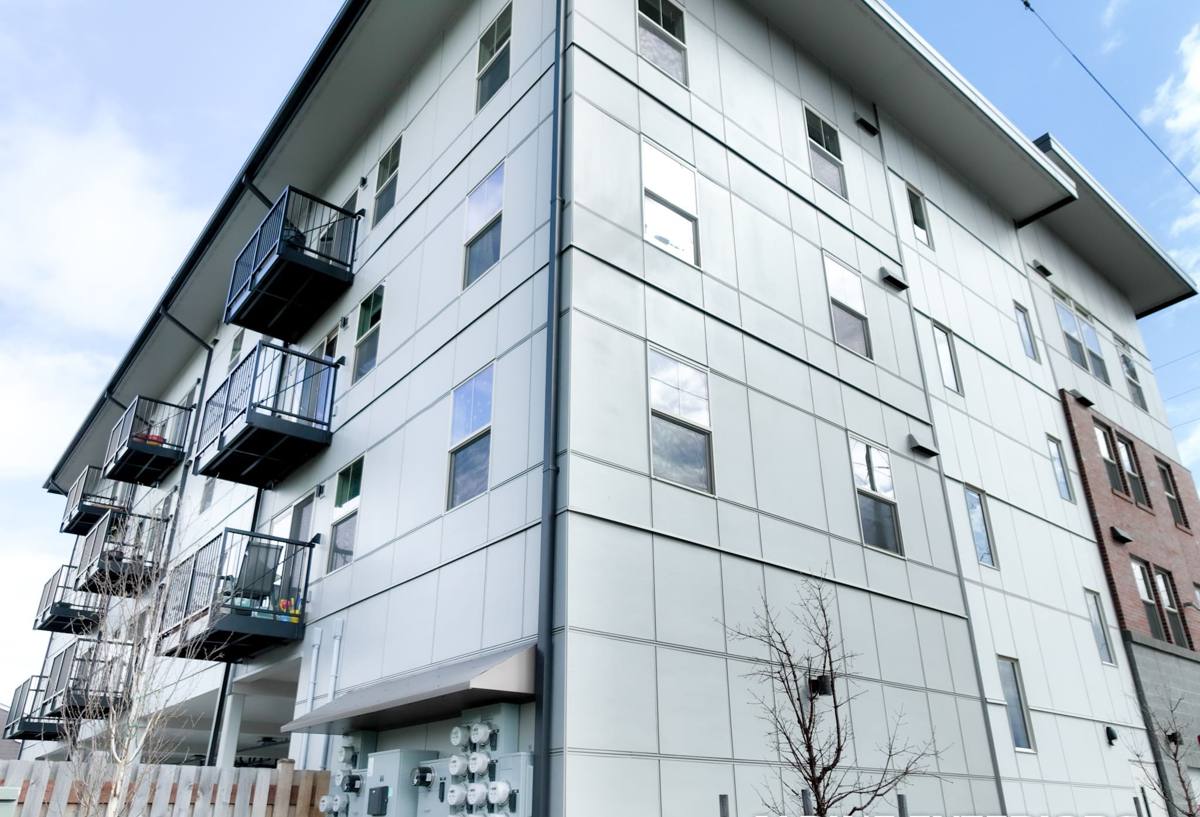
What Blaine's Climate Demands From a Siding Product
Salt Air as a Daily Exposure
Homes near Semiahmoo Bay and Drayton Harbor deal with salt-laden air as a constant, not a once-in-a-while event, and that exposure works on siding in two ways: it accelerates corrosion on fasteners, flashing, and trim hardware, and it stresses factory finishes faster than the same product would wear inland. A siding system has to hold both its substrate and its surface finish against that combination, year after year, without depending on a homeowner catching problems early.
Wind-Driven Rain Off the Water
Rain in Blaine rarely falls straight down. Wind off the water pushes it sideways into lap joints, behind trim, and into any gap where flashing or caulking isn't done right. That matters more for fiber cement than people expect, because the material itself is genuinely water-resistant at its core — the failure points, when they happen, are almost always at the seams, fastener penetrations, and transitions where installation detail decides whether water gets managed or gets in.
A Moss Season That Runs Most of the Year
Mild coastal temperatures combined with near-constant moisture mean moss and mildew pressure on shaded or north-facing walls for most of the calendar, especially on the tree-covered lots common around Blaine. Fiber cement doesn't feed organic growth the way an untreated wood surface can, but a surface that's constantly damp behind trapped moss still holds moisture against the wall longer than it should, which is a drainage and detailing question as much as a material question.
Why Fiber Cement Is the Right Category Here
We're not going to re-run the full case for fiber cement over vinyl, engineered wood, and cedar on this page — that's covered in depth elsewhere on the site. The short version specific to a coastal, salt-air property: fiber cement doesn't have a wood-based or petroleum-based core that swells, softens, or feeds insects when it takes on moisture, and it's non-combustible, which is a real factor for insurance underwriting regardless of how wet the local climate is. The table below is the version of that comparison that matters most for a house this close to the water.
| Material | What happens under sustained salt air and wind-driven rain |
|---|---|
| Vinyl siding | Panel seams and J-channels aren't sealed joints; wind-driven rain finds its way behind them more easily than through a properly caulked fiber cement lap |
| Engineered wood (LP SmartSide) | Wood-strand core depends on an intact coating at every cut edge and fastener hole; salt air and constant moisture shorten how long that coating holds |
| Cedar or primed spruce | Organic material requiring an ongoing paint or stain schedule; moss finds a bare or weathered wood surface especially hospitable in this climate |
| James Hardie fiber cement | Inorganic core doesn't absorb and swell; factory-applied finish is formulated for UV and salt exposure rather than field-applied and touched up over time |
The James Hardie System We Install
HZ5 Engineering
James Hardie builds different product formulations for different climate zones, and the HZ5 line is engineered for regions with sustained moisture exposure and freeze-thaw cycling — a closer match to Whatcom County's coastline than a product line engineered primarily for hot, dry inland climates. That distinction matters more than most homeowners realize when they're comparing quotes: the same brand name doesn't guarantee the same climate engineering if the wrong HZ line ends up on the order.
ColorPlus Factory Finish
Instead of a field-painted surface, ColorPlus finish is baked on in multiple coats under controlled factory conditions before the boards reach the job site. On a property facing direct salt exposure, that difference shows up over years, not months — a factory-cured finish holds color and adhesion longer under UV and salt than most site-applied paint systems, and it carries its own warranty separate from the substrate warranty.
Choosing the Right Profile for the House
Not every Blaine home should get the same fiber cement profile. Lap siding is the most common choice and reads close to traditional wood siding from the street. Board and batten fits certain architectural styles and gives a more vertical, modern line. Panel systems work well on accent walls, gable ends, or where a cleaner, more contemporary look is the goal. We walk this decision with the homeowner during the estimate rather than defaulting to whatever's fastest to install — the right profile is a function of the house's architecture and the specific walls that take the most weather exposure.
What Correct Installation Involves on a Coastal Wall
Fiber cement's long-term performance depends more on installation quality than most homeowners are told upfront. On a property with this much sustained moisture and salt exposure, the installation details below aren't optional refinements — they're the difference between a job that lasts and one that starts failing at the seams within a few wet seasons.
- Corrosion-resistant fasteners, placed and set to manufacturer depth specifications rather than whatever's on hand in the truck
- Manufacturer-specified clearances from grade, roofline, and deck surfaces to keep splash-back and standing moisture off the board edge
- Proper flashing at every window, door, and wall penetration, directing wind-driven rain away from seams rather than trapping it behind the cladding
- A rainscreen or drainage plane behind the siding, so any moisture that does get past the surface can drain and dry instead of sitting against the sheathing
- Factory-cut edges used wherever the layout allows, with field cuts properly sealed to preserve the factory finish's protection
- Correct caulking at butt joints and trim intersections, using a sealant rated for the movement and exposure this climate actually produces
A crew that treats fiber cement as an interchangeable swap for whatever siding they usually hang will miss some or all of this. The material can be right and the job can still underperform if these details aren't followed.
How Our Process Works
Inspection and Estimate
We start with an honest look at the house: current siding condition, any signs of trapped moisture or sheathing damage behind it, and how exposure varies across the different walls — a wall facing open water typically takes more weather than a sheltered, landward side of the same house. That assessment drives the estimate and the profile recommendation, not a flat per-square-foot guess.
Prep and Tear-Off
Old siding comes off and we check the sheathing underneath before anything new goes up. This is where hidden moisture damage from years of an underperforming siding system tends to show up, and it needs to be addressed before new fiber cement goes on top of it, not papered over.
Installation
Boards and panels go up to Hardie's published spec: correct clearances, proper flashing sequence, drainage plane in place, fasteners set right. This is the stage where the checklist above either gets followed or doesn't, and it's the single biggest factor in how the job performs ten and twenty years out.
Final Walkthrough
We walk the finished job with the homeowner, point out anything worth knowing about maintenance going forward, and make sure the paperwork for the manufacturer's warranty is squared away before we consider the job done.
Cost Factors for Fiber Cement Siding in Blaine
| Factor | How it affects cost |
|---|---|
| Tear-off and disposal of existing siding | Adds labor and disposal cost; varies with how many layers of old material are coming off |
| Sheathing repair | Moisture damage found once old siding is removed adds material and labor before new siding can go on |
| Profile choice (lap, board and batten, panel) | Labor time and trim detail requirements differ by profile |
| Home size and wall complexity | More corners, dormers, and penetrations mean more flashing and cutting labor |
| Trim and color selection | ColorPlus finish options and custom trim packages affect material cost |
We give real numbers during the estimate once we've actually looked at the house, not a broad range pulled from a website. Hidden costs on a fiber cement job almost always trace back to sheathing repair discovered mid-project, which is another reason a thorough tear-off inspection matters more than a quick quote.
Maintenance in a Salt Air Environment
Fiber cement asks less of a homeowner than wood-based siding, but "low maintenance" isn't "no maintenance," especially this close to the water. A periodic rinse to clear salt residue and organic buildup off the surface, an annual look at caulked joints and trim intersections for any separation, and prompt attention if a section ever shows impact damage are the realistic upkeep expectations. None of that compares to the repainting and recaulking schedule a wood-based product demands, but skipping it entirely on a bay-facing wall isn't a good bet either.
Why Hiring a Crew That Already Works Blaine Matters
Fiber cement installation isn't identical everywhere it's sold. A crew that mostly works inland, drier markets can install a technically correct job on paper and still get details wrong that only matter under sustained salt air and wind-driven rain — the clearance that's fine forty miles inland but too tight on a Blaine lot facing the water, the caulk rated for general use but not for this level of sun and salt exposure. We work this stretch of the county regularly, and that means the flashing sequence, fastener choice, and clearances on a Blaine job reflect what actually holds up here, not a generic install pulled from a manual written for a different climate.
If you're weighing a re-side in Blaine or want a straight answer on whether your current siding is holding up the way it should, we're glad to come take a look. Use the form below to schedule a free, no-pressure estimate.