 Lynden Siding
 Blaine's Coastal Climate Puts Real Stress on Siding
Blaine sits right on the water at the northern edge of Whatcom County, and that location shapes what happens to a house's exterior over time. Salt-laden air off the shoreline works on anything metal or poorly sealed - fasteners, trim edges, hardware - in a way that inland Lynden and Ferndale homes simply don't deal with to the same degree. Add driving rain that comes in sideways during winter storms, and siding that isn't detailed correctly starts taking on moisture at seams, corners, and butt joints long before a homeowner notices anything from the ground.
Then there's moss. Shaded north and east walls in this part of Whatcom County stay damp for months at a stretch, and moss and algae take hold on any surface that can't shed water fast or that has a rough, absorbent face. On wood-based and some composite sidings, that dampness doesn't just sit on the surface - it gets pulled into the material itself, which is where swelling, delamination, and rot usually start. Any siding decision for a Blaine home has to account for all three factors together, not just one of them.
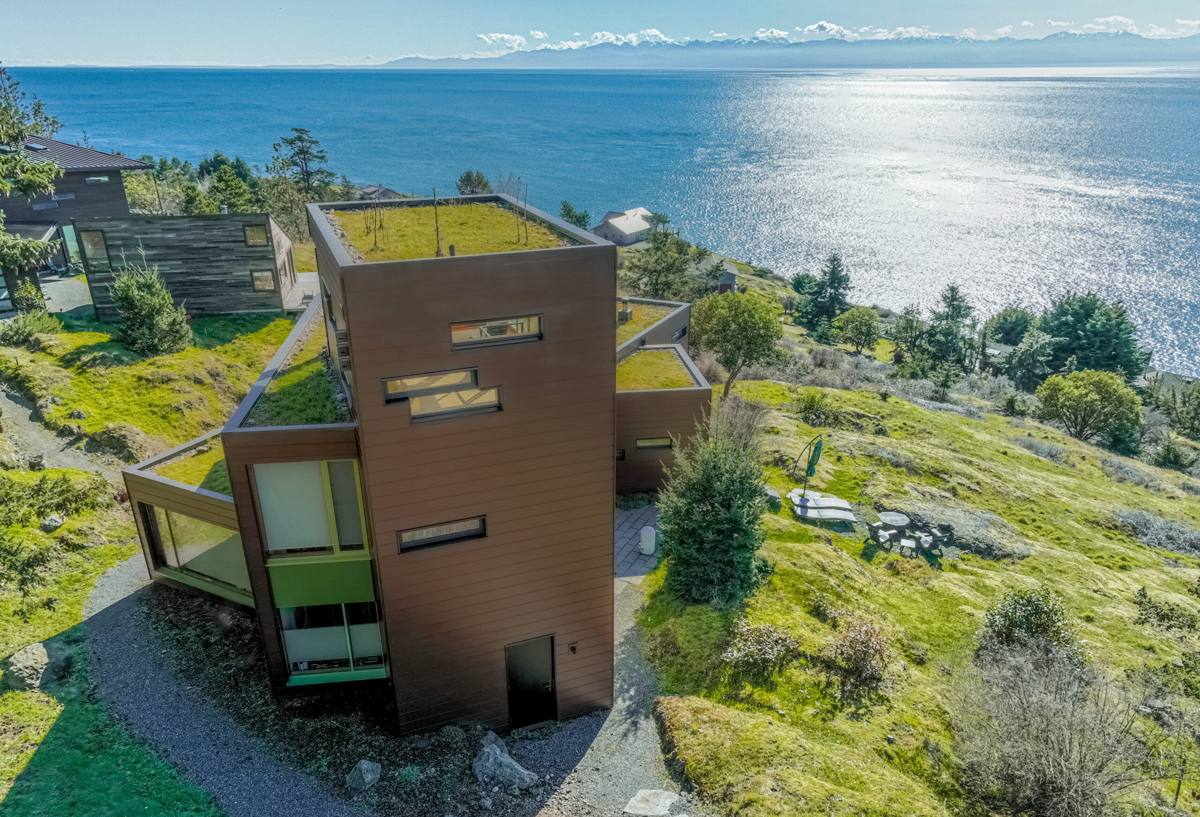
Why James Hardie Fiber Cement Is Built for This Environment
We install James Hardie fiber cement exclusively, and this is exactly the kind of climate that decision is based on. Fiber cement doesn't absorb water and swell the way wood, wood composite, or primed wood products can. It won't feed moss the way a porous or fibrous surface will. And because it's non-combustible, it doesn't carry the same long-term degradation risks tied to organic materials sitting in a wet marine climate year after year.
HZ5 Engineering for the Pacific Northwest
James Hardie makes climate-specific product formulations, and the HZ5 line is engineered for the wetter, cooler regions that include western Washington. It's formulated to handle sustained moisture exposure and freeze-thaw cycling better than a generic, one-size-fits-all fiber cement product. Pairing the right HZ formulation with the region is a small detail that a lot of homeowners never hear about, but it matters over the life of the siding.
The factory-applied ColorPlus finish is the other half of the equation. Because the color is baked on at the factory under controlled conditions rather than field-applied, it holds up better against salt air and UV exposure than a job-site paint job, and it resists the chalking and fading that field-painted or unfinished siding tends to show first along the coast.
What a Correct James Hardie Installation Involves
James Hardie siding is only as good as the installation behind it. The product itself resists moisture, but a house is still a system of seams, penetrations, and transitions, and every one of those has to be handled to spec or water finds a way in regardless of what the siding is made of.
Flashing and Water Management
Every window, door, deck ledger, and roof-to-wall transition needs proper flashing integrated with a weather-resistive barrier behind the siding, not just caulk at the surface. In a driving-rain climate like Blaine's, this is where most siding failures actually start - not in the field of the wall, but at the details where water is forced to change direction.
Fasteners, Gaps, and Caulking
Hardie's installation specs call for corrosion-resistant fasteners driven at the correct depth and location on the board, proper clearance from grade, roofing, and decks, and gaps at butt joints and trim that get sealed with a quality sealant rather than butted tight. Cut edges need to be primed before they're closed up. Skipping any of these steps doesn't show up on day one - it shows up in year three or four as staining, cupping at joints, or paint failure, and by then it's a repair job instead of a five-minute fix during installation.
Choosing the Right Hardie Product for a Blaine Home
James Hardie makes several product lines, and the right one depends on the home's style, wall height, and how much of the exterior is exposed to weather.
| Product | Best Use | Why It Fits Blaine's Climate |
|---|---|---|
| HardiePlank Lap Siding | Traditional horizontal siding, most home styles | Sheds driving rain efficiently with proper lap and overlap detailing |
| HardiePanel Vertical Siding | Modern facades, accent walls, gable ends | Fewer horizontal seams means fewer places for wind-driven rain to intrude |
| HardieShingle Siding | Craftsman and cottage-style accents | Non-combustible, moisture-stable alternative to real wood shingles that tend to hold dampness |
| HardieTrim Boards | Corners, window and door trim, fascia | Won't rot or split at the joints where most trim failure happens near the coast |
What Drives the Cost of a Hardie Siding Project
Every Blaine home is different, so we don't quote off a flat number - but the factors that move a price up or down are consistent across the industry.
| Factor | Why It Matters |
|---|---|
| Siding profile and texture | Smooth, cedar-shake texture, and specialty profiles are priced differently |
| Home size and number of stories | More square footage and taller walls mean more material, staging, and labor |
| Condition of the existing wall | Sheathing repair or rot remediation found during tear-off adds scope |
| Trim and detail complexity | Multiple gables, dormers, and corner details take more time to finish correctly |
| Site access | Tight lots, waterfront setbacks, or limited staging area can affect labor time |
Our Process, Start to Finish
We walk the exterior first and check for moisture intrusion, soft sheathing, and problem areas before anything is priced - especially on older homes where prior siding may have been masking damage underneath. From there, tear-off removes the old material down to the sheathing, any rot or damaged sheathing gets repaired, and a new weather-resistive barrier goes on correctly lapped and sealed. Flashing is installed at every penetration and transition before a single piece of Hardie board goes up.
Installation follows James Hardie's published fastening and clearance specifications exactly - this is also what keeps the manufacturer's warranty intact, since installation errors are one of the most common reasons a warranty claim gets denied. We finish with caulking, touch-up at cut edges and fasteners, and a full cleanup before walking the job with the homeowner.
Living with Moss, Mildew, and Salt Air After Installation
Fiber cement doesn't feed moss or mildew the way organic siding materials do, but nothing on a coastal exterior is entirely maintenance-free. Periodically rinsing off salt film, keeping gutters and downspouts clear so water isn't splashing back onto the wall, and trimming back vegetation on shaded sides to let air and light reach the siding all go a long way toward keeping a Hardie exterior looking clean year-round. Because the ColorPlus finish is factory-cured, repainting intervals are much longer than field-painted siding typically needs - a real advantage in a climate that's hard on exterior paint in general.
Why Hiring a Crew That Already Works Blaine Matters
A crew that installs siding across Whatcom County but doesn't specifically know Blaine's shoreline exposure can still do competent work - but a crew that's already worked this stretch of coast knows where wind-driven rain hits hardest on a given home orientation, which walls tend to develop moss first, and how much more attention the flashing details deserve on a house exposed to salt air. That familiarity shows up in fewer callbacks and a siding job that's still performing well a decade in, not just a paint-and-caulk job that looks fine on move-out day.
Local experience also means fewer surprises with permitting and inspection expectations specific to this part of the county, and a crew that already has the right corrosion-resistant fasteners and flashing materials on the truck instead of substituting something less suited to a marine environment.
Signs Your Current Siding Is Already Losing the Battle
Coastal siding problems tend to show up gradually, and homeowners often don't realize how far along the damage is until it's pointed out. Watch for these signs:
- Soft or spongy spots when you press on the siding, especially near the bottom courses
- Persistent moss or algae growth that returns within weeks of cleaning
- Peeling, bubbling, or chalking paint, particularly on shaded or north-facing walls
- Visible gaps, cracking, or warping at butt joints and corners
- Staining or dark streaks below window sills, deck ledgers, or roof-to-wall transitions
- A musty smell or visible mold on interior walls that share an exterior with problem siding
Any one of these is worth a closer look before it becomes a sheathing or framing repair instead of a siding replacement.
If you're seeing any of these signs on a Blaine home, or you're simply ready to stop maintaining siding that can't keep up with this coastline, we're happy to take a look and put together a free, no-pressure estimate.