 Lynden Siding
 Deck Repair Built for Custer's Climate
Custer sits in one of the wetter, damper corners of Whatcom County, close enough to the water that salt-laden air reaches yards and decks year-round. Add a Pacific Northwest rain season that runs long and heavy, plus a moss season that can stretch from October well into April, and you have a set of conditions that are hard on any wood or composite deck. We repair decks in Custer and throughout the Lynden area, and the patterns we see here are consistent: fastener corrosion, moss-driven rot, and moisture trapped where it shouldn't be.
A deck repair that ignores those local realities tends to fail again within a season or two. Our approach is to fix what's actually causing the damage, not just replace the boards that show it.
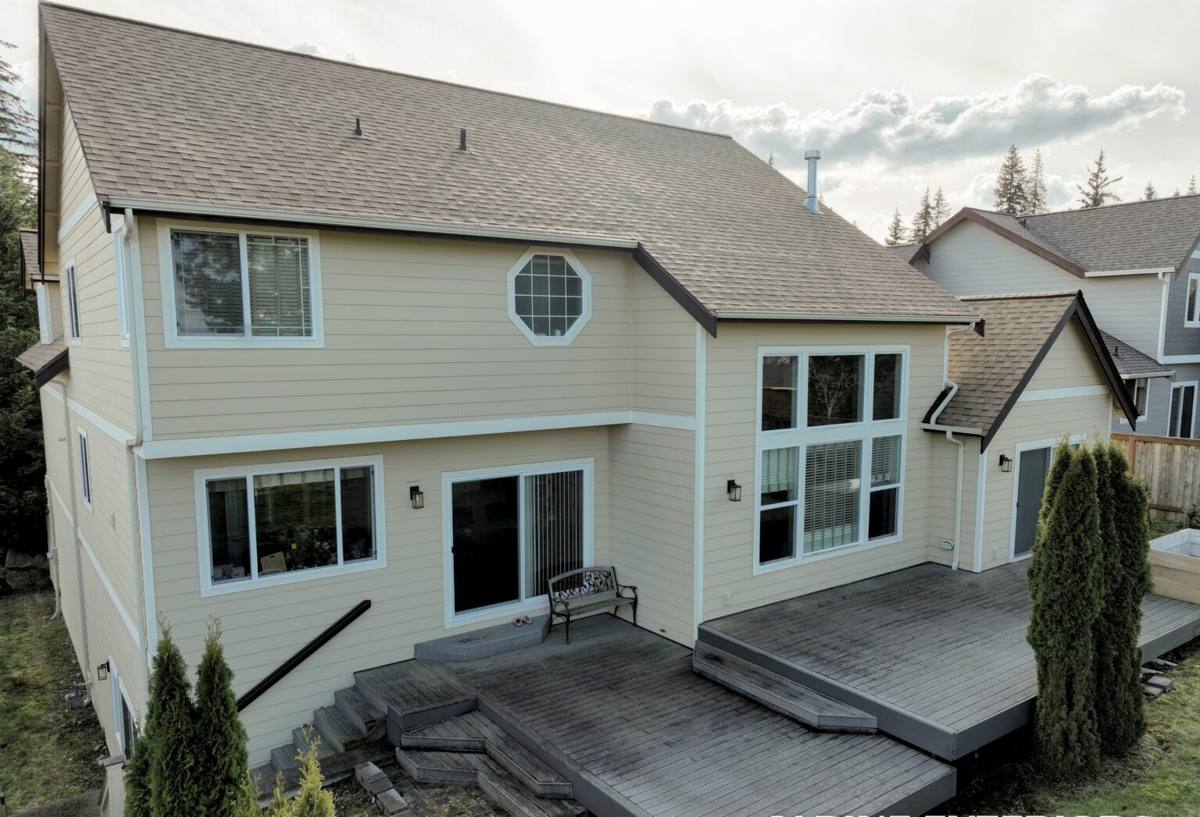
What Custer's Climate Does to a Deck
Salt Air and Metal Fasteners
Homes closer to the water pick up airborne salt that settles on exposed metal — joist hangers, deck screws, bolts, and railing hardware. Over years, that accelerates corrosion, especially on lower-grade galvanized fasteners. Rusted joist hangers and screw heads that shear off during a routine inspection are one of the first things we check for on a Custer deck repair call.
Moss and Trapped Moisture
Moss doesn't just look bad — it holds water against decking boards and structural framing far longer than open air would. On shaded decks, north-facing decks, or decks tucked under overhangs or trees, moss can keep wood damp for weeks at a stretch during our wet months. That constant dampness is what actually causes rot; the moss is just the mechanism that keeps the moisture in place.
Driving Rain and Ledger Board Failure
Wind-driven rain off the Strait pushes water sideways and upward, not just straight down. That matters most at the ledger board — the piece that attaches the deck to the house. If flashing was skipped or installed poorly when the deck was built, driving rain finds its way behind the ledger and rots both the ledger and the rim joist behind it. This is one of the most serious deck problems because it's structural and it's invisible until you know where to look.
Freeze-Thaw Cycling
Whatcom County doesn't get extreme cold often, but it gets enough freeze-thaw cycles each winter to widen small cracks in wood and stress fastener connections that are already weakened by rust or rot. A deck that was borderline in October can be noticeably worse by March.
Signs Your Deck Needs Repair, Not Just Cleaning
- Soft or spongy spots underfoot, especially near the house or at stair landings
- Boards that have visibly cupped, splintered, or pulled away from joists
- Rust streaks running down from screw heads or joist hangers
- Persistent moss or black-green algae that comes back within weeks of cleaning
- A railing or post that wobbles or flexes when you lean on it
- Gaps or dark staining where the deck meets the house siding
- Stair stringers that feel uneven, bouncy, or show cracking
- Visible daylight or rot at the base of support posts
Any one of these can be a simple fix. Several at once usually means the underlying framing needs a closer look before we touch the surface boards.
What a Correct Deck Repair Actually Involves
Inspecting the Structure First
Replacing rotted decking boards without checking the joists, ledger, and posts underneath just hides the problem under new wood. We pull boards in the affected area, probe the framing with a screwdriver or awl for soft spots, and check the ledger board connection and flashing before deciding what actually needs to be repaired versus rebuilt.
Matching Fasteners to the Environment
Given the salt air and moisture common around Custer, we use stainless steel or heavy hot-dip galvanized fasteners and hardware rated for ground contact and coastal exposure — not the standard-grade hardware that's fine further inland but corrodes faster here. This is a place where the cheaper hardware genuinely costs more over time.
Flashing Done Right
Any ledger board repair gets proper flashing — metal flashing under the siding, over the ledger, with the right lap direction so water sheds outward instead of behind the board. This is the single detail most responsible for premature ledger rot when it's missing or installed backward.
Code-Compliant Railings and Stairs
When we repair railings, posts, or stairs, we bring them up to current guardrail height, baluster spacing, and stair rise/run requirements as part of the repair — not just patch them back to however they were built originally, especially on older decks in the area that predate current code.
Repair, Rebuild, or Replace? A Cost-Factor Comparison
Most deck problems fall into one of three tiers. The right call depends on how much of the structure is affected, not just how bad the surface looks.
| Approach | When It Fits | What's Involved | Relative Cost |
|---|---|---|---|
| Spot Repair | A few damaged boards or one bad hanger, structure otherwise sound | Remove and replace affected boards, hardware, or a single post | Lowest |
| Partial Rebuild | Rot at the ledger, multiple joists, or a stair section | Rebuild the affected framing section, re-flash, replace decking over it | Moderate |
| Full Rebuild | Widespread rot, undersized original framing, or a deck near the end of its life | Remove deck to the ledger or slab, rebuild framing and surface to current code | Highest |
We'll always tell you honestly which tier your deck falls into. A full rebuild isn't the answer just because it's more work — but a spot repair on a deck with a rotted ledger is a waste of money that will need to be redone.
Decking Material Options for This Climate
Pressure-Treated Wood
Still the most common choice and the least expensive up front. It needs regular cleaning to stay ahead of moss and periodic sealing to hold up against our rain season — skipping that maintenance is where most PT deck failures start.
Cedar
Naturally resistant to rot and insects and a good look for the area, but it's softer and shows wear faster in high-traffic spots. It also needs re-sealing on a schedule to keep that resistance working for you.
Composite Decking
Higher upfront cost, but it doesn't absorb moisture the way wood does, which matters directly for moss and rot resistance in a climate like ours. The tradeoff is that composite still needs a properly built and flashed structure underneath — it doesn't fix bad framing, it just doesn't rot the way wood framing can.
We'll talk through these honestly based on your budget and how the deck gets used, rather than pushing whichever material has the best margin.
Our Deck Repair Process
- On-site inspection — we check decking, framing, ledger, posts, stairs, and railings, not just the visible problem you called about
- Honest assessment — spot repair, partial rebuild, or full rebuild, explained in plain terms with the reasoning behind it
- Permit check — structural work and some rebuilds require a Whatcom County permit; we handle that when it applies
- The repair itself — matched materials, corrosion-resistant hardware, correct flashing, and code-compliant railings and stairs where applicable
- Cleanup and walkthrough — site cleaned up, repair explained, and a straightforward look at what to watch going forward
Why a Crew That Already Works Custer Matters
A deck repair estimate that's accurate for Custer accounts for things a contractor from outside the area might miss — how much moss shade and tree cover actually generate here, which fastener grades hold up against the salt air, and what Whatcom County's permitting and inspection process actually requires for structural deck work. A crew already working in Lynden and the surrounding communities has seen enough local decks to recognize a ledger problem or a moss-driven rot pattern quickly, instead of treating every job as a first guess.
There's also a practical side: being local means we can get to your property faster for the initial look, and we're not disappearing after the invoice if a question comes up later.
Maintaining Your Deck Between Repairs
- Clean moss and algae off decking and stairs at least once a year, more often on shaded sections
- Keep gutters and downspouts clear so runoff isn't dumping extra water onto or near the deck
- Trim back vegetation that's shading the deck and keeping it damp longer than it needs to be
- Reseal wood decking on the schedule recommended for the product you have
- Check railings and stair connections for movement once a year, before winter if possible
None of this prevents every problem, but it slows the moisture-and-moss cycle that causes most of what we get called out to repair.
If your deck has soft spots, rust stains, stubborn moss, or a railing that's started to move, we're glad to take a look and give you a straightforward, no-pressure estimate. The form below gets you on our schedule for a free assessment.