 Lynden Siding
 Why Decks in Custer Wear Out Faster Than the Brochure Says
Custer sits close enough to the water and open farmland that its decks take a different kind of beating than a deck built forty miles inland. The combination of salt-laden air blowing off the Strait, long stretches of driving rain through fall and winter, and a shade-and-moisture cycle that keeps surfaces damp for days at a time adds up fast. A deck that would last two decades in a drier part of the state can start failing structurally in half that time here if it wasn't built with this specific climate in mind.
We're not talking about cosmetic wear. We're talking about the ledger board, the joists, the fasteners, and the footings — the parts you can't see from the yard but that determine whether a deck is safe to stand on. If you own a home in or around Custer and your deck is showing its age, understanding what's actually happening underneath it is the first step toward deciding whether repair is realistic or replacement is the honest answer.
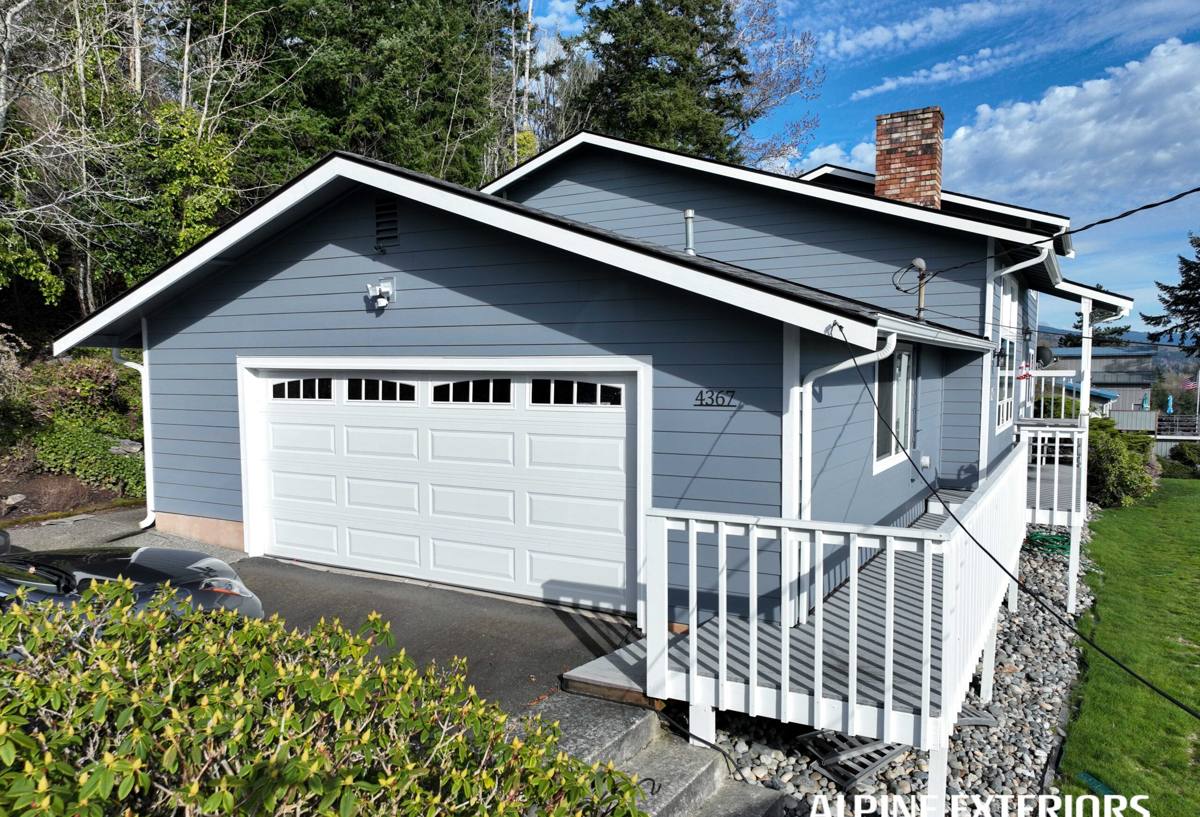
What the Local Climate Actually Does to a Deck
Salt Air and Metal Fatigue
Airborne salt doesn't need direct ocean spray to do damage — it travels on wind and settles on any exposed metal. Over years, that means accelerated corrosion on fasteners, joist hangers, and structural connectors, even ones rated for exterior use. Once a hanger or bolt starts rusting from the inside of a joint, you often can't see it until the connection has already weakened. This is one of the most common hidden problems we find on older Custer decks that look fine from a distance.
Driving Rain and Water Intrusion
Whatcom County doesn't just get rain, it gets sideways rain, and a deck attached to a house has several points where wind-driven water can get behind siding, under flashing, or into end-grain wood that was never sealed properly. Once moisture gets into a ledger board connection or a post base, it stays there — surface drying between storms rarely reaches the wood fibers deep inside a joint. That trapped moisture is what leads to soft, spongy framing long before the decking boards themselves look bad.
Moss, Shade, and the Long Wet Season
Many Custer properties have mature trees or sit close to farmland windbreaks, which means shaded deck areas that never fully dry out for months at a time. Moss and algae aren't just a slip hazard on the surface — the same moisture that feeds them is being held against the wood or composite decking underneath, softening fibers and, on wood decks, feeding rot in fastener holes and board ends.
Signs a Custer Deck Needs Replacement, Not Just Repair
Not every tired-looking deck needs a full rebuild. But there are signs that tell us the framing has been compromised and patching the surface would just be cosmetic. Before we recommend replacement over repair, we look for:
- Soft or spongy spots when you walk across the deck, especially near the house or stair landings
- Visible rust staining running down from joist hangers, bolts, or post connectors
- Gaps or movement where the deck meets the house at the ledger board
- Wood that's gone gray, cracked, or checked deeply, especially at board ends and around fastener holes
- Persistent moss or dark staining that comes back within weeks of cleaning
- Railings or stairs that feel loose or shift under normal use
- Any sign the posts have shifted, leaned, or settled unevenly since the deck was built
If you're seeing two or more of these, especially the structural ones, it's worth having a crew look at what's underneath before spending money on surface repairs that won't hold.
Choosing the Right Decking Material for This Climate
There's no single "best" decking material for every home, but in a climate like Custer's, some options handle moisture and salt air better than others. Here's how the common choices compare for this specific setting:
| Material | How It Handles Salt Air & Rain | Moss/Algae Resistance | Long-Term Maintenance |
|---|---|---|---|
| Pressure-treated wood | Good if fasteners and hardware are corrosion-rated; wood itself needs regular sealing | Low — needs cleaning and treatment yearly in shaded areas | Highest — staining/sealing every 1-2 years |
| Cedar or other naturally durable wood | Decent natural rot resistance, but still needs sealed end grain | Moderate — still requires cleaning in damp, shaded spots | Moderate to high — regular oiling or sealing |
| Capped composite decking | Very good — the cap layer resists moisture intake and doesn't corrode | Good — smooth cap sheds moss more easily than open wood grain | Low — occasional washing, no sealing or staining |
| Uncapped composite (older generation) | Fair — can absorb moisture at cut ends if not sealed correctly during install | Moderate — more porous than capped versions | Low to moderate |
We'll walk you through these trade-offs honestly based on your budget, how much sun or shade your deck gets, and how much maintenance you actually want to keep up with — not just what carries the highest markup.
What a Correct Deck Replacement Actually Involves
The Substructure Matters More Than the Surface
The decking boards are what you see, but the framing underneath is what keeps a deck safe. A proper replacement means new joists sized correctly for the span, ledger flashing installed to actually shed water away from the house rather than trap it, and post footings set deep enough for our soil and frost conditions — not just resting on the old pads.
Corrosion-Rated Fasteners and Hardware
Given how hard salt air is on standard hardware here, we use fasteners and structural connectors rated for coastal and treated-lumber exposure, not the cheapest hardware that happens to meet minimum code. This is one of the areas where cutting corners doesn't save much money up front but costs the homeowner in five or ten years when hidden corrosion shows up again.
Ledger Attachment and Flashing
The connection between the deck and the house is the single most common failure point we see, and it's almost always a flashing or fastening problem, not a design problem. Correct ledger flashing directs water down and away from the house wall instead of letting it wick into the rim joist. This is not a place to save time or money during a replacement.
Drainage and Grading Underneath
Water needs somewhere to go once it's off the deck. We grade and, where needed, add drainage under low decks so water doesn't pool against posts and footings — a detail that matters more in a wet climate than in drier regions, where it's sometimes skipped without consequence.
Our Deck Replacement Process
- On-site assessment. We inspect the existing deck's framing, ledger connection, posts, and footings, not just the surface boards, so you know what's actually driving the need for replacement.
- Honest scope and options. We explain what needs to be replaced versus what can be reused, walk through material options for your specific site conditions, and give you a clear, itemized estimate.
- Permitting. We handle the paperwork required for your project so the work is inspected and documented correctly.
- Removal and framing. We tear out compromised structure down to sound material, then rebuild the substructure with corrosion-rated hardware and proper flashing at the house connection.
- Decking, railing, and finish work. Boards, railings, and stairs go in to spec, with attention to drainage gaps and fastener placement that hold up to repeated wet-dry cycles.
- Final walkthrough. We go over the finished deck with you, including what maintenance (if any) your chosen material needs going forward.
Permits and Local Considerations Around Custer
Deck replacements involving structural changes — new footings, height changes, or attachment to the house — typically require a permit and inspection in Whatcom County. Skipping this step is a common shortcut some crews take to move faster, but it leaves homeowners without documentation that the structure was built and inspected to code, which can matter at resale or with insurance. We handle this as a standard part of the job rather than an upsell.
Why a Crew That Already Works in Custer Makes a Difference
A contractor who works this area regularly already knows which details matter most for the local climate — how far the salt air reaches inland, which properties hold moisture longest under tree cover, and what kind of hardware actually holds up here versus what only looks good on a spec sheet. That's different from a crew doing one job in the area and moving on. It shows up in the small decisions: how flashing is lapped, which fasteners get specified, where drainage gets added without being asked. Those are the details that determine whether a deck is still solid in fifteen years or needs another rebuild in five.
If your deck is showing signs of wear, or you're just not sure whether it's a repair or a replacement situation, we're happy to take a look and give you a straightforward answer. Reach out for a free, no-pressure estimate — there's a form below to get started.