 Lynden Siding
 Custom Decks Built for the Way Deming Actually Weathers
Deming sits inland from Lynden toward the Cascade foothills, but it still gets the full Whatcom County treatment: long wet stretches, driving rain that comes in sideways off a west wind, and a moss season that can run from fall clean through spring. A deck built to a generic national spec doesn't hold up well out here. A deck built for this specific corner of Washington does. That's the difference we aim for on every custom deck project we take on in the Deming area — not just a structure that looks good the day it's finished, but one that's still solid, dry, and safe to walk on in ten or fifteen years.
This page covers what we've learned building and repairing decks in this climate: what local homes actually need, what a correctly built deck involves from the ground up, and how our process works from first call to final walkthrough.
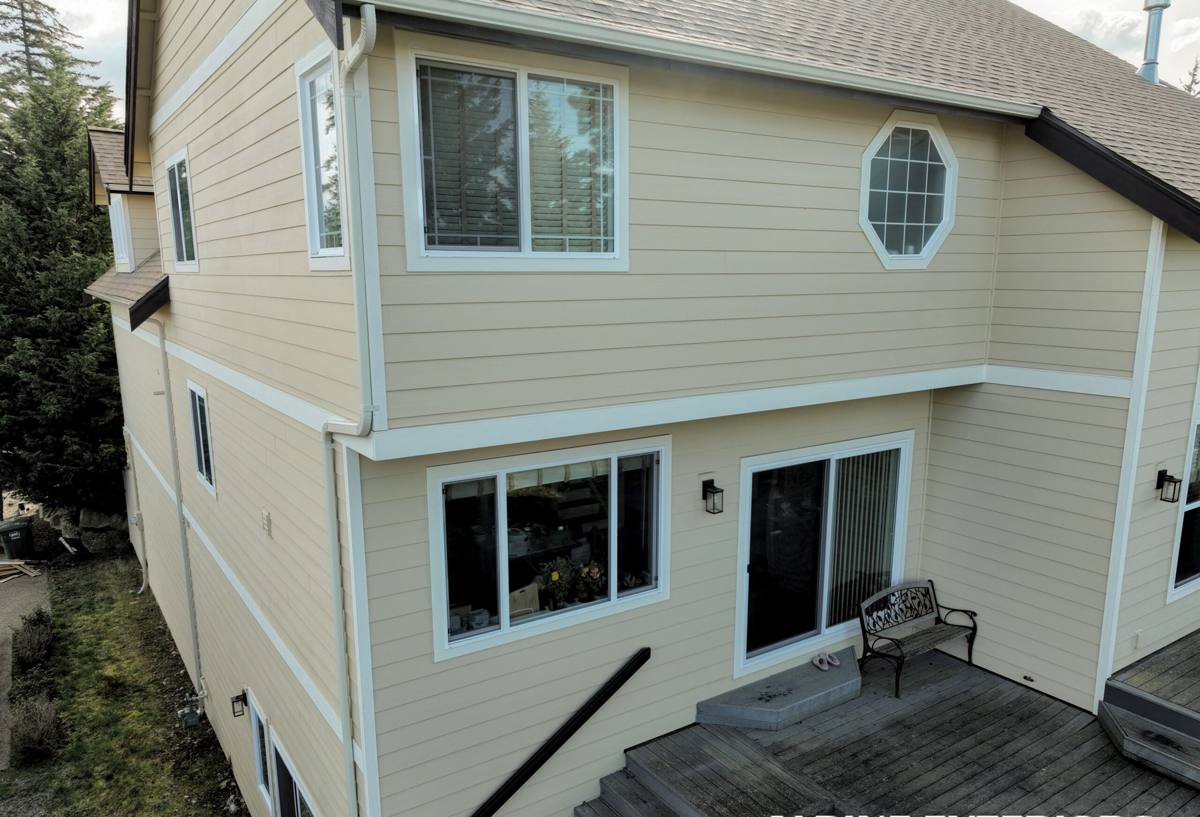
What Deming's Climate Does to a Deck Over Time
Every material decision on a custom deck traces back to three things this region throws at outdoor structures year after year:
- Salt air: Even away from the immediate coastline, Whatcom County's marine-influenced air carries enough salt to accelerate corrosion on fasteners, brackets, and any exposed metal hardware. Cheap or mismatched hardware rusts and stains long before the wood or decking itself wears out.
- Driving rain: Wind-driven rain doesn't just fall on a deck — it gets pushed under railings, into ledger connections, and into any gap where two boards meet. Flat, poorly flashed connection points are where rot almost always starts first.
- A long moss season: Shaded yards, tree cover, and months of damp weather give moss and algae plenty of time to establish on horizontal wood surfaces. Beyond looking bad, moss holds moisture against the decking and makes boards slick and dangerous underfoot.
None of this means a deck can't last in Deming — it means the design, materials, and fastening details have to account for it from the start, not get patched in later.
Choosing the Right Decking Material for This Site
There isn't one "best" decking material for every home — it depends on sun exposure, tree cover, budget, and how much upkeep you actually want to do. Here's how the common options compare for a shaded, damp, Deming-style lot:
| Material | Moisture Resistance | Moss/Algae Behavior | Upkeep |
|---|---|---|---|
| Pressure-treated fir/pine | Good if sealed regularly | Prone to buildup without cleaning | Annual cleaning and re-sealing |
| Cedar | Naturally decay-resistant, but surface still absorbs water | Still needs periodic cleaning | Sealing every 1-2 years to hold color and repel moisture |
| Composite (capped) | Excellent — doesn't absorb water into the core | Can still get slick film; needs occasional washing | Low — wash down 1-2x per year |
| Composite (uncapped/older style) | Weaker — some older products absorb moisture at the core | More prone to surface staining | Moderate — we're selective about which composite lines we install for this reason |
We'll walk through this trade-off with you honestly rather than steering you toward whatever's easiest to install. A shaded, moss-prone lot in Deming is a very different decision than a full-sun deck on an open lot in town, and the right material for one is often the wrong material for the other.
Why We're Selective About Composite Products
Not all composite decking performs the same way in this climate. Some older or lower-grade composite products absorb moisture at the core over time, which shows up as swelling, warping, or dark staining at board ends and cut edges — exactly the areas driving rain targets hardest. Our standard is to use capped composite products with a solid manufacturer warranty structure and confirmed performance in wet Pacific Northwest conditions, and to detail every cut end and fastener penetration so water can't get into the core in the first place. That's a maintenance and longevity decision, not a brand preference.
Substructure and Framing — Where Deck Failures Actually Start
Homeowners usually focus on the decking boards on top, but the framing underneath is what determines whether a deck lasts. In a wet climate like this, we pay particular attention to:
- Ledger board flashing: The connection where the deck attaches to the house is the single most common failure point on any deck. Proper flashing keeps water from tracking behind the ledger and into the house framing.
- Post and beam sizing: Sized to local span and load requirements, not just "what's typically done," so the structure doesn't flex or sag under snow load or a full deck of people.
- Joist protection: Joist tape or equivalent moisture barriers on top of framing members, so standing water from a hard rain doesn't sit directly on cut lumber.
- Footings set below frost depth and on solid bearing: Undersized or shallow footings are a common shortcut that shows up years later as a deck that's begun to shift or settle unevenly.
- Airflow underneath: Decks built too close to grade, or with skirting that blocks all ventilation, trap moisture underneath and accelerate rot from below — often invisible until the damage is advanced.
These are the details that don't show up in a photo but decide whether a deck needs major repair work in year six or is still tight and solid in year twenty.
Railings, Fasteners, and Hardware That Actually Hold Up
Given the salt content in this region's air, hardware selection matters more than most homeowners realize. We use fasteners and structural connectors rated for coastal/wet exposure — typically stainless steel or heavy-duty coated fasteners rather than standard galvanized hardware, which can begin showing surface corrosion and staining well before the wood itself needs attention. Streaking from rusting screws is one of the most common cosmetic complaints we see on older decks in this area, and it's almost always avoidable with the right hardware spec from the start.
Railing systems get the same scrutiny. Wood railings need the same moisture detailing as the decking; metal or cable railing systems need corrosion-resistant hardware at every connection point, since railing posts take direct weather exposure on all sides.
How Our Custom Deck Process Works
1. On-Site Assessment
We start at your property, not with a generic quote. We look at sun exposure, tree cover, drainage patterns, and how the ground slopes away from the house — all of which affect both design and material choice.
2. Design and Material Selection
We talk through layout, decking material, railing style, and any features like built-in seating or a stair configuration, weighing upfront cost against long-term maintenance so you're choosing with full information.
3. Permitting
Deck projects in Whatcom County typically require a permit depending on height, size, and attachment to the structure. We handle that process as part of the job so it isn't left on your plate.
4. Construction
Footings, framing, flashing, decking, and railing — built in that order, with each stage inspected before moving to the next rather than rushing to a finished look.
5. Final Walkthrough
We walk the finished deck with you, cover basic care and cleaning specific to the material you chose, and make sure everything meets what was discussed at the start.
Deck Maintenance Checklist for Deming Homeowners
Even a well-built deck needs some seasonal attention in this climate. A short list of what actually makes a difference:
- Sweep leaves and debris off the deck surface regularly in fall — trapped organic matter is what feeds moss growth
- Rinse or lightly scrub moss and algae buildup before it gets slick, rather than after
- Check that gaps between boards stay clear so water can drain through, not pool on the surface
- Inspect ledger board flashing and railing post connections once a year for early signs of water intrusion
- Re-seal wood decking on the manufacturer's recommended schedule — don't wait until it's visibly gray and dry
- Confirm under-deck ventilation isn't blocked by stored items, plants, or built-up debris
Permits and Local Considerations in Whatcom County
Whatcom County building requirements apply to most new deck construction, particularly for decks above a certain height off grade or those structurally attached to the home. Requirements can also touch on setback distances from property lines, which matters on some of the larger, more rural lots common around Deming. We factor this into the design phase rather than treating it as an afterthought, so the project you plan is the project that actually gets approved.
Why Hire a Crew That Already Works in Deming
A deck contractor who only works in drier, more sheltered parts of the state can get the framing and the finish right and still miss the details that matter most for this exact area — the flashing detail that keeps driving rain out of a ledger connection, the hardware grade that shrugs off salt-influenced air, the drainage gap that keeps moss from taking hold on a shaded lot. Those aren't things you learn from a spec sheet; they're things you learn from building and repairing decks in Whatcom County season after season.
We bring that same standard to every custom deck we build in Deming — sized and detailed for the site, built with materials and hardware chosen for how this climate actually behaves, not just for what looks good on install day.
If you're planning a new deck or want an honest opinion on repairing or replacing an existing one, we're happy to come take a look. Reach out using the form below for a free, no-pressure estimate.