 Lynden Siding
 Deck Building for Deming Homes
Deming sits inland from Lynden along the Nooksack River corridor, in wooded, tree-sheltered Whatcom County terrain that stays damp and shaded longer than open farmland does. That shade is part of what makes the area feel private and green, but it's also exactly the kind of setting that's hard on an outdoor structure. A deck built here deals with the same regional weather that defines exterior work across this part of Washington — salt-tinged marine air moving in from the Sound, driving rain that doesn't fall straight down, and a moss season that can run most of the year under a tree canopy — combined with slower drying times than a deck would see on an open, sun-exposed lot.
None of that means a deck can't be built to last in Deming. It means the framing, fasteners, and decking material all have to be chosen and installed with that specific combination of shade and moisture in mind, rather than treated like a generic backyard project. We build decks for this climate specifically, not for a catalog photo taken somewhere dry.
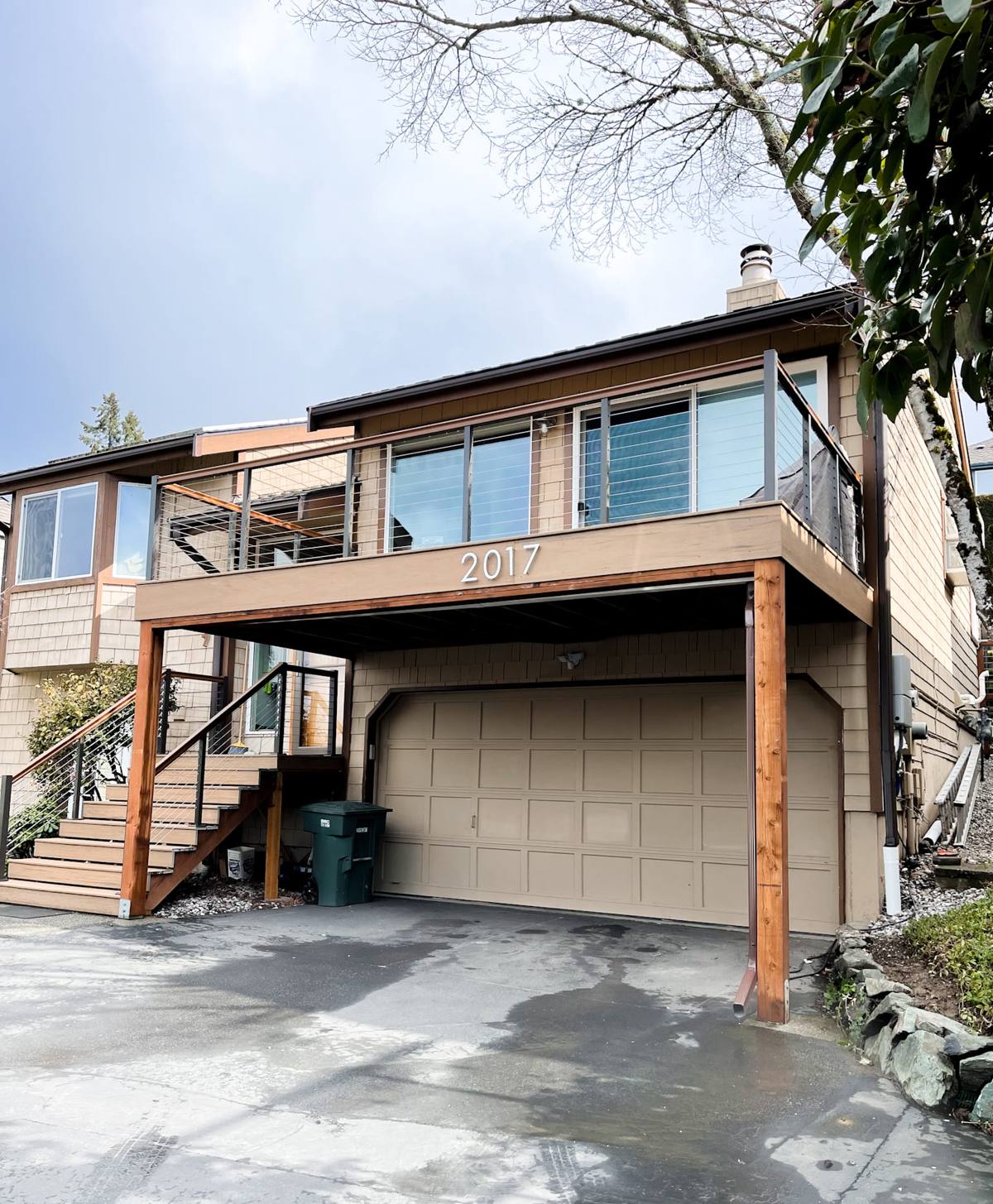
What Deming's Climate Does to a Deck
Shade and Slow Drying
Wooded lots common around Deming keep decks under partial or full tree cover for much of the day. That shade slows evaporation after every rain, which means deck boards, joists, and connections stay damp longer than they would on a sun-exposed structure. A deck that never fully dries out between storms is a deck that's working harder, structurally, than one built in the open.
Driving Rain and Marine-Influenced Air
Rain in this part of Whatcom County rarely falls straight down. Wind pushes it sideways into ledger connections, railing posts, and any horizontal surface that isn't sloped to shed water quickly. The same salt-influenced air that moves through the county corrodes lower-grade fasteners and hardware faster than a drier inland climate would, which matters most at the connections a homeowner can't easily see once the deck is built.
A Long Moss and Mildew Season
Consistent moisture, mild temperatures, and shade add up to organic growth that can appear on a horizontal deck surface for most of the year in a place like Deming. Moss on a deck isn't just an appearance issue — it holds moisture against the board surface and creates a genuinely slick, unsafe walking surface, especially on stairs and near shaded railings.
What a Correctly Built Deck Requires Here
A deck is really two things: the structure underneath, which a homeowner rarely looks at once it's built, and the decking surface on top, which is all anyone sees day to day. Both have to be right, but in a climate like this one, the structure is where a shortcut costs the most.
Footings and Framing
Footings need to be sized and set below frost depth per current code, and framing lumber should be rated for ground contact or exterior exposure where it's called for, not just whatever's cheapest on the lumber rack that week. On a shaded, slow-drying lot, undersized or poorly spaced framing gives moisture more opportunity to sit against the wood.
Ledger Board Attachment
The ledger board, where the deck attaches to the house, is the single most common source of deck failure nationally, and it's not close. It has to be properly flashed and fastened so water sheds away from the house rather than tracking behind the ledger into the rim joist. A deck can look solid for years while a poorly flashed ledger connection quietly rots the framing behind it.
Fasteners and Hardware
Corrosion-resistant, code-rated fasteners and structural hardware matter more here than in a drier, less salt-influenced climate. Mismatched or undersized hardware is one of the more common shortcuts we see on decks we're asked to inspect or repair, and it's rarely visible from the surface until something starts to fail.
Choosing a Decking Material for a Deming Lot
Wood and composite decking both have a legitimate place, and the right choice depends on how much maintenance a homeowner actually wants to keep up with, not just the price tag on day one. On a shaded, slow-drying lot, the tradeoffs below matter more than they would in the open.
| Factor | Wood Decking | Composite Decking |
|---|---|---|
| Moisture resistance | Depends on species and finish; needs regular sealing to perform well | Resists moisture absorption without ongoing sealing |
| Moss and mildew | Organic surface supports growth faster under shade if maintenance lapses | Less hospitable to organic growth, though surface cleaning is still needed |
| Maintenance | Annual or biennial sealing/staining recommended, more often under tree cover | Periodic washing; no sealing or staining required |
| Upfront cost | Generally lower | Generally higher |
| Long-term cost | Higher over time with sealing, staining, and board replacement | Lower ongoing cost, longer typical service life |
Either material can hold up well on a Deming property if the framing and fastening underneath are done correctly and the homeowner understands the maintenance commitment they're signing up for. We'll walk through both honestly rather than pushing whichever one carries a better margin.
How We Approach a Deck Project in Deming
- Site walk and assessment: We look at sun exposure, tree cover, drainage, and how the deck will attach to the house before talking materials or price.
- Design and material selection: Layout, railing style, and decking material get chosen together, with the shade and moisture pattern of the specific lot factored in.
- Permitting: We handle the permit process so the footings, framing, and railings meet current Whatcom County code requirements from the start.
- Footings and framing: Footings are set below frost depth, and framing is built to code span and spacing requirements, not the minimum that happens to pass inspection.
- Ledger and flashing detail: The house connection gets the most attention on the entire project, since it's the hardest point to fix later.
- Decking and railing installation: Boards and railings go in per the manufacturer's spec if composite, or with proper fastening and spacing if wood.
- Final walkthrough: We go over the finished deck with the homeowner, including what maintenance (if any) the chosen material needs going forward.
Cost Factors on a Deming Deck Project
| Factor | What It Affects | Why It Matters Here |
|---|---|---|
| Deck size and layout | Material quantity, framing complexity | Multi-level decks common on sloped, wooded lots add framing cost |
| Decking material | Upfront price vs. long-term maintenance | Shaded lots shift the maintenance math toward lower-upkeep materials |
| Site access and grading | Excavation and footing work | Wooded, uneven lots around Deming often need extra site prep |
| Railing style | Material and labor cost | Corrosion-resistant hardware adds cost but matters in this climate |
| Ledger and structural repairs | Scope beyond a straightforward new build | Attaching to an older home sometimes uncovers rim joist damage that needs fixing first |
Exact numbers depend on the size, site conditions, and material chosen, which is why we walk the actual property before giving a real number instead of quoting off a flat price list.
Signs an Existing Deming Deck Needs Attention
- Moss or dark staining on the deck surface that returns quickly after cleaning
- Soft, spongy, or visibly sagging boards, especially near the house or stairs
- Rust staining around fasteners or visibly corroding hardware
- Gaps, cracking, or separation where the deck meets the house at the ledger board
- Wobbly railings or posts that move under light pressure
- Standing water that doesn't drain off the deck surface within an hour or two of rain stopping
Any one of these is worth a closer look. Several of them together, especially near the ledger connection, usually point to a structural issue rather than a cosmetic one.
Why a Crew That Already Works Deming Matters
Deming's mix of river-corridor terrain, mature tree cover, and sloped or uneven lots isn't the same building environment as an open lot in town, and it isn't identical to every other wooded pocket of Whatcom County either. A crew that regularly builds and repairs decks in this specific setting develops a feel for which lots stay damp longest, where drainage actually needs to go, and which connection details are worth the extra time so the deck isn't back on our schedule for repairs in a few years. That kind of judgment comes from doing the work here repeatedly, not from a general contractor passing through for a one-off project.
Get a Free, No-Pressure Estimate
If you're planning a new deck in Deming or want an honest look at one that's showing its age, we're glad to walk the property and give you a straightforward assessment — what the site needs, what materials make sense for your maintenance preferences, and a real number to work from. Reach out using the form below to schedule a free estimate, no pressure, no upsell script.