 Lynden Siding
 Kendall's Climate Puts Real Stress on Windows
Kendall sits up in the Whatcom County foothills east of Lynden, where the terrain is more wooded and the lots tend to sit in shade for a good part of the day. That changes how a house dries out after weather moves through. Driving rain off the Nooksack valley pushes water sideways into wall assemblies, and the tree cover that makes the area beautiful also means less sun and wind to dry things back out. Add in the marine-influenced air that moves through the whole county, and you get long stretches of damp weather where wood, trim, and window sills simply don't get a chance to fully dry between storms.
Moss is the most visible sign of this. It doesn't just grow on roofs — it takes hold on north-facing siding, in window corners, and along sills where debris and pollen collect. Moss and algae hold moisture against a surface far longer than bare wood or vinyl would on their own, and that constant dampness is exactly what breaks down old caulk, swells wood sashes, and corrodes aluminum hardware over time. None of this is unique to Kendall, but the combination of shade, rainfall, and slower drying times means windows here tend to show wear a few years earlier than the same product would on a more open, sun-exposed lot closer to town.
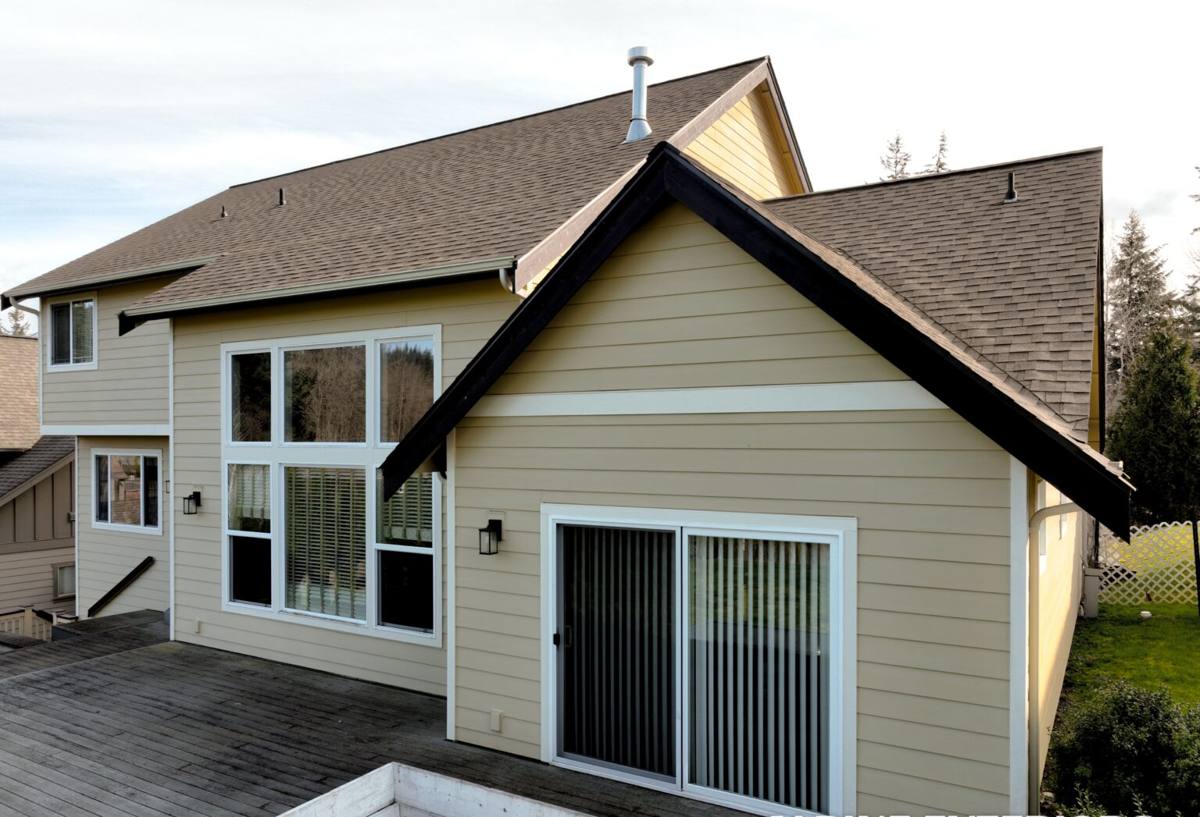
How to Tell a Kendall Home Actually Needs New Windows
Not every old window needs to be replaced, and not every drafty room is a window problem — sometimes it's insulation or an old door. Before we ever recommend replacement, we look for actual physical signs that the window unit itself, or the way it was installed, has failed.
- Wood sashes or sills that feel soft, spongy, or discolored when pressed
- Fogging or a permanent haze between the panes of a double-pane unit — the seal has failed
- Visible daylight or a draft you can feel around the frame with the window closed and locked
- Paint that keeps bubbling or peeling in the same spot no matter how often it's repainted
- Windows that are hard to open, don't stay up on their own, or won't latch square
- Moss or dark staining building up in the corners of the frame or on the sill
- Noticeably colder rooms or higher heating bills than the rest of the house would suggest
If you're seeing two or three of these at once, that's usually enough evidence to justify a closer look rather than another round of caulk and paint.
What a Correct Window Installation Actually Involves
The window unit itself is only part of the job. Most of the water and air problems we get called out to fix in Whatcom County didn't come from a bad window — they came from how it was set into the wall. In a climate that gets this much sideways rain, the installation details matter as much as the product.
Flashing and moisture management
Every opening needs a proper drainage plane: flashing tape or a pan at the sill that directs any water that gets past the window back out and down, not into the wall cavity. Housewrap has to be integrated with the window flanges in the right shingle-lap order — top piece over the side pieces, side pieces over the sill piece — so water always sheds outward and down, never in.
Air sealing and insulation
The gap between the window frame and the rough opening needs to be sealed with a proper low-expansion foam or backer rod and sealant, not just packed with fiberglass insulation and caulked over. Insulation alone slows heat loss but doesn't stop air infiltration, and in a home with heavy shade and cool evenings, that gap is where condensation and drafts start.
Fastening and structural fit
The window has to be shimmed level, plumb, and square before it's fastened — an out-of-square frame puts stress on the sash and hardware, which shows up a few years later as a window that won't latch or a sash that binds. This is also where we check that the rough opening framing itself is sound; on older Kendall homes we sometimes find soft framing around a window that was never causing visible problems until the old unit came out.
Our Installation Process
- On-site assessment. We look at every window being replaced from both sides — inside and out — and check the condition of the framing, not just the glass.
- Honest scope and estimate. You get a written estimate that separates the window units from any framing repair, so you know exactly what you're paying for and why.
- Careful removal. Old units come out without tearing up more siding or trim than necessary, and we check for hidden rot before anything new goes in.
- Repair before install. Any soft framing, missing flashing, or failed housewrap gets fixed first — we don't install a new window into a wet opening.
- Proper flashing and sealing. Sill pan, flashing tape, and housewrap integration are done in the correct order, every time, not just where it's convenient.
- Level, plumb, square set. The unit is shimmed and fastened correctly, then the interior and exterior are sealed and trimmed to match the rest of the house.
- Final walkthrough. We open, close, and lock every window with you before we call the job done.
Choosing the Right Window Material for a Kendall Home
There's no single "best" window material — it depends on the exposure of the wall, your budget, and how much upkeep you want to take on. Here's how the common options hold up in a shaded, damp, rain-heavy setting like Kendall.
| Material | How it handles moisture | Maintenance | Typical fit for Kendall |
|---|---|---|---|
| Vinyl | Won't rot or corrode; seams and welds are the weak point if installed poorly | Low — occasional cleaning | Good all-around choice for most walls, especially shaded ones |
| Fiberglass | Very stable in wet, temperature-swinging conditions; expands and contracts close to glass | Low | Strong option for north-facing or heavily shaded exposures |
| Wood-clad / composite | Exterior cladding protects the wood core, but any breach in the cladding lets moisture into the wood | Moderate — requires attention to any cladding damage | Best reserved for covered or well-protected exposures |
| Aluminum | Doesn't rot, but conducts heat and cold and can corrode over time in persistent damp | Low to moderate | We generally steer homeowners away from it for exposed, wet-climate walls |
For most Kendall homes, we lean toward vinyl or fiberglass on the north- and west-facing walls that catch the most weather, simply because they don't give moisture a foothold the way a wood core can if the exterior cladding ever gets compromised. That's a maintenance and moisture-management call, not a knock on wood-clad windows generally — they perform fine on a covered porch wall or a protected exposure.
What Affects the Cost of Window Installation
Every quote should tell you why the number is what it is. The main variables we see on Kendall jobs are below — we're not going to quote a price here since every house is different, but this is what actually moves the number up or down.
| Factor | Why it matters |
|---|---|
| Window size and type | Larger units and operable styles (casement, sliders) cost more than fixed picture windows of the same size |
| Number of openings | Per-unit cost drops somewhat as the total count goes up on the same job |
| Condition of the rough opening | Rot or missing flashing found during removal adds repair time before the new window can go in |
| Siding material around the opening | Cutting into fiber cement or brick takes longer and requires more care than removing lap siding |
| Trim and interior finish | Matching existing wood trim or painted finishes adds labor versus a simple vinyl-wrap trim |
| Access and site conditions | Second-story openings, steep lots, or tight side-yard access all add time |
Why Hiring a Crew That Already Works in Kendall Matters
A crew that's worked on homes throughout Whatcom County knows the difference between a wall that just needs new windows and one that has hidden moisture damage from years of moss buildup or a flashing detail that was never done right the first time. That's not something you can tell from a phone estimate — it takes someone who's opened up enough walls in this specific climate to know what to check for before quoting the job. It also means we're not guessing at how the local weather pattern behaves; we've seen how driving rain hits west- and north-facing walls out here, and we plan the flashing and sealing details around that instead of using a generic approach that might work fine in a drier part of the state.
Local also means accountability. If something isn't right after the install, we're not driving in from out of the area — we're already working in Lynden and the surrounding communities, including Kendall, on a regular basis.
A Word on Maintenance After Installation
A properly installed window in this climate still needs a little upkeep to get its full lifespan. Rinse pollen and debris out of the tracks and sills a couple of times a year so moss doesn't get a foothold, check that exterior caulk lines stay intact going into the wet season, and keep gutters and downspouts clear so water isn't sheeting down the wall face above a window. None of this is complicated, but skipping it is how a good installation starts looking like a bad one after a few years.
If you're weighing whether it's time to replace windows on a Kendall home, or you just want a second opinion on what's actually causing a draft or a fogged pane, we're happy to take a look. Estimates are free, there's no pressure, and you'll get a straight answer about what your windows actually need — just fill out the form below to get started.