 Lynden Siding
 Building a Deck That Actually Holds Up in Laurel
Laurel sits in that stretch of Whatcom County where marine air off the Sound meets the rain shadow edge of the Cascades — which means decks here take a beating that homeowners further inland never have to think about. Salt-tinged moisture in the air, long stretches of driving rain from fall through spring, and shaded, damp corners that grow moss almost year-round all work against a deck that wasn't built with this specific climate in mind. A deck that looks fine in July can be soft, slick, or rotting at the ledger board by the following February if it was framed and finished without local conditions in mind.
We build and repair decks for homes around Laurel and the rest of Whatcom County, and most of what separates a deck that lasts 25+ years from one that needs major repair in five comes down to decisions made before the first board is ever installed — flashing details, fastener choice, spacing, and drainage. This page covers what actually matters for a deck built in this specific area, not generic advice that ignores the weather.
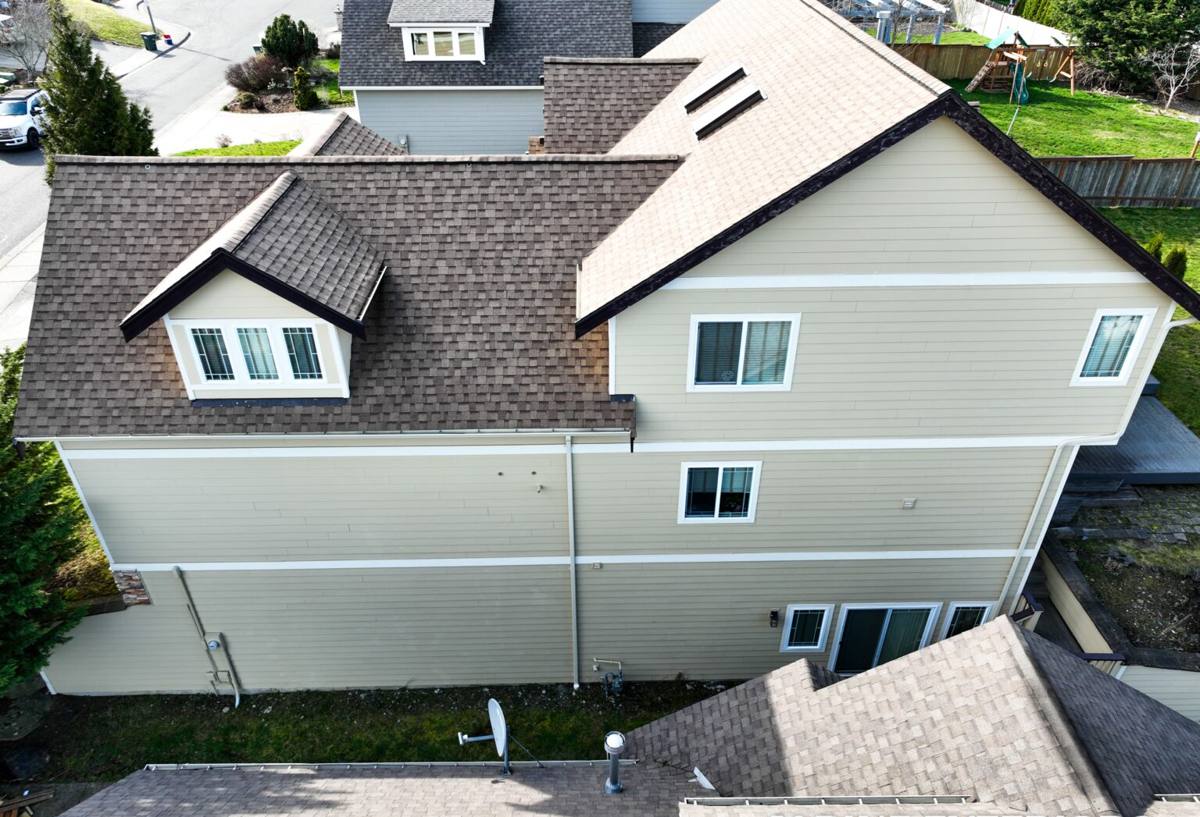
What Laurel's Climate Does to an Outdoor Structure
Three things drive almost every deck problem we see out here:
Salt-Influenced Marine Air
Proximity to Bellingham Bay and the Salish Sound means the air carries more moisture and mineral content than a purely inland climate would. That accelerates corrosion on exposed fasteners, hardware, and metal railing components, and it speeds up the breakdown of lower-grade finishes and sealers. Hardware that isn't rated for coastal or marine exposure can start showing rust streaks and staining the decking around it well before the wood itself is a problem.
Driving, Sideways Rain
Whatcom County rain doesn't just fall straight down — wind-driven rain gets pushed into ledger connections, under railing posts, and into any gap where flashing was skipped or done poorly. Most of the rot we find in older decks starts at the ledger board where the deck attaches to the house, because that joint took years of wind-driven moisture without proper flashing behind it.
A Long Moss and Algae Season
Shaded decks, north-facing decks, and decks under mature trees stay damp for months at a stretch. That's exactly the environment moss, algae, and mildew need. Beyond looking bad, a mossy deck surface is a slip hazard, and moss holds moisture directly against the decking material, which shortens its life regardless of what it's made of.
Choosing the Right Decking Material for This Climate
There's no single "best" decking material — the right choice depends on budget, how much maintenance you're willing to do, and how shaded or exposed the deck site is. Here's how the common options actually perform in a wet, moss-prone climate like Laurel's:
| Material | Moisture Resistance | Moss/Algae Resistance | Maintenance | Typical Lifespan |
|---|---|---|---|---|
| Pressure-treated lumber | Good if properly sealed and maintained | Moderate — needs regular cleaning | Annual cleaning and re-sealing recommended | 15-20 years |
| Cedar | Naturally decay-resistant, but surface needs upkeep | Moderate — moss still takes hold in shade | Sealing every 1-2 years to hold color and resist moisture | 15-25 years |
| Capped composite | Excellent — won't absorb moisture into the core | Better resistance, still needs occasional washing | Periodic washing, no sealing or staining | 25-30+ years |
| Uncapped composite | Good, but the exposed core can absorb some moisture over time | Moderate | Occasional washing; more prone to surface staining than capped versions | 20-25 years |
In practice, for shaded lots or decks tucked under tree cover — common around Laurel's more wooded properties — we lean toward recommending capped composite or a well-sealed cedar deck with a maintenance plan the homeowner actually intends to follow. Pressure-treated lumber is still a reasonable, budget-conscious choice for sunnier sites where it'll dry out between rain events, but it's the material most likely to disappoint an owner who wants to "set it and forget it."
Framing and Substructure Details That Actually Matter
The decking boards are the part everyone sees, but the substructure is what determines whether the deck is still safe and solid in fifteen years. In a climate like this, a few details are non-negotiable:
Ledger Flashing
The ledger board — where the deck bolts to the house — is the single most common failure point we find on older decks in wet climates. Proper flashing, installed correctly behind the house's water-resistive barrier and over the ledger, keeps wind-driven rain from tracking behind the board and rotting both the ledger and the house rim joist behind it.
Joist Protection
Joist tape or a comparable moisture barrier over the top of each joist keeps water from pooling in fastener holes and wicking into the joist's end grain, which is the most vulnerable part of any framing member. This is a small material cost that pays for itself many times over in avoided rot.
Fastener and Hardware Grade
Given the salt-influenced air here, we use fasteners and structural hardware rated for coastal or marine-grade exposure rather than standard interior-grade hardware. It costs a bit more up front and prevents the rust staining and premature corrosion that shows up within a few years when standard hardware is used near the coast.
Footings for Local Soil
Whatcom County soils vary block to block — some sites drain well, others hold water and shift seasonally. Footings sized and set to the actual soil and frost conditions on your property, rather than the minimum allowed anywhere, keep the structure from settling unevenly over time.
Drainage and Airflow Under the Deck
Board spacing and structure height above grade both affect how quickly a deck dries out after rain. A deck built too low to the ground, or with boards spaced too tight, stays damp longer and becomes a magnet for moss and mildew underneath as well as on the surface.
Permits and Local Requirements
Deck permitting in Whatcom County depends on factors like height above grade, size, and whether the structure is attached to the house. Many decks require a building permit, and setback rules apply depending on your lot's zoning and its distance from property lines. Requirements can also differ slightly if your property falls under county jurisdiction versus a nearby municipal boundary. We handle the permit process as part of a full deck build, but if you're unsure whether your project needs one, it's worth a quick call to Whatcom County Planning & Development Services before work begins — building without a required permit can create real problems at resale.
Our Deck Building Process
- On-site assessment. We look at sun exposure, shade, slope, soil, and how the deck will connect to the house before recommending materials.
- Material and layout discussion. We walk through the tradeoffs in the table above honestly, based on your budget and how much maintenance you want to take on.
- Permit handling. We prepare and submit what's needed with the county so you're not navigating that process alone.
- Demolition or site prep. Removal of any existing structure, and grading or drainage work if the site needs it.
- Framing. Ledger flashing, joist protection, marine-grade hardware, and footings sized for your soil — all the substructure work described above.
- Decking and railing installation. Installed to the manufacturer's spacing and fastening specs so warranties stay valid.
- Final walkthrough. We go over care and maintenance specific to the material you chose before we consider the job done.
Living With a Deck in a Moss-Prone Climate
Even the right material and the best framing still need some seasonal attention in this climate. A simple maintenance routine keeps a deck safer and extends its life significantly:
- Sweep leaves and debris off the deck regularly, especially in fall — trapped organic matter holds moisture and feeds moss growth
- Wash the surface at least once a year with a deck-safe cleaner to remove early moss and algae before it takes hold
- Check railing posts and stair connections annually for looseness, which can signal moisture getting into a joint
- Reseal wood decking (cedar or pressure-treated) on the manufacturer or product-recommended schedule — don't wait until it looks gray and dry
- Keep gutters and downspouts near the deck clear so runoff isn't draining directly onto or under the structure
- Trim back overhanging branches where practical to reduce shade and speed up drying time after rain
Why Hire a Crew That Already Works Laurel
A deck builder who mostly works in drier climates, or who treats every region the same, will often default to standard hardware, standard flashing details, and whatever decking is easiest to source — because that's what works where they usually build. In Laurel, those shortcuts show up as rot, rust stains, and slick moss within a few years, not decades. Working this specific stretch of Whatcom County regularly means we already know which details can't be skipped here: the flashing behind the ledger, the hardware grade, the spacing that lets a shaded deck actually dry out between storms. That's not a marketing point — it's the difference between a deck that needs major repair at year eight and one that's still solid at year twenty-five.
Get an Estimate for Your Laurel Deck
Whether you're planning a new deck, replacing an aging one, or dealing with soft boards and rot at the ledger, we're happy to take a look and give you an honest read on what your property needs. Fill out the form below for a free, no-pressure estimate — no obligation, just a straight answer about what a deck built for this climate actually requires.