 Lynden Siding
 Roofing in Maple Falls Is Its Own Challenge
Maple Falls sits up in the forested foothills of Whatcom County, and that setting changes what a roof has to deal with compared to a home closer to town. Heavy tree canopy means more shade, more standing moisture, and more debris landing on the roof deck year-round. Add in the long, wet stretch of fall and winter driving rain that moves through this part of Washington, and you have a recipe for a roof that ages differently than one out in the open. Moss season here isn't a minor cosmetic issue — it's a structural one if it's left unchecked, because moss holds water against shingles and roofing felt far longer than the material was ever designed to tolerate.
We've installed and repaired roofs across Whatcom County long enough to know that a roof spec that works fine in a dry, sunny yard doesn't necessarily hold up the same way under heavy tree cover in Maple Falls. Ventilation, underlayment choice, and flashing detail all matter more here, not less.
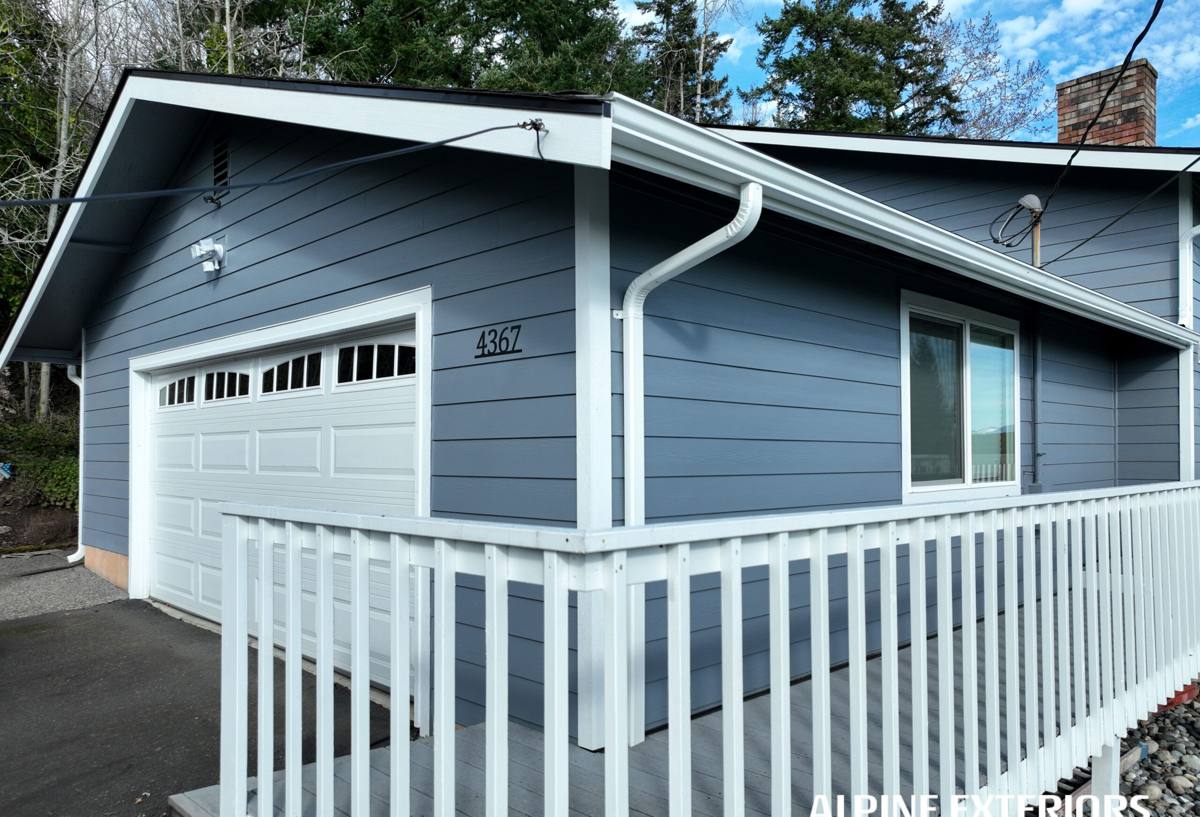
What Local Homes Actually Need From a New Roof
A new roof installation in this area needs to account for three things at once: sustained moisture exposure, shade that slows drying time after every rain event, and the physical load of debris and moss buildup over the life of the roof. That means:
- Underlayment rated for extended wet exposure, not just a minimum-code product
- Attic and roof ventilation sized correctly for a shaded, moisture-heavy site — not a generic calculation
- Flashing details at valleys, chimneys, and roof-to-wall transitions built for repeated saturation, not occasional rain
- A shingle or metal product with a track record for moss and algae resistance in the Pacific Northwest
- Proper edge and eave protection to stop wind-driven rain from working under the first course of roofing
Skipping any one of these doesn't usually cause a problem in year one. It shows up in year six or seven, as soft decking, granule loss, or moss creeping under the shingle tabs — which is exactly the kind of premature failure a correctly built roof should never see.
Why Moss Season Deserves Special Attention
Moss doesn't just sit on the surface. Once it establishes on a shaded roof slope, it lifts shingle edges, holds water against the mat, and accelerates granule loss. On a roof with poor ventilation underneath, that trapped moisture also raises deck temperature swings and humidity in the attic space, which shortens the life of the roof from both sides at once. A correctly installed roof won't stop moss from ever growing — nothing fully does in a heavily wooded setting — but the right materials and detailing slow it down significantly and make routine maintenance far more effective.
What a Correct New Roof Installation Involves
A new roof is more than laying shingles over what's already there. Here's what we consider non-negotiable on every installation, and especially on shaded, moisture-heavy Maple Falls properties:
Full Tear-Off and Deck Inspection
We remove the old roofing down to the deck rather than layering over it. That's the only way to actually see the condition of the sheathing — soft spots, old water staining, or rot that's been hidden under the old roof for years. Any damaged decking gets replaced before anything new goes down. Installing new roofing over a compromised deck just hides the problem for another decade and shortens the life of the new roof.
Ice and Water Protection at Vulnerable Points
Valleys, eaves, and areas around penetrations get self-adhering ice-and-water membrane, not just standard felt. In a rainy, shaded climate, these are the spots where water finds its way in first — usually years before anyone notices a leak inside the house.
Ventilation Sized for the Site
Intake and exhaust ventilation need to work together and be sized to the actual attic volume and roof shape, not a one-size-fits-all rule of thumb. Under heavy tree cover, poor airflow traps moisture in the attic, which condenses on the underside of the deck and accelerates rot from the inside — a failure mode that has nothing to do with the shingles themselves.
Flashing Done Right, Not Just Reused
Old flashing gets replaced, not reused, at chimneys, skylights, and wall transitions. Flashing is where most roof leaks actually originate, and it's cheap insurance compared to the cost of chasing a hidden leak later.
Material Comparison for a Maple Falls Roof
There's no single "best" roofing material for every home — it depends on budget, roof pitch, tree cover, and how much long-term maintenance a homeowner wants to take on. Here's how the common options stack up for this specific climate:
| Material | Moss/Moisture Resistance | Typical Lifespan Here | Maintenance Needs |
|---|---|---|---|
| Architectural asphalt shingle (algae-resistant) | Good, with copper or zinc strips at ridge | 25-30 years | Periodic moss treatment and gutter clearing |
| Standard 3-tab asphalt shingle | Fair — more prone to moss under shade | 15-20 years | More frequent moss removal |
| Standing seam metal | Excellent — sheds moisture fast, little for moss to grip | 40-50+ years | Low; occasional debris clearing |
| Composite/synthetic shake | Good | 30-40 years | Moderate; check manufacturer guidance |
Metal roofing carries a higher upfront cost but tends to perform the best in exactly the conditions Maple Falls sees the most of: shade, moss pressure, and sustained rain. Algae-resistant architectural shingles remain a solid, more budget-friendly choice when paired with proper ventilation and metal ridge strips that discourage moss growth. We'll walk through the honest trade-offs for your specific roof rather than pushing one product for every home.
How Our Process Works
- On-site evaluation. We look at your current roof, attic ventilation, tree cover, and any trouble spots you've already noticed — soft spots, moss buildup, staining, or past leaks.
- Written estimate. You get a clear, itemized quote covering materials, tear-off, deck repair allowances, and ventilation work — no vague lump sums.
- Material selection. We go over shingle, metal, or composite options based on your budget and how much maintenance you want to take on long-term.
- Scheduling around weather. Given how much rain this area sees, we plan installation windows carefully and protect the open roof deck if conditions shift mid-job.
- Tear-off, deck repair, and installation. Full removal of old roofing, deck inspection and repair, then installation following manufacturer specs for wind and moisture performance.
- Final walkthrough. We review the finished roof with you, confirm ventilation and flashing details, and go over basic maintenance expectations for your specific material.
Signs Your Maple Falls Roof May Need Replacing, Not Just Patching
- Granules collecting heavily in gutters or at downspouts
- Moss or dark streaking covering more than a small portion of the roof
- Soft or spongy feeling decking noticed from the attic
- Daylight visible through the roof deck in the attic
- Curling, cracked, or missing shingles across multiple areas, not just one spot
- Repeated leaks in different locations after previous patch repairs
- Roof is 20+ years old and has never had ventilation upgrades
One or two of these on their own might mean a repair is enough. Several at once usually means the roof system as a whole is past the point where patching makes financial sense — we'll tell you honestly which situation you're in.
Why Hiring a Crew That Already Works in Maple Falls Matters
Roofing crews that mostly work in drier, more open areas of Washington sometimes underbuild for conditions here — lighter underlayment, minimal ventilation upgrades, standard flashing details that are fine in a sunny subdivision but undersized for a shaded, high-moisture property. A crew that regularly works Whatcom County's rural and wooded properties knows to size ventilation for actual shade cover, detail valleys and penetrations for sustained rain rather than occasional storms, and recommend materials that hold up against moss pressure instead of just looking good on day one.
Access matters too. Maple Falls properties often have longer driveways, steeper terrain, or septic systems that affect where equipment and dumpsters can go. A crew unfamiliar with rural Whatcom County properties can lose time — and sometimes damage landscaping — figuring that out on the fly. We plan for it up front.
Maintaining a New Roof Once It's Installed
A correctly installed roof still benefits from basic upkeep in this climate. Keep gutters clear of needles and debris so water actually drains instead of backing up under the eaves. Have moss growth treated before it spreads, rather than after it's covered a full slope. Trim back overhanging branches where practical to reduce shade and debris load. And have the roof looked at every few years, especially after major storms, so small issues — a lifted shingle tab, a small gap in flashing sealant — get caught before they become deck damage.
None of this is complicated, but it makes a real difference in how long a new roof actually lasts under Whatcom County's driving rain and long moss season, versus how long it's rated to last on paper.
Get a Free, No-Pressure Estimate
If your roof is showing its age, or you just want an honest read on whether repair or replacement makes more sense for your Maple Falls home, we're glad to take a look. The estimate is free, there's no pressure to commit, and you'll get a straight answer about what your roof actually needs. Use the form below to get started.