 Lynden Siding
 Siding Built for Maple Falls' Weather
Maple Falls sits back in the wooded, higher-elevation country east of Lynden, where tree cover runs heavier and storms tend to linger longer than they do out on the open flats. Homes here deal with the same driving rain and long moss season that mark all of Whatcom County, but the tree canopy and terrain add their own wrinkle: shaded walls that never fully dry out between storms, gutters and roof valleys that clog faster with needle drop, and siding that stays damp for days after the rain has already moved on. Marine air still works its way up the valley from the Salish Sea, carrying enough salt and moisture to age fasteners and finishes that weren't built to handle it.
None of that makes siding installation in Maple Falls exotic. It makes it a job where the details matter more than they would on a dry, open lot in town. The product you choose and the way it's installed are what decide whether your walls shrug off another decade of Whatcom County winters or start showing trouble in three or four years.
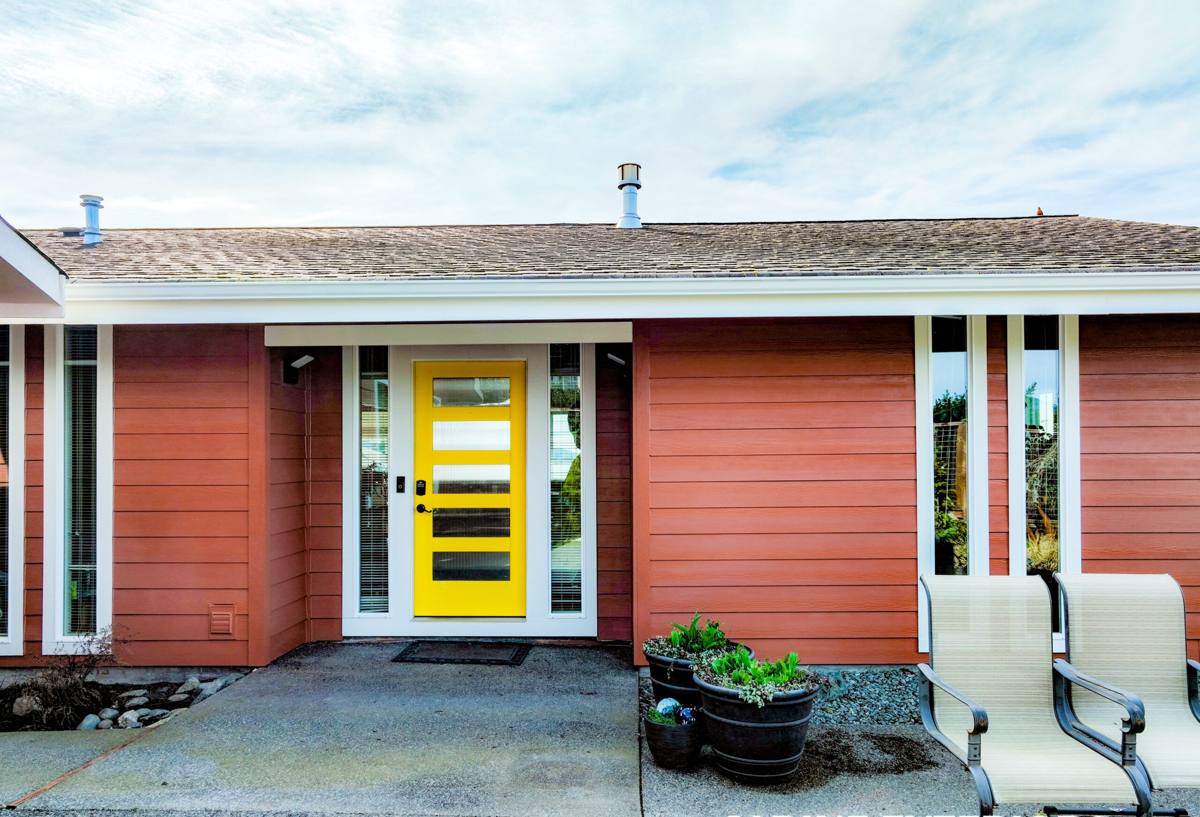
What Driving Rain, Moss, and Marine Air Actually Do to a Wall
Driving rain doesn't just fall straight down — wind pushes it sideways into laps, seams, and trim joints. If those details aren't lapped and sealed correctly, water finds its way behind the cladding and sits against the sheathing where nobody can see it, and by the time it shows up as a soft spot or a stain, the damage has usually been building for a while.
Moss and algae are a slower problem but not a smaller one. On shaded or north-facing walls, and on anything close to tree cover, a wall can stay damp for days at a time. That's hard on wood-based siding products in particular, and it's why the finish on any siding matters as much as the substrate underneath it — a compromised paint film gives moisture and organic growth a foothold that's tough to reverse with washing alone. Add in the salt-laden air moving through the county, which speeds up corrosion on exposed fasteners and unprotected trim, and you've got three separate stresses working on a wall at the same time, year after year.
Signs Your Siding Is Already Losing That Fight
Most siding failure in this climate doesn't announce itself with one obvious event — it shows up as a handful of small signs that add up. Worth checking for before they turn into a bigger repair:
- Soft or spongy spots when you press on the siding, especially near the bottom courses or under windows
- Paint that's peeling, bubbling, or chalking, particularly on shaded or tree-covered walls
- Black or green streaking that comes back within a few weeks of cleaning
- Visible gaps, separation, or cracking at corner boards and trim joints
- Swelling, warping, or delamination along the bottom edge nearest the ground
- Rust trails below nail heads or fasteners that have started to work loose
Any one of these on its own might just need attention. Several at once, especially on a wall that gets more shade or wind than the rest of the house, usually means the siding system itself is falling behind the climate it's up against.
What a Correct Installation Involves
A siding job holds up or doesn't based on what's happening behind the visible surface. The plank itself is only part of the system.
Weather-Resistive Barrier and Flashing
Every correct installation starts with a continuous weather-resistive barrier under the siding, with window and door flashing integrated into it so water sheds down and out rather than getting trapped behind the opening. Kick-out flashing where a roofline meets a wall is a small detail that gets skipped constantly and causes an outsized amount of hidden rot when it is — it matters even more here, where roof valleys are already handling more runoff from tree cover and longer rain events.
Fastening, Clearances, and Panel Gaps
Fiber cement siding has to be fastened at the right depth and pattern, kept clear of grade, roofing, and decking by the margins the manufacturer specifies, and installed with the panel gaps and caulking called for in the install guide — not just butted tight and painted over. Skipping any of this doesn't show up on day one. It shows up in year four or five, usually right where the shortcut was taken.
Joints, Caulking, and Trim
Trim and joint details are where a lot of amateur and rushed jobs fall apart first, because they're the places water actively wants to get behind the cladding. Correct caulking, properly lapped trim, and attention to how water moves off the wall at every joint is what keeps those spots from becoming the first repair call.
Why We Install Only James Hardie Fiber Cement
We don't install vinyl, LP SmartSide, Cemplank, Allura, primed spruce, or cedar. That's a standard we hold across every job, not a sales pitch for one project. James Hardie fiber cement is non-combustible, holds paint and color far longer than wood-based siding in a wet climate, and comes with a factory-applied ColorPlus finish that's baked on under controlled conditions rather than brushed on a job site — which matters a great deal in a place where field-applied finishes are fighting rain and shade for most of the year. Hardie's HZ product line is engineered by climate zone, and the version specified for the Pacific Northwest is built around moisture and freeze-thaw performance rather than a one-size-fits-all approach. It also carries a strong transferable warranty, which only means something if the installation behind it was done to spec — which is exactly why we treat the install process as seriously as the product choice.
What Drives the Cost of a Maple Falls Siding Job
Every home is different, so we don't quote pricing sight unseen — but the factors that move a project up or down in cost are consistent. Knowing them ahead of time makes the estimate conversation more useful.
| Factor | Why It Matters |
|---|---|
| Tear-off vs. new construction | Removing and disposing of failed siding, and repairing any sheathing damage found underneath, adds labor before the new siding even starts |
| Home size and wall complexity | More corners, dormers, and roof-to-wall intersections mean more flashing and trim detail, which takes more time to do correctly |
| Hidden moisture damage | Shaded, tree-covered walls are more likely to have sheathing or framing damage that only becomes visible once the old siding is off |
| Siding profile and trim style | Lap siding, shingle-style panels, and board-and-batten all install differently and carry different material and labor costs |
| Site access | Tree-lined lots and limited driveway or yard access can slow staging and material handling compared to an open in-town lot |
Our Installation Process, Start to Finish
- Walk-around assessment — we look at every wall, not just the ones that look obviously worn, paying particular attention to shaded and tree-covered sides
- Tear-off and sheathing check — old siding comes off and we inspect what's underneath for moisture or rot before anything new goes up
- Weather-resistive barrier and flashing — a continuous barrier goes on with window, door, and roofline flashing integrated correctly the first time
- Hardie installation to spec — proper clearances, fastening pattern, and panel gaps, following manufacturer requirements rather than shortcuts
- Trim, caulking, and detail work — the joints and transitions that determine whether water sheds off the wall or finds its way behind it
- Final walk-through — we go over the finished job with you before we call it done
Why a Crew That Already Works Maple Falls Matters
A contractor who mostly works in-town jobs isn't automatically wrong for a Maple Falls home, but a crew that already knows this stretch of Whatcom County has a real advantage: they know which walls tend to need extra flashing attention because of shade and tree cover, they're used to working around the access and staging challenges of wooded lots, and they're not learning the local permitting process on your project. That familiarity shows up less in what gets sold to you and more in what gets caught before it becomes a problem — which is really the whole point of hiring a professional crew in the first place.
If you're weighing a siding replacement or new installation on a Maple Falls home, we're glad to walk the property with you and give you a straight, no-pressure estimate — what we'd recommend, why, and what it would take to do it right. There's a form right below to get that started.