 Lynden Siding
 Blaine's Coastline Is Hard on Roofs
Blaine sits right on the water at the northwest corner of Whatcom County, and that location shapes everything about how a roof ages here. Salt-laden air moves in off the coast and settles on exposed metal, fasteners, and flashing, slowly working through protective coatings faster than it would a few miles inland in Lynden. Add in wind-driven rain that comes off the water sideways rather than straight down, and you get water intrusion at points a roof further inland would never test — the leading edge of shingles, exposed nail heads, and the uphill side of any flashing detail.
None of this means a Blaine roof is doomed to fail early. It means the margin for error on materials, fasteners, and flashing work is smaller than it is in a drier, more sheltered part of the county. A repair that would hold up fine in a low-exposure yard inland can fail within a season or two on a roof facing the water, if it isn't built with that exposure in mind.
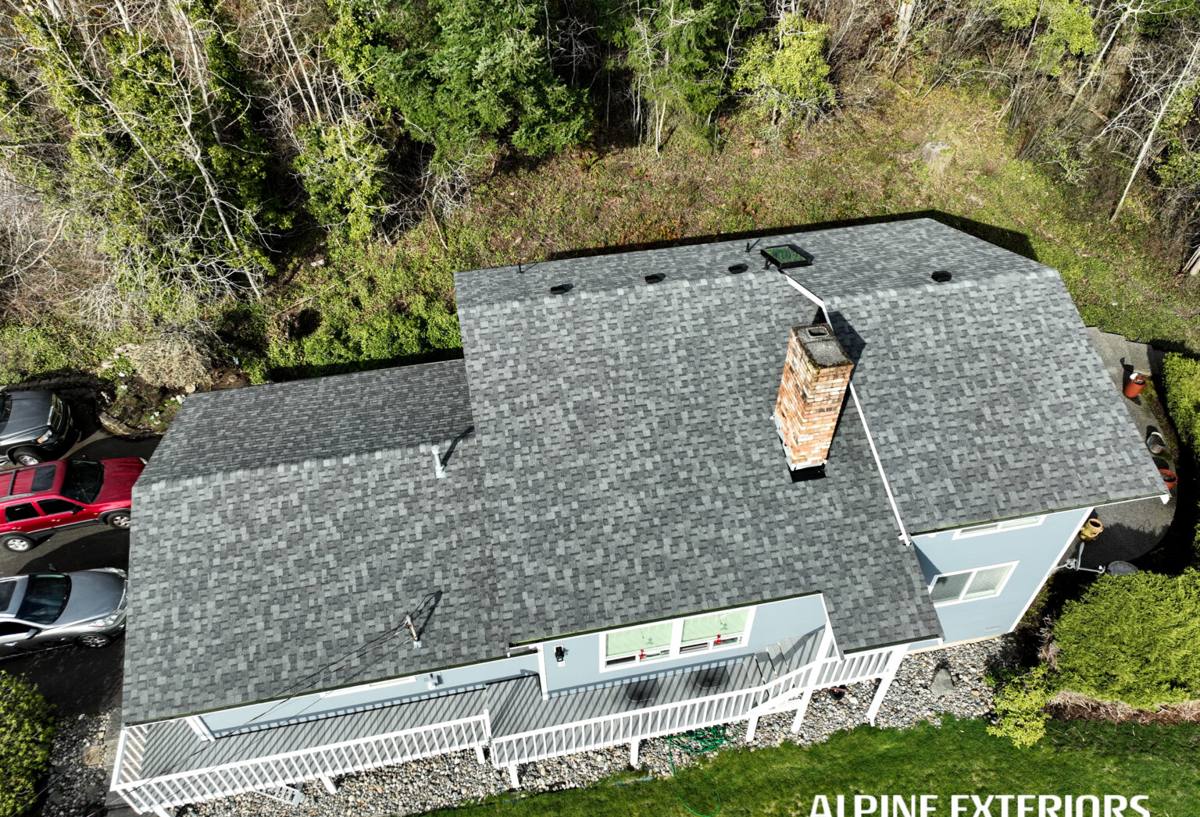
Signs Your Blaine Roof Needs Repair
Roof problems in this area rarely show up as a dramatic leak on day one. They usually start small and get worse through a wet fall and winter. Watch for:
- Granule loss showing up in gutters or at the base of downspouts
- Dark streaking or green-black staining across shingles, especially on north-facing or shaded slopes
- Soft spots or slight sagging when walking a roof deck, particularly near valleys
- Rust bleeding from exposed fasteners or metal flashing
- Curling, cracked, or lifted shingle edges along the roof's windward side
- Water stains on interior ceilings after a hard rain, even if they dry out and disappear
- Daylight visible through the roof deck from inside an attic or crawlspace
Any one of these on its own might be minor. Several together, or staining paired with an interior stain, usually means water is already getting past the roofing material and into the deck.
What Moss Season Actually Does to a Roof
Western Whatcom County's moss season runs long — cool, damp conditions from fall through spring give moss and algae plenty of time to establish themselves, and Blaine's coastal humidity keeps roofs wet longer between dry spells than they would be further inland. Moss doesn't just look bad. It holds moisture directly against the roofing material, works its way under shingle tabs as it grows, and lifts shingles just enough to let wind-driven rain in behind them. On a roof with mature moss growth, the damage is frequently worse under the moss than what's visible from the ground.
Correct moss treatment during a repair means more than a quick brushing. It means removing growth without tearing the shingle mat underneath, treating the area to slow regrowth, and checking whether moisture has already reached the underlayment or deck in the affected spot. Pressure washing moss off a roof is one of the fastest ways to shorten its life — it strips granules and drives water under the tabs — so we don't do it.
What a Correct Roof Repair Involves
A repair that actually holds up in this climate starts with finding where water is getting in, not just patching where it's showing up. Water travels along the underlayment and roof deck before it appears as a stain, so the visible damage and the actual entry point are often several feet apart. A correct repair traces that path back to the source.
From there, the work typically includes:
- Removing and replacing damaged shingles or roofing material back to solid, dry decking
- Repairing or replacing any soft or rotted deck sheathing found underneath
- Rebuilding flashing at vulnerable points — chimneys, vent pipes, skylights, valleys, and roof-to-wall transitions — rather than just re-caulking existing flashing
- Matching underlayment and fastener choices to the exposure of that specific roof slope
- Confirming attic ventilation isn't trapping moisture that will undo the repair from underneath
Caulk and sealant have a place in roofing, but they're a short-term fix when used to cover for a flashing detail that was never built correctly. On a roof exposed to coastal wind and rain, a sealant-only repair tends to need redoing within a year or two.
Roofing Materials and Coastal Exposure
Homeowners often ask which roofing material makes sense for a coastal property versus one further inland. There's no single right answer — it depends on the home, the budget, and how much maintenance the owner wants to take on — but the trade-offs are worth understanding before a repair or a future replacement.
| Material | Salt Air Resistance | Moss Resistance | Typical Lifespan | Maintenance Needs |
|---|---|---|---|---|
| Asphalt composition shingle (standard) | Moderate — fasteners and metal accents are the weak point | Low to moderate; needs periodic cleaning | 20-30 years | Moderate — moss removal, occasional flashing checks |
| Architectural/dimensional shingle | Moderate to good with quality fasteners | Moderate | 25-35 years | Moderate |
| Standing seam metal | Good with proper coatings and fastener selection | Good — sheds moss more readily | 40-60 years | Low, but coating and fastener condition should be checked |
| Cedar shake/shingle | Fair — needs treatment to resist salt and moisture | Low without regular treatment | 20-30 years with upkeep | High — regular treatment and moss control |
For repair work specifically, the material already on the roof usually dictates the approach — mixing materials or fastener types on a single roof plane tends to create more problems than it solves. Where a full replacement is on the table, this is the point where salt exposure and maintenance appetite should drive the decision, not just upfront cost.
Our Roof Repair Process
We keep the process straightforward because homeowners deserve to know what's happening on their roof before, during, and after the work.
- Inspection. We walk the roof and check the attic or crawlspace where accessible, looking for the actual water path, not just the visible symptom.
- Diagnosis and options. We explain what we found, what's causing it, and what repair scope actually fixes the problem — including when a small area needs more than a patch because the deck underneath is compromised.
- The repair itself. Damaged material comes out, the deck gets checked and repaired as needed, flashing is rebuilt where it's failing, and new material is tied in to match the existing roof as closely as possible.
- Cleanup and check. Debris and old material are removed from the property, gutters are cleared of anything that came down during the work, and we walk the repair with the homeowner before we leave.
We're straightforward about scope. If a roof needs a full section replaced rather than a patch, we'll say so — and explain why — rather than doing a quick fix that won't hold up through a wet Whatcom County winter.
Repair or Replace? What to Weigh
Not every roof problem calls for a full replacement, and not every leak can be fixed with a small patch. A few questions help sort out which situation you're in:
- Is the damage isolated to one area, or showing up in multiple spots across the roof?
- How old is the roof relative to its material's typical lifespan?
- Has water reached the deck, or is it still limited to the roofing material itself?
- Is the flashing at chimneys, vents, and valleys original, or has it already been reworked once?
- Are granules heavily worn across large sections, not just at one damaged spot?
A roof that's otherwise sound with one damaged section is usually a good repair candidate. A roof nearing the end of its expected life with problems in several areas is often better served by planning a replacement, even if a repair could patch the immediate leak. We'll tell you honestly which situation applies rather than defaulting to the larger job.
Why a Local Blaine Crew Matters
A repair crew that regularly works in and around Blaine already knows what coastal exposure does to a roof before they climb the ladder. That matters for diagnosis speed, for matching fasteners and materials to the right exposure level, and for knowing which flashing details tend to fail first on homes facing the water versus homes tucked further from it. It also matters for follow-through — being a known, reachable local business rather than a crew that isn't around if a question comes up after the work is done.
Whatcom County's coastal and inland areas don't age roofs the same way, and a generic repair approach doesn't account for that difference. We work across the area, from inland Lynden out to coastal Blaine, and we adjust the approach to the specific exposure each roof actually faces.
If you're seeing moss buildup, a stain on the ceiling, or shingles that look worse for wear after another wet season, we're happy to take a look. We offer free, no-pressure estimates — use the form below to get a time on the calendar.