 Lynden Siding
 Siding That Has to Work in a Sumas Climate, Not Just Look Good on Install Day
Sumas sits at the edge of Whatcom County, close enough to the Salish Sea's marine air and far enough into the valley to catch its own share of standing humidity, shaded tree lines, and long wet stretches through fall, winter, and spring. Siding on a Sumas home isn't decoration — it's the first line of defense against months of driving rain, damp ground-level air, and the kind of shade-and-moisture combination that grows moss on anything that holds still long enough. A lot of siding products can survive one bad winter. Fewer can survive fifteen or twenty of them without curling, swelling, or feeding a moss problem that keeps coming back no matter how many times it gets pressure washed off.
We install James Hardie fiber cement siding exclusively — not as one option among several, but as the only product we're willing to put our name behind in this climate. This page is about what that looks like specifically for a Sumas home: what the local conditions demand, what a correct installation actually involves, and why the crew doing the work matters as much as the material itself.
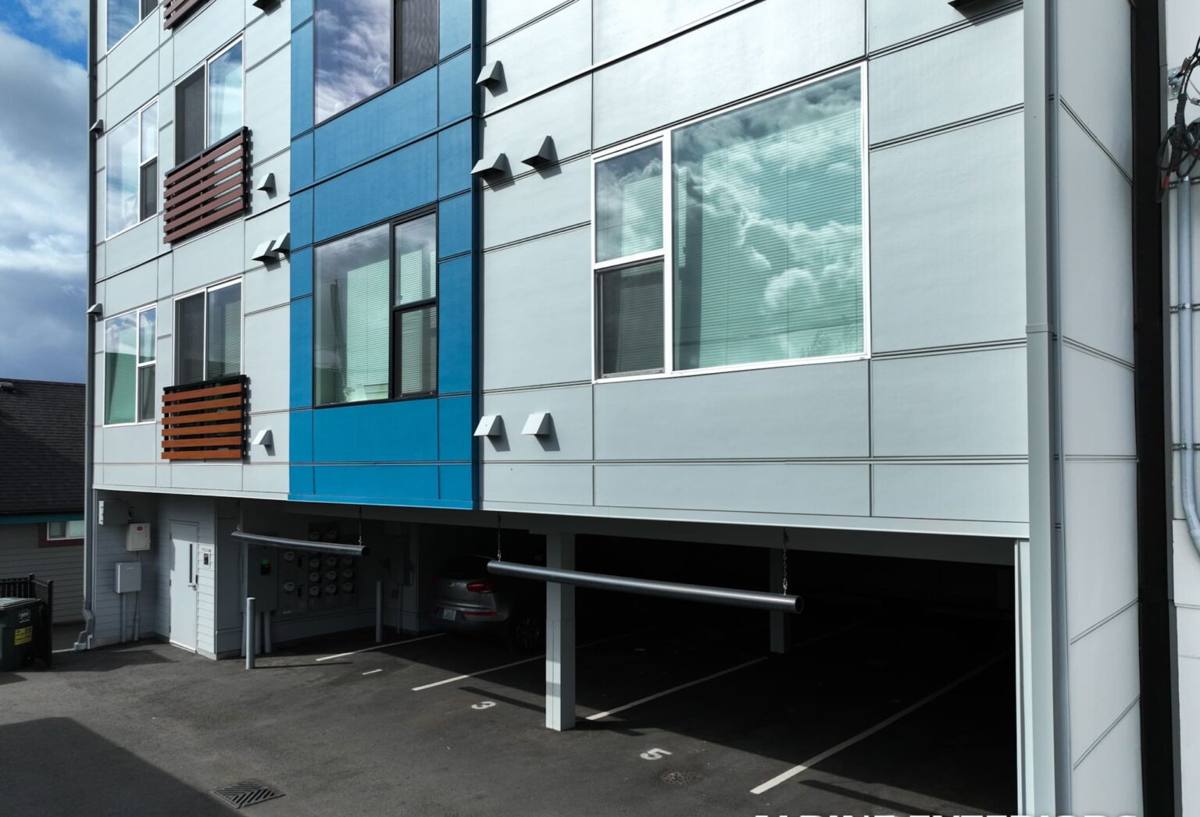
What This Climate Actually Does to Siding
The damage siding takes in Sumas rarely shows up as one dramatic event. It's cumulative — small exposures that add up over years:
- Driving rain pushed sideways by wind finds every gap, seam, and butt joint that wasn't detailed correctly, and it doesn't take long for water working its way behind siding to cause real damage.
- Persistent surface moisture from marine-influenced air and long grey stretches keeps siding damp longer than a drier inland climate would, which is exactly the condition moss, algae, and mildew need to take hold.
- Shaded north- and east-facing walls, especially near mature trees or fences, dry out slower after every rain and are almost always where moss shows up first and worst.
- Freeze-thaw cycling in the colder months stresses any material that absorbs moisture, since water trapped in the material expands and contracts with the temperature swings.
None of this is unique to one house — it's the baseline for anything built in this part of Whatcom County. The difference is in the product and the installation, not the weather.
Why James Hardie Is the Product We Install
Built for This Zone, Not Just This Region
James Hardie engineers its siding by climate zone, and the HZ5 product line is formulated for regions that see the freeze-thaw cycling and sustained moisture Whatcom County gets. Fiber cement itself doesn't absorb water the way wood-based or wood-adjacent siding products do, and it doesn't rot, delaminate, or feed insects. That matters more here than in a dry climate, because the siding spends a large share of the year wet or damp.
A Factory Finish Instead of a Field-Painted One
Hardie's ColorPlus finish is baked on at the factory under controlled conditions, not brushed or sprayed on-site. That gives it a more consistent, fade-resistant finish than field paint, and it's backed by its own finish warranty separate from the product warranty. In a climate where siding stays damp for extended stretches, a factory-cured finish holds up to that exposure far better than paint applied on-site and left to cure in variable weather.
Non-Combustible Construction
Fiber cement doesn't burn. That's not a Sumas-specific concern, but it's part of why we standardized on Hardie across every home we work on, in every town we serve.
What a Correct Installation Actually Involves
The siding product is only half the equation. Most siding failures we get called to look at — on any brand — trace back to installation shortcuts, not the material itself. On a Sumas home, given the moisture load the wall assembly deals with, these details aren't optional:
Drainage Plane and Rainscreen Gap
Siding needs a way to shed the water that inevitably gets behind it, and it needs airflow to dry out between rain events. That means a correctly installed weather-resistant barrier, a drainage gap between that barrier and the back of the siding, and flashing that actually directs water out and away rather than trapping it against the sheathing. Skipping or shortcutting this step is the single most common cause of hidden rot behind siding that looks fine from the driveway.
Fastening, Clearances, and Joints
Hardie publishes specific fastening patterns, minimum ground clearances, and joint treatment requirements for good reason — deviate from them and you introduce entry points for water or stress points that show up as cracking years later. Butt joints get flashed or shimmed correctly, not just caulked and hoped for. Siding is held at proper clearance from grade, decks, and roof lines so it isn't sitting in standing moisture or splash-back.
Trim, Caulking, and Penetrations
Every window, vent, hose bib, and light fixture that penetrates the siding is a place water can get in if it's not detailed correctly. Correct trim work and the right sealants at the right locations — not caulk used as a substitute for proper flashing — are what keep those penetrations dry through years of driving rain.
Where Moss and Moisture Problems Show Up First
On a typical Sumas property, the pattern is consistent enough that we plan for it before the crew ever shows up:
| Area | Why It's Vulnerable | What We Do Differently There |
|---|---|---|
| North/east walls near trees or fences | Slow to dry, shaded most of the day, prime moss conditions | Extra attention to drainage gap and clearance; ColorPlus finish resists staining better than field paint |
| Lower courses near grade | Splash-back and ground moisture wick upward | Correct clearance from grade, hardscape, and soil per manufacturer spec |
| Wall/roof intersections and dormers | Concentrated water flow during driving rain | Step flashing and kick-out flashing installed and verified, not assumed |
| Butt joints and trim seams | Highest-risk spot for water intrusion over time | Manufacturer-spec joint treatment instead of relying on caulk alone |
Our Process on a Sumas Project
- Assessment: We walk the exterior, check the current siding and any water damage already present, and look at grading, trees, and drainage patterns specific to that lot.
- Prep and tear-off: Old siding comes off, sheathing gets inspected for hidden damage, and any rot or compromised framing gets addressed before anything new goes up — no covering up existing problems.
- Weather barrier and drainage plane: A correctly installed water-resistive barrier and rainscreen gap go in first, since this is the layer that determines whether the wall assembly can actually dry out between storms.
- Hardie installation: Siding, trim, and flashing installed to James Hardie's published specifications for the HZ5 zone — fastening pattern, clearances, and joint treatment included, not treated as optional.
- Final inspection and walkthrough: We check our own work against spec before calling the job done, and walk the finished exterior with the homeowner.
Why We Only Install James Hardie — and Skip Vinyl, LP, and Cedar
We get asked about vinyl, LP SmartSide, and cedar often enough that it's worth being direct about it. Each has legitimate uses elsewhere. In this climate, each carries trade-offs we're not willing to build a Sumas installation around:
- Vinyl is inexpensive and low-maintenance, but it expands and contracts significantly with temperature swings, can warp or crack in impact or cold, and doesn't hold paint if a homeowner ever wants to change the color.
- LP SmartSide is an engineered wood product — better moisture resistance than raw wood, but it's still wood-based, meaning it depends heavily on caulking, paint maintenance, and correct installation to keep moisture out over the long run, in a climate that gives it a lot of moisture to deal with.
- Cedar is a beautiful, traditional material, but it requires ongoing maintenance — refinishing, sealing, and moss/mildew treatment — that a lot of homeowners underestimate until they're several years in.
Fiber cement sidesteps the core problem all three share: moisture management depending on ongoing maintenance rather than the material itself. That's the trade-off that made James Hardie the only product we put on homes.
Maintenance in a Moss-Prone Climate
Hardie siding installed correctly is genuinely low-maintenance, not maintenance-free. A simple annual routine keeps it performing the way it should:
- Rinse siding gently once a year (garden hose pressure, not a pressure washer aimed directly at seams or joints)
- Trim back trees, shrubs, and vines that shade walls or hold moisture against the siding
- Check caulking at trim, window, and penetration points every year or two and refresh where it's cracked or pulling away
- Clear debris from the base of walls and any spots where water tends to pool
- Watch shaded north/east walls specifically for early moss growth and address it before it spreads
Why Hiring a Crew That Already Works Sumas Matters
Installation quality is the biggest variable in how siding performs over time, and that comes down to the crew, not just the brand on the invoice. A crew that regularly works Whatcom County knows what driving rain off a bad storm actually does to a wall assembly, knows which orientations grow moss first, and doesn't need to relearn local permitting and inspection expectations on your project. That familiarity shows up in the details — flashing that's actually lapped correctly, clearances that are actually held, joints that are actually treated to spec — the parts of the job that don't show on install day but determine whether the siding is still performing correctly in year fifteen.
If you're planning a siding project in Sumas and want to talk through what James Hardie siding would look like on your home, we're happy to walk the exterior with you and give you a straightforward, no-pressure estimate — just fill out the form below.