 Lynden Siding
 Window Replacement Built for Bellingham's Coastal Climate
Bellingham sits close enough to Bellingham Bay and the Salish Sea that homes here deal with a version of Pacific Northwest weather that's tougher on windows than what you'd see further inland. Salt-laden air off the water accelerates corrosion on hardware and metal components. Wind-driven rain, especially during fall and winter storms, pushes water sideways into gaps that would stay dry in a calmer climate. And the long stretch of overcast, damp months that Whatcom County is known for keeps north- and shade-facing surfaces wet for weeks at a time, which is exactly the environment moss and mildew need to take hold on frames, sills, and trim.
None of that means Bellingham homes need exotic solutions. It means the basics — material selection, flashing, and installation technique — matter more here than they would in a drier region. A window that performs fine in eastern Washington can fail early on the coast if it's not installed with this climate in mind.
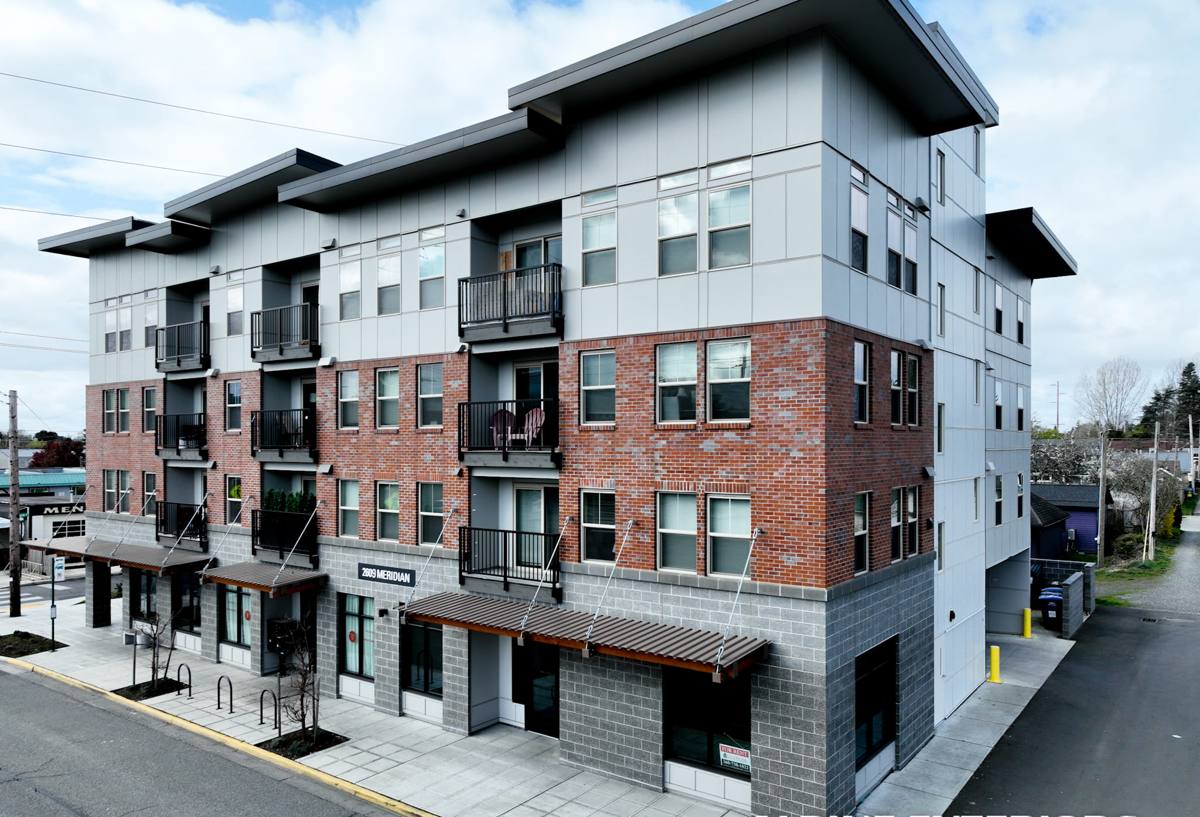
Signs Bellingham Windows Are Due for Replacement
Windows rarely fail all at once. Usually there's a stretch of small warning signs before a window becomes a real problem. Watch for these:
- Fogging or a hazy film between panes of double-pane glass — this means the seal has failed and the insulating gas or dry air pocket is gone
- Soft, spongy, or discolored wood at the sill, jamb, or surrounding trim
- Windows that stick, won't stay open, or are hard to latch — often a sign of swelling from moisture intrusion
- Visible moss, algae, or persistent black mildew staining on frames or sills that keeps coming back after cleaning
- Noticeable drafts near the frame even when the window is fully closed and locked
- Pitting, rust, or stiff hardware on aluminum or steel components — common with sustained salt air exposure
- Single-pane glass or original aluminum-frame windows on an older home that's never been updated
- A steady climb in heating costs that isn't explained by anything else in the home
What a Correct Window Replacement Job Actually Involves
The window unit itself is only part of the job. In a climate that gets as much wind-driven rain as this one does, how the window is installed matters as much as what's installed.
Flashing and Water Management
Every replacement window needs to tie back into the home's water-resistive barrier correctly — not just get caulked around the edges. That means sill pan flashing to direct any water that gets past the glass back out and away from the framing, proper head flashing above the unit, and integration with the existing siding or house wrap so water sheds down and over, never behind. This is the step that gets skipped or rushed on cut-rate jobs, and it's also the step that determines whether the wall cavity behind the window stays dry through a wet Whatcom County winter or slowly rots from the inside.
Fit, Insulation, and Sealant
An accurately measured rough opening, correct shimming so the window is square and doesn't bind, and the right combination of low-expansion foam or backer rod with a quality exterior sealant all matter for both energy performance and keeping water out. Gaps that are too large or filled incorrectly become paths for both drafts and moisture — a bad combination in a marine climate.
Choosing Frame Materials for Whatcom County Weather
Frame material affects how a window holds up to salt air, moisture, and temperature swings over time, and it's usually the biggest factor in both upfront cost and long-term maintenance.
| Material | Moisture & Salt Air Resistance | Maintenance | Typical Lifespan |
|---|---|---|---|
| Vinyl | Good — won't rust or rot, handles coastal moisture well | Low — occasional cleaning | 20-30+ years |
| Fiberglass | Very good — stable in temperature and humidity swings, minimal expansion/contraction | Low | 30-40+ years |
| Wood-clad | Fair to good — the exterior cladding protects the wood, but any breach needs prompt attention | Moderate — cladding needs periodic inspection, interior wood may need refinishing | 20-30 years with proper care |
| Aluminum | Poor to fair in salt air — prone to pitting and corrosion over time without protective finishes | Moderate to high | Varies widely; corrosion often shortens lifespan near the coast |
We don't push aluminum-frame replacements for homes this close to Bellingham Bay, not because aluminum is a bad material everywhere, but because untreated or poorly finished aluminum hardware and frames are the ones we most often see corroding and sticking within a decade in this specific environment. Vinyl and fiberglass simply hold up better against sustained salt air with less upkeep, which is why they make up most of what we recommend and install.
Glass and Performance Options Worth Considering
Beyond the frame, the glass package affects comfort, condensation, and energy bills. Double-pane glass with a Low-E (low-emissivity) coating and argon gas fill is the standard for good reason — it cuts heat loss significantly compared to older single-pane or basic double-pane units, and it helps reduce interior condensation on cold, damp mornings, which is a common complaint in homes with older windows here.
Weep holes — the small drainage channels at the bottom of a window frame that let any moisture that gets into the frame track escape back outside — need to stay clear of dirt, pollen, and moss buildup. It's a small detail, but a blocked weep hole in a climate with this much rainfall can mean water sitting against the frame instead of draining, which shortens the life of even a good window.
Our Window Replacement Process
- On-site assessment — we look at your current windows, note any signs of water intrusion or rot in the surrounding wall, and talk through what's actually needed versus what can wait
- Measurement and product selection — accurate measurements and a straightforward walkthrough of material and glass options that fit your home and budget
- Removal and inspection — once the old window is out, we check the sheathing and framing underneath for hidden moisture damage before anything new goes in; this is often where problems that weren't visible from outside get caught
- Installation — proper flashing, shimming, insulation, and sealant, tied correctly into your existing siding and water-resistive barrier
- Cleanup and walkthrough — job site cleaned up, and we walk you through the finished work so you know what was done and why
What Window Replacement Typically Costs
Costs vary based on several factors, and anyone who quotes a firm number without seeing your home isn't giving you a real estimate. In general terms, expect these to move the price:
| Factor | Why It Matters |
|---|---|
| Frame material | Vinyl is typically the most budget-friendly; fiberglass and wood-clad cost more upfront but often last longer |
| Window size and style | Larger units, custom shapes, or operable styles like casements generally cost more than standard double-hung sizes |
| Number of windows | Doing several windows in one project usually brings down the per-window cost versus one-off replacements |
| Hidden rot or framing repair | If we find water damage behind an old window, repairing that framing adds cost but is not optional — installing a new window over rotten framing just hides the problem |
| Access and site conditions | Upper-story windows or difficult access can add labor time |
Rather than quote broad numbers that won't mean much without seeing your specific windows, we'll walk your home, look at what's actually there, and give you a written estimate with no pressure to commit on the spot.
Why Hire a Crew That Already Works in Bellingham
A window replacement done wrong doesn't usually show itself right away. It shows up a year or two later as a soft spot in the trim, a musty smell near the sill, or moss creeping up from the corner of a frame that never quite dries out. Crews that work regularly in Bellingham and the rest of Whatcom County know what correct flashing and sealant work needs to look like to hold up against this specific mix of salt air, wind-driven rain, and long damp seasons — because we see what happens when it's done wrong on other homes' repair calls.
That familiarity also means fewer surprises during the job itself: knowing how local siding types typically tie into window trim, what kind of hidden moisture damage to expect on homes of a certain age in this area, and how to sequence the work so your home isn't exposed to the weather any longer than necessary.
If your windows are showing any of the signs above, or you'd just like an honest opinion on whether repair or replacement makes more sense for your home, we're happy to take a look. Fill out the form below for a free, no-pressure estimate — we'll tell you straight what we find.