 Lynden Siding
 Siding Built for the Wiser Lake Climate
Homes around Wiser Lake sit in one of the wetter, greener corners of Whatcom County. The lake itself keeps humidity high through the fall and winter, tree cover holds moisture against exterior walls long after a storm has passed, and marine air moving in off the Sound carries a faint salt content that slowly works on paint, fasteners, and any siding material that isn't built to shed water fast. Add a moss season that can run half the year in shaded, low-lying yards, and you have a climate that is genuinely hard on exterior cladding. It's not a place where "good enough" siding holds up the way it might in a drier part of the state.
This page is about one job in one area: installing fiber cement siding correctly on Wiser Lake homes. Not a general overview of siding options, not a sales pitch — a straight explanation of what this climate demands, what a correct installation actually involves, and why the crew doing the work matters as much as the material itself.
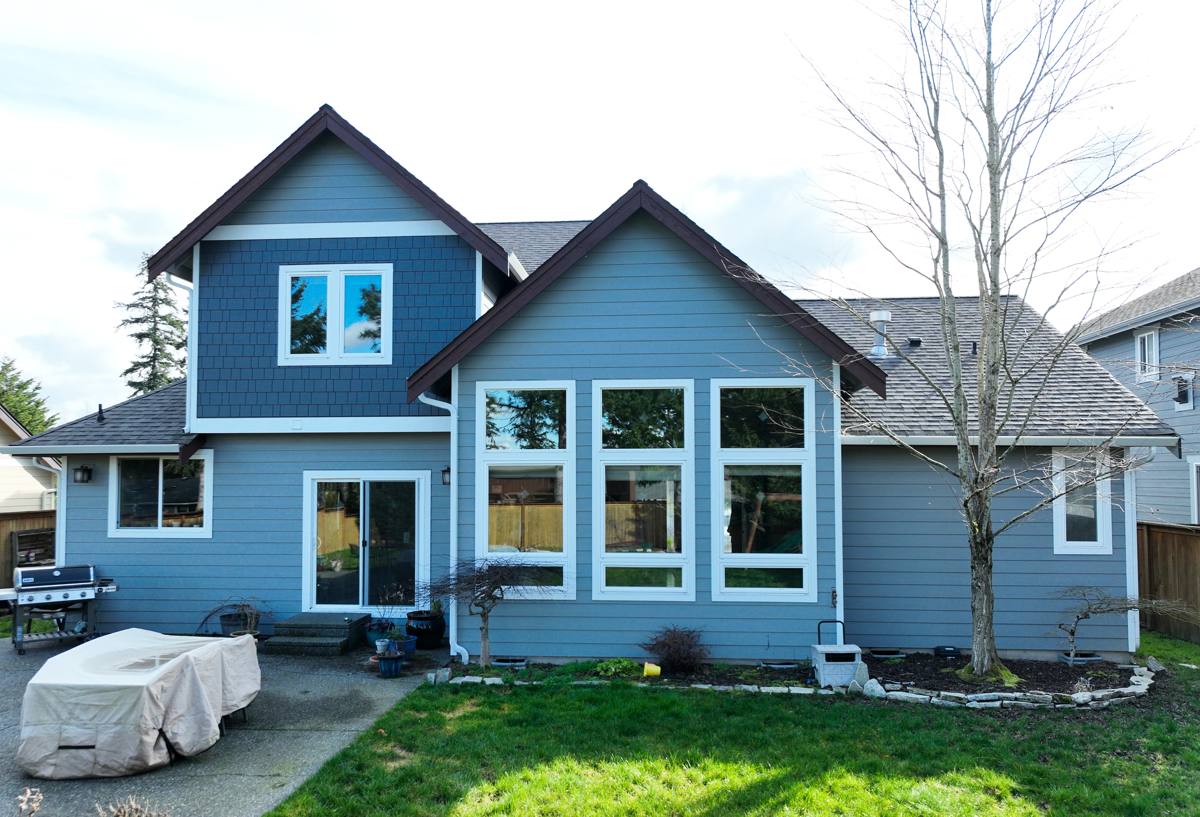
What Wiser Lake Homes Actually Need From Their Siding
Moisture Management First
Driving rain off the water, combined with wind that pushes moisture sideways into wall assemblies, means siding here has to do more than look good when it's dry. It has to shed water at every horizontal lap, every window and door opening, and every inside corner where two wall planes meet. Any gap, any missed flashing detail, any caulk joint that fails becomes a slow leak point — and slow leaks are the ones that do the most damage, because nobody notices until the sheathing behind the siding is already compromised.
Moss and Algae Resistance
Shaded north walls, tree-lined lots, and the ambient humidity off the lake all add up to a long moss season. Moss doesn't just look bad — it holds water against the surface of the siding, which accelerates whatever moisture problems already exist underneath. A siding product with a durable factory finish resists staining and biological growth far longer than field-painted materials, but no finish is moss-proof forever. The product and the maintenance plan have to work together.
Salt-Tinged Marine Air
Whatcom County isn't oceanfront, but the marine air that moves inland off the Sound still carries enough salt content to matter over years of exposure, especially on fasteners, trim, and any exposed metal flashing. Materials and hardware need to be rated for that exposure, not just for general Pacific Northwest rain.
Why We Install Only James Hardie Fiber Cement
We standardized on James Hardie siding — and only James Hardie — for every home we side, including Wiser Lake. We don't install LP SmartSide, vinyl, Cemplank, Allura, or unfinished wood siding like primed spruce or cedar. That's a deliberate professional standard, not a marketing line, and it's worth explaining honestly.
What Hardie Gets Right for This Climate
- Non-combustible fiber cement core — doesn't feed a fire the way wood-based or foam-backed products can
- ColorPlus factory finish — baked-on color and coating applied under controlled conditions, which holds up better against moss, algae, and UV than field-applied paint
- HZ5 climate engineering — Hardie's Pacific Northwest product line is formulated for high-moisture, high-humidity regions like Whatcom County, not a one-size-fits-all national spec
- Dimensional stability — fiber cement doesn't swell, cup, or rot the way wood-based products can when moisture gets behind them
- Strong transferable warranty — backed by material longevity that's been proven over decades of real installations, not just lab testing
Why Not the Alternatives
Vinyl siding is inexpensive and low-maintenance in mild climates, but it can warp under sustained heat, becomes brittle in cold snaps, and its seams give driving rain more opportunities to find a way in over time. Wood-based composite siding and unfinished cedar or spruce both require diligent, ongoing maintenance to keep moisture out of the substrate — maintenance that's easy to fall behind on, and unforgiving when you do, especially in a climate this wet. Other fiber cement brands aren't necessarily bad products, but we've chosen to build our installation expertise, our flashing details, and our warranty relationships around one system we know inside and out, rather than splitting our knowledge across several. That focus is what lets us guarantee the work.
What a Correct Installation Involves
Fiber cement siding is only as good as the assembly behind it. A rushed or generic install defeats the purpose of choosing a premium material in the first place. Here's what we treat as non-negotiable on every Wiser Lake project:
The Water-Resistive Barrier
A continuous, properly lapped weather-resistive barrier goes over the sheathing before any siding touches the wall. Seams are taped or shingled correctly so water draining down the back of the siding has a clear path down and out, not into the wall cavity.
Flashing at Every Penetration
Windows, doors, hose bibs, vents, and light fixtures all need proper flashing integrated with the water-resistive barrier — not just caulk. Caulk is a backup, not a strategy. This is the detail that separates siding that lasts twenty-plus years from siding that leaks behind the walls within five.
Correct Fastening and Clearances
Hardie's installation specifications call for specific fastener types, spacing, and embedment depth, plus minimum clearances from grade, roof lines, and decks. Skipping these details voids manufacturer warranty coverage and creates exactly the moisture traps this climate will exploit.
Caulking and Joint Treatment
Butt joints, corners, and trim intersections get treated with a quality, paintable, siding-rated sealant — applied to manufacturer specification, not just wherever a gap looks open.
Our Process for Wiser Lake Projects
- On-site assessment — we look at the existing siding and sheathing, check for hidden moisture damage, and evaluate sun and shade exposure on each wall
- Tear-off and sheathing inspection — old siding comes off and we inspect the sheathing underneath before anything new goes up; damaged sheathing gets repaired, not covered over
- Barrier and flashing installation — weather-resistive barrier and flashing details go in first, and get inspected before siding installation begins
- Hardie installation to spec — siding, trim, and accessories installed per manufacturer clearances and fastening requirements
- Final detailing — caulking, touch-up, and a walk-through so you understand what was done and why
Signs Your Current Siding Isn't Handling This Climate Well
If you're seeing any of the following on a Wiser Lake home, it's worth having someone look before the problem grows past the surface:
- Persistent moss or dark streaking on north- or shade-facing walls that comes back shortly after cleaning
- Soft or spongy spots when you press on siding near the bottom courses or around windows
- Paint that's peeling, bubbling, or chalking heavily rather than fading evenly
- Visible gaps at joints, corners, or trim where caulk has shrunk or pulled away
- Warping, cupping, or swelling in individual boards or panels
Comparing Siding Options for a Wet, Shaded Climate
| Factor | James Hardie Fiber Cement (HZ5) | Vinyl | Wood-Based / Untreated Wood |
|---|---|---|---|
| Moisture behavior | Stable, non-absorbent core, engineered for high-humidity regions | Doesn't absorb water, but seams and expansion gaps can let it in | Absorbs moisture; prone to swelling and rot without diligent upkeep |
| Moss/algae resistance | Factory finish resists growth and staining longer | Can be prone to algae streaking in shaded areas | Susceptible to moss and mildew, especially in shade |
| Fire performance | Non-combustible | Can melt or deform under heat | Combustible |
| Maintenance | Occasional wash and caulk check; ColorPlus finish reduces repainting need | Low, but damage often means panel replacement | Regular repainting/resealing required |
| Typical longevity when properly installed | Multiple decades, backed by transferable warranty | Variable, shorter in harsh weather cycles | Shorter without consistent maintenance |
Maintenance That Keeps Hardie Siding Performing Here
Hardie siding is low-maintenance, not no-maintenance. In a climate like this, a little attention goes a long way:
- Rinse siding annually, and more often on shaded walls prone to moss, using a garden hose and soft brush rather than a pressure washer aimed directly at joints
- Inspect caulk lines at trim, corners, and penetrations once a year and re-caulk any that have cracked or pulled away
- Keep gutters clear so overflow doesn't run down the wall surface repeatedly
- Trim back vegetation and tree branches that hold shade and moisture directly against the siding
- Address any soft spots, gaps, or staining promptly rather than waiting for a full inspection cycle
Why Hiring a Crew That Already Works Wiser Lake Matters
A crew that regularly works this specific area already knows how the humidity off the lake behaves against different wall orientations, which details fail first in this climate, and how to sequence a project around the wetter stretches of the year. That familiarity shows up in the small decisions — where extra flashing attention goes, how much clearance to leave near grade on a shaded lot, which corners of a house need the most careful joint work. It's the difference between a generic installation and one that's actually built for where it stands.
If you're considering fiber cement siding for a home near Wiser Lake, we're glad to take a look and give you a straightforward, no-pressure estimate — no invented urgency, just an honest read on your home's condition and what correct installation would involve. Use the form below to get started.