 Lynden Siding
 Composite Decking for Abbotsford, BC Homes
Abbotsford sits in the Fraser Valley just north of the Whatcom County line, and it gets the same weather pattern we deal with on the Lynden side of the border: long, wet winters, driving rain that comes in sideways off the valley, and a moss season that seems to start earlier every year. A deck built here has to shed water fast, resist rot at every joint, and stand up to freeze-thaw cycles without cupping, splitting, or growing a green film across every board. Composite decking, installed correctly, handles all of that better than wood does — but "installed correctly" is doing a lot of work in that sentence, and it's the part most homeowners never get a straight answer about.
This page covers what a composite deck actually needs to survive in this climate, what a correct installation looks like from the ground up, and why it matters to hire a crew that already works jobs in and around Abbotsford rather than a contractor who's never dealt with this specific combination of rain volume, humidity, and moss pressure.
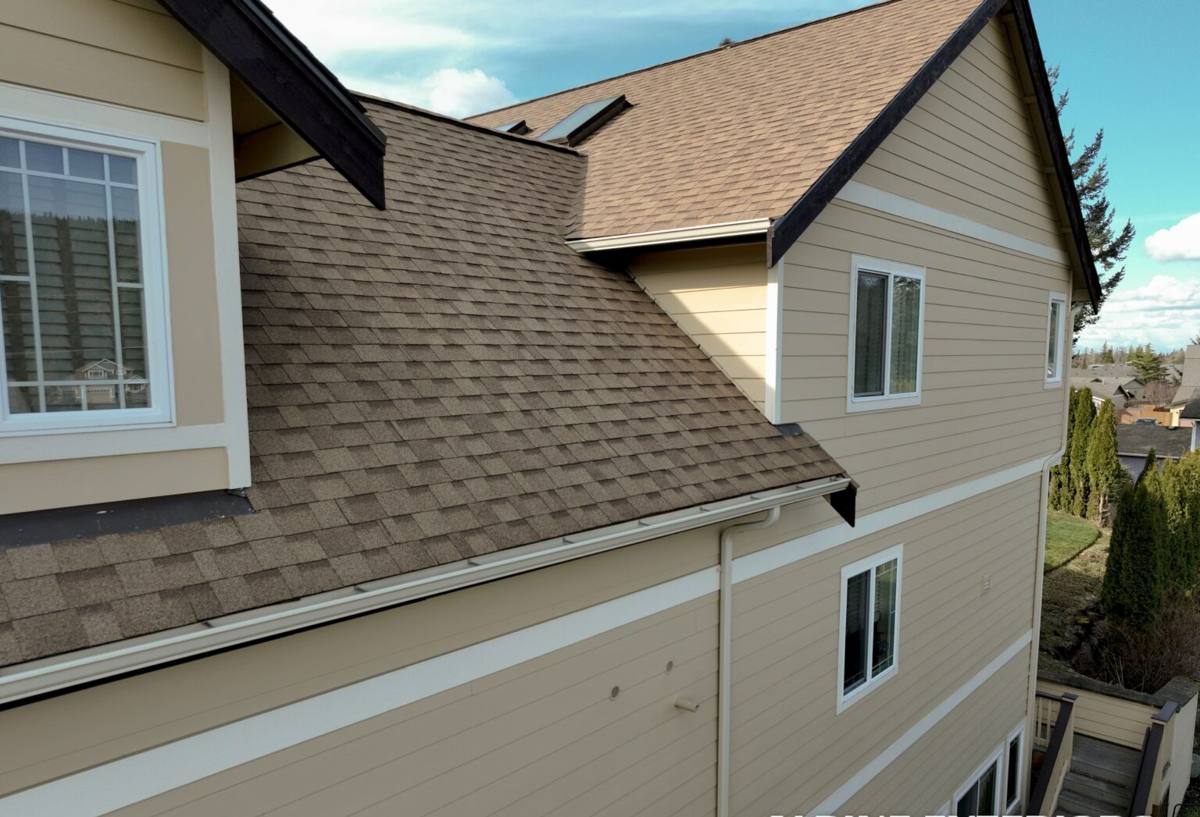
What This Climate Does to a Deck Over Time
The Fraser Valley funnels moist air off the water and traps it against the mountains, which means Abbotsford sees more rain days per year than most people expect, and the humidity rarely lets up between storms. A few things happen to decking as a result:
- Standing water finds every low spot. Boards that aren't pitched properly, or that sit on a substructure without drainage, hold water against the underside where you can't see it happening.
- Moss and algae take hold fast. Shaded decks, north-facing decks, and anything under trees stay damp long enough for moss spores to establish — and once moss gets a foothold in a textured or grooved board, it's hard to fully clear.
- Fasteners and framing corrode or rot from below. This is the failure homeowners never see coming, because the deck surface can look fine for years while the ledger board, joists, or hardware underneath are quietly failing.
- Freeze-thaw cycling stresses joints. It doesn't get brutally cold here, but the repeated freeze-thaw swings through the wet season work on any gap, crack, or poorly sealed fastener point.
None of this is unique to composite decking — wood decks face the same conditions and generally lose that fight faster. But composite boards only outperform wood if the structure underneath, the drainage, and the fastening system are built for this climate specifically. A composite deck installed the same way you'd build one in a dry inland climate will still grow moss, still trap moisture, and still disappoint the owner within a few years.
Why Composite Over Wood for This Area
We install both, and wood still has its place — it's cheaper up front and some homeowners prefer the look and the ability to refinish it themselves. But given what this climate does to exterior wood, composite is usually the better long-term call for a Fraser Valley deck, for a few honest reasons:
- No annual refinishing. A wood deck in this climate needs sealing or staining on a real schedule, or it starts absorbing water, graying, and splintering. Skip a season or two and you're behind.
- Consistent moisture behavior. Quality composite boards don't swell, cup, or splinter the way wood does when it takes on water repeatedly through a wet winter.
- Better footing when wet. Textured composite surfaces generally stay more slip-resistant than bare or worn wood when they're damp, which matters on a deck that's wet more months than not.
- Moss and algae are easier to manage. Composite doesn't feed mold and fungus the way untreated wood fiber does, so cleaning stays a surface job rather than a structural concern.
The trade-off is real too — composite costs more per square foot up front, board selection and fastening are less forgiving of mistakes, and a poorly installed composite deck can actually trap moisture worse than wood because the boards themselves don't breathe. That's why the installation details below matter as much as the material choice.
What a Correct Installation Involves
Substructure First
Composite decking is only as good as what's underneath it. We use joist tape or a comparable moisture barrier on top of every joist to keep water from soaking into the frame through fastener penetrations — a detail that's easy to skip and impossible to fix later without pulling the deck apart. Joist spacing gets set to the manufacturer's spec for the specific board, which is often tighter than typical wood-decking spacing, especially at angles, curves, or stair treads.
Drainage and Pitch
Every deck we build gets a deliberate pitch away from the house — typically a slight slope so water sheets off rather than pooling. On decks close to grade or covered by a roofline, we pay extra attention to this because Abbotsford's rain volume means a flat deck will hold water somewhere, every time, eventually.
Fastening System
Hidden fastener clip systems are standard on most composite lines now, and we use the fastener system engineered for the specific board — mixing brands or improvising with generic screws is one of the most common ways a composite deck fails early, either through squeaking, board movement, or clips that corrode faster than the board's warranty accounts for.
Ventilation Underneath
Low-clearance decks and decks built over patios need airflow underneath to keep the substructure from staying damp for days after a storm. We plan vent gaps and skirting with that in mind rather than sealing the underside up tight, which just traps the moisture this climate already produces in abundance.
Edge and End Cuts
Every cut end of a composite board is a point where moisture can wick in if it isn't capped or treated. We finish exposed ends properly at stair noses, picture-frame borders, and against the house, rather than leaving raw cut edges exposed to year-round rain.
Choosing the Right Board for This Climate
Not all composite decking is built the same way, and the difference matters more here than in a dry climate. The main split is between capped and uncapped composite boards.
| Factor | Capped Composite | Uncapped Composite |
|---|---|---|
| Moisture resistance | Plastic shell resists water absorption at the surface | More prone to absorbing moisture over time |
| Moss and staining | Smoother, less porous surface sheds moss and algae more easily | More porous texture gives moss and mildew more to grip |
| Fade and color hold | UV-stable cap resists fading better long-term | Color can shift faster with sun and rain exposure |
| Upfront cost | Higher | Lower |
| Best fit | Uncovered decks, full sun/rain exposure, low-maintenance goal | Covered decks, budget-driven projects, lower moisture exposure |
For most uncovered decks in this area, we recommend capped composite — the up-front premium tends to pay for itself in reduced cleaning and a board that still looks good after several wet seasons. For covered decks or porches with less direct rain exposure, an uncapped board can be a reasonable way to control cost without taking on much added risk.
Color and Grain Considerations
Darker composite boards run hotter in direct sun and can show water spotting differently than lighter tones once wet — something worth walking through in person against your home's siding and exposure before you commit to a color. We'll talk through this as part of the estimate rather than just handing you a sample chip.
Our Process, Start to Finish
- On-site assessment. We look at grade, drainage, sun and shade exposure, existing structure (if it's a replacement), and how the deck ties into the house.
- Design and board selection. We talk through capped vs. uncapped, board pattern, railing, and any stairs or landings, with real numbers, not vague ranges.
- Permit and inspection coordination. Deck projects above a certain height or attached to the home typically require permitting — we handle that paperwork rather than leaving it on you.
- Demo and structural prep. Old decking and, where needed, old framing comes out; ledger boards, footings, and joists get inspected and corrected before anything new goes down.
- Substructure build. Joist layout, moisture barrier, and pitch get set to spec for the board you've chosen.
- Decking installation. Boards go down with the manufacturer-specified fastener system, proper spacing for expansion, and finished edges.
- Railing, stairs, and trim. Fascia boards, post sleeves, and railing get installed to match.
- Final walkthrough. We go over the finished deck with you, including what maintenance actually looks like going forward.
Maintenance: What's Actually Required
One of the real selling points of composite is how little upkeep it needs compared to wood — but "low maintenance" isn't "no maintenance," especially in a climate that grows moss on almost anything left damp and shaded.
- Rinse or sweep debris off regularly, especially leaves and needles that trap moisture against the board surface.
- Clean with a soft-bristle brush and mild soap and water once or twice a year — avoid pressure washing at close range, which can damage the board's surface texture or cap.
- Check and clear gaps between boards where organic debris can build up and hold moisture.
- Keep planters and furniture feet from sitting directly on the surface long-term without airflow underneath them.
- Inspect railing posts and stair connections annually for movement, since hardware is often the first thing affected by sustained damp conditions.
What to Ask Before You Hire Anyone
Composite decking has a reputation as a "simple" project, which is exactly why a lot of it gets installed poorly. Before hiring a contractor for a composite deck in this area, it's worth asking:
- Do you install a moisture barrier or joist tape under the decking, or just fasten straight to bare joists?
- What fastener system do you use, and is it matched to the specific board manufacturer?
- How do you handle drainage and pitch on a deck this close to the house?
- Do you finish or cap exposed cut ends, especially at stairs and borders?
- Have you built decks in this specific area before, and can you speak to how the local rain and moss pattern factors into your build?
- Does the manufacturer's warranty stay intact with your installation method, or does it depend on a specific fastener or ventilation spec?
A contractor who can answer all of these without hesitation has actually thought through what this climate does to a deck. One who can't is guessing, and you're the one who lives with the result.
Why Local Experience in This Area Matters
Abbotsford and Lynden sit close enough together, on either side of the border, that the weather doesn't change much crossing between them — the same wet-season rain, the same valley humidity, the same moss pressure on anything shaded or low to the ground. A crew that already builds decks in this specific stretch of the Fraser Valley knows how a given board actually performs here over a few wet winters, not just what the spec sheet claims. That experience shows up in small decisions — how much pitch to add, where ventilation actually needs to go, which board finishes hold up against moss and which just look good in the showroom — that a contractor unfamiliar with this climate won't think to make.
It also means less guesswork on your project. We're not learning how our joist tape, fastener clips, or board choices hold up in this rain pattern for the first time on your deck — we've already seen what works through multiple wet seasons in homes near yours.
Get a Free, No-Pressure Estimate
If you're planning a new composite deck or replacing an aging wood deck in Abbotsford, we're happy to come take a look, talk through board options and what your specific site needs for drainage and structure, and give you a straightforward estimate — no pressure, no hard sell. Use the form below to get started.