 Lynden Siding
 Why Abbotsford Homes Need a Different Approach to Windows
Abbotsford, BC sits just north of the Whatcom County line in the Fraser Valley, and it shares the same marine-influenced weather pattern we deal with on the Lynden side of the border. Homes here see long stretches of driving rain, damp air moving inland off the coast, and a moss season that can run from early fall clear through spring. Windows take more of that weather than almost any other part of a house exterior — they're penetrations in the wall assembly, they catch wind-driven rain directly, and their frames and seals are usually the first thing to show wear when moisture management fails.
An energy-efficient window in this climate isn't just a number on a spec sheet. It has to keep water out under sustained wind and rain, resist the kind of persistent dampness that feeds moss and mildew growth on sills and frames, and hold its seal through repeated wet-dry and freeze-thaw cycles. Get the product or the installation wrong and whatever energy savings you paid for disappear within a few years as seals fail and frames start absorbing water.
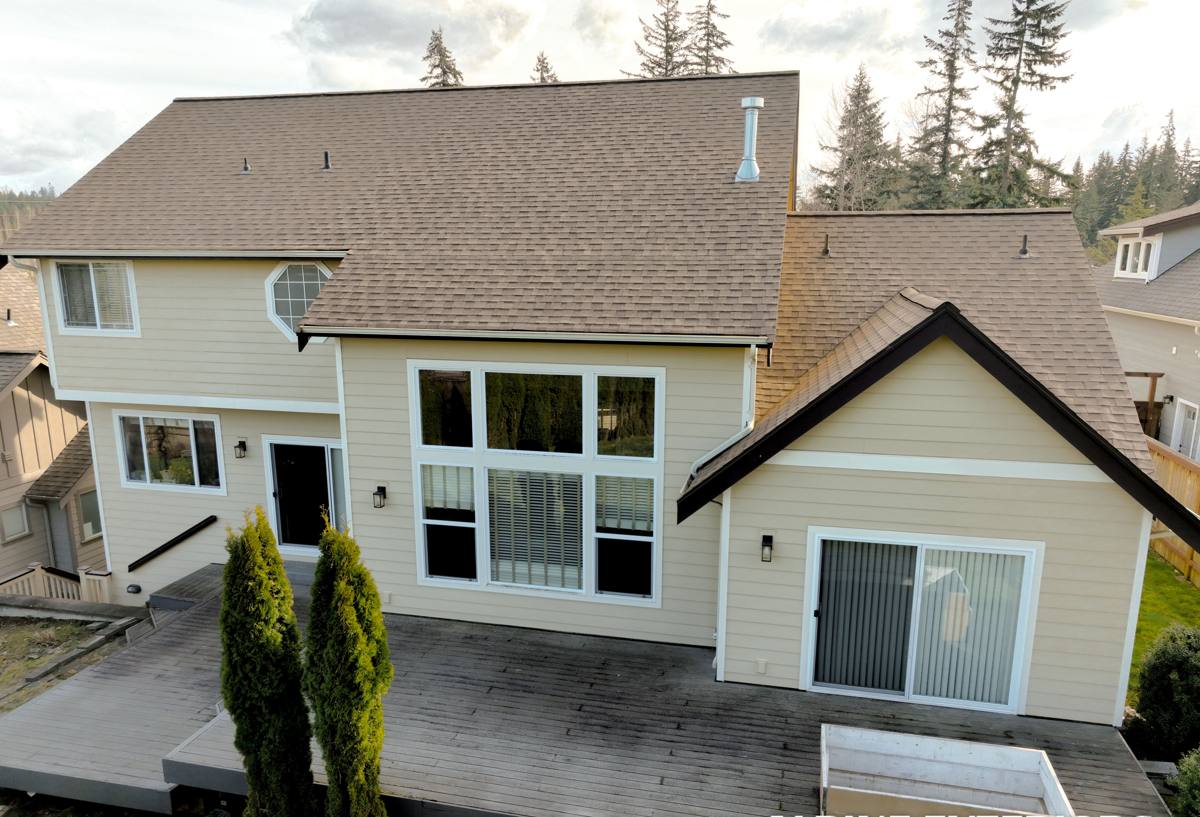
What "Energy-Efficient" Actually Means
A handful of factors determine how a window actually performs, and they matter more here than in a dry climate:
- U-factor — how much heat passes through the window. Lower is better for keeping heating costs down through our wet, cool winters.
- Low-E coatings — a microscopically thin metallic layer on the glass that reflects heat back into the room in winter and blocks solar heat gain in summer, without noticeably changing how clear the glass looks.
- Gas fills — argon or krypton sealed between panes insulates better than plain air and helps reduce condensation on the interior glass surface, which is a common complaint in damp coastal climates.
- Warm-edge spacers — the material separating the panes at the edge of the glass unit. Cheaper aluminum spacers conduct cold straight through and are where you'll usually see condensation and fogging start first.
- Frame material and construction — how well the frame itself resists moisture intrusion, expansion and contraction, and long-term warping.
All of these matter on their own, but none of them matter much if the window isn't installed with correct flashing, sealant, and drainage — which is where a lot of window jobs actually go wrong.
Frame Material Trade-Offs
There's no single "best" frame material — each comes with real trade-offs, and the right choice depends on the specific wall, sun exposure, and budget.
| Frame Type | Moisture Performance | Maintenance | Typical Trade-Off |
|---|---|---|---|
| Vinyl | Good — won't rot, resists moisture well | Low | Can expand/contract more in temperature swings; limited color options |
| Fiberglass | Excellent — very stable, low expansion | Low | Higher upfront cost |
| Wood-clad | Good if the cladding stays intact; vulnerable where it's breached | Moderate to high | Cladding damage exposes wood to our wet climate quickly |
| Aluminum | Poor — conducts cold, prone to condensation | Low | Rarely the right call for this climate outside of specific architectural needs |
We'll talk through which frame material actually fits your home rather than pushing one option — the right answer changes based on sun exposure, wall assembly, and how the window is protected from direct weather.
Signs Your Current Windows Are Working Against You
Before recommending replacement, we look for concrete signs that a window has stopped doing its job — not just its age. Common ones in this region:
- Condensation or fogging between the panes (a failed seal on the insulated glass unit — this can't be fixed, only replaced)
- Soft or discolored wood/trim around the frame, especially at the bottom corners
- Visible daylight or a noticeable draft when you hold a hand near the frame on a windy day
- Moss or dark streaking building up on the sill or lower frame that keeps returning after cleaning
- Difficulty opening, closing, or locking — a sign the frame has swollen or shifted
- A noticeable difference in room temperature near the window compared to the rest of the room
- Paint or finish that's bubbling or peeling specifically around the window opening, which usually points to trapped moisture behind it
Any one of these on its own might just need a repair or a re-seal. Several together, especially on an older window, usually means the unit and its installation are past the point where patching makes sense.
How We Install for This Climate
The window itself is only part of the equation — how it's tied into the wall is what actually determines whether wind-driven rain stays out. Our process for a proper installation includes:
- Removing the old unit carefully and inspecting the rough opening and sheathing underneath for hidden rot or moisture damage before anything new goes in.
- Correcting any damaged framing or sheathing we find — installing a new window into a compromised opening just hides a bigger problem.
- Flashing the opening properly, with sill pan flashing and a shingled, lapped sequence at the sides and head so water is directed out and down, never behind the siding.
- Setting the window level, plumb, and square, shimming as needed so the sash operates correctly and the seal isn't stressed unevenly.
- Sealing with the correct materials at the interior and exterior — using compatible sealants and housewrap tie-ins rather than relying on caulk alone to do the whole job.
- Insulating the gap around the frame without overpacking it, which can bow the frame and affect how the window operates.
- Final check and adjustment of operation, locks, and weep holes before we consider the job finished.
That flashing and drainage detail is the single biggest factor in whether a window job holds up here. A high-end window installed with poor flashing will leak eventually; a mid-range window installed correctly, with proper drainage built in, will outperform it for years.
Working With Homes on the Canadian Side
Lynden sits close enough to the border that Abbotsford is a natural part of our service area, and we're comfortable with the practical differences that come with working there — coordinating scheduling and material delivery across the crossing, and working with whatever local permitting and inspection requirements apply to your specific project through the City of Abbotsford. We don't treat a job on the BC side as an afterthought squeezed in around Washington work; if we're on your street, we're giving it the same attention to detail we'd give a job in Lynden.
That said, we're straightforward about scope: we'll tell you upfront if a project requires permitting or engagement with local authorities before work starts, and we'd rather have that conversation early than run into it partway through the job.
Cost Factors to Expect
Every window job is different, but the main variables that move the price are consistent. We give firm numbers only after seeing the actual openings, but this is a general sense of what drives cost up or down:
| Factor | Why It Matters |
|---|---|
| Number and size of windows | More openings and larger glass units mean more material and labor |
| Frame material chosen | Vinyl, fiberglass, and wood-clad carry different unit costs |
| Condition of the existing opening | Hidden rot or framing damage found during removal adds repair time |
| Access and second-story work | Upper-floor windows or tight access can add setup and safety time |
| Glass package | Triple-pane, upgraded Low-E, or specialty glazing cost more than standard double-pane units |
| Trim and finish work | Matching existing interior or exterior trim adds finish carpentry time |
We'd rather walk your home and give you an honest number than throw out a broad range that doesn't mean much once we're actually looking at your specific windows.
Protecting the Investment After Installation
A properly installed, energy-efficient window can last decades in this climate, but the moss and moisture cycle here means a little seasonal upkeep goes a long way:
- Clean sills and tracks a couple of times a year to keep moss and organic debris from holding moisture against the frame
- Check exterior caulk lines annually, especially heading into the wet season, and re-seal any cracked or separated joints promptly
- Keep weep holes and drainage channels clear of dirt, leaves, and moss so water can actually exit the frame
- Watch for condensation between panes — it means the seal has failed and the unit needs replacing, not just cleaning
- Trim back vegetation or moss growth on nearby siding or trim before it spreads onto window frames and trim boards
None of this is complicated, but skipping it is exactly how a good window installation turns into a moisture problem five or ten years down the road.
Why Local Experience Matters for This Job
Window replacement looks straightforward from the outside, but the details that determine whether it holds up — flashing sequencing, sealant compatibility, correct handling of the specific wall assemblies common in this region — are learned by doing the work here repeatedly, not from a general how-to guide. A crew that's used to installing windows in dry, low-rain regions can do a technically fine job that still fails in a few years under our rain load and moss cycle, simply because the margin for error on drainage detailing is much smaller here.
We're not asking you to take that on faith. Ask any contractor bidding your window job how they flash the sill, what happens to water that gets behind the cladding, and how they handle the transition where the new window meets your existing siding. The answers should be specific, not vague reassurances.
Get a Free, No-Pressure Estimate
If your windows are showing condensation, drafts, moss buildup, or just aren't keeping the weather out the way they used to, we're happy to take a look and give you an honest read on what's going on and what it would take to fix it. Fill out the form below for a free estimate — no pressure, no obligation.