 Lynden Siding
 Deck Repair Built for the Acme Area's Climate
Acme sits in the wooded, rural stretch of Whatcom County southeast of Lynden, where tree cover runs heavier and homes tend to sit further back from full sun. That's good for privacy and shade, but it's hard on an outdoor deck. Between the driving rain that moves through this part of Washington for months at a time, the marine-influenced air that carries in off the Sound and Strait, and a moss season that can stretch from fall through spring, decks here work harder than the same structure would in a drier climate. Wood stays damp longer under a tree canopy. Hardware corrodes faster in salt-tinged, humid air. Moss and algae take hold on any surface that doesn't get regular sun and airflow.
We repair decks throughout the Lynden and greater Whatcom County area, and the repairs we see most often in and around Acme follow a pattern: shaded framing that stayed wet too long, fasteners that gave out years before the wood around them did, and railings that loosened at the post connections. None of that means a deck is a lost cause. Most of what we're called out for is repairable if it's caught before the damage spreads into the main structure.
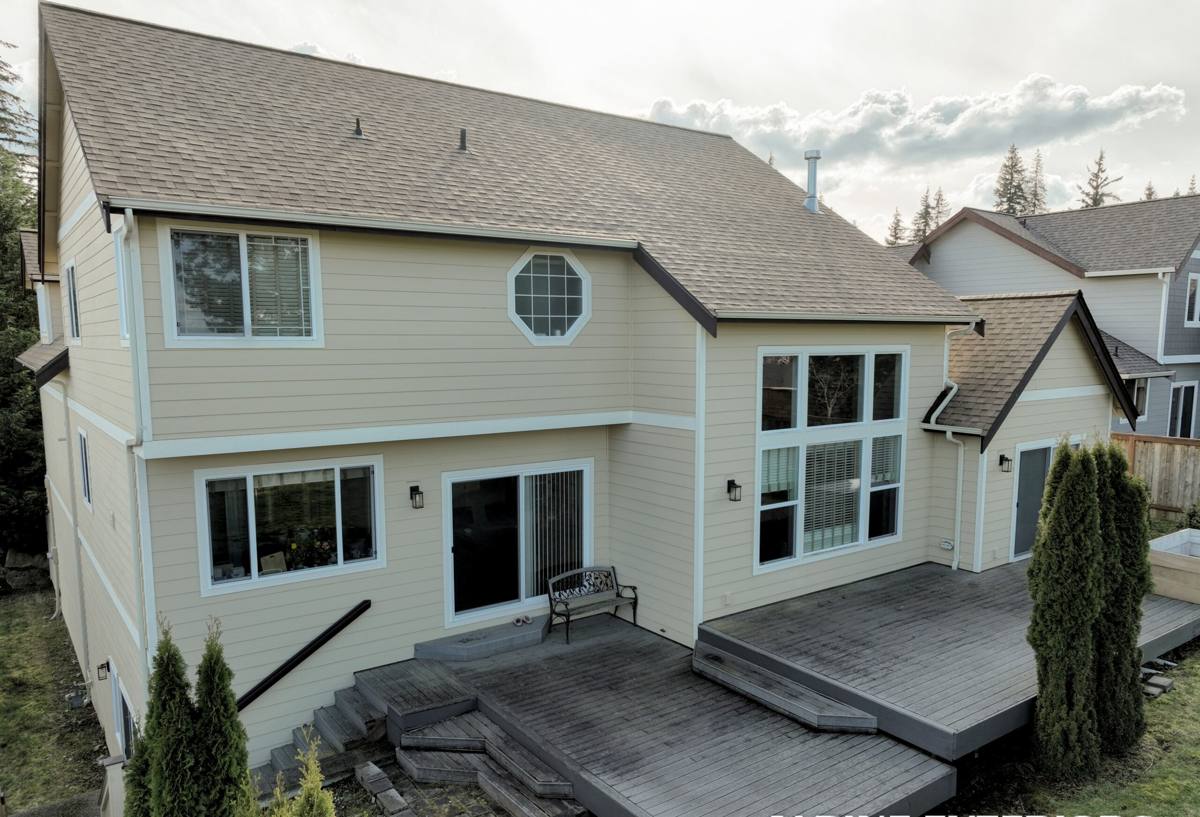
Signs Your Deck Needs Repair
A deck rarely fails all at once. It gives warning signs first, and most of them are easy to check for without any tools.
- Boards that feel spongy, soft, or slightly springy when you walk across them
- A greenish or black film on decking, stairs, or the tops of railings that comes back soon after cleaning
- Railings or guardrail posts that wiggle or flex when pushed
- Visible gaps, rust streaks, or popped fastener heads around joist hangers and screws
- A ledger board (where the deck attaches to the house) that shows staining, gapping, or soft wood underneath
- Standing water that takes more than a day to dry after a normal rain
- Stair stringers or treads that feel less solid than they used to
- A musty smell coming from underneath the deck
Any one of these on its own is worth a look. Several at once usually means water has been getting into the structure for a while, not just the surface.
What This Climate Actually Does to a Deck
Ledger Board and Flashing
The ledger board carries a big share of a deck's structural load, and it's also the connection point most exposed to water running off the house. In a climate with long, steady rain, the flashing detail behind and above the ledger either sheds water correctly or it doesn't — there's rarely an in-between. Older decks, or decks that were never flashed correctly to begin with, tend to trap water right at this joint. That's the single most serious repair we deal with, because it affects how the deck is attached to the house, not just how it looks.
Framing and Fasteners
Joists, beams, and posts hidden underneath the decking don't get sun or airflow, especially on lots with heavy tree cover. Moisture that would evaporate off an open, sunny deck can sit against hidden framing for days. Add humid, salt-influenced air moving through the region, and metal fasteners and joist hangers corrode faster than the wood itself weakens. We regularly find decking that still looks fine on top over hardware that's already failing underneath.
Decking Surface and Moss
Moss and algae need shade and moisture to establish, and a lot of properties in the Acme area supply both. Beyond looking bad, a mossy deck surface holds water against the wood far longer than a clean, dry surface would, which accelerates rot in the boards themselves and makes the surface genuinely slick underfoot.
Rails, Stairs, and Guards
Railing posts usually fail at the base, where they're fastened to the rim joist or framing — exactly where water collects and drains slowest. A loose or wobbly rail is almost always a fastener or post-base problem, not a sign the whole railing system needs to be torn out.
Repair or Replace? How We Decide
Not every deck problem calls for a full rebuild, and not every deck can be patched and called good. We look at where the damage is, how far it's spread, and what it would take to fix it correctly.
| Condition | Repair Usually Makes Sense | Replacement Usually Makes Sense |
|---|---|---|
| Rot location | Isolated to a few boards, one rail section, or a stair tread | Spread through multiple joists, the ledger, or several structural posts |
| Framing condition | Joists and beams are sound; surface or hardware is the issue | Framing is soft, cracked, or has lost load-bearing strength |
| Age of structure | Newer deck with a localized, identifiable failure point | Older deck already near the end of its practical service life |
| Code compliance | Meets current guardrail and stair code once repaired | Never met code, or repair can't bring it into compliance |
| Cost pattern | Targeted fix costs a fraction of full replacement | Repeated repairs are starting to approach rebuild cost |
We'll walk you through which category your deck falls into before any work starts, in plain terms — not a sales pitch either direction.
Our Deck Repair Process
- On-site inspection. We check the ledger connection, framing, posts, decking, and railings from both the top and underneath, since the real story is often below the surface.
- Moisture and structural check. We probe suspect wood and check fastener condition to see how far damage has actually traveled, not just where it's visible.
- Honest scope of work. You get a clear explanation of what's failing, why, and what it will take to fix it — including if repair isn't the right call.
- Repair. We replace only what needs replacing: rotted boards, failed hardware, compromised framing, or loose rail connections, matching material and fastening to hold up in this climate.
- Flashing and water management. Where the original problem was water intrusion, we correct the flashing or drainage detail so the same failure doesn't repeat.
- Final check. We confirm the repaired sections are solid, rails meet safe load standards, and the deck is left clean and ready to use.
Common Repairs We Handle Around Acme
Most of the work we do on Acme-area decks falls into a handful of categories:
- Ledger board and flashing repair where water has been getting behind the house connection
- Joist and beam sistering or replacement where hidden framing has rotted
- Railing and guardrail post repair or rebuild, including bringing older rail spacing up to current code
- Stair stringer and tread repair
- Board-by-board decking replacement where rot or moss damage is isolated rather than structural
- Fastener and hardware replacement where corrosion has outpaced the wood around it
- Post base and footing repair where a deck has settled or shifted
Permits, Codes, and Guardrail Safety
Deck work that touches structural framing, the ledger connection, or guardrails typically falls under Whatcom County's building permit and inspection requirements, even for a repair rather than new construction. Guardrail height, baluster spacing, and stair rail requirements are set by code for a reason — a rail that "looks fine" can still fail a safe-load check. When a repair involves any of these elements, we make sure the finished work meets current code, not just the standard the deck was originally built to. If a permit is required for the scope of work, we handle that as part of the job rather than leaving it for you to sort out.
Why Local Experience in the Acme Area Matters
A deck repair crew that already works in this part of Whatcom County knows what to expect before they climb underneath. They know which failure points show up most on shaded, tree-covered lots. They know how long the wet season really runs here and size repairs to hold up through it, not just through a dry-season inspection. And they're not guessing at flashing details or fastener choices — they've seen what holds up in this climate and what doesn't, repair after repair.
That local pattern-recognition is worth more than it sounds like. It's the difference between a repair that gets ahead of the next wet season and one that's patching the same spot again in two years.
If your deck has soft spots, a wobbly rail, or a spot that never seems to dry out, we're happy to take a look. Estimates are free, there's no pressure either way, and you'll get a straight answer about whether it's a repair, and how big a job it actually is. Use the form below to request yours.