 Lynden Siding
 Board & Batten Siding for Aldergrove and the Lynden Border Area
Board and batten is one of the most requested siding profiles we install in and around Lynden, and that demand doesn't stop at the border. Homes in Aldergrove and the surrounding Whatcom County/Fraser Valley corridor share the same exterior — a mix of farmhouse, craftsman, and modern-barn architecture where the vertical lines of board and batten do real work, not just decorative work. We get calls from this stretch of the border regularly, and the siding questions we hear are almost always the same: will the seams hold up, will the flat panels stay looking flat, and will whatever we install actually survive the wet season without turning green by March.
This page is about board and batten specifically — what the profile needs to perform correctly in this climate, how we install it, and why we only do this work in James Hardie fiber cement rather than the wood or engineered-wood alternatives that are also marketed as "board and batten."
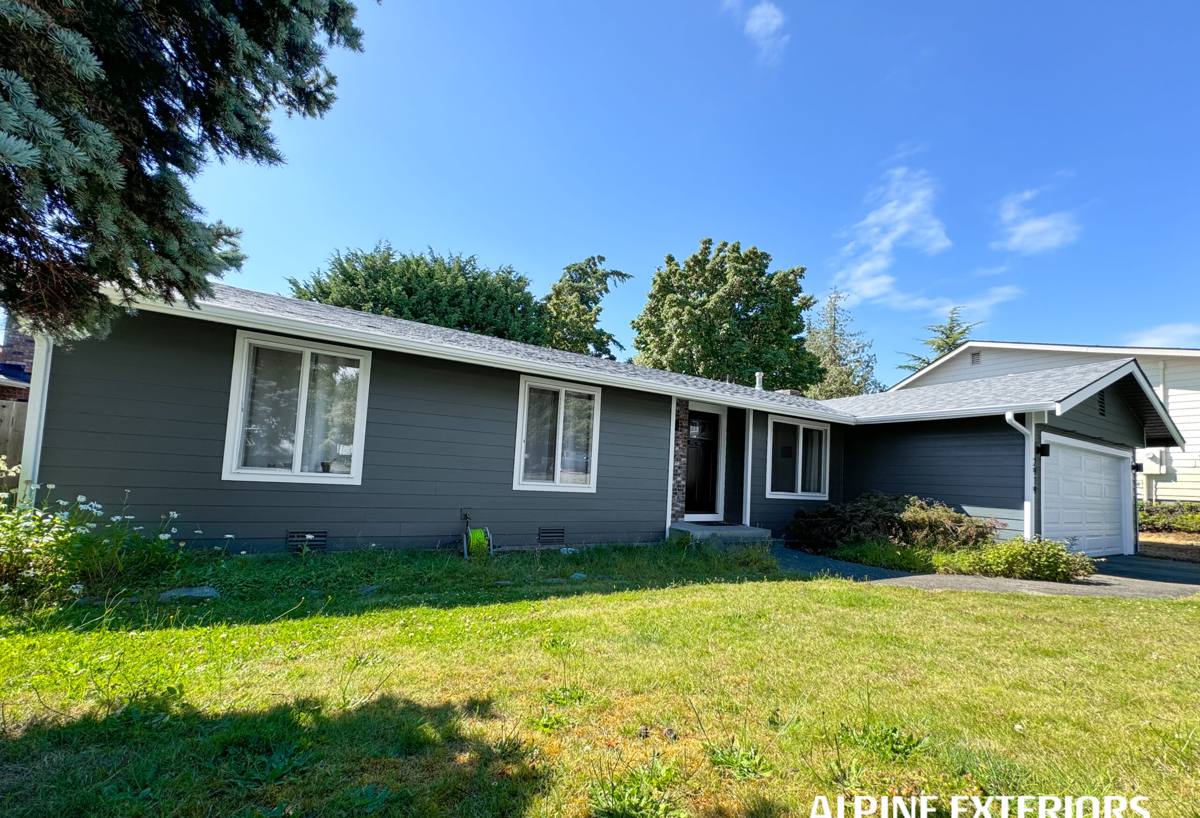
Why This Climate Is Hard on Board and Batten Specifically
Board and batten isn't lap siding. It's a flat panel field with vertical battens covering the joints, which means the assembly lives or dies on how well those seams and panel faces shed water over time. In this part of Whatcom County and the adjoining Fraser Valley, three conditions combine to stress that assembly harder than most siding profiles:
- Salt air: Proximity to Puget Sound and the Strait of Georgia means airborne salt reaches inland further than people expect. It accelerates fastener corrosion and breaks down poor-quality paint films faster than a dry climate ever would.
- Driving rain: Wind-driven rain off the water doesn't fall straight down — it hits vertical wall surfaces at an angle, which is exactly the orientation that finds gaps at butt joints, unsealed battens, and undersized clearances.
- A long moss season: Cool, damp, shaded conditions here can run from fall through spring. Anything that holds moisture at a seam or a low-clearance edge gives moss and algae a long runway to establish before a dry stretch ever shows up.
None of that makes board and batten a bad choice for this area — it's actually a strong architectural fit for the farmhouse and modern-rural styles common around Lynden and Aldergrove. It just means the material and the installation details matter more here than they would somewhere drier.
What Goes Wrong When Those Details Are Skipped
The failures we see on board and batten jobs in this region are consistent: butt joints that were caulked instead of properly flashed, battens fastened straight through without accounting for expansion, bottom clearance shorted at grade or a deck ledger, and face panels that were never rated for the moisture cycling they'd see here. Every one of those is preventable at install time and expensive to fix after the fact.
Why We Install Board and Batten Only in James Hardie Fiber Cement
We do not offer board and batten in vinyl, LP SmartSide, primed spruce, cedar, Cemplank, or Allura. That's a deliberate standard, not a lack of options, and it comes down to how each material handles the specific stresses this profile faces in a wet, salt-influenced climate.
Wood board and batten — cedar or primed spruce — can look excellent when new, but it's an organic material in a climate that gives it very little time to dry between rain events. Even with good finishes, seams and end grain are where wood siding fails first, and board and batten has more exposed seams per square foot than almost any other profile. LP SmartSide is an engineered wood product with a factory-applied treatment that resists moisture better than raw lumber, but it's still wood-based at its core, and cut edges and field joints need to be sealed correctly every time or the same moisture path opens up. Vinyl board and batten is affordable and low-maintenance, but it's a thin, flexible material that can warp or oil-can in temperature swings and doesn't hold paint if a color change is ever wanted — and in coastal wind it moves more than a homeowner expects.
James Hardie fiber cement is non-combustible, dimensionally stable across our temperature range, and engineered specifically for this kind of climate through its HZ10 product line, which is built for cold, wet, coastal Pacific Northwest conditions. The factory-applied ColorPlus finish is baked on under controlled conditions rather than field-painted, so the color holds up to salt air and UV exposure far longer than a job-site paint job, and touch-up product is formulated to match. It's also backed by a strong transferable limited warranty when installed to Hardie's specifications — which matters on a profile where installation quality is doing most of the work anyway.
How the Materials Compare on the Points That Actually Matter Here
| Factor | James Hardie Fiber Cement | Wood / Engineered Wood | Vinyl |
|---|---|---|---|
| Moisture behavior at seams | Stable; won't swell or rot at cut edges when properly sealed | Most vulnerable point; requires diligent sealing and maintenance | Won't rot, but can trap moisture behind panels |
| Salt air / coastal exposure | Factory finish resists fading and chalking | Finish breaks down faster; more frequent recoating | Can become brittle over time in UV and salt exposure |
| Dimensional stability | Minimal expansion/contraction | Moderate; wood moves with humidity | Higher movement; can warp in heat, contract in cold |
| Fire rating | Non-combustible | Combustible | Combustible, can melt/deform |
| Maintenance cycle | Occasional wash; no repainting for factory finish life | Repainting/staining every few years | Low, but color can't be changed by painting easily |
What a Correct Board and Batten Installation Involves
The profile looks simple from the street, but a correct installation has more moving parts than most homeowners realize:
Water Management Behind the Panel
A weather-resistive barrier and a rainscreen or drainage gap behind the siding gives any moisture that gets past the face material a way out instead of a place to sit against the sheathing. Given how much driving rain this area sees, we treat this layer as non-negotiable, not an upgrade.
Joint and Seam Treatment
Butt joints in the field panels get flashed, not just caulked. Caulk is a maintenance item that fails eventually; flashing is a permanent water management detail. Battens are fastened per Hardie's blocking pattern so they're not just decorative strips glued or nailed randomly over the seam.
Fastener Selection
Given the salt air in this region, we use corrosion-resistant fasteners rated for the exposure, not general-purpose fasteners that will streak and weaken over a decade of coastal humidity.
Clearance at Grade, Roofs, and Decks
Board and batten needs proper clearance from grade, roof lines, decks, and patios — typically several inches minimum — so splashback and standing moisture never sit against the bottom edge. This is one of the most common corners cut on budget installs, and it's exactly where moss and rot start first in a climate like this one.
Panel and Batten Layout
Batten spacing needs to be planned around window and door openings before the first panel goes up, not adjusted on the fly, so the reveal stays even and corners land cleanly. A rushed layout is usually visible from the curb.
Our Process for Aldergrove and Lynden-Area Board and Batten Projects
- On-site assessment: We look at your home's current siding, moisture history, sun/shade exposure, and grade clearance before recommending anything.
- Product and color selection: We walk through Hardie's board and batten options and ColorPlus palette suited to farmhouse, craftsman, and modern-rural styles common in this area.
- Written scope and timeline: You get a clear breakdown of what's included — tear-off, water barrier, flashing, fastening, and finish work — before any work starts.
- Installation to manufacturer spec: Crews that already work this border region install to Hardie's published fastening, clearance, and joint details, not shortcuts.
- Final walkthrough: We review the finished work with you and confirm clearances, seams, and trim before calling the job done.
Why Local Experience on This Specific Border Matters
Aldergrove sits close enough to Lynden that the building conditions are nearly identical — same rainfall patterns, same seasonal moss pressure, same salt-air influence off the Sound and the Strait. A crew that installs siding here regularly already knows how much clearance to leave at grade in this soil and drainage pattern, which wall orientations take the worst of the driving rain, and how long the moss season really runs before it needs a fresh look. That's not something you get from a general contractor who does a few siding jobs a year alongside everything else — it comes from doing this specific work, in this specific climate, over and over.
What to Check Before Hiring for a Board and Batten Job
- Do they install to the siding manufacturer's published specifications, or their own shortcuts?
- Will they explain their water management plan (barrier, drainage gap, flashing) before work starts, not just after you ask?
- Do they use corrosion-resistant fasteners appropriate for coastal/salt-air exposure?
- Can they show you actual clearance measurements they plan to leave at grade, decks, and roof lines?
- Is the warranty tied to correct installation, and is it transferable if you sell the home?
Get an Honest Look at Your Project
If you're weighing board and batten for a home in Aldergrove or on the Lynden side of the border, we're happy to come take a look, walk the exterior with you, and give you a straight assessment — no pressure, no upsell. Fill out the form below for a free estimate.