 Lynden Siding
 Siding Replacement for Homes Near the Aldergrove–Lynden Border
Homes just north and south of the Aldergrove, BC and Lynden, WA border crossing share the same weather, the same soil, and often the same siding problems. We work this stretch of the border regularly, which means we've seen how the same storm system that soaks a farmhouse outside Lynden does the same thing to a house a few miles up the road in the Township of Langley. Whether your property sits in Whatcom County or on the BC side near Aldergrove, the fundamentals of a correct siding replacement don't change — but the details of doing it right in this specific climate absolutely do.
This page is about one job: replacing siding on homes in and around Aldergrove, BC and Lynden. Not a general overview, not a sales pitch — just what local homes need, what a correct installation actually involves, and why the crew doing the work matters as much as the material going on the wall.
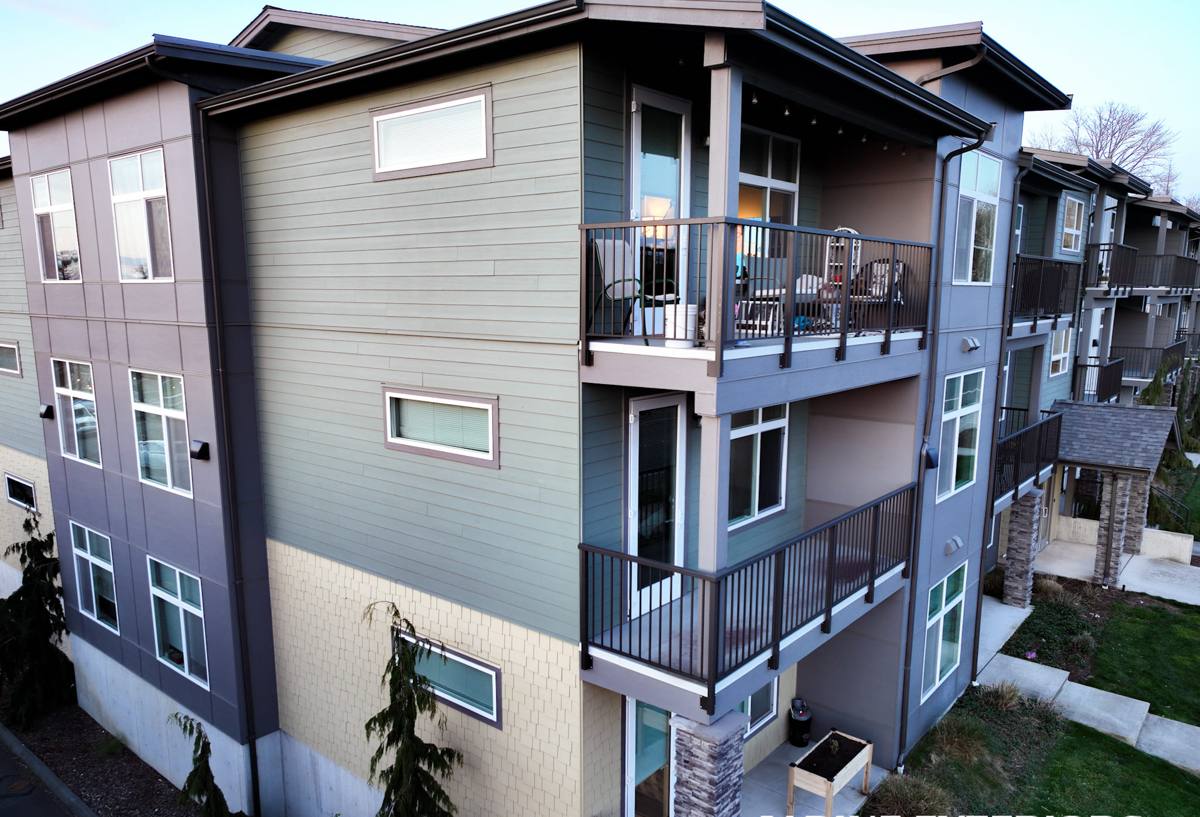
What This Climate Does to Siding Over Time
The Pacific Northwest marine climate that reaches this part of Whatcom County and the Fraser Valley isn't dramatic — no hurricanes, no extreme freezes most winters — but it's relentless. That's the part homeowners underestimate.
Salt Air and Moisture-Laden Wind
Prevailing air moving in off the Strait of Georgia and Puget Sound carries salt and moisture well inland, and it doesn't take a beachfront lot to feel the effects. Salt-laden moisture accelerates corrosion on fasteners, trim, and any siding product with exposed metal or untreated wood fiber, and it works into seams and end-cuts that aren't properly sealed.
Driving Rain
Rain here doesn't just fall — wind pushes it sideways into wall assemblies, especially on west and south-facing elevations that catch storms coming off the water. Siding that isn't installed with the correct water-resistive barrier, flashing, and drainage plane will eventually let that rain behind the cladding, where it causes rot long before anyone sees a stain on the outside.
A Long Moss Season
Between the rainfall totals and the number of overcast, damp days per year, moss and algae have a long runway to establish themselves on north-facing walls, under eaves, and anywhere airflow is limited. On the wrong material, that growth holds moisture against the surface and accelerates whatever damage the rain started.
None of this is unique to one street or one neighborhood — it's the baseline condition for exterior work anywhere between Lynden and Aldergrove. Siding that isn't chosen and installed with this in mind is siding that will disappoint a homeowner years before it should.
Signs Your Siding Needs Replacing, Not Just Repairing
Not every problem calls for a full replacement, but in this climate, certain signs mean patching is just delaying a bigger repair bill.
- Soft or spongy spots when you press on the siding, especially near the bottom courses or below windows
- Persistent moss or algae staining that returns within a season of cleaning
- Visible cupping, buckling, or separation at seams and butt joints
- Paint that won't hold — blistering, peeling, or needing a repaint far more often than it should
- Interior signs like musty smells near exterior walls, or peeling interior paint on the same wall as damaged siding
- Siding that's original to a home built more than 20–25 years ago, particularly wood-based products
If you're seeing more than one of these, it's worth an inspection before another wet season goes by.
What a Correct Siding Replacement Actually Involves
Siding replacement is often sold as a cosmetic upgrade. In this climate, it's a moisture-management project that happens to also change how the house looks. The visible siding is the last layer — everything underneath it is what actually keeps water out.
Tear-Off and Inspection
Old siding comes off in full, not patched over, so the sheathing underneath can actually be inspected. This is where hidden rot, past water intrusion, or failed flashing around windows and doors gets found and dealt with — not covered up.
Water-Resistive Barrier and Flashing
A new weather-resistive barrier goes on correctly lapped, with proper flashing at every window, door, and penetration. Given how much horizontal, wind-driven rain this area sees, this step matters more here than it would in a drier climate — it's the difference between water shedding off the wall and water finding a way behind it.
Installation to Manufacturer Spec
Fastener spacing, clearances at grade, gaps at butt joints, and caulking at penetrations all have to follow the manufacturer's installation instructions exactly. This isn't a formality — installing outside spec is one of the fastest ways to void a warranty and create the exact moisture problems the product was designed to prevent.
Trim, Caulking, and Finish Details
The last coat of paint or the factory finish is only as good as what's underneath it. Correct trim work and sealant at transitions keep water from tracking behind the siding at corners, soffits, and roof lines — the spots where most failures actually start.
Why We Only Install James Hardie Fiber Cement
We don't install vinyl, LP SmartSide, primed spruce, cedar, or other fiber cement brands. That's a deliberate standard, not a limitation on what we're capable of installing.
In a climate defined by salt-laden wind, driving rain, and a long moss season, the material matters as much as the workmanship. James Hardie fiber cement is non-combustible, doesn't absorb moisture the way wood-based products do, and holds its factory-applied ColorPlus finish far longer than field-painted alternatives — which matters when repainting means scaffolding and labor, not just a can of paint. Hardie's HZ5 product line is engineered specifically for climates like this one, with freeze-thaw and moisture cycling in mind. It also carries a strong, transferable warranty when installed to spec — which is exactly why correct installation isn't optional in our process.
We're not going to tell you other products are junk. Vinyl is inexpensive and low-maintenance in the right setting. Cedar has real character. LP SmartSide has improved over the years. But each comes with trade-offs — moisture sensitivity, seam behavior, repainting cycles, impact resistance — that we've decided aren't worth carrying on homes we put our name on in this particular climate.
How the Common Options Compare
| Material | Moisture Behavior | Maintenance | Typical Lifespan |
|---|---|---|---|
| James Hardie Fiber Cement | Engineered for wet climates; won't rot or swell | Occasional wash; factory finish holds color | 30+ years, strong transferable warranty |
| Vinyl | Doesn't rot, but seams can allow water behind it | Low, but can crack or fade in sun/cold cycling | 20–30 years, warranty often prorated |
| Cedar | Absorbs moisture; needs sealing/staining upkeep | High — regular refinishing required | 15–25 years with diligent maintenance |
| LP SmartSide / Engineered Wood | Treated for moisture, but edge-sealing is critical | Moderate; repainting on a cycle | 20–30 years if installed and maintained precisely |
Our Process, Start to Finish
- Site visit and assessment — we look at your current siding, sheathing condition, and the elevations that take the worst weather
- Written estimate — clear scope, product line, and cost factors, no pressure to sign on the spot
- Tear-off and sheathing inspection — old material removed, any hidden damage identified and discussed before we move forward
- Weather barrier and flashing installation — the layer that actually keeps water out
- Hardie installation to spec — correct fastening, clearances, and joint treatment
- Final walkthrough — trim, caulking, and finish details reviewed with you before we call it done
Why a Crew That Already Works Aldergrove and Lynden Matters
A siding job near the border isn't quite the same as one three towns away from either side. British Columbia's building code and permitting process differ from Washington's, and a crew that regularly works both sides of the Aldergrove–Lynden crossing already understands those differences instead of learning them on your project. We know how to plan material delivery and scheduling around border logistics, and we're not guessing at what an inspector on either side will expect to see.
Just as important, we've watched how houses in this specific stretch of Whatcom County and the Fraser Valley actually age — which elevations take the worst of the driving rain, where moss tends to establish first, which older homes are more likely to have hidden moisture damage behind original siding. That local pattern recognition doesn't come from a general contractor's license — it comes from doing this work, in this area, repeatedly.
What to Ask Before You Hire
- Do you carry current licensing and insurance for work on both sides of the border, if needed?
- Will you inspect and document sheathing condition before installing new siding?
- What water-resistive barrier and flashing details do you use, specifically?
- Is the product installed exactly to the manufacturer's written specifications?
- What warranty applies to materials and to labor, and is it transferable if the home sells?
- Can you explain, in plain terms, why you recommend one siding product over another for this climate?
A contractor who can answer all of these clearly, without hedging, is one worth trusting with a job that's supposed to last 30 years.
Get a Straight Answer About Your Siding
If your siding is showing wear, moss won't stop coming back, or you're just planning ahead before the next wet season, we're happy to take a look and give you an honest read on what your home actually needs. Reach out for a free, no-pressure estimate — no upsell, just a clear assessment and straight answers about what a correct siding replacement would involve on your property.