 Lynden Siding
 Aldergrove sits close enough to the coast and to the Nooksack lowlands that its roofs take a specific kind of beating: salt-tinged wind off the Fraser Valley corridor, long stretches of driving rain, and a moss season that can run from October clear through April. Asphalt shingles are still the most practical, cost-effective roofing material for most homes in this pocket of Whatcom County and the border area near it — but only when they're installed with this exact climate in mind. A shingle roof detailed for a dry inland town won't hold up the same way here. This page covers what actually matters for asphalt shingle roofing on homes in and around Aldergrove, BC and Lynden, and how we approach the job differently because of it.
Why This Roof Is Different Here
Three things drive almost every shingle failure we see in this area, and none of them are about the shingle brand.
Salt Air and Metal Fatigue
Homes closer to the coastal flow get a fine dusting of salt-laden moisture carried in on prevailing winds. It doesn't rot shingles directly, but it accelerates corrosion on exposed fasteners, flashing, and vent stacks. A roof that uses bare or lightly coated metal in these spots will show rust streaks and early flashing failure years before the shingles themselves are due.
Driving Rain, Not Just Rain
The difference between rain and driving rain matters more than most homeowners realize. Wind-driven rain pushes water sideways and upward under laps, ridge caps, and around penetrations — areas that a standard, minimum-code installation treats as an afterthought. On an Aldergrove or Lynden roof, every one of those transition points needs to be built assuming water will be pushed at it from an angle, not just falling straight down.
Moss Season
Shaded roof planes, north-facing slopes, and anything near overhanging trees will grow moss here — it's a function of moisture and mild temperatures sitting together for months at a time, not a sign of a bad roof. Left unmanaged, moss lifts shingle edges, holds water against the mat, and shortens the roof's working life by years. Moss is a maintenance issue with a design-stage solution, which we'll get into below.
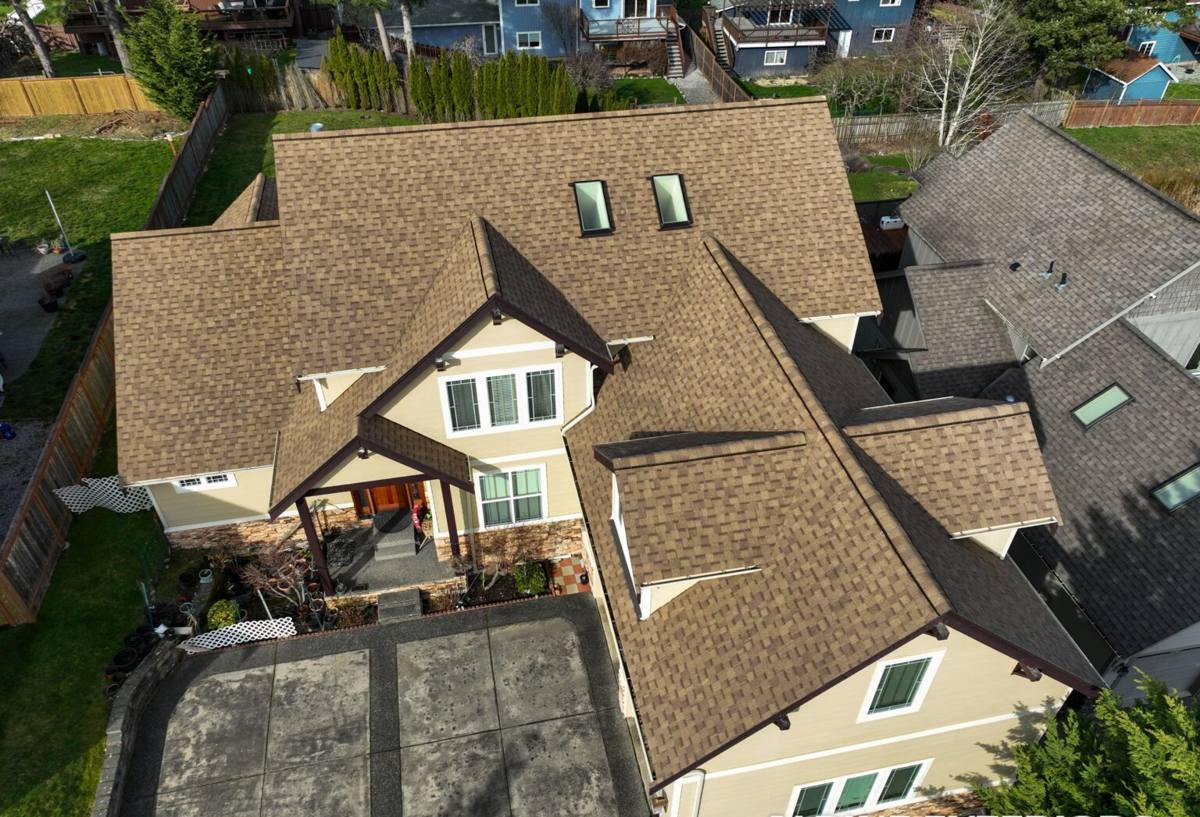
What a Correct Installation Actually Involves
A shingle roof is a system, not a single product. Skipping or downgrading any one layer is where most premature leaks start.
- Deck inspection and repair — any soft, delaminated, or water-stained sheathing gets replaced before anything goes down. Shingles are only as good as what's under them.
- Ice-and-water shield at vulnerable zones — valleys, eaves, and around chimneys and skylights, where wind-driven rain and ice damming are most likely to force water backward under the shingle laps.
- Synthetic underlayment across the full deck — a secondary water barrier that also gives the crew a dry, safe surface to work on during our wetter months.
- Corrosion-resistant flashing — step flashing at walls and chimneys, and properly lapped valley metal, matched to hold up against the salt exposure common in this area.
- Balanced ventilation — intake at the soffits and exhaust at the ridge, sized to move the volume of moist air a Pacific Northwest attic actually produces.
- Proper nailing pattern and fastener count — six-nail patterns in high-wind zones instead of the four-nail minimum, driven flush, not overdriven or underdriven.
- Starter strip and ridge cap detailing — the two areas most often shortcut, and the two most exposed to wind uplift and driving rain.
Shingle Options and How They Perform Locally
Not every shingle line is a good fit for this climate. Wind rating, algae resistance, and moisture tolerance matter more here than in drier regions.
| Shingle Type | Typical Lifespan | Best Fit For This Area |
|---|---|---|
| 3-Tab Standard | 15–20 years | Budget re-roofs, secondary structures; lower wind rating means more attention to fastening detail |
| Architectural / Laminate | 25–30 years | Most common choice locally — thicker mat, better wind rating, holds up well against driving rain |
| Algae-Resistant (AR) Laminate | 25–30 years | Recommended on shaded or north-facing roof planes prone to moss and algae growth |
| Premium / Designer Laminate | 30+ years | Homes wanting a heavier, dimensional look; also carries the strongest wind and impact warranties |
For most Aldergrove and Lynden homes, an algae-resistant architectural shingle is the practical middle ground — it costs a modest amount more than standard architectural shingles up front and pays that back in reduced moss treatment and a longer-looking roof.
Our Process on an Aldergrove or Lynden Home
1. On-Site Assessment
We walk the roof, not just the ground. That means checking deck condition where accessible, ventilation intake and exhaust, existing flashing condition, and moss or algae patterns that point to shaded, slow-drying areas needing extra attention.
2. A Written Scope, Not a Vague Estimate
You get a plan that spells out deck repair allowances, underlayment type, flashing approach, ventilation changes if needed, and the specific shingle line — not just a single lump-sum number with no detail behind it.
3. Weather-Aware Scheduling
Roofing in this region means working around rain windows, not ignoring them. We stage materials and sequence tear-off to keep the deck covered and dry, rather than opening more roof than can be dried in before weather moves back in.
4. Tear-Off and Deck Correction
Old material comes off down to the deck. Any damaged sheathing is replaced — patched-over rot is the single most common cause of a "new" roof leaking within a few years.
5. Installation to the Details Above
Underlayment, ice-and-water shield, flashing, shingles, and ridge work go in following the sequence and fastening standards described earlier — not a stripped-down version of it.
6. Final Walkthrough
We review the finished roof with you, including ventilation, any flashing changes made, and basic maintenance expectations for the property.
Why a Locally Experienced Crew Matters
A crew that already works Aldergrove and Lynden regularly has seen which roof orientations grow moss fastest, which older flashing details tend to fail first in this specific wind and rain pattern, and how to sequence a tear-off around this region's rain windows instead of guessing. That's not marketing — it's the difference between a roof that's built to code and one that's built for what actually hits it here. It also means faster response if something needs attention after the job is done, since we're not driving in from out of the area.
Moss and Algae Management After Installation
Prevention starts at installation — algae-resistant shingles, proper ventilation to reduce trapped moisture, and correct slope transitions that don't hold standing water. After that, upkeep is straightforward:
- Keep overhanging branches trimmed back to reduce shade and debris buildup on the roof plane.
- Clear valleys and gutters of needles and leaf litter each fall, before the wet season sets in.
- Have moss physically removed rather than pressure-washed off — pressure washing strips granules and shortens shingle life.
- Schedule a light visual check every couple of years on shaded or north-facing slopes specifically, since that's where moss returns first.
Cost Factors Homeowners Should Understand
Every roof estimate should account for these variables — they're the reason two houses of similar size can have very different quotes.
| Factor | Why It Matters |
|---|---|
| Roof pitch and access | Steeper or harder-to-access roofs take longer and require more fall-protection setup |
| Number of layers to remove | Tear-off of multiple existing layers adds labor and disposal cost |
| Deck condition | Rotted or delaminated sheathing found during tear-off requires repair before shingles go down |
| Number of penetrations | Chimneys, skylights, and vents each need individual flashing work |
| Shingle line chosen | Standard, architectural, and premium lines carry different material costs and warranty terms |
| Ventilation upgrades | Adding or correcting intake/exhaust venting affects both cost and long-term roof performance |
We'd rather walk you through these factors up front than hand over a number with no explanation behind it.
Signs Your Aldergrove or Lynden Roof Needs Attention
- Granules collecting in gutters or at downspout outlets
- Shingle edges curling or lifting, especially on south- or west-facing slopes exposed to wind
- Dark streaking or thick moss growth on shaded planes
- Soft spots or sagging visible from the ground or attic
- Daylight visible through the roof deck from inside the attic
- Rust staining around vent stacks or chimney flashing
None of these mean the roof needs replacing immediately, but they're worth a professional look before the next wet season adds pressure to the problem.
If you're weighing repair versus replacement, or just want an honest read on how much life is left in your current roof, we're glad to come take a look. Fill out the form below for a free, no-pressure estimate on your Aldergrove or Lynden home.