 Lynden Siding
 Why Bellingham Roofs Take More Punishment Than People Expect
Bellingham sits close enough to the water that salt-laden air reaches roof surfaces year-round, and close enough to the foothills that shaded, damp roof planes rarely get a full dry-out between storms. Add Whatcom County's long, wet fall-through-spring stretch and you get a roofing environment that's tougher on asphalt shingles than most manufacturers' marketing materials assume. None of this means asphalt shingle roofing is a bad choice here — it's still the most practical, cost-effective option for the large majority of homes. It just means the installation details matter more in this climate than they would somewhere dry.
Three things drive most of the roof problems we see on Bellingham homes: moss and algae growth on shaded or north-facing slopes, wind-driven rain finding its way under improperly lapped shingles or flashing, and salt air accelerating the breakdown of metal fasteners and flashing that weren't rated for coastal exposure. A roof built with those three factors in mind will simply outlast one that wasn't, even using the exact same shingle product.
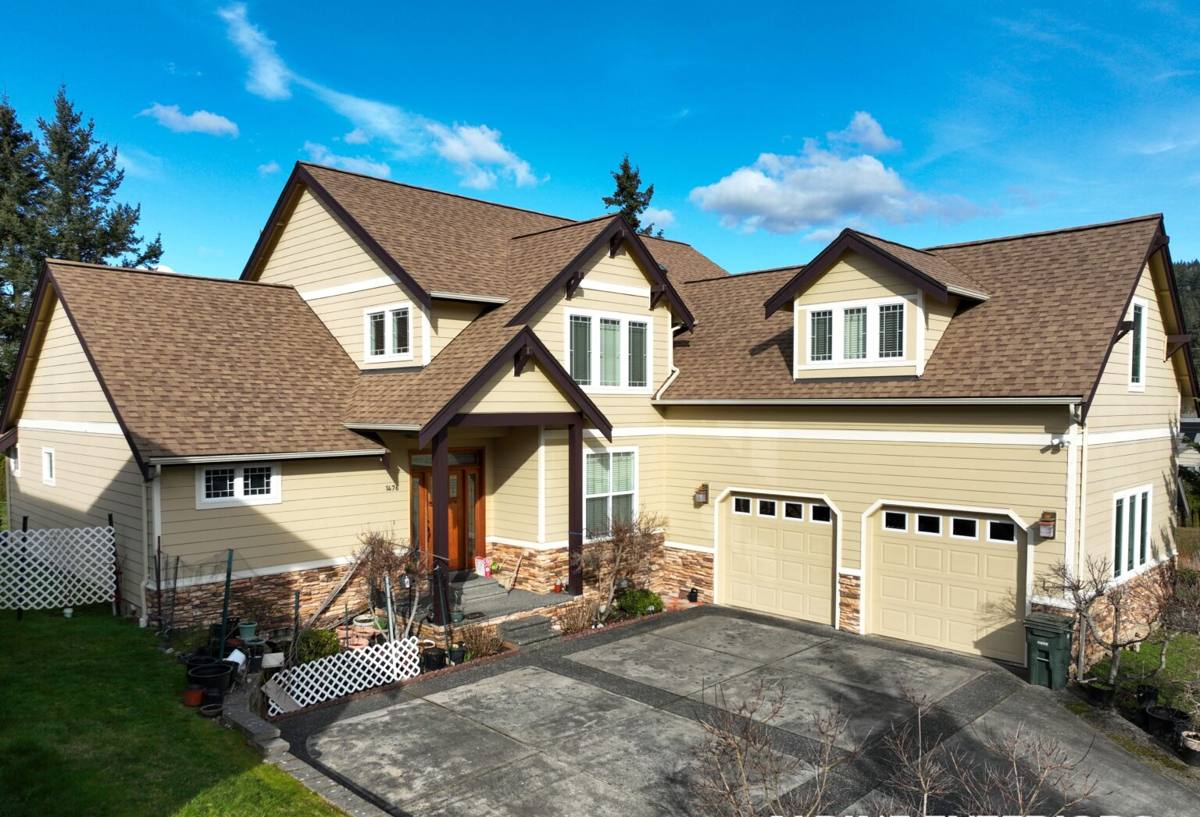
What a Properly Installed Asphalt Shingle Roof Actually Involves
Asphalt shingle roofing looks simple from the ground, which is part of the problem — a lot of the work that determines whether a roof lasts 15 years or 30 years happens underneath the shingles, where nobody ever sees it again. A correct install includes:
- A sound, dry roof deck — any soft or delaminated sheathing gets replaced, not shingled over
- Ice-and-water shield membrane at eaves, valleys, and around every penetration, not just the minimum code strip
- Synthetic or felt underlayment across the full deck, lapped correctly with the slope so water sheds downhill at every seam
- Proper starter strip along eaves and rakes so the first course of shingles has full seal contact
- Correct nailing — six nails per shingle in high-wind or coastal zones, placed in the manufacturer's nailing strip, not high or low
- New flashing at every wall intersection, chimney, skylight, and roof-to-roof transition
- Balanced intake and exhaust ventilation so the attic isn't trapping moisture against the underside of the deck
Skip any one of these and the roof can still look fine for a few years. The failures show up later, as leaks at a valley that was never properly lined, or shingles that lift in a windstorm because they were nailed too high in the strip. In a climate that delivers driving rain off the water and sustained wind events several times a year, these details aren't optional upgrades — they're the difference between a roof that holds up and one that doesn't.
Ventilation Deserves Its Own Mention
A poorly ventilated attic traps warm, moist air against the roof deck, which is exactly the condition that encourages moss and algae to take hold on the shingles above and rot to develop in the sheathing below. We check intake (soffit vents) and exhaust (ridge or box vents) as part of every roofing job, not just the shingles themselves, because a beautiful new roof over a poorly ventilated attic still ages faster than it should.
Shingle Selection for Salt Air and a Long Moss Season
Not every asphalt shingle is built the same way, and in this climate the differences matter more than the color swatch. We generally steer Bellingham customers toward algae-resistant shingles — these use copper or other metal granules blended into the surface specifically to slow the black streaking and moss growth that shaded, damp roof planes are prone to here. Standard shingles without that treatment will still perform structurally, but homeowners on tree-shaded lots typically see algae staining show up within a few years.
We also weigh architectural (dimensional) shingles against traditional 3-tab in most Bellingham quotes. Architectural shingles are heavier, use a stronger laminated construction, and generally carry higher wind ratings — a real consideration given how much wind-driven rain this area sees off the Sound. They cost more upfront but tend to be the better value once you account for wind performance and the longer manufacturer warranties most lines carry.
For fasteners and flashing, we favor corrosion-resistant metals in any home within a few miles of saltwater exposure. Standard galvanized flashing can start showing surface corrosion faster near the coast than it would inland, so we factor that into material selection rather than defaulting to whatever's cheapest.
Our Process, Start to Finish
- Inspection and honest assessment — we get on the roof (not just a look from the ground) and check the deck, existing flashing, ventilation, and moss/algae condition before quoting anything
- Written estimate — clear scope, materials, and price, so you know what you're approving before work starts
- Tear-off and deck inspection — old roofing comes off completely so we can actually see the deck condition, not guess at it
- Deck repair as needed — any soft, water-damaged, or delaminated sheathing gets replaced before anything new goes down
- Underlayment, flashing, and shingle installation — following the details above, not a shortcut version of them
- Ventilation check — confirming intake and exhaust are balanced for the attic's size
- Cleanup and magnetic sweep — nails and debris cleared from the yard and driveway before we consider the job done
- Final walkthrough — we go over the finished roof with you before we call it complete
Moss, Cleaning, and What Actually Extends a Roof's Life
Moss on a shaded Bellingham roof isn't just cosmetic — moss holds moisture against the shingle surface and, over years, can work its way under shingle tabs and lift them. Pressure washing is not the answer; it strips granules and shortens shingle life faster than the moss would on its own. The better approach is gentle chemical treatment or hand removal, done at a frequency that matches how shaded and damp a particular roof plane is, plus zinc or copper strips near the ridge on roofs that are chronic moss producers. We're happy to talk through a maintenance schedule that fits your specific lot and tree cover rather than a one-size-fits-all interval.
What Drives the Cost of a Bellingham Roofing Job
| Factor | Why It Matters Here |
|---|---|
| Roof size and pitch | Steeper roofs and multiple valleys take longer to flash correctly and require more safety setup |
| Deck condition | Hidden water damage from past leaks means sheathing replacement, which isn't known until tear-off |
| Shingle tier | Algae-resistant and architectural shingles cost more per square than basic 3-tab but hold up better to moss and wind |
| Number of penetrations | Every chimney, skylight, and vent pipe needs its own flashing detail — more penetrations means more labor |
| Access and site conditions | Tree cover, tight lot access, or multi-story sections affect staging and safety equipment needs |
| Ventilation upgrades | Adding or correcting intake/exhaust vents adds modest cost but pays off in roof longevity |
We give homeowners a broad range up front based on roof size and visible condition, then firm it up once we've done a proper inspection and, if needed, seen the deck after tear-off. We don't pad estimates with contingencies we don't expect to use, and we don't lowball a quote just to win the job and find "surprises" later.
A Quick Checklist Before You Sign Any Roofing Contract
- Does the estimate specify the shingle brand and exact product line, not just "architectural shingles"?
- Is ice-and-water shield coverage spelled out for valleys and eaves, not left vague?
- Does the contract name who handles flashing at chimneys and walls — the same crew, or a sub?
- Is ventilation addressed at all, or is the quote shingles-only?
- Are cleanup and debris removal included, or a separate line item?
- Is the workmanship warranty separate from the manufacturer's material warranty, and how long is each?
Manufacturer Warranties vs. Workmanship Warranties
Shingle manufacturers warranty their material against defects, but that warranty typically only stays fully intact if the installation follows their specifications — proper nailing, correct underlayment, adequate ventilation. That's part of why we install to those specs as a baseline standard, not an upsell: it protects the manufacturer's warranty you're already paying for. Separately, our own workmanship warranty covers the installation itself. Ask any roofing contractor to put both warranties in writing, with terms spelled out, before you sign.
Why a Crew That Already Works Bellingham Matters
Roofing crews that work Whatcom County regularly develop a feel for which details actually matter here — which slopes on a given lot type will get chronic moss, which flashing details tend to fail first under driving coastal rain, which ventilation setups keep attics dry through a wet winter. That's not something a crew passing through the area on a one-off job typically has dialed in. We also know the practical side: permitting expectations, typical weather windows for tear-off scheduling, and how to sequence a job so a roof isn't left exposed when a rain system is rolling in off the water.
Asphalt shingle roofing done right isn't complicated, but it does require getting the underlying details correct for the climate the roof actually has to survive. Salt air, driving rain, and a long moss season aren't reasons to avoid asphalt shingles — they're reasons to make sure whoever installs yours understands exactly what this area asks of a roof.
If you're weighing a roof replacement or repair on a Bellingham home, we're glad to come take an honest look and put together a straightforward, no-pressure estimate. Use the form below to get started.