 Lynden Siding
 Roofing a Kendall Home Is Not the Same Job as Roofing One in Town
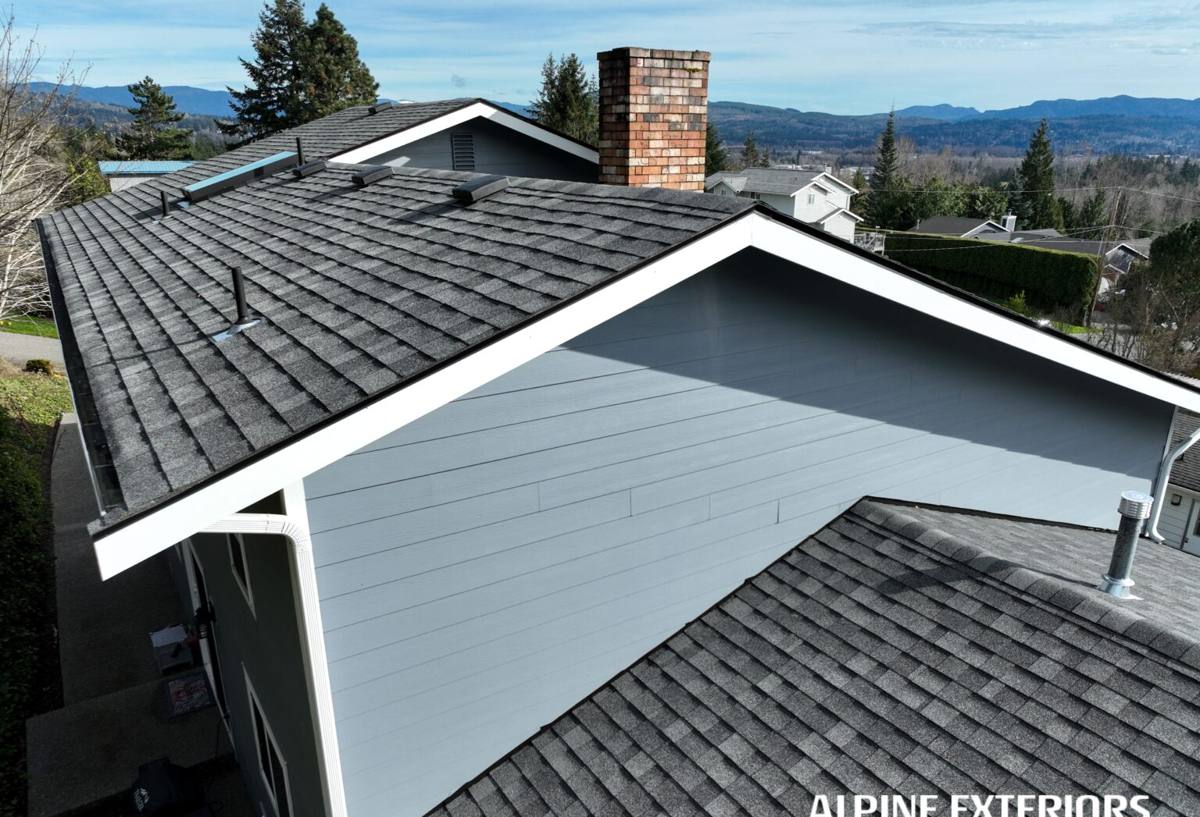
Kendall sits up the Mount Baker Highway corridor from Lynden, in the more wooded, higher-elevation stretch of Whatcom County. That setting changes what a roof has to deal with day to day. Where a Lynden roof in an open subdivision sheds sun and rain pretty evenly, a Kendall roof is usually working under partial shade from conifers and big-leaf maples for a good part of the day, catching needle and leaf debris in its valleys, and staying damp longer after every storm because the tree canopy slows evaporation. That combination is exactly what moss, moisture-trapped algae, and premature granule loss feed on.
We're not describing a different roofing system for Kendall — asphalt shingles are still the right, cost-effective choice for the vast majority of homes out there. What changes is the attention paid to ventilation, underlayment, and shingle selection, because a roof that's fine going up in September can start showing moss streaks and soft spots within a couple of wet seasons if those details get skipped.
What Whatcom County Weather Actually Does to a Shingle Roof
Three things do most of the damage over the life of a roof in this part of the county:
- Driving, wind-blown rain. Storms moving through the county don't just fall straight down — wind pushes rain sideways into laps, ridges, and any flashing detail that isn't sealed and lapped correctly. A roof that's fine in a light drizzle can leak in a sideways November storm if the underlayment and flashing weren't installed with that in mind.
- A long, wet moss season. Cool, damp conditions stretch from fall through spring, and shaded roofs like most of what we see in Kendall barely get a break. Moss doesn't just look bad — it lifts shingle edges as it grows, holds water against the roof deck, and accelerates granule loss.
- Salt-influenced marine air. Whatcom County sits close enough to the Strait of Georgia and Puget Sound that salt-laden marine air moves through the region on prevailing winds, even well inland. It's a slower factor than moss or rain, but it accelerates corrosion on exposed metal — nail heads, flashing, and vents — over the life of a roof.
None of that means Kendall homes need exotic materials. It means the underlayment, fastening, flashing, and ventilation choices have to actually account for these conditions instead of following a generic, one-size-fits-all install.
Moss: Prevention Beats Removal
Moss on a shaded roof isn't a matter of if, it's a matter of when — but how much it establishes and how fast it damages the roof depends heavily on the install. Algae-resistant (AR) shingles with copper or zinc-infused granules slow regrowth. Proper ventilation keeps the deck from staying warm and damp, which is what moss and moisture-loving algae want. And keeping valleys and gutters clear of needle litter, which we'll flag during a normal service call, cuts down on the wet debris that gives moss somewhere to start.
What a Correct Asphalt Shingle Roof Installation Actually Involves
A shingle roof looks simple from the ground, but the parts nobody sees are what determine whether it lasts 15 years or 30. On every Kendall project we account for:
- Ice-and-water shield at eaves, valleys, and around every penetration — chimneys, skylights, plumbing vents — where wind-driven rain and any cold-snap ice are most likely to force water backward under the shingles.
- Synthetic underlayment across the full deck as a second line of defense, not just felt paper that degrades faster under prolonged damp conditions.
- Proper nailing pattern — six nails per shingle in high-wind-exposure areas rather than the minimum four, placed in the manufacturer's nail line, not high or low, which is one of the most common causes of blow-offs and warranty denials we see on older re-roofs.
- Balanced ventilation between soffit intake and ridge or roof-line exhaust, sized to the attic, not guessed at.
- Correct flashing at every wall, chimney, and valley intersection, including step flashing and kick-out flashing where a roof plane meets a sidewall — a detail that's cheap to do right during installation and expensive to fix after the fact.
- Starter strip along eaves and rakes, which seals the vulnerable first course against wind uplift and water intrusion.
Tear-Off vs. Layover
We tear off down to the deck on the large majority of jobs. Layovers (a new layer over existing shingles) can be code-legal in limited situations, but they trap moisture, add weight, hide deck damage, and shorten the life of the new shingles. On a Kendall roof, where moisture is already working against you, a hidden rotten section under an old layer is exactly the kind of problem we'd rather find and fix than build over.
Choosing the Right Shingle for a Kendall Property
Shingle lines vary by wind rating, algae resistance, and expected lifespan, which matters more here than in a drier climate. The table below covers the general tiers we work with most.
| Shingle Tier | Typical Lifespan | Wind Rating | Best Fit |
|---|---|---|---|
| 3-Tab / Standard | 15–20 years | Lower | Budget-conscious projects, secondary structures |
| Architectural / Laminate | 25–30 years | Higher | Most Kendall homes — our default recommendation |
| Premium / Designer | 30+ years | Highest | Steep-slope or highly visible roofs, higher-end finish |
For most wooded, shaded lots we steer homeowners toward algae-resistant architectural shingles as the baseline, not the upgrade. The price difference over 3-tab is modest, and the added mass and higher wind rating hold up noticeably better against the driving rain and gusts this area sees through fall and winter.
Cost Factors on a Kendall Roof
Every roof gets priced on its own specifics, but the factors that move the number most are usually the same:
| Factor | Why It Matters |
|---|---|
| Roof pitch and access | Steeper roofs and limited driveway/staging access take longer and require more safety setup |
| Deck condition | Rot found after tear-off, more common on shaded, damp roofs, requires plywood or board replacement |
| Number of penetrations | Chimneys, skylights, and vents each need individual flashing work |
| Shingle tier | Material cost scales with wind rating, algae resistance, and warranty length |
| Tear-off layers | Removing multiple old layers adds disposal cost and labor |
We give an honest, written estimate after walking the roof and, where needed, checking the attic — not a number pulled from square footage alone.
Our Process, Start to Finish
- On-site inspection. We walk the roof and check the attic for ventilation, moisture staining, and deck condition.
- Written estimate. A clear scope and price, no vague allowances buried in the fine print.
- Tear-off and deck check. Old material comes off, the deck gets inspected board by board, and any rot or soft spots are repaired before anything new goes down.
- Underlayment and flashing. Ice-and-water shield, synthetic underlayment, and all flashing details installed to manufacturer and code standards.
- Shingle installation. Correct nailing pattern, exposure, and alignment for a roof that performs, not just one that looks straight from the driveway.
- Ventilation check and cleanup. Intake and exhaust balanced, magnetic sweep for stray fasteners, debris hauled off site.
- Final walkthrough. We go over the finished roof and the warranty paperwork with you directly.
Maintenance That Actually Extends Roof Life
A well-installed roof still benefits from basic upkeep, especially under tree cover. What we recommend homeowners keep on top of between professional inspections:
- Clear needles and leaf litter from valleys and gutters at least twice a year, more if you're under heavy conifer cover
- Watch for dark streaking or green growth, early signs of algae or moss before it spreads
- Trim back branches that overhang or brush against the roofline
- Check attic insulation and ventilation aren't blocked by stored items or added insulation
- Have flashing around chimneys and skylights checked every few years, since sealant and metal both age faster under damp, salt-influenced air
- Never pressure-wash a shingle roof — it strips granules and shortens shingle life
Warranty Structure: Material vs. Workmanship
Two different warranties cover a new roof, and homeowners deserve to understand both. The manufacturer's material warranty covers defects in the shingles themselves. The workmanship warranty, which we provide separately, covers the installation — flashing, nailing, ventilation, and sealing. A roof can fail from bad installation even with perfect shingles, which is why we stand behind our labor directly rather than pointing homeowners back to the manufacturer for every issue.
Why Hire a Crew That Already Works in Kendall
Roofing crews who mostly work in flatter, more open parts of Whatcom County can still do competent work, but they're not necessarily thinking about shade patterns, needle load, or the specific moss pressure that comes with a wooded lot. We work this area regularly, which means we're not guessing at how a given roofline will perform once the trees leaf out and the wet season sets in — we've seen how these roofs age and we build accordingly, from underlayment choice to ventilation sizing to how tight we keep valleys clear of debris during the job itself.
We also pull permits, follow Whatcom County requirements, and carry the insurance a homeowner should ask for before anyone gets on their roof. None of that is optional, and none of it should need to be asked for twice.
If your Kendall roof is due for a look, whether it's showing moss, losing granules, or just getting close to the end of its expected life, we're glad to come out for a free, no-pressure estimate. Use the form below and we'll get a time on the calendar.