 Lynden Siding
 A Bellingham House Faces a Specific Kind of Weather
Bellingham sits in a spot where three things pile up on a house's exterior at once: salt-tinged air moving off the water, driving rain that comes in sideways more often than straight down, and a moss season that, realistically, runs most of the year. None of those three things is unusual on its own for western Washington. Together, over enough winters, they're what separates siding that still looks good in year fifteen from siding that's chalking, staining, and softening at the edges by year eight.
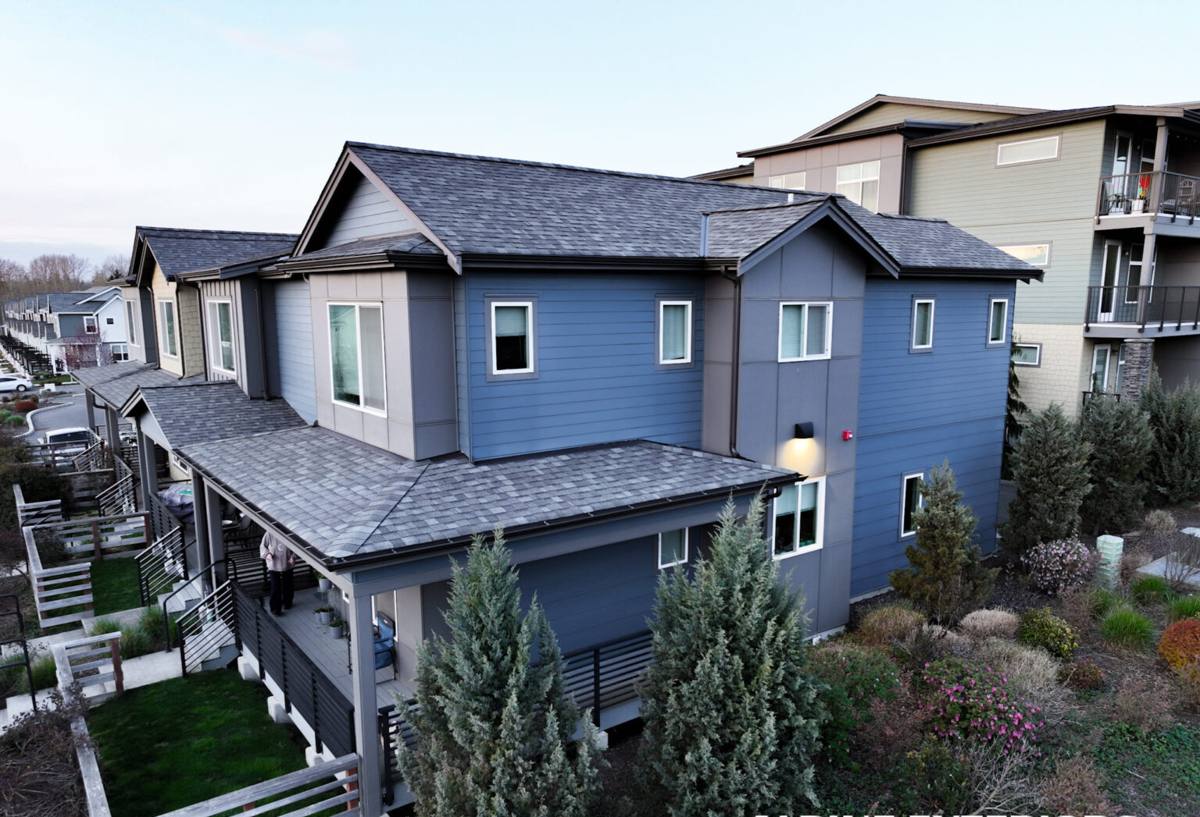
We install James Hardie fiber cement siding exclusively, and Bellingham is one of the areas where we spend the most time explaining why that standard exists. This page is about one thing specifically: what a correctly installed James Hardie system looks like on a Bellingham home, what the local climate actually does to a wall over time, and how our process is built around those conditions rather than around a generic install checklist.
What Salt Air, Driving Rain, and Moss Actually Do to Siding
Salt Air
Homes closer to the water pick up salt-laden air that settles on exterior surfaces and, over years, accelerates the breakdown of lower-quality finishes — chalking, dulling, and in some cases corrosion of exposed fasteners if the wrong hardware was used. It's a slow process, which is exactly why it's easy to underestimate when a homeowner is choosing a siding product based on how it looks on day one rather than how it holds up on year ten.
Driving Rain
Bellingham doesn't just get a lot of rain — a good share of it arrives horizontally, driven by wind off the water and through the gaps between buildings. That matters for siding because driving rain finds every weak seam, every gap where flashing was skipped, and every joint that wasn't caulked or lapped correctly. A siding system that performs fine in a gentle vertical rain can still fail here if the installation details weren't built for wind-driven moisture specifically.
Moss
Shaded walls, north-facing exposures, and lots with mature tree cover all stay damp longer than they would in a drier climate, and that dampness is what moss and algae need to establish. Moss on siding isn't just cosmetic — sustained moisture held against a wall surface is a slow path to problems underneath, particularly on products that aren't dimensionally stable when wet.
Why We Standardized on James Hardie for This Climate
We don't install LP SmartSide, vinyl, Cemplank, Allura, primed spruce, or cedar. That's not a claim that every one of those products is bad in every application — it's a professional standard we set based on what actually holds up under Bellingham's specific combination of salt, wind-driven rain, and sustained moss exposure, year after year, on real homes.
- Non-combustible fiber cement: Hardie board is cement-based, not wood-based, so it doesn't carry the same moisture-swelling and rot risk that wood and wood-composite products do when a seam fails.
- Climate-engineered HZ product line: Hardie manufactures region-specific formulations, and for the Pacific Northwest we install the HZ5 line, engineered for colder, wetter climate zones like ours rather than a one-size-fits-all board.
- ColorPlus factory finish: a baked-on finish applied under controlled factory conditions, which resists the fading and chalking that salt air and UV exposure cause faster in field-applied paint.
- Strong transferable warranty: a warranty structure that's meaningful because the product itself is built to actually reach the end of that warranty period in a demanding climate like this one.
- Proven longevity when installed to spec: the material only performs as well as its installation — which is why the details below matter as much as the product choice itself.
What a Correct Installation Involves
A James Hardie system is only as good as the flashing, fastening, and clearance details underneath it. In a climate that drives rain sideways and keeps walls damp for long stretches, these details aren't optional extras — they're the difference between siding that performs for decades and siding that fails quietly behind the surface.
Moisture Management
Correct weather-resistive barrier installation, properly lapped and taped house wrap, and flashing at every window, door, and penetration are what actually keep driving rain from working its way behind the siding. Hardie's own installation instructions are specific about lap and clearance requirements, and skipping them is one of the most common causes of moisture problems on any siding job, not just Hardie.
Fastening
Fasteners need to be corrosion-resistant and driven to the manufacturer's specified depth and spacing — not over-driven, not under-driven. In a salt-air environment, the wrong fastener choice can corrode and stain the siding around it well before the board itself shows any wear.
Clearance and Grade
Hardie specifies minimum clearances from grade, roofline, decks, and patios so water has somewhere to go instead of wicking up into the bottom edge of the siding. On sloped or tight-lot properties around Bellingham, getting this clearance right sometimes takes real planning during tear-off, not just a rule to glance at.
Caulking and Joint Treatment
Butt joints, corners, and penetrations need the right sealant, applied correctly, and Hardie is specific about which joints should be caulked versus which should rely on flashing and lapping alone. Getting this backwards is a common source of trapped moisture.
Ventilation Behind the Cladding
A rainscreen gap or properly vented assembly gives any moisture that does get past the outer layer a way to dry out, rather than sitting against the sheathing. On shaded, north-facing, or heavily treed lots — common around Bellingham — this drying capacity matters more than it does on a sunny, exposed wall.
| Install Detail | Why It Matters Here |
|---|---|
| Lapped, taped weather-resistive barrier | Blocks wind-driven rain from reaching the sheathing |
| Corrosion-resistant fasteners, correct depth | Salt air accelerates corrosion of the wrong hardware |
| Proper grade and roofline clearance | Keeps standing water and splash-back off the bottom edge |
| Correct caulking vs. flashing at joints | Prevents trapped moisture behind the board |
| Rainscreen or vented assembly | Lets incidental moisture dry instead of sitting against the wall on shaded lots |
Moss and Long-Term Maintenance on a Bellingham Home
Even with a correctly installed Hardie system, moss and algae can still develop on shaded or north-facing walls — the siding material doesn't eliminate the conditions that grow moss, it just handles sustained moisture far better than wood-based alternatives while you deal with it. A gentle wash on a normal schedule keeps growth from building up, and Hardie's factory finish holds up to that kind of routine maintenance far better than field-applied paint does over repeated cleanings.
- Rinse siding gently on a regular schedule rather than letting moss or algae build up for years between cleanings
- Avoid high-pressure washing directly into joints and seams, which can force water past intended drainage paths
- Trim back vegetation and tree limbs that keep a wall section shaded and damp longer than the rest of the house
- Watch gutters and downspouts near siding runs — overflow during a heavy rain event is a common, avoidable source of localized staining
- Have caulked joints and flashing spot-checked periodically, especially after severe wind events
Why Hiring a Crew That Already Works Bellingham Matters
The install details above aren't unique to Hardie's instruction manual — they're the same principles any competent siding crew should follow. What changes from region to region is how much margin for error the local climate gives you, and Bellingham gives you very little. A flashing detail that would go unnoticed for years in a drier climate can show up as a moisture problem in a single wet season here.
A crew that already works homes in this specific area has a working sense of which orientations take the worst of the driving rain, which lots hold moisture longest, and how the local permitting and inspection process runs — none of which is something you can fully substitute with a generic installation guide, no matter how good that guide is.
What to Expect From Our Process
- On-site assessment: we look at your home's exposure, existing siding condition, moisture history, and any problem areas before recommending anything.
- Product and color planning: selecting the right Hardie profile, HZ5 formulation, and ColorPlus finish for your home and its orientation.
- Tear-off and inspection: removing existing siding gives us a direct look at the sheathing underneath, which is often the only way to catch hidden moisture damage before it's covered over again.
- Weather-resistive barrier and flashing: installed and lapped correctly at every window, door, and penetration before a single board goes up.
- Installation to manufacturer spec: correct fastening, clearance, and joint treatment throughout, not just on the parts that are easy to see.
- Final walkthrough: reviewing the completed work with you, including how to care for the finish going forward.
A Note on Cost Factors
Every Bellingham home is different, and we don't quote a price without seeing the house, but a few factors consistently move the cost of a Hardie project up or down regardless of who's doing the work:
| Factor | How It Affects the Project |
|---|---|
| Existing siding removal | Tear-off of old wood, vinyl, or damaged material adds labor before installation can begin |
| Hidden sheathing damage | Moisture damage found during tear-off may need repair before new siding goes on |
| Home complexity | Dormers, multiple gables, and cut-up wall lines take more time than a simple rectangular elevation |
| Product line and texture | Lap, panel, and shingle profiles, plus smooth vs. cedarmill texture, price differently |
| Trim and accent work | Custom trim details and accent panel work add scope beyond the field siding itself |
If you're weighing a re-side in Bellingham and want a straight answer on what your home actually needs, we're happy to walk the property with you and put together a free, no-pressure estimate.