 Lynden Siding
 Why Bellingham Roofs Take a Beating
Bellingham sits close enough to the water that salt-laden air is part of daily life, and that air doesn't do metal flashing, fasteners, or exposed roofing hardware any favors. Add in the driving rain that comes off winter storms rolling through the Sound, plus a moss season that can run most of the year in the shade of mature trees, and you have a climate that quietly works against a roof from three directions at once. None of this means Bellingham roofs are doomed — it means they need attention that accounts for the actual conditions, not a generic repair job pulled from a drier climate's playbook.
We're based in Lynden, a short drive north, and we've been doing roof work throughout Whatcom County long enough to know that a storm-damaged roof here rarely fails for just one reason. Wind lifts a few shingles, moss has already been trapping moisture against the deck for a season or two, and the flashing around a vent or chimney was already starting to lift. The storm is often the event that exposes damage that was building quietly beforehand.
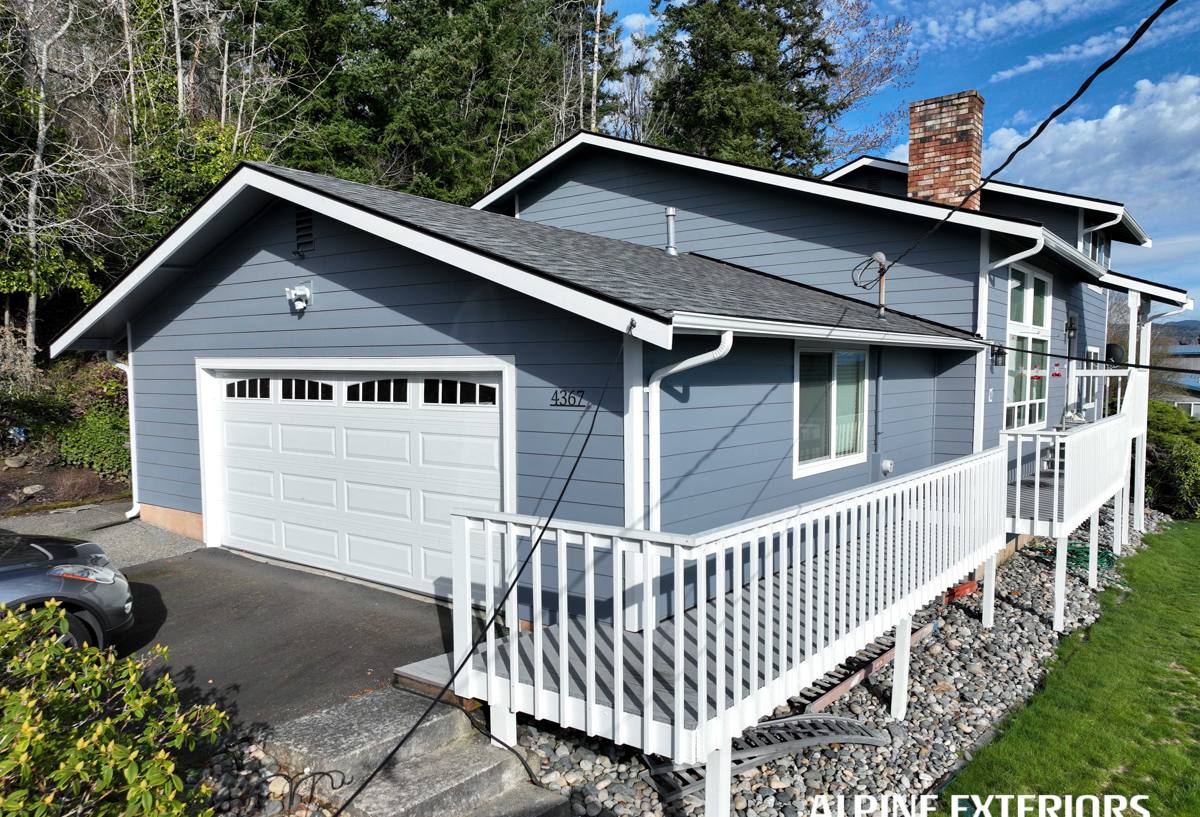
What Storm Damage Actually Looks Like on a Local Roof
Wind and impact damage
Sustained wind and gusts during a storm can lift shingle tabs, crease them, or tear them off entirely. Sometimes the shingle stays in place but the seal underneath breaks, which isn't visible from the ground but leaves that shingle free to flap and let water in on the next windy day. Branches and debris can also crack shingles or dent metal flashing without leaving an obvious hole.
Moss-related damage
Moss doesn't just sit on top of a roof — its root structure holds water against the shingle surface and works into the granule layer over time. During a heavy storm, waterlogged moss mats can shift or partially tear away, taking granules and sometimes shingle material with them, and leaving bare, vulnerable patches behind. A roof that's had moss cover for a while is more likely to show storm damage in the same spots where the moss was thickest.
Flashing, valley, and penetration failures
Roof valleys, chimney flashing, vent boots, and skylight edges are where most water intrusion starts, because they rely on overlapping metal and sealant rather than a continuous shingle surface. Storms stress these transitions more than any other part of the roof, and driving rain in particular can find its way through a flashing gap that would never leak in a light, straight-down rain.
Why a Quick, Correct Response Matters More Than a Fast One
A storm-damaged roof doesn't have to be leaking into your living room to be causing damage. Once the shingle layer or flashing is compromised, moisture can work into the underlayment, decking, and insulation well before it ever shows up as a stain on a ceiling. In a climate with this much sustained damp weather, that hidden moisture has more time to cause rot, compromise the deck's structural integrity, or create conditions for mold — problems that cost a lot more to fix than the original storm damage would have.
That said, "quick" shouldn't mean "rushed." A tarp-and-run repair that doesn't address the actual cause of the damage just delays the real fix and can trap moisture underneath in the meantime. The goal is a fast, correct assessment followed by a repair that actually solves the problem — not just the fastest possible truck roll.
What a Correct Storm Damage Repair Involves
A full inspection, not just the reported spot
If you noticed a leak in one room, that's where the water showed up — not necessarily where it got in. Water travels along the underlayment and rafters before it finds a path through the ceiling, so a proper inspection covers the whole roof plane, the attic side where accessible, and the flashing details, not just the ceiling stain's rough location.
Matching materials correctly
Shingle color and profile change over time with sun exposure, so a patch using new material next to weathered shingles is sometimes visible even when the repair itself is sound. We're upfront about when an exact match isn't realistic and when a partial re-roof of that slope makes more sense than a visibly mismatched patch.
Flashing, underlayment, and ventilation
Replacing damaged shingles without checking the underlayment and flashing underneath is one of the most common shortcuts in this trade, and it's also why the same spot leaks again a year later. A correct repair reseals or replaces flashing as needed, checks that underlayment is intact and properly lapped, and confirms attic ventilation isn't trapping moisture against the deck from below — all things a storm can expose weaknesses in, even if the storm itself didn't cause them.
Repair or Replace? How We Help You Decide
Not every storm-damaged roof needs a full replacement, and not every roof is a good candidate for another round of patching. The honest answer depends on a handful of factors we walk through with you before recommending either path.
| Factor | Favors Repair | Favors Replacement |
|---|---|---|
| Roof age | Well within expected service life | Nearing or past typical lifespan for the material |
| Damage extent | Isolated to one area or slope | Spread across multiple slopes or the whole roof |
| Prior repair history | First or second repair on this roof | Several past patches already, especially in different spots |
| Underlying decking condition | Solid, no soft spots found | Soft, delaminated, or visibly water-damaged decking |
| Material availability | Matching shingle still findable or match isn't critical | Discontinued shingle line, mismatch would be very visible |
We'll give you a straight read on where your roof falls, including when a repair is the right call financially and functionally — we're not in the business of pushing a full replacement when a solid repair will hold up.
How Our Process Works
- Assessment: We inspect the full roof, not just the damaged area, and check attic access where possible.
- Clear explanation: We walk you through what we found, what caused it, and what repair (or replacement) options make sense — in plain terms, before any work starts.
- Written estimate: You get a scope of work and pricing before we touch anything, so there are no surprises partway through.
- Repair: We do the work, including the flashing, underlayment, and ventilation checks that a shingle-only patch would skip.
- Cleanup and walkthrough: We clear debris and old material from the property and walk the finished work with you.
Working With Your Insurance Company
Many storm-related roof repairs are covered under homeowners insurance, depending on your policy and the cause of damage, but the claims process moves faster and more smoothly when the documentation is solid from the start. We can document the damage with photos and a written scope that you can hand directly to your adjuster, and we're glad to walk your property with an adjuster if that's helpful. We don't handle the claim itself — that's between you and your insurer — but we won't leave you guessing about what the damage actually is or what it will take to fix it correctly.
Why a Local Lynden Crew Covering Bellingham Matters
Storm damage repair isn't a job best handled by a crew driving in from out of the area for a single job. We work Whatcom County roofs regularly, which means we're already familiar with how local roofing systems hold up against salt air, sustained rain, and moss, and we're not learning the regional climate on your roof. Being based nearby in Lynden also means a faster response when a storm has left a roof exposed and a temporary repair needs to happen before the next weather system rolls through — and it means we're still a local business you can reach if a question comes up after the work is done.
We'd rather build a long-term reputation on roofs that hold up in this climate than chase one-time storm jobs and move on. That's the standard we hold repairs to, whether it's a small flashing fix or a larger section of storm-damaged shingles.
What to Check After a Storm
You don't need to get on your roof to do a basic check after a storm passes through. From the ground, look for:
- Shingle granules collecting in gutters or at downspout outlets
- Shingles that look lifted, curled, torn, or missing from the street or yard
- Visible dents or bent sections in metal flashing, vent caps, or gutter edges
- Moss clumps that have shifted position or come loose along roof edges
- New water stains, discoloration, or drips on interior ceilings, especially near chimneys or skylights
- Sagging or uneven sections along a roofline that weren't there before
- Debris, branches, or granule buildup pooled in valleys
Finding one or more of these doesn't necessarily mean a full replacement is coming — it means it's worth getting a professional look before the next storm finds the same weak spot.
If you've had storm damage to a roof in the Bellingham area, we're glad to come take a look and give you a straightforward, no-pressure estimate — just fill out the form below and we'll get in touch.