 Lynden Siding
 Roofing on the Water: Why Birch Bay Is a Different Job Than Roofing Inland
Birch Bay sits right on the water, and that changes what a roof has to deal with year-round. A few miles inland in Lynden, a shingle roof mostly has to shed rain and survive winter. On the bay, the same roof also has to stand up to salt-laden air, wind-driven rain that comes in sideways off the water, and a shade-and-moisture combination that keeps moss growing for most of the year. None of that means asphalt shingles are the wrong choice for this stretch of Whatcom County — they're not — but it does mean the materials, the flashing details, and the maintenance schedule need to match the environment, not just a generic install spec.
This page covers what we've learned installing and repairing asphalt shingle roofs specifically in this coastal pocket of Whatcom County, and what to look for whether you're planning a full replacement or trying to get more life out of the roof you have.
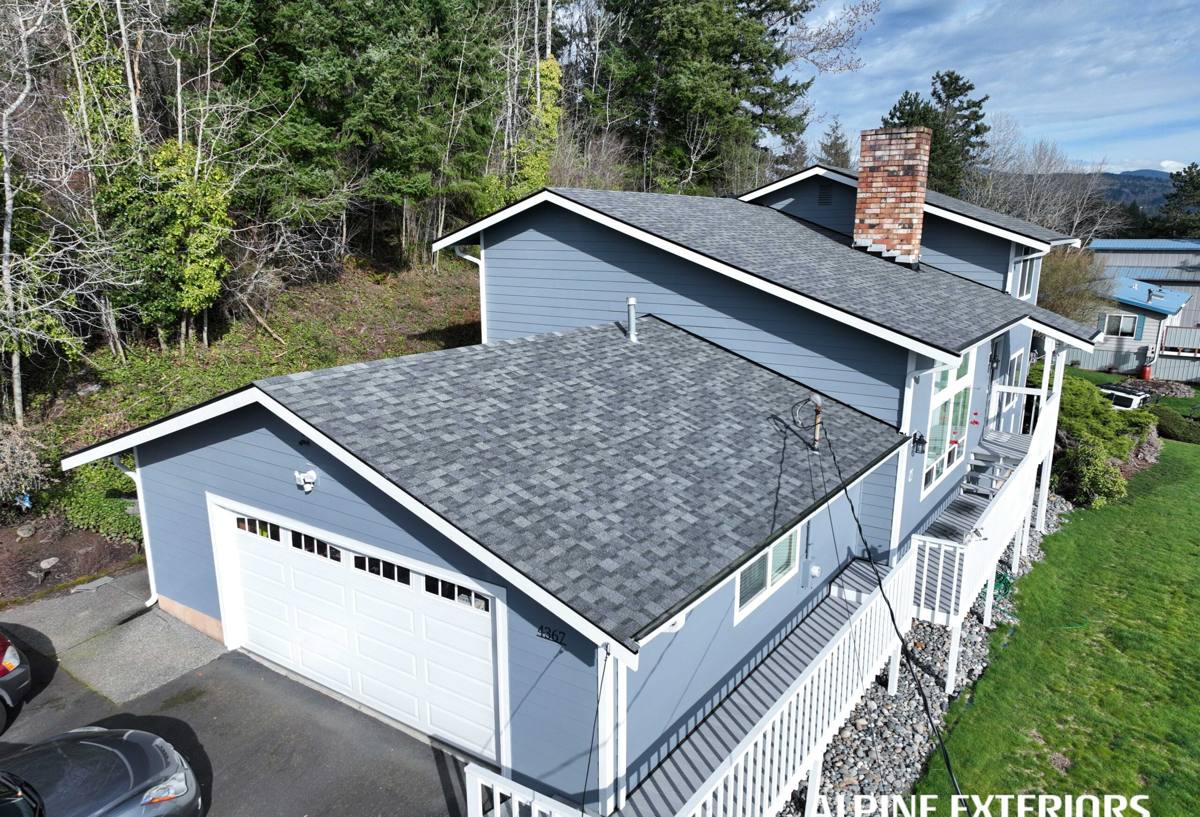
What Salt Air, Driving Rain, and Moss Actually Do to a Shingle Roof
Salt Air
Airborne salt doesn't damage the shingles themselves much, but it's hard on metal. Fasteners, flashing, and drip edge that aren't rated for coastal exposure corrode faster near the water than they would a few miles inland. Once a nail head or a piece of flashing starts to rust, it's only a matter of time before it stops sealing properly, and a roof usually fails at these small metal details long before the shingles wear out.
Driving Rain
Storms coming off the water tend to push rain sideways rather than straight down. That matters because a shingle roof is designed to shed water moving downhill, not water being driven uphill or sideways under the shingle tabs. Roofs here need tighter attention to underlayment coverage, valley protection, and sealing at every penetration — the margin for a shortcut is smaller than it is on a roof that only ever sees straight-down rain.
Moss Season
Between the marine moisture and the tree cover common around Birch Bay properties, north-facing slopes and shaded sections of roof can stay damp for long stretches of the year. That's exactly what moss needs to take hold. Left alone, moss lifts shingle edges, holds water against the roof deck, and accelerates granule loss. It's one of the most common reasons we get called out to look at a roof that's otherwise not that old.
What a Correctly Built Shingle Roof Looks Like Out Here
A roof built for this environment isn't a different product — it's the same asphalt shingle system, assembled with attention to the details that matter most near the water.
- Fasteners and flashing rated for coastal exposure — corrosion-resistant nails and flashing metal that won't be the first thing to fail.
- Full synthetic underlayment, not just felt in the field areas, for better resistance to wind-driven moisture during the install and over the roof's life.
- Ice-and-water shield at eaves, valleys, and around every penetration — the areas most exposed to driving rain and the most common leak points.
- Proper attic and roof ventilation to keep the underside of the deck dry, which also slows moss and algae growth from the inside out.
- Tight, correctly lapped flashing at chimneys, skylights, and wall intersections, since these are where sideways rain finds gaps.
None of these are upgrades or add-ons in our book — they're what a correct install looks like once you account for where the house sits. Skipping them doesn't save meaningful money; it just moves the cost to a repair bill a few years down the road.
Common Problems We Find on Birch Bay Roofs
When we inspect roofs in this area, a handful of issues come up far more often than they do inland:
- Moss buildup on shaded or north-facing slopes, especially under overhanging trees
- Granule loss and shingle edge lifting from repeated wind-driven rain exposure
- Rusted or corroding nail heads and flashing on older roofs not built with coastal-grade materials
- Soft or discolored decking under valleys and chimney flashing where water has been getting past worn seals
- Gutter and downspout backups from moss and debris, which push water back up under the shingle edge
Most of these are manageable if caught early, and a lot of them are preventable with the right materials at install time and a basic annual maintenance routine after that.
Our Asphalt Shingle Installation Process
The steps are similar to any quality shingle install, but the details we pay closest attention to are shaped by everything above.
- Tear-off and deck inspection. We remove the old roofing down to the deck and check for soft spots, rot, or damage — particularly around valleys, chimneys, and any area that showed leaks.
- Deck repair. Any compromised sheathing gets replaced before anything new goes down. Roofing over a bad deck just hides the problem.
- Underlayment. Full synthetic underlayment across the field, with ice-and-water shield at eaves, valleys, and penetrations.
- Flashing. New flashing at chimneys, walls, skylights, and valleys, using corrosion-resistant metal appropriate for the coastal exposure.
- Shingle installation. Installed to manufacturer nailing and exposure specs, with attention to sealing at edges and penetrations where driving rain is most likely to find a way in.
- Ventilation check. We confirm intake and exhaust ventilation are adequate, adjusting or adding vents where the existing setup is undersized.
- Cleanup and walkthrough. Full site cleanup, magnetic sweep for stray fasteners, and a walkthrough so you know what was done and what to watch for going forward.
Repair or Replace? What We Actually Look At
Not every roof with moss or a few worn spots needs full replacement. We look at age, extent of damage, and what's happening at the deck level before recommending either path.
| Factor | Usually a Repair | Usually a Replacement |
|---|---|---|
| Roof age | Under 12–15 years | Approaching or past 20–25 years |
| Moss/algae staining | Isolated patches, treatable | Widespread, recurring despite cleaning |
| Granule loss | Localized, spot-checkable | Consistent bald patches across multiple slopes |
| Decking condition | Solid, no soft spots found | Soft or discolored decking in multiple areas |
| Flashing condition | A few points need resealing or replacing | Widespread corrosion or failed seals |
| Leak history | None, or a single traceable source | Recurring leaks in different spots |
Cost for either path depends heavily on roof size, pitch, layer count, and how much deck repair is needed, so we'd rather give you a real number after a look at the actual roof than a broad estimate that doesn't mean much either way.
Keeping a Shingle Roof Healthy in a Marine Climate
A well-built roof still needs a bit of upkeep out here, more than it would inland. This is the routine we recommend to homeowners in the area:
- Clean gutters and downspouts at least twice a year, more often if you're under fir or cedar cover
- Have moss treated (not just power-washed) before it spreads across a slope, and keep an eye on shaded north-facing sections
- Trim back tree limbs that overhang the roof to cut down on shade, debris, and moss-friendly moisture
- Check flashing around chimneys, skylights, and vents annually for early signs of corrosion or lifting
- Confirm attic ventilation isn't blocked by insulation or storage — poor airflow speeds up moss and shortens shingle life
- Do a visual check after any major windstorm for lifted or missing shingles, especially after events with heavy rain off the water
None of this requires climbing on the roof yourself — most of it is visible from the ground or worth a quick call to have someone take a look, especially after a rough winter.
Why It Matters That We Already Work in Birch Bay
A crew that mostly works dry, inland roofs doesn't always think about corrosion-resistant fasteners or extra flashing attention at every valley — because most of the roofs they see don't need it. Working this stretch of the Whatcom County coastline regularly means we're used to building and repairing roofs that hold up against salt air and driving rain as a matter of course, not as a special request. It also means we're familiar with the access and logistics of bay-front and near-water properties, and with the permitting expectations for the area, so there are fewer surprises once a project starts.
If you're weighing a repair against a full replacement, or you just want an honest read on how much life is left in your current roof, we're happy to take a look and walk you through what we find. There's no pressure and no hard sell — just a straight answer and, if you'd like one, a free estimate using the form below.