 Lynden Siding
 Roof Repair Built for Laurel's Weather, Not a Generic Climate
Laurel sits in the part of Whatcom County where marine air off the water, heavy winter rain, and a shaded, tree-lined landscape all combine to put extra stress on a roof. It's not the same set of conditions a roof faces in a drier inland region, and repairs that ignore that fact tend to fail early. A patch that would hold up fine in a dry climate can leak again within a season here if it doesn't account for how water moves across a Laurel roof and how long that roof stays damp between rain events.
We work on homes throughout Lynden and the surrounding rural communities, including Laurel, and we tailor every repair to what actually happens to a roof in this part of Whatcom County — not a one-size-fits-all fix.
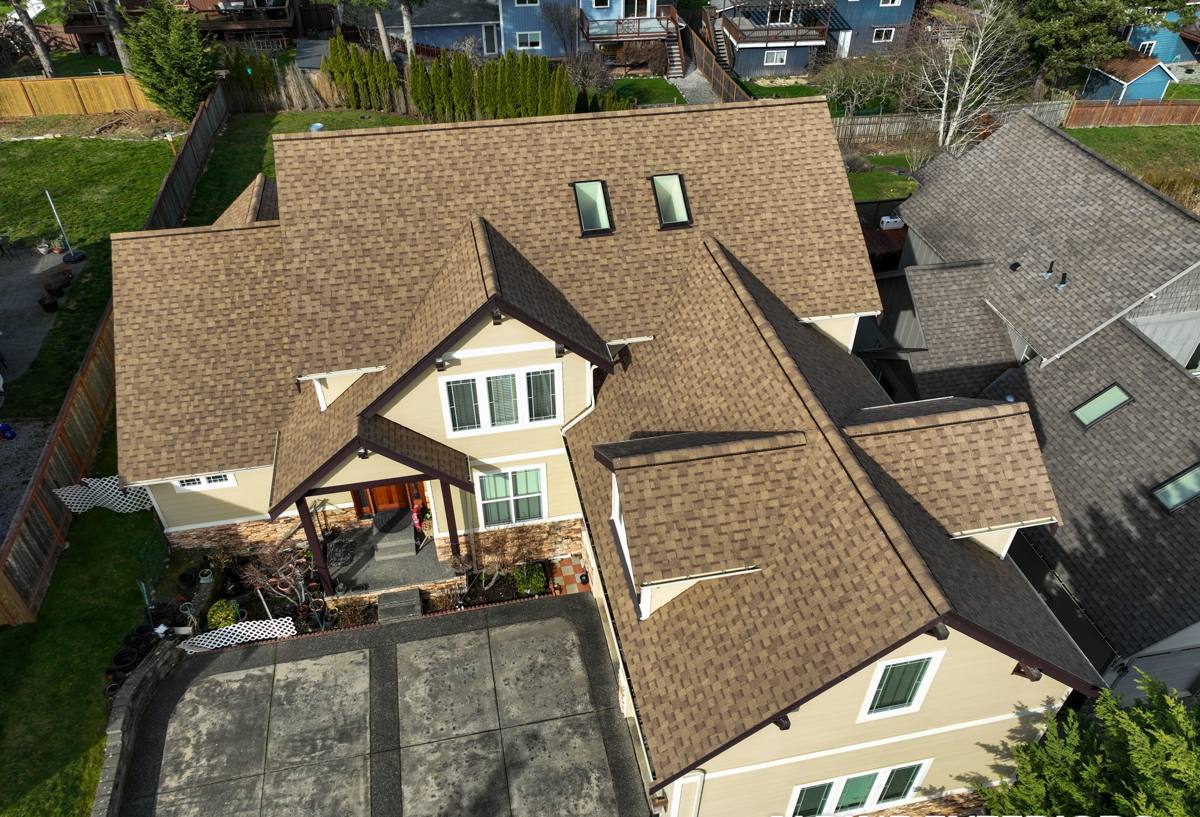
What Laurel's Climate Does to a Roof Over Time
Three conditions do most of the damage to roofs in this area, and they compound each other:
Salt Air and Metal Fatigue
Homes closer to Puget Sound and the surrounding waterways deal with airborne salt that accelerates corrosion on exposed metal — flashing, nail heads, gutter fasteners, and vent stacks. Corroded flashing is one of the most common hidden causes of a roof leak, because the shingles above it can look fine while the metal underneath has already failed.
Driving Rain and Wind-Driven Water
Whatcom County gets long stretches of steady, wind-driven rain rather than short heavy downpours. That matters for repair work because wind-driven rain can push water sideways and uphill under shingles, valleys, and flashing in ways that a straightforward vertical-rain repair won't stop. A repair has to account for the direction water is actually traveling, not just where a leak shows up inside the house.
A Long Moss Season
Shaded roof sections — north-facing slopes, areas under overhanging trees, and roofs that don't get much direct sun in winter — stay damp for months at a stretch. That's exactly what moss needs to establish itself, and once it takes hold it lifts shingle edges, holds moisture against the roofing material, and works itself into gaps that were never a problem before.
Signs a Laurel Roof Needs Repair, Not Just a Look
Most roof problems in this area don't announce themselves as a dramatic leak on day one. They start small. Here's what we tell homeowners to watch for between inspections:
- Dark streaking or green-black patches on shingles, especially on shaded slopes
- Granules collecting in gutters or at the base of downspouts
- Shingles that look cupped, lifted at the edges, or curled
- Soft or discolored spots on interior ceilings, especially after a stretch of heavy rain
- Rusty streaking below metal flashing or vent stacks
- Daylight visible through the roof deck from inside an attic
- Sagging in the roofline over a porch, garage, or bay window
- Moss buildup thick enough that you can see it from ground level
If any of these look familiar, it's worth having someone look at it before the next wet stretch rather than after.
What a Correct Roof Repair Actually Involves
Diagnosing the Real Problem First
The single biggest mistake in roof repair is treating the visible symptom instead of the source. Water travels — a stain on a bedroom ceiling might trace back to a flashing failure three feet away, or a valley that's been slowly failing for a year. Before we patch anything, we trace the path water is actually taking, which usually means checking the attic side of the roof deck, the flashing details around penetrations, and the condition of the underlayment, not just the shingles at the surface.
Matching Materials and Technique to the Existing Roof
A repair only holds up if the new material and the old material work together. That means matching shingle profile and, where possible, color; using compatible fasteners that won't set up a corrosion reaction with existing metal; and re-flashing with material rated for the exposure that section of roof actually gets. A mismatched patch is often visible, and worse, it can behave differently than the surrounding roof in wind and rain — which is how a "fixed" spot leaks again.
Addressing the Cause, Not Just the Hole
If moss caused the failure, the repair has to include moss and debris removal and, where it makes sense, recommendations for reducing shade or improving airflow — otherwise the same spot fails again on the same timeline. If corroded flashing caused the leak, the fix is new flashing rated for coastal exposure, not a bead of sealant over the old metal.
Common Roofing Materials on Laurel Homes and How We Repair Each
| Roofing Material | Typical Repair Focus | Local Consideration |
|---|---|---|
| Asphalt composition shingles | Replacing damaged shingles, resealing tabs, addressing granule loss | Most common material; matching older shingle lines can require a close color match rather than exact |
| Architectural (dimensional) shingles | Section replacement, flashing repair around penetrations | Thicker profile holds up well to wind-driven rain when properly fastened |
| Metal roofing or metal flashing systems | Fastener and seam maintenance, corrosion treatment | Highest exposure to salt-air corrosion; needs periodic inspection |
| Wood shake or shingle (older homes) | Selective shake replacement, moss and moisture management | Most vulnerable to the long moss season without regular upkeep |
Our Roof Repair Process
- On-site inspection — we walk the roof and check the attic, not just look from the ground
- Honest diagnosis — we identify the actual cause, including anything hidden behind the visible damage
- Written scope and estimate — you know what's being repaired and why before any work starts
- Moss and debris clearing — where needed, before any new material goes down
- Repair and re-flashing — using material matched to the existing roof and rated for this area's exposure
- Cleanup and final check — including a look at drainage paths so water sheds the way it's supposed to
Repair or Replace? What Actually Drives That Decision
Not every roof problem needs a full replacement, and not every roof should be patched indefinitely. The honest answer depends on a handful of factors, and we'll walk through them with you rather than push toward the bigger job by default.
| Factor | Leans Toward Repair | Leans Toward Replacement |
|---|---|---|
| Age of roof | Under 15 years, isolated damage | Near or past expected shingle lifespan |
| Extent of damage | Localized to one section or penetration | Spread across multiple slopes |
| Underlying deck condition | Solid, no rot found | Soft spots or rot in the decking |
| Repair history | First or second repair in this area | Same spot has already been patched multiple times |
| Moss/moisture pattern | Manageable with cleaning and spot repair | Chronic moisture damage across shaded slopes |
When a roof is genuinely at the point where repeated repairs are just delaying the inevitable, we'll say so plainly. When a repair is the right call, we won't talk you into more.
Between-Repair Maintenance That Actually Helps
A lot of roof damage in this climate is preventable with a little regular attention. This is the short list we give homeowners in Laurel and the rest of the Lynden area:
- Clear gutters and downspouts before the fall rains settle in
- Trim back tree limbs that keep a roof section shaded and damp
- Have moss treated or removed before it spreads rather than after
- Check attic ventilation — poor airflow keeps roof decking damp from underneath
- Walk the roofline visually after any major windstorm
- Get a professional look at flashing every few years, not just when a leak appears
Why a Crew That Already Works Laurel Makes a Difference
Roof repair isn't just about swinging a hammer — it's about recognizing what a roof's condition is telling you, and that recognition comes from seeing a lot of roofs in the same conditions. A crew that regularly works Laurel and the surrounding Lynden area already knows what salt air does to flashing after a decade, how moss behaves on the shaded slopes common to this area, and how driving rain finds its way through a weak valley. That local pattern recognition is what keeps a repair from turning into a callback six months later.
It also means faster, more accurate estimates. We're not guessing at how Whatcom County's weather affects a roof — we're working from what we see on homes like yours, in the same conditions, all the time.
Get a Straight Answer About Your Roof
If you're dealing with a leak, spotting moss buildup, or just want an honest read on a roof's condition before the next wet season sets in, we're glad to take a look. Use the form below for a free, no-pressure estimate — we'll tell you what we actually find, not just what's easiest to sell.