 Lynden Siding
 Birch Bay Windows Work Harder Than Most
Birch Bay sits right up against the Salish Sea, and that location changes what a window has to survive. Homes just a few miles inland in Whatcom County deal with plenty of rain, but they aren't fighting salt-laden air, wind-driven storms coming straight off the water, and the long, wet moss season that settles over the region every fall and winter. A window that would hold up fine on a sheltered lot near Lynden can start showing problems years earlier out here, simply because of what it's exposed to day after day.
This isn't a reason to avoid window replacement or to assume every job is a headache — it's a reason to be deliberate about material choice and installation details. Windows installed correctly for this environment, with the right flashing and the right frame material, do just fine. The problems show up when a job is installed the same way it would be on a dry, inland lot, with no adjustment for what the coast throws at it.
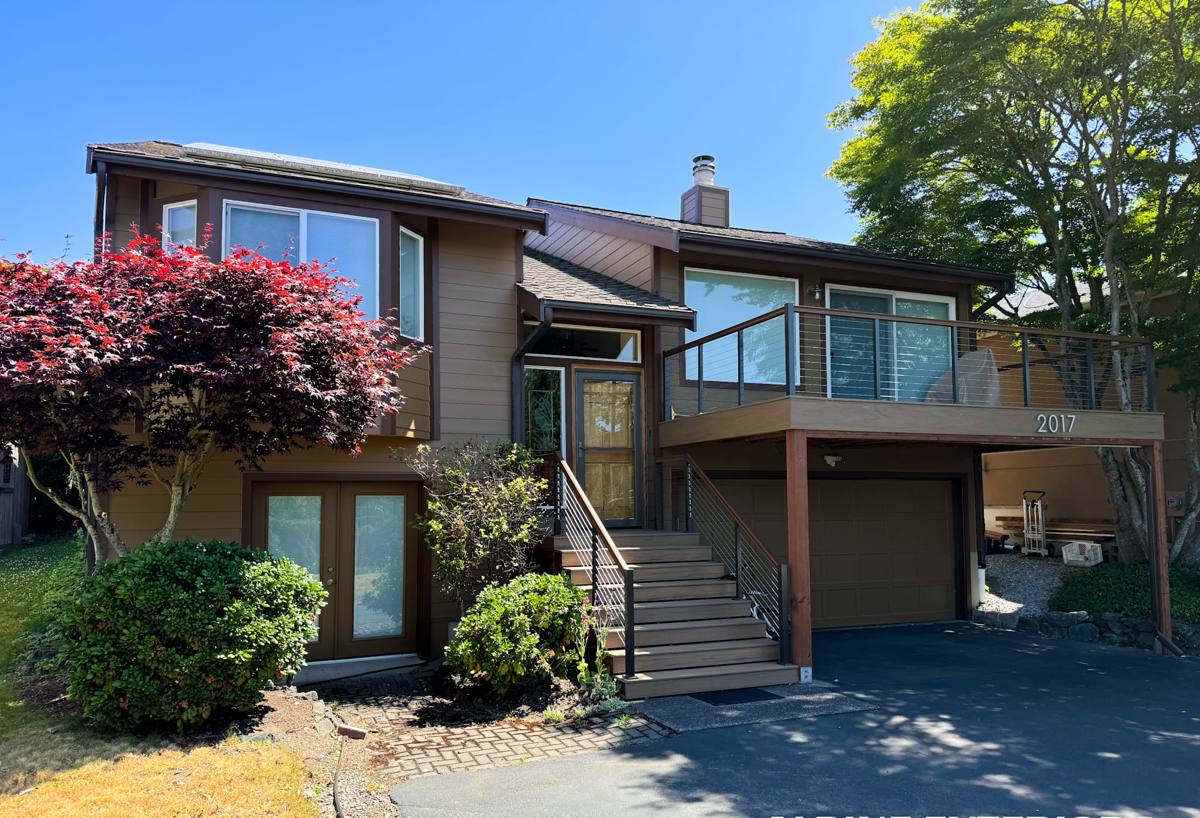
What Salt Air and Driving Rain Do to Windows Over Time
Salt air is corrosive to metal. Over years, it attacks window hardware — hinges, locks, balance mechanisms, and screws — especially anything that isn't specifically rated for coastal or marine exposure. You'll see it as stiff or sticking hardware, streaking on the frame, or fasteners that back out or snap when a homeowner finally tries to adjust them.
Driving rain is a separate problem. Wind off the water doesn't just fall on a window, it pushes against it, forcing water into any gap in the flashing, sealant, or trim that a calmer climate would never test. Small installation shortcuts that go unnoticed for a decade inland can show up as staining, soft drywall, or rot around the rough opening within just a few years in a spot like Birch Bay.
Where the damage usually starts
In our experience, three spots fail first: the sill (where water collects and needs to drain out, not pool), the corners of the frame (where flashing laps have to be sequenced correctly), and any exterior trim or casing that isn't sealed and back-primed before it's painted. Once water gets behind the trim, it's hidden until the wood is already soft.
Choosing Materials That Hold Up on the Coast
There's no single "correct" window material for every home — it depends on the house, the budget, and how exposed the specific wall or elevation is. What we do care about is being honest about the trade-offs so a homeowner isn't surprised five years in.
| Material | Coastal / salt-air performance | Maintenance | Notes |
|---|---|---|---|
| Vinyl | Good — won't corrode or rust, handles moisture well | Low | Budget-friendly; quality varies a lot between manufacturers |
| Fiberglass | Very good — stable in swings of moisture and temperature, doesn't corrode | Low | Higher upfront cost, holds paint well if a custom color is wanted |
| Wood-clad | Fair — the cladding protects the exterior, but any breach exposes wood to rot | Moderate to high | We're careful about where we recommend this on directly exposed elevations |
| Aluminum-frame | Poor to fair in salt air unless specifically coated for marine use | Moderate | Prone to corrosion and condensation without a thermal break; we steer most Birch Bay homes away from uncoated aluminum |
For most Birch Bay homes, we lean toward vinyl or fiberglass on the elevations that take the brunt of the weather, because neither one gives salt air or moisture a foothold. That's a professional judgment based on how these materials behave over time in this kind of exposure, not a claim that other materials never work — a wood-clad window on a sheltered, covered elevation can perform fine for years.
Installation Details That Matter More Here Than Inland
The window itself is only part of the job. How it's flashed, sealed, and integrated with the siding is what actually keeps water out over the long run — and it's the part that's easy to shortcut if a crew isn't used to coastal conditions.
- Sill pans: A proper sloped sill pan under the window gives any water that does get in a path back outside, instead of letting it sit against the sill and the framing.
- Flashing sequence: Housewrap and flashing tape need to be layered shingle-style — sill first, then jambs, then head — so water is always directed down and out, never trapped behind a layer.
- Sealant selection: Not every exterior sealant is rated for the temperature swings and near-constant moisture of a marine climate. We use products chosen for that exposure, not whatever's cheapest at the yard.
- Weep holes and drainage: Weep paths need to stay clear, not caulked shut by well-meaning but incorrect sealing.
- Trim integration: Exterior casing gets back-primed and sealed before installation, not after — sealing over bare, unprimed wood just traps moisture in.
Our Process for a Birch Bay Window Installation
- On-site assessment: We look at each opening individually — sun and wind exposure, current condition of the framing and sill, and whether there's already hidden water damage to address before a new window goes in.
- Material and product selection: We walk through the honest trade-offs for that specific wall, not a one-size answer for the whole house.
- Careful removal: Old windows come out without tearing up more siding or trim than necessary, and we check the rough opening for rot or soft framing while it's exposed.
- Flashing and sill pan installation: This is the step that determines whether the job lasts — done correctly and in the right sequence, every time.
- Window installation and shimming: Set plumb, level, and square, with the fastening schedule the manufacturer specifies for coastal wind exposure.
- Sealing and trim: Exterior sealant rated for marine exposure, trim reinstalled or replaced, back-primed and painted.
- Final walkthrough: We check operation, sealing, and cleanup before calling the job done.
Moss Season and Window Drainage
Whatcom County's moss season runs long — realistically several months of the year where surfaces stay damp enough for moss and algae to take hold. Around windows, that shows up as green or black buildup on sills, in corners of the frame, and on the trim and siding directly below a window where runoff collects. It's not just cosmetic: moss and algae hold moisture against the surface underneath it, which is exactly what accelerates rot on wood trim and speeds up wear on sealant.
Good installation reduces this by directing water away cleanly instead of letting it sheet down the face of the wall. But every homeowner in this area benefits from a simple seasonal check.
- Clear debris and moss buildup from window sills and tracks before it compacts and holds water
- Rinse trim and siding below windows periodically during the wettest months
- Check that weep holes on vinyl and fiberglass frames are open and draining
- Look for soft spots or dark staining on wood trim, especially at the bottom corners
- Re-caulk visibly cracked or shrunken sealant joints before winter storms set in
Signs Your Current Windows Are Losing the Battle
Coastal exposure speeds up the timeline on window failure, so it's worth knowing what to watch for rather than waiting until a window won't open at all.
- Fogging or moisture between panes of double- or triple-glazed units — a sign the seal has failed
- Hardware that's stiff, corroded, or won't lock properly
- Visible gaps, drafts, or whistling during windy weather
- Soft or discolored trim and casing around the frame
- Moss or algae growth that keeps returning around the sill no matter how often it's cleaned
- Paint that's peeling or bubbling on interior or exterior trim near the window
What Drives Cost for Window Replacement Here
Costs vary a lot by project, and we'd rather walk a specific home than quote a number that doesn't apply. Broadly, standard-size replacement windows run from several hundred to a few thousand dollars installed, per window, depending on the factors below. Larger, custom-shaped, or full-frame installations run higher than a straightforward like-for-like swap.
| Factor | Why it moves the price |
|---|---|
| Material (vinyl vs. fiberglass vs. wood-clad) | Fiberglass and wood-clad cost more upfront than vinyl |
| Install type | Full-frame replacement (removing the old frame entirely) costs more than an insert into an existing, sound frame |
| Hidden damage | Rotted framing or sheathing found during removal adds repair work before the new window can go in |
| Size and shape | Large picture windows or custom shapes cost more than standard sliders or double-hungs |
| Trim and siding tie-in | Matching or repairing surrounding trim and siding adds labor and material |
| Number of windows | Doing several at once typically brings a lower per-window cost than one at a time |
Why Hire a Crew That Already Works Birch Bay
Window installation isn't exotic work, but coastal conditions punish shortcuts faster than they do elsewhere in Whatcom County. A crew that's used to inland, sheltered lots may not default to marine-rated sealant, a sloped sill pan, or hardware that resists salt air — not out of carelessness, but because it's simply not the habit they've built. A crew that regularly works Birch Bay and similar shoreline areas treats those details as standard practice, not an upgrade.
Local experience also means fewer surprises during the job itself — knowing what kind of framing and trim conditions are common in homes of a certain age in this area, understanding how wind exposure differs from one elevation to the next, and being realistic with homeowners about what a given wall actually needs versus what's optional.
If you're weighing whether it's time to replace windows on a Birch Bay home, we're happy to take a look and give you a straight answer — no pressure, no inflated scope. Request a free estimate below and we'll walk the property with you.