 Lynden Siding
 Building New in Blaine? The Windows Decide More Than the View
If you're framing up a new home in Blaine, the windows are one of the few components that get harder — not easier — to fix once the siding, trim, and interior finishes go on. A window that's installed correctly on day one will outlast several remodels. A window that's flashed wrong, even by a small margin, can hide a moisture problem behind drywall for years. On a new build this close to the coast and the Canadian border, the margin for error is smaller than it is inland, because the weather works harder on every seam.
This page covers what new-construction window installation actually involves, what Blaine's climate specifically asks of a window package, and how we run the job when we're brought in during the framing and rough-opening stage of a build.
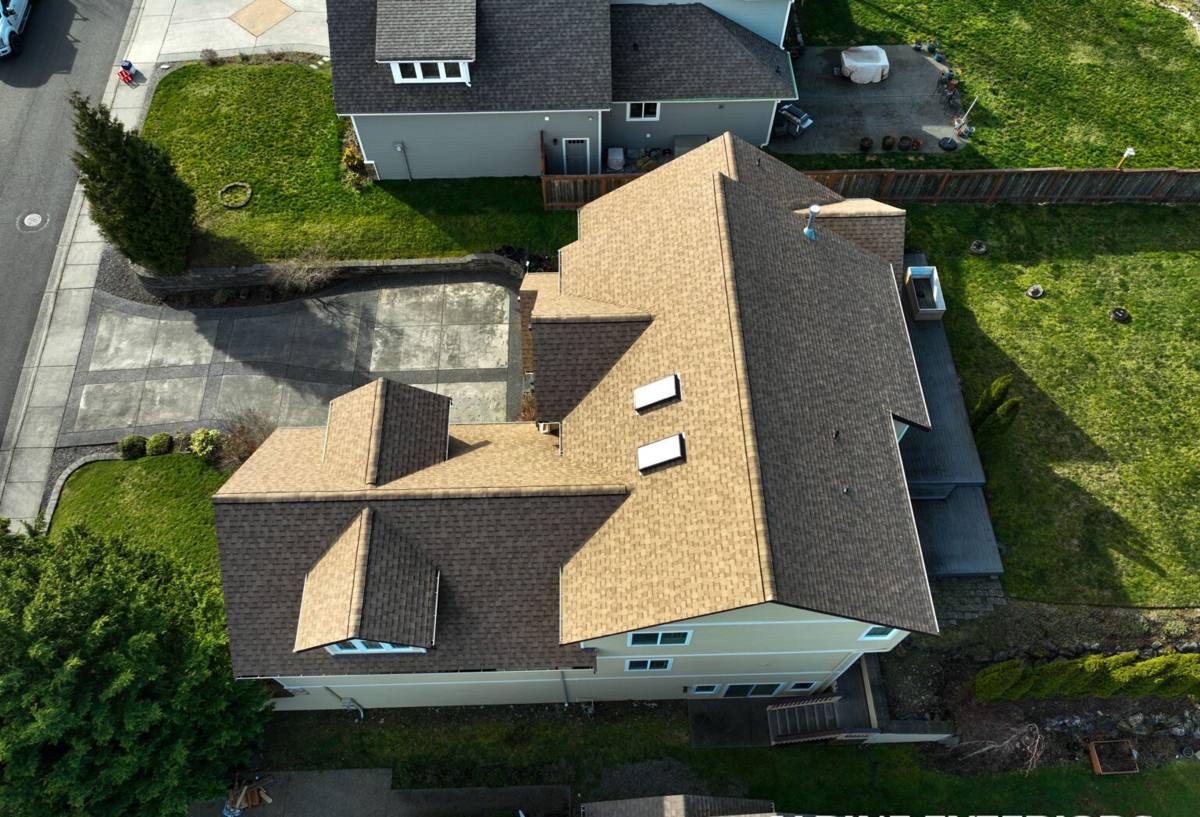
What Blaine's Climate Does to New-Construction Windows
Blaine sits at the northwest corner of Whatcom County, right on the water and close enough to the border that the weather pattern is coastal Pacific Northwest at its most direct: wind off the water, near-constant moisture in the air, and long stretches of the year where surfaces simply don't fully dry out.
Salt Air and Coastal Exposure
Homes near the water deal with airborne salt that settles on window frames, hardware, and fasteners. Over years, salt exposure accelerates corrosion on lower-grade metal components — hinges, cranks, screws — and can dull or pit finishes that weren't rated for a marine-influenced environment. This is a durability issue more than a performance issue, but on a new build it's worth solving up front, because replacing hardware later means pulling trim you just installed.
Wind-Driven Rain
Rain that falls straight down is easy to shed. Rain that's being pushed sideways by wind off the water is a different problem — it finds gaps that vertical rain never reaches, and it tests flashing details a lot harder than a typical inland install. New-construction windows have an advantage here because the flashing can be built in layers as the wall assembly goes up, but only if whoever's setting the windows understands wind-driven rain and doesn't treat every install the same way.
Moss, Algae, and a Long Wet Season
Whatcom County's wet season runs long, and shaded or north-facing walls stay damp for extended stretches. That doesn't just grow moss on roofs — it keeps window sills, trim, and the sealant joints around a window wet longer than a homeowner in a drier climate would expect. Materials and details that shed water quickly and dry out fast hold up better here than ones that trap moisture against the frame.
New-Construction vs. Retrofit: Why the Install Method Matters
"New-construction" isn't a marketing term — it describes a specific type of window with a nailing flange, installed into a rough opening before siding goes on, so the flashing and water-resistive barrier can be layered correctly. It's a different job than a retrofit (or "pocket") replacement window installed into an existing frame. Getting this distinction right at the framing stage saves problems for the life of the house.
| Factor | New-Construction Window | Retrofit/Pocket Window |
|---|---|---|
| When it's installed | Before siding, into a bare rough opening | Into an existing window frame during a remodel |
| Flashing approach | Full flashing integrated with house wrap, in proper shingle-lap order | Relies on the condition of the existing frame and flashing |
| Best use case | New builds, additions, full wall re-sides | Replacing windows without disturbing existing siding |
| Long-term moisture control | Highest, when installed correctly | Good, but limited by what's already behind the wall |
Because your Blaine build is starting from a bare opening, you get the chance to do this the thorough way. That's an advantage worth using — it's much cheaper to get the flashing right now than to chase a leak after the siding and interior finishes are in.
What a Correct Installation Includes
- A sloped sill pan under the window so any water that gets past the glazing drains back outside, not into the wall cavity
- Self-adhered flashing tape at the sill, jambs, and head, layered so upper courses always overlap lower ones (shingle-style)
- Proper integration with the house wrap or weather-resistive barrier — flashing tucked behind the barrier above, over it below
- A head flashing or drip cap detail that kicks water away from the top of the window instead of letting it run down the face
- Backer rod and quality exterior sealant at the trim line, sized and tooled correctly rather than just caulked over a gap
- Shimming and fastening through the nailing flange per the manufacturer's instructions, so the frame stays square and doesn't bow under wind load
Choosing a Window Package for a Blaine New Build
Material choice matters more here than it would in a drier, more sheltered climate, because whatever you pick will spend a lot of its life damp. We look at moisture behavior and maintenance burden as much as upfront price.
| Frame Material | How It Handles Coastal Moisture | Maintenance | Typical Fit |
|---|---|---|---|
| Vinyl | Doesn't corrode or rot; performs well in wet, salt-influenced air | Low — occasional cleaning | Most new builds; strong value |
| Fiberglass | Very stable, resists warping and doesn't corrode | Low | Higher-end builds, larger openings |
| Wood-clad | Cladding protects the exterior, but any breach at a joint exposes wood to moisture | Higher — joints and finish need monitoring | Homes prioritizing an interior wood look |
| Bare aluminum | Prone to corrosion in salt air unless heavily coated; conducts cold | Higher | We generally steer clients away from this near the water |
We're not against wood-clad or aluminum on principle — they have real advantages in the right application. But on a home exposed to salt air and driving rain, we're honest about the added maintenance and installation sensitivity those materials carry, and most Blaine clients land on vinyl or fiberglass once they weigh that against a wood or metal look they'd have to stay on top of.
Glass and Weatherstripping
For this climate, we generally recommend a Low-E, dual-pane (or triple-pane for higher-exposure walls) unit with good weatherstripping and a warm-edge spacer. The goal isn't the highest-spec glass available — it's a package that resists condensation, cuts down on the draft you'd otherwise feel on a windy, wet day, and matches the exposure of the specific wall it's going on. A window on the water-facing side of the house may warrant a heavier-duty package than one on a sheltered interior wall.
Our Process for New-Construction Window Installs
- Plan review and rough-opening check. We confirm opening sizes against the window schedule before anything ships, and flag any framing issues while they're still cheap to fix.
- Sill pan and flashing layout. We install sloped sill pans and flashing tape in the correct shingle-lap sequence, tied into the house wrap.
- Window set and fastening. Windows are shimmed level, plumb, and square, then fastened through the nailing flange per manufacturer spec — not just "close enough."
- Head flashing and barrier integration. Head flashing is installed and the water-resistive barrier is lapped over it before siding goes on.
- Interior and exterior sealing. Backer rod and sealant at the exterior trim; low-expansion foam or backer rod at the interior gap, avoiding anything that bows the frame.
- Final check. We check operation, look for square and reveal consistency, and confirm flashing laps are correct before your siding crew closes the wall.
Mistakes We See on New Builds Near the Coast
Most window failures we get called to inspect on newer homes trace back to a handful of repeatable errors — nearly all of them at the flashing stage, not the window itself.
- Flashing tape applied out of sequence, so water runs behind a lap instead of over it
- No sill pan, or a flat sill pan with no slope to drain water back out
- Caulk used in place of proper flashing tape or backer rod and sealant
- House wrap cut and left loose around the opening instead of integrated with the flashing
- Windows fastened without shimming, leaving the frame slightly racked and hard to operate
- Hardware and finishes chosen without accounting for salt air exposure on a water-facing wall
Why a Crew That Already Works in Blaine Is Worth Having
A window crew that mainly works inland doesn't always adjust for wind-driven rain, salt exposure, or a wet season that runs longer than most of the state sees. We work throughout Whatcom County, including Blaine, so the flashing sequence, hardware recommendations, and glass package we suggest are based on what actually holds up here — not a generic install method applied everywhere the same way. We also know how to sequence with your builder or GC so window installation lines up with framing inspections and siding start dates instead of causing delays.
Cost Factors for New-Construction Windows
Every new build is different, so we won't quote a number without seeing the plans, but these are the factors that move the price up or down:
| Factor | Effect on Cost |
|---|---|
| Window count and size | Larger openings and more windows raise material and labor cost directly |
| Frame material | Vinyl is typically the most economical; fiberglass and wood-clad cost more |
| Glass package | Triple-pane or upgraded Low-E coatings add cost but reduce condensation and drafts on exposed walls |
| Wall exposure | Water-facing or wind-exposed walls may warrant heavier flashing detail and hardware upgrades |
| Access and timing | Coordinating tightly with framing and siding crews keeps labor efficient; delays add cost |
If you're still finalizing your window schedule, we're glad to walk through it with your builder before anything is ordered — it's easier to adjust sizes or specs on paper than after windows arrive.
If you're building in Blaine and want a straight answer on what your window package should look like for this climate, we'll come take a look at your plans or your framed opening and give you a free, no-pressure estimate — just fill out the form below.