 Lynden Siding
 Blaine Roofs Take a Different Kind of Beating
Blaine sits right where Whatcom County meets the water, and that location shapes everything about how a roof ages here. Salt-laden air off the coast works on exposed metal year-round, driving rain comes in almost sideways during winter storms, and the region's long, wet moss season keeps organic growth active on north-facing slopes for months at a time. None of this is dramatic on its own, but stacked together over a few storm seasons, it adds up to real damage that isn't always obvious from the ground.
A roof that would hold up fine in a drier, inland climate can start failing years early in Blaine if it wasn't built and maintained with these conditions in mind. That's the gap we work in: storm damage repair that accounts for what actually happens to roofing materials near the water, not a generic patch job pulled from a manual written for a different climate.
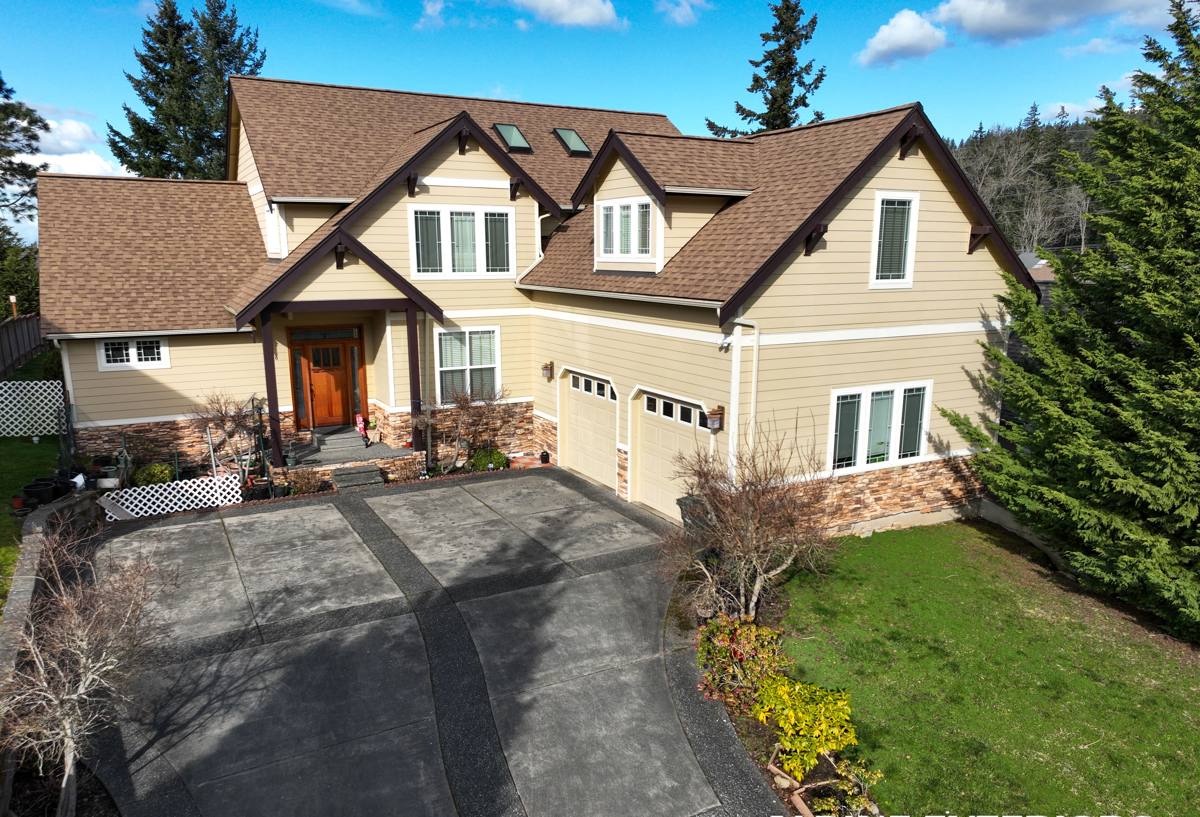
What Storm Damage Actually Looks Like on a Blaine Roof
Homeowners usually call us after a specific storm — high wind, a hard rain event, or a stretch of freezing weather followed by a thaw. But some of the damage we find didn't happen in a single night. It built up over several storms and just became visible after the worst one. Here's what we look for on every inspection:
- Lifted, cracked, or missing shingles, especially along ridges and roof edges where wind uplift concentrates
- Granule loss showing up as dark streaks in gutters or downspouts after heavy rain
- Flashing pulled loose or bent around chimneys, vents, and skylights
- Soft or spongy decking felt underfoot in the attic, a sign water has already gotten past the surface layer
- Moss and algae buildup on shaded slopes, which holds moisture against shingles long after a storm passes
- Corrosion or rust streaking on metal flashing, fasteners, or gutter systems from prolonged salt air exposure
- Water stains on interior ceilings or attic insulation that appeared after the last major storm
- Gutters pulling away from fascia boards under the weight of trapped debris and standing water
Some of these are easy to spot from the driveway. Others — soft decking, early corrosion, flashing that's been slowly working loose — only show up on a proper roof-level inspection. That's why we walk the roof rather than just looking at photos or checking from the ground.
Why "It's Just a Few Missing Shingles" Is Rarely the Whole Story
The visible damage after a storm is often the smallest part of the problem. Once wind or impact opens a gap in the shingle layer, water has a path to the underlayment and decking underneath. In a dry climate that gap might sit exposed for weeks before the next real rain. In Blaine, the next driving rain event is usually just days away, and it doesn't take long for moisture to start affecting the wood beneath.
This is why we're cautious about repairs that only address what's visible. A patch over a few missing shingles looks like a complete fix, but if water already reached the decking during the storm that caused the damage, that patch is sitting over a problem that will keep growing under the surface. Part of doing this job correctly is checking what's underneath before closing anything back up.
Repair or Replace? How We Make That Call
Not every storm-damaged roof needs a full section replaced, and we don't default to the more expensive option. The decision comes down to a handful of factors we walk through on every job:
| Factor | Favors Repair | Favors Replacement |
|---|---|---|
| Extent of damage | Isolated to one slope or a small area | Spread across multiple slopes or the whole roof |
| Roof age | Well within expected lifespan | Already near the end of its service life |
| Decking condition | Solid, dry, no soft spots | Soft, delaminated, or water-stained decking found underneath |
| Material matching | Matching shingles or panels still available | Discontinued material that would leave a visible patch |
| Storm frequency | First significant damage in years | Repeated damage from consecutive storm seasons |
We explain this reasoning plainly during the inspection — what we found, why it points toward repair or replacement, and what happens if the cheaper option is chosen and the underlying issue isn't fully resolved. The goal is a decision you understand, not one you have to take on faith.
What a Correct Storm Damage Repair Involves
Tear-off and inspection of the affected area
We remove damaged material back to solid, undamaged roofing rather than just covering the visible gap. This is the step that gets skipped when a repair is rushed, and it's the step that determines whether the fix actually lasts.
Decking repair where needed
If water reached the plywood or OSB decking, that section gets replaced, not just dried out and covered over. Soft or delaminated decking won't hold fasteners properly and will keep failing underneath a new surface layer.
Underlayment and flashing
Given how much driving rain this area sees, we pay particular attention to underlayment continuity and flashing details around penetrations — chimneys, vents, skylights, and valleys. These are the spots that fail first in wind-driven rain, and they're often where the original storm damage started.
Matching materials and finishing
We match shingle color, profile, and where possible manufacturer, so the repair blends into the existing roof instead of standing out as an obvious patch. For metal components, we use fasteners and flashing rated for coastal exposure, since standard hardware corrodes faster this close to salt air.
Our Process, Start to Finish
- Inspection. We walk the roof, not just the ground level, and document what we find with straightforward explanations of what's damage versus normal wear.
- Written estimate. You get a clear scope of work and price before anything is scheduled — no vague verbal quotes.
- Scheduling around weather. Roof repair work needs a dry window. We plan around the forecast rather than rushing a repair into a wet spell, which almost always shows up as a problem later.
- The repair itself. Tear-off, decking work if needed, underlayment, flashing, and matched finish materials — done in that order, not skipped for speed.
- Final walkthrough. We show you what was done and what to watch for going forward, particularly around moss growth and gutter maintenance given the local climate.
Working With Your Insurance Company
Many storm damage repairs in this area are covered in whole or in part by homeowners insurance, particularly when the damage traces to a specific wind or storm event. We're glad to document damage clearly — photos, written findings, and a scope of work — in a format that's useful for a claim. We're not a public adjuster and we don't promise a claim outcome, but a clear, honest inspection report is one of the most useful things you can hand your insurer, and we make sure you have one.
If you're not sure whether a repair is claim-worthy, that's a fair question to bring to us before you call your agent. We'll tell you plainly what we see and let you decide how to proceed.
Why It Matters That We Already Work in Blaine
Roofing crews that mostly work inland don't always account for how much faster salt air corrodes exposed metal, or how persistent moss growth stays through a Whatcom County winter. Those aren't exotic problems, but they're details that change which fasteners, flashing, and maintenance recommendations actually hold up here versus somewhere drier and further from the coast.
Working this area regularly also means we're not learning the local weather patterns on your roof. We know what a hard winter storm off the water typically does to a roof system, and we build repairs to handle the next one, not just to pass a visual inspection today.
A Few Things Worth Checking After Any Significant Storm
- Look at your gutters and downspouts for a buildup of granules, which signals shingle wear
- Check the attic for new water stains, damp insulation, or daylight showing through the decking
- Walk the property line and look up at ridge lines and roof edges for anything visibly lifted or missing
- Note any new or unusual leaks, even small ones, and when they started relative to the last storm
- If you have exterior lighting or gutter guards, check that they haven't pulled loose under wind load
Catching these signs early is almost always cheaper and simpler than waiting until a small problem becomes a bigger one. If something looks off, it's worth having someone take a real look before the next storm rolls through.
If your Blaine home has visible storm damage, or you just want a second opinion after a rough weather week, we're glad to come out and take an honest look. The estimate is free, there's no pressure attached to it, and you'll get a clear explanation of what we find either way — just fill out the form below to get started.