 Lynden Siding
 Why Windows Take a Different Kind of Beating in Custer
Custer sits close enough to saltwater that homes here deal with a combination most inland communities never have to think about: salt-laden air, wind-driven rain coming off the water, and a damp season that stretches on for months. None of that is dramatic on its own, but layered together year after year, it wears on window components in ways that show up as higher heating bills, sticky sashes, fogged glass, and soft trim long before the rest of the house shows its age.
Salt air is hard on metal hardware — hinges, locks, balance mechanisms, and screen frames corrode faster near the coast than they do twenty miles inland. Driving rain finds every gap in flashing and sealant that a calmer climate would never test. And the long moss season that defines this part of Whatcom County keeps sills, tracks, and exterior trim damp for weeks at a stretch, which is exactly the environment wood rot, seal failure, and condensation problems need to take hold. Windows installed without those specific stresses in mind tend to underperform years ahead of schedule.
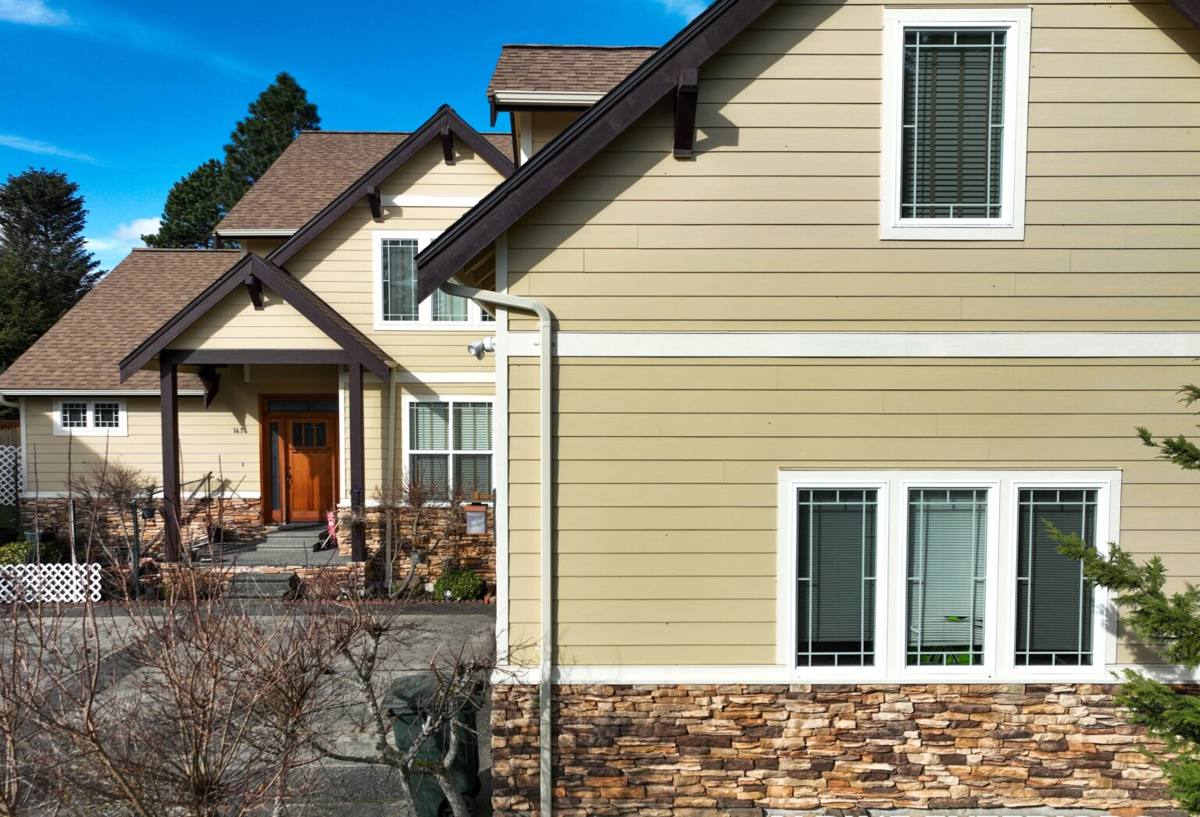
What "Energy-Efficient" Actually Means for a Home Like Yours
"Energy-efficient" gets used loosely in window marketing, so it's worth being specific about what actually matters for a Custer home.
U-Factor Is the Number That Counts
U-factor measures how well a window resists heat flow — lower is better. In our climate, where winters are wet and mild rather than brutally cold, a good U-factor keeps interior glass surfaces warmer, which cuts down on the condensation that shows up as fogged glass or damp sills every morning. That condensation isn't just a nuisance; it's moisture sitting against wood trim and drywall all winter.
Low-E Coatings and Gas Fills
A low-emissivity (Low-E) coating is a microscopically thin layer that reflects heat back into the room in winter and blocks solar heat gain in summer, without noticeably darkening the glass. Argon or krypton gas fill between panes adds insulation value over plain air. Both are standard on any quality double-pane window today — the differences between manufacturers are mostly in glass package options and how well the coating and fill are sealed in over the long run.
Air Sealing Matters as Much as the Glass
A window with excellent glass specs still underperforms if it's installed with gaps around the frame. In a home exposed to steady wind off the water, air sealing at the rough opening — not just the glass package — is often the bigger factor in comfort and energy loss.
Signs Your Windows Are Underperforming
Most homeowners don't notice window failure until it's advanced. A quick self-check can catch problems while replacement is still a choice rather than a necessity:
- Condensation or a milky haze between the panes (not on the surface) — this means the seal has failed and the insulating gas has escaped
- Visible drafts near the frame on a windy day, even with the window latched shut
- Windows that are hard to open, close, or lock, especially after damp weather
- Soft, discolored, or moss-covered wood at the sill or lower frame corners
- Noticeably higher heating bills compared to similarly sized homes nearby
- Single-pane glass or original aluminum frames that predate any past remodel
- Streaking or staining below a window after heavy rain, which points to a flashing problem rather than the glass itself
Frame Material Comparison for Local Conditions
Frame material has a bigger effect on long-term performance in a marine climate than most homeowners expect. Here's how the common options actually hold up:
| Material | Behavior in Salt Air & Rain | Maintenance | Relative Cost |
|---|---|---|---|
| Vinyl | Won't corrode or rot; performs consistently near the coast | Low — occasional cleaning | Lower |
| Fiberglass | Excellent stability in temperature and moisture swings; very resistant to warping | Low | Higher |
| Wood / Clad-Wood | Attractive but exterior wood is vulnerable to the sustained dampness of moss season if maintenance lapses | Higher — periodic refinishing of any exposed wood | Higher |
| Aluminum (older legacy frames) | Conducts cold and condenses easily; hardware corrodes faster in salt air | Moderate | N/A — mostly seen in older homes, not typically re-specified today |
We stock a small number of proven vinyl and fiberglass lines rather than carrying every brand on the market. That's a deliberate standard, not a limitation — it means every install crew on the job has actually trained on the products they're setting, and we're not troubleshooting an unfamiliar frame system on your house for the first time.
What a Correct Installation Actually Involves
Flashing and the Weather-Resistive Barrier
The window itself is only part of the system. What keeps water out over the long haul is how the opening is flashed and how that flashing ties into the house's weather-resistive barrier — the layer behind the siding. A sill pan at the bottom of the opening, properly lapped flashing tape at the sides and top, and correct integration with whatever is behind the siding are what actually stop driving rain from working its way into the wall cavity. Skip this step and even the best window on the market will eventually leak.
Full-Frame Replacement vs. Insert Replacement
An insert (or "pocket") replacement sets a new window inside the existing frame — faster and less disruptive, but it only makes sense if the existing frame is still sound and square. A full-frame replacement removes everything down to the rough opening, which is the right call when there's any sign of rot, water damage, or an out-of-square opening. We check the condition of the existing frame before recommending which approach fits your situation — not before quoting a price.
Sealing, Shimming, and Trim
Every window needs to be shimmed plumb, level, and square before it's fastened — an out-of-square install stresses the sash and shortens the life of the seals and hardware. Insulation around the frame should fill the gap without over-packing it, since over-compressed insulation can bow the frame inward. Exterior sealant and trim details are matched to the surrounding siding so the finished look is clean, not patched-in.
Our Process, Start to Finish
- Free on-site estimate — we measure every opening, check the condition of existing framing and flashing, and talk through what you actually need versus what's optional.
- Product selection — we walk through frame material, glass package, and grille or hardware options based on your home and budget, without pushing upgrades you don't need.
- Scheduling and permitting — where a permit applies, we handle the paperwork so you don't have to track it down yourself.
- Installation — old windows are removed carefully, openings are inspected and repaired if needed, and new units are set with proper flashing, sealing, and insulation.
- Cleanup and walkthrough — job site debris is hauled off, and we walk every new window with you before we call the job done.
What Drives the Cost of a Window Project
We don't publish fixed prices because every home and every opening is different, but the main cost drivers are consistent from job to job:
| Factor | Why It Matters |
|---|---|
| Number and size of openings | More and larger windows mean more material and labor hours |
| Frame material and glass package | Vinyl vs. fiberglass and double- vs. triple-pane glass carry different material costs |
| Full-frame vs. insert replacement | Full-frame work takes longer and may involve repairing the rough opening |
| Condition of existing flashing/trim | Hidden rot or past water damage adds repair scope once openings are exposed |
| Access and story height | Second-story or hard-to-reach openings take more time and equipment |
Whether triple-pane glass is worth the added cost depends on the exposure of each opening — a window facing prevailing wind and rain benefits more from the upgrade than a sheltered one on the lee side of the house.
Why a Crew That Already Works Custer Matters
Window performance isn't just about the product — it's about whether the installer understands the specific conditions the window has to survive. A crew that regularly works Whatcom County knows which direction the wind-driven rain typically comes from on an exposed lot near Custer, how long moss season keeps sills damp each year, and what that means for flashing details and sealant choices. That local pattern recognition is hard to substitute with a generic install checklist.
There's also a practical advantage to working with a crew based out of Lynden that handles both siding and windows: when window replacement happens alongside or near siding work, the weather-resistive barrier and flashing can be integrated as one continuous system instead of two separate trades patching around each other's work. That reduces the seams and transitions where leaks tend to start.
Finally, local knowledge of permitting requirements matters. Some window replacements — particularly ones changing the size of an opening or affecting a required egress window in a bedroom — need a permit through the local building department. A crew that pulls permits regularly in this area knows what triggers that requirement and won't leave you guessing.
Keeping New Windows Performing in a Marine Climate
A well-installed, quality window still needs a little seasonal attention in this environment:
- Rinse salt residue and grime off frames and tracks a couple of times a year, especially on sides facing open water or prevailing wind
- Keep weep holes at the base of the frame clear of dirt and debris so water can drain out as designed
- Watch for moss or algae building up on sills and clean it off before it holds moisture against the frame
- Check exterior caulking annually and re-seal any cracked or separated joints before the wet season sets in
- Operate locks and hardware periodically through the year so mechanisms don't seize up from disuse in damp weather
If your windows are drafty, fogged, hard to operate, or just original to a much older house, we're happy to take a look and give you an honest assessment — no pressure, no obligation. Fill out the form below for a free estimate and we'll walk your home with you in person.