 Lynden Siding
 New Roof Installation in Custer: Built for Salt Air, Driving Rain, and a Long Moss Season
Custer sits in the open, agricultural flatland north of Ferndale, close enough to the Salish Sea to pull salt-laden marine air inland on a regular basis, even without the direct spray a true waterfront property deals with. Add in flat, wind-exposed terrain with little natural wind break, long stretches of driving rain through fall and winter, and mild temperatures that keep moss and algae growing on roof surfaces for most of the year, and you have a climate that's genuinely harder on a roof than a lot of homeowners realize until they're dealing with a leak. A new roof installed here needs to be built for that combination from day one, not adapted to it after the fact.
Lynden Siding Company installs roofs, siding, windows, and decks throughout this part of Whatcom County, and on a new roof project specifically, we treat the installation details underneath the roofing material as being just as important as the material itself. A premium shingle installed with rushed flashing and undersized ventilation will underperform a mid-grade product installed correctly. Getting a new roof right in Custer is less about picking the fanciest option on the shelf and more about making sure every layer of the system does its job.
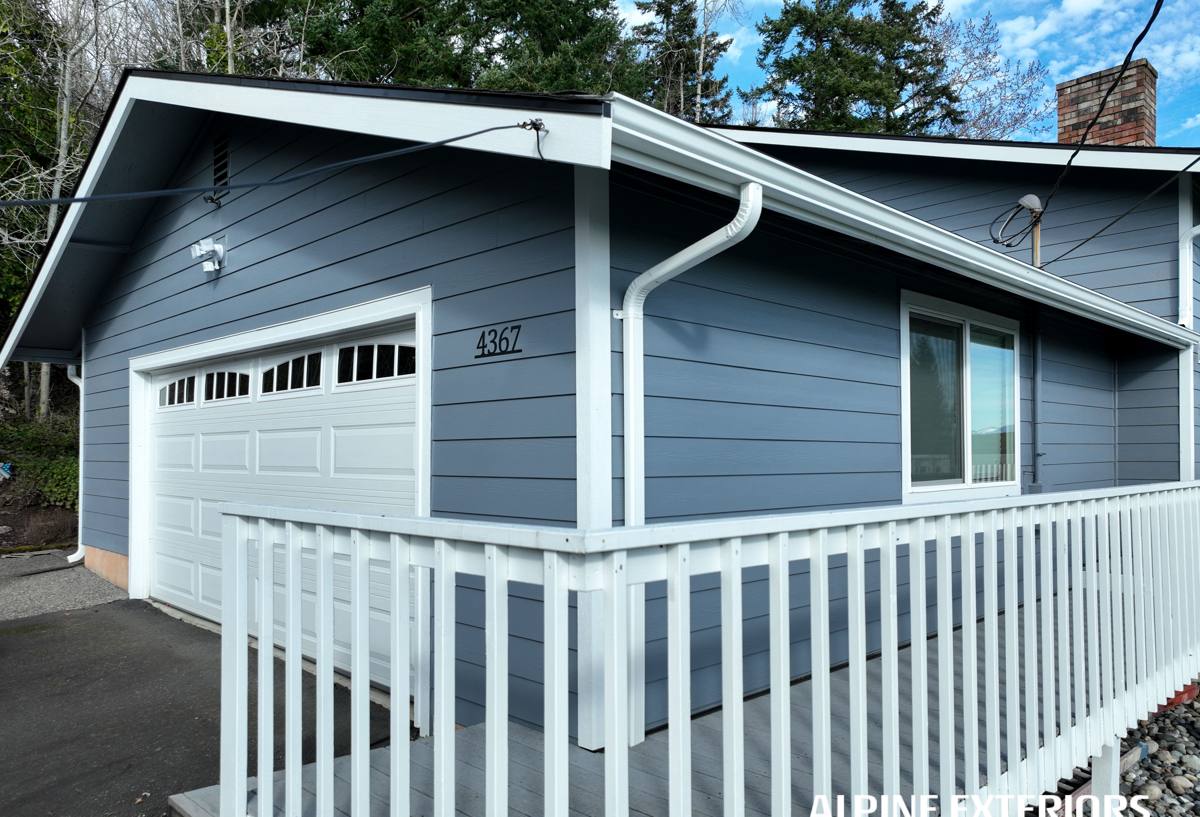
What Custer's Climate Actually Demands From a New Roof
Salt-Laden Marine Air and Corrosion
Custer doesn't take direct salt spray the way a waterfront lot on Birch Bay does, but the marine air moving inland off the Strait of Georgia still carries enough salt to accelerate corrosion on fasteners, flashing, and any exposed metal roofing components over years of exposure. Lower-grade fasteners and untreated metal flashing can start showing rust and weakening well before a roof's expected service life is up. That's a material and hardware decision made at installation time — it's not something that can be fixed later without redoing the affected sections.
Wind-Driven Rain Across Open, Flat Ground
The open farmland around Custer offers little in the way of natural wind break, so storms coming off the water push rain sideways into roof valleys, around vent pipes and chimneys, and up under shingle edges and flashing laps rather than simply falling straight down and running off. That same open exposure also means wind uplift is a real consideration on a new roof, not just moisture — fastening patterns and shingle sealing need to account for it, especially on more exposed roof planes.
A Long Moss and Algae Season
Mild, damp conditions through most of the year give moss and algae a long growing season on any roof surface that stays shaded or holds moisture — north-facing slopes, roof sections under trees, and valleys where debris collects are the usual starting points. Moss isn't just cosmetic. It holds water against the roofing material, works under shingle tabs, and over time can lift or loosen roofing if it's allowed to spread. A new roof gives you a clean start on moss control, but only if it's specified and detailed with that in mind.
What a Correct New Roof Installation Actually Includes
A lot of what determines whether a new roof lasts its full rated life in this climate happens underneath the visible roofing material, in details a homeowner never sees again once the job is done. On every installation, that means:
- Underlayment rated for sustained moisture exposure, not just the minimum required by code
- Ice-and-water shield at eaves, valleys, and other areas where water and debris naturally collect
- Properly lapped and sealed flashing at every valley, chimney, vent pipe, skylight, and roof-to-wall transition
- Balanced attic and roof deck ventilation that lets moisture escape from below instead of getting trapped against the deck
- Corrosion-resistant fasteners and metal components suited to a marine-influenced climate
- Drip edge and starter course details that direct water off the roof rather than back under it
None of these add significant cost relative to the price of the roofing material itself, but skipping any one of them is exactly what turns a roof rated for decades into one that needs attention in half that time. We treat this list as standard practice, not an upgraded package.
Choosing a Roofing Material for a Custer Home
There's no single correct roofing material for every Custer property — it depends on the roof's pitch, how much shade it gets, your budget, and how long you plan to own the home. What changes by climate is which trade-offs actually matter here.
| Material | Moss & Moisture Behavior | Corrosion Exposure | Realistic Lifespan Here |
|---|---|---|---|
| Architectural asphalt shingle | Good with proper ventilation; algae-resistant granule options help | Low, if fasteners and flashing are corrosion-rated | 20-30 years |
| Standing seam metal | Sheds water and resists moss well due to a smooth, non-porous surface | Depends on coating and fastener quality in marine air | 40-60 years |
| Composite/synthetic shingle | Resists moisture absorption; performance varies by product | Low to moderate | 30-50 years depending on product |
| Cedar shake | Absorbs moisture readily; needs airflow underneath to dry between rains | Not a factor for the shake itself, but fasteners still need attention | 20-30 years with consistent upkeep |
We'll walk through which option makes sense for your roof's specific pitch, sun exposure, and budget rather than defaulting to whichever product is easiest to sell. A steep, sun-exposed roof plane and a low-slope roof shaded by farmland trees don't call for the same recommendation, even on the same house.
Full Tear-Off vs. Roofing Over an Old Layer
Roofing over an existing layer instead of tearing off down to the deck is sometimes offered as a cheaper shortcut, and we don't do it as standard practice. It hides the condition of the roof deck underneath — soft spots, trapped moisture, and prior flashing mistakes all stay buried instead of getting addressed. In a climate where sustained moisture is already the main threat to a roof's lifespan, installing a new system over unknown conditions underneath is a real trade-off in long-term performance for a modest short-term savings. A full tear-off lets us inspect and repair the deck itself before anything new goes down, which is the only way to actually know what you're building on.
Signs Your Custer Roof Is Actually Due for Replacement
- Shingles that are curling, cupping, or missing across more than one roof plane
- Granule buildup in gutters or at the base of downspouts
- Moss that returns quickly after cleaning, especially on shaded or north-facing slopes
- Water staining on interior ceilings near exterior walls or around chimneys and vents
- Soft spots or noticeable sag when the roof deck is walked on
- Flashing that's visibly lifted, rusted, or missing its sealant
- A roof that's already had multiple repairs and is approaching or past its expected service life
One or two of these on their own might still be a repair. Several together, especially on a roof that's already at or near the end of its rated life, usually mean replacement is the more honest recommendation — and we'll tell you that directly rather than stringing along another round of patchwork.
Our New Roof Installation Process
- On-site assessment of the existing roof, deck condition where accessible, attic ventilation, and any problem areas around valleys, chimneys, and vents
- A straightforward walkthrough of material options suited to your roof's pitch and exposure, with a written scope and price before any work begins
- Full tear-off of the old roofing, with the deck inspected and any damaged sections repaired before new material goes down
- Installation of underlayment, ice-and-water shield, flashing, and ventilation components as standard practice, not optional add-ons
- Installation of the chosen roofing material, followed by a final walkthrough and cleanup of the site
Why Hiring a Crew That Already Works Custer Matters
A crew that installs roofs across this part of Whatcom County regularly already knows how open, flat exposure changes wind and rain loading on a roof compared to a more sheltered inland site, and how much marine air actually reaches this far from the water. That shows up in decisions a homeowner never sees directly — how much ice-and-water shield a given valley actually needs, which fastener grade gets specified for a wind-exposed roof plane, how ventilation gets balanced for a shaded, moss-prone slope. Those are the decisions that determine whether a new roof performs for its full rated lifespan or starts causing problems well ahead of schedule.
If you're planning a new roof for a home in Custer, or you're not yet sure whether your current roof needs replacement or just attention, we're happy to take a look and give you a straightforward, honest read on what it actually needs. Reach out using the form below for a free, no-pressure estimate.