 Lynden Siding
 Siding Repair Built for Custer's Coastal Edge
Custer sits close enough to the water that homes here take a different kind of beating than siding just a few miles inland in Lynden proper. Salt-laden air off the bay corrodes fasteners and trim faster, wind-driven rain off Pacific storm systems finds every gap and seam, and the shaded, moisture-heavy stretches of the year keep moss and algae established on north- and west-facing walls longer than homeowners expect. Siding repair out here isn't just patching a dent — it's addressing why that section failed in the first place, and making sure the fix survives the next storm season instead of just the next inspection.
We work Whatcom County exteriors regularly, and Custer's mix of older farmhouses, newer builds along the county roads, and homes close enough to Birch Bay and Drayton Harbor to catch salt spray gives us a good read on what actually goes wrong here versus what's just cosmetic.
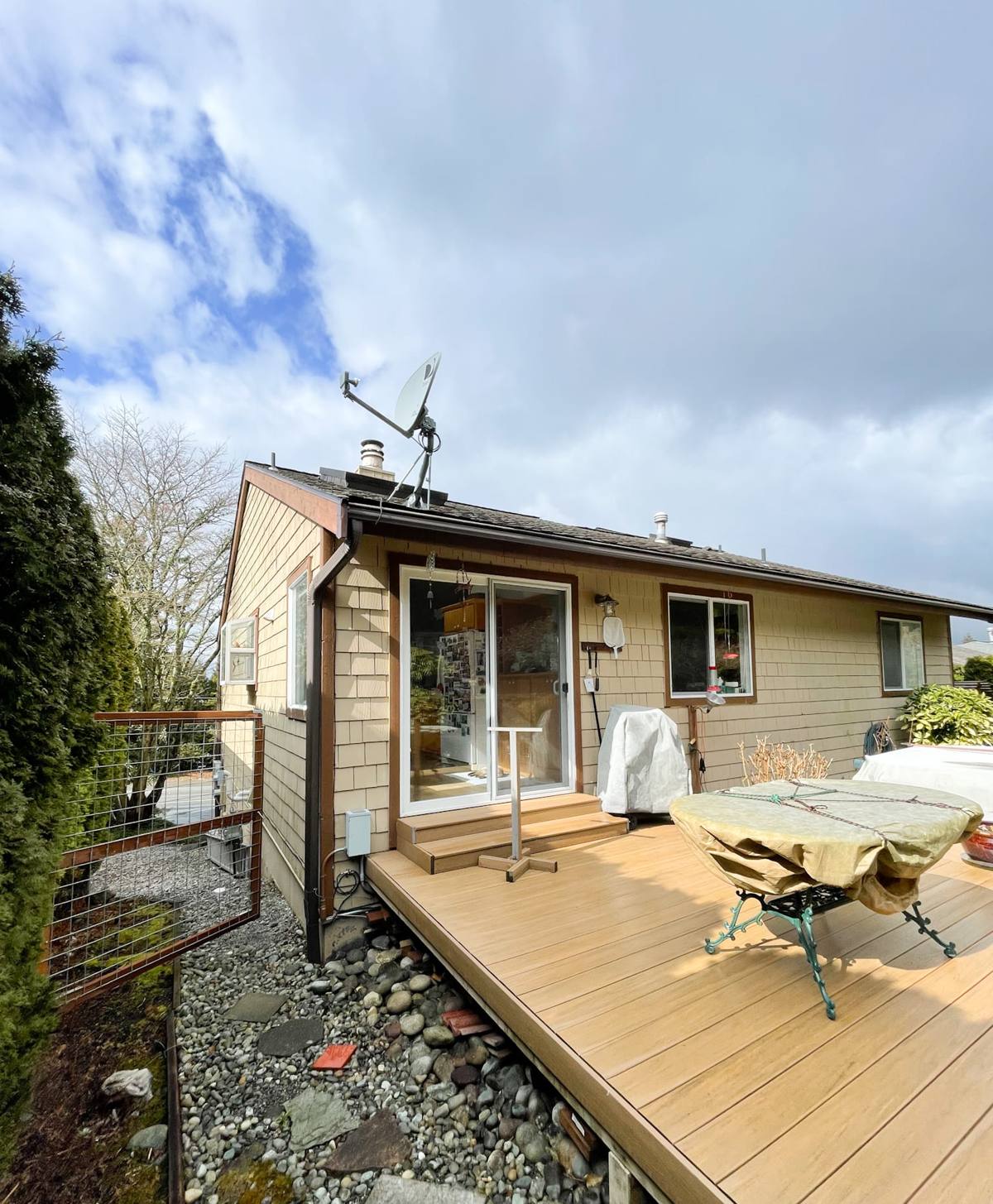
Signs Your Siding Needs Repair, Not Just a Repaint
A lot of homeowners call about paint peeling and end up needing structural repair instead. Paint failure is often the first visible symptom of something happening underneath, not the actual problem. Watch for:
- Soft or spongy spots when you press on the siding, especially near the bottom courses and around window trim
- Paint that bubbles, peels, or fails repeatedly in the same spots even after repainting
- Visible cracking, splitting, or buckled panels, particularly on walls that face prevailing wind and rain
- Dark streaking or persistent moss growth that keeps coming back within a season of cleaning
- Rust streaks running down from fasteners or trim nails
- Gaps opening up at seams, corners, or where siding meets trim, window frames, or the foundation
Any one of these on its own might be minor. Several together, or any sign of softness under the surface, usually means moisture has already gotten past the siding and into the wall assembly — and that changes the scope of the repair.
What's Actually Failing: Common Causes We See in Custer
Salt Air and Fastener Corrosion
Proximity to the water means airborne salt settles on exterior surfaces and accelerates corrosion of exposed metal — nail heads, trim flashing, hose bib penetrations, and any fastener that wasn't properly set or coated. Once a fastener corrodes and loosens, the siding around it starts moving, seals break, and water gets a path in. This is a bigger factor in Custer than it is for siding jobs we do further inland around Lynden itself.
Wind-Driven Rain
Open, low-lying terrain near the water means storms hit with more direct force and less wind break than in more sheltered parts of the county. Rain doesn't just fall here, it drives sideways into seams, under trim, and behind loose panels. Siding and flashing details that would be adequate in a more protected location can underperform in Custer's exposure.
Extended Moss and Moisture Season
Shaded walls and roof lines that stay damp for long stretches of the year give moss and algae a foothold. Beyond the cosmetic staining, sustained moisture against the siding surface — especially on older wood-based products — softens the material over time and holds water against fasteners and seams longer than a dry wall ever would.
Age and Original Material
Homes sided years ago with primed wood, older composite panels, or vinyl are simply more vulnerable to these conditions than a correctly installed fiber cement system. Material choice is often the real reason a repair keeps recurring in the same spot.
Repair or Replace? What Actually Drives the Decision
Not every damaged section needs full replacement, but not every problem should be patched either. Here's how we think through it:
| Factor | Favors Targeted Repair | Favors Broader Replacement |
|---|---|---|
| Extent of damage | Isolated to a few boards or one wall section | Recurring failures across multiple walls |
| Underlying moisture | Surface is dry once damaged boards are removed | Sheathing or framing shows rot or persistent moisture |
| Material condition | Existing siding is Hardie or otherwise sound elsewhere | Existing material is wood, older composite, or failing broadly |
| Age of siding | Relatively young, isolated impact or fastener issue | Original siding is old and near the end of its service life |
| Color match | Product and color still available or close enough to blend | Discontinued color or weathering makes patches obvious |
Where we can do a clean, honest repair that will actually hold up, we recommend it — there's no reason to replace a whole wall over a localized problem. Where the damage points to a systemic issue with the material or the original installation, we'll tell you that directly instead of patching something that's going to fail again in a year.
Why Repairs Go Back On with James Hardie
When we repair or replace sections of siding, we use James Hardie fiber cement, and only James Hardie. It's non-combustible, engineered specifically for Pacific Northwest moisture exposure through Hardie's HZ5 product line, and finished with the factory ColorPlus system, which means a repaired section can match the existing wall far more closely than a field-painted patch ever will. Fiber cement doesn't absorb water the way wood-based or many composite products do, so a well-installed repair isn't just cosmetic — it removes the moisture pathway that likely caused the original damage.
We don't install LP SmartSide, vinyl, Cemplank, Allura, or primed wood siding, on repairs or full jobs. That's a standard we hold across every project, not just new installs, because the same salt air and driving rain that damaged the original siding will work on a replacement patch just as hard if it's made from a product that isn't built for this exposure.
How We Approach a Repair Job
1. Inspection and Moisture Check
We start by identifying not just what's visibly damaged, but what's happening behind it. That includes checking for soft sheathing, testing moisture levels where we suspect water has gotten past the siding, and looking at flashing and trim details that may be contributing to the problem.
2. Scope the Actual Repair
We tell you plainly whether this is a board-level repair, a section replacement, or something bigger. If there's rot in the sheathing, that gets addressed before any new siding goes back on — covering rotten sheathing with new siding just hides the problem.
3. Match the Product and Profile
We match plank width, exposure/reveal, and texture to your existing siding as closely as possible, and use Hardie's ColorPlus finish options to get the closest practical color match.
4. Correct Fastening and Flashing
Given how much fastener corrosion contributes to repeat failures out here, we pay particular attention to fastener choice and placement, along with flashing at seams, trim, and penetrations, so the repair isn't just cosmetic.
5. Final Walkthrough
We walk the repaired section with you, explain what we found and what we did about it, and flag anything else on the exterior worth keeping an eye on.
What to Look For When Hiring a Siding Repair Contractor Here
- Do they inspect for moisture and underlying damage, or just patch what's visible?
- Do they explain why the damage happened, not just how they're fixing it?
- Are they familiar with coastal/salt-air exposure specifically, not just general siding wear?
- Do they work with a fiber cement system engineered for this climate, with a real factory finish and warranty?
- Will they give you a straight answer on repair versus replacement, rather than defaulting to the bigger job?
- Are they licensed, insured, and willing to put the scope of work in writing?
Why a Crew That Already Works Custer Matters
Siding repair done by a contractor who doesn't regularly work this part of Whatcom County can miss the reasons a repair keeps failing — because the causes here (salt air corrosion, wind-driven rain exposure, extended moss season) are more pronounced than they are just a few miles inland. We work siding jobs across Lynden and the surrounding county, including Custer, so we're not guessing at what conditions your walls have actually been dealing with. That translates into repairs that address the real cause instead of the surface symptom, and that blend into the rest of your siding instead of standing out as an obvious patch.
If you're seeing soft spots, recurring paint failure, persistent moss, or damage near trim and fasteners, we're happy to take a look and give you a straightforward, no-pressure estimate on what it will actually take to fix it right. Fill out the form below and we'll get in touch.