 Lynden Siding
 Windows in Custer Have a Harder Job Than People Think
Custer sits close enough to the water and open farmland that its windows take a beating most homeowners never fully account for. You've got salt-laden air drifting in off the Strait and Boundary Bay, wind-driven rain that doesn't just fall but gets pushed sideways into wall assemblies, and a long, damp moss season that keeps everything outside — and sometimes just inside the wall cavity — wet for months at a time. A window that's a little loose, a little under-flashed, or sealed with the wrong caulk isn't going to fail in a dramatic way. It's going to fail slowly, as a soft spot in the sill, a musty smell in a bedroom closet, or a heating bill that creeps up every winter.
We install windows across Whatcom County, and Custer jobs get the same attention as anything in town: correct flashing sequence, the right sealants for our climate, and a finish that actually sheds water instead of just looking like it does.
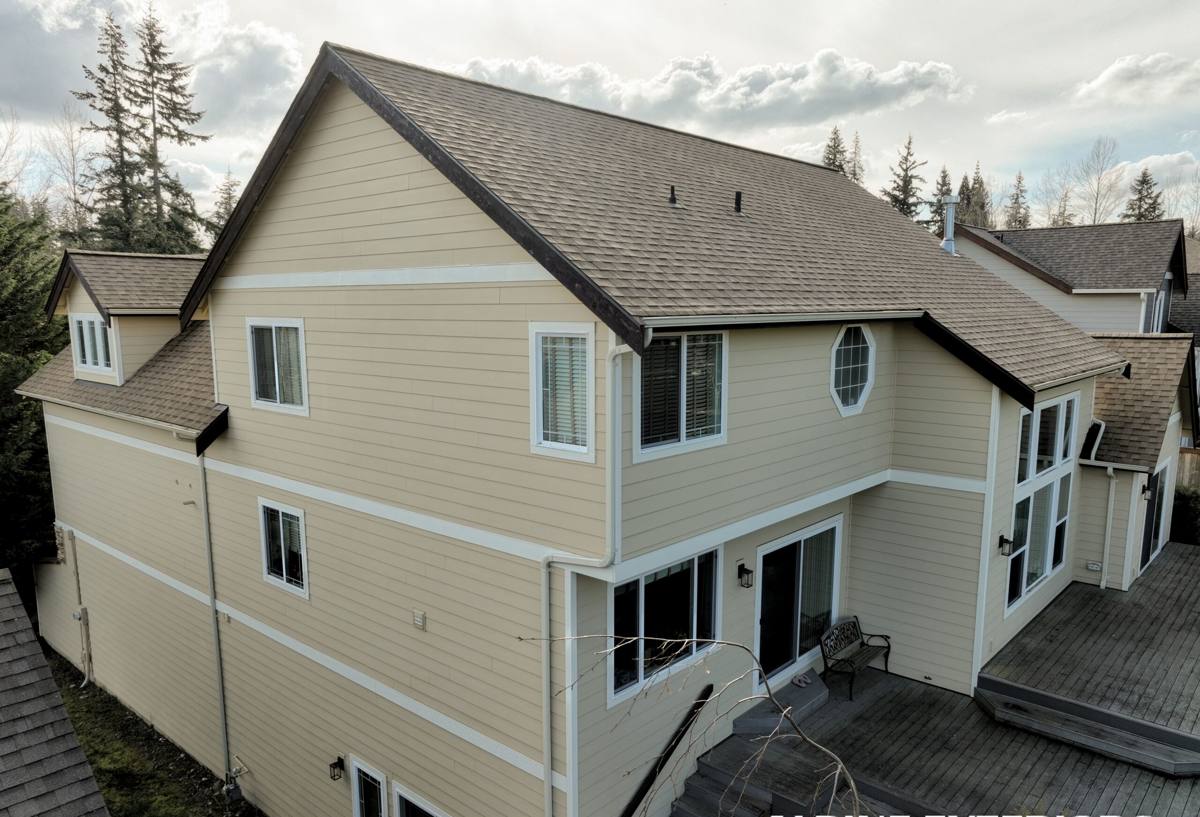
What the Local Climate Actually Does to a Window Opening
Salt Air and Corrosion
Proximity to salt water accelerates corrosion on hardware, screws, and any exposed metal flashing that isn't rated for it. Cheap fasteners or aluminum trim without the right coating will pit and streak years before they should. It's a small detail that gets skipped often, and it's one of the first things that shows up as rust staining on siding below a window.
Driving Rain
Wind off open fields and water pushes rain sideways into wall assemblies far more aggressively than a calm rain shower would. A window opening that relies on caulk alone — instead of proper flashing that directs water back out by gravity — will eventually let moisture in, especially at the corners and the bottom sill where water collects.
Moss Season
Whatcom County's wet stretch runs long, and moss doesn't just grow on roofs. It colonizes window sills, trim, and any horizontal surface that stays damp and shaded. Beyond looking bad, moss holds moisture against wood trim and paint, which shortens the life of both and can mask early rot until it's already spread.
Signs a Custer Home May Need New Windows
- Condensation forming between panes (a sign the seal on a double-pane unit has failed)
- Visible gaps, drafts, or a noticeable temperature difference near the window in winter
- Soft or discolored wood on the interior or exterior sill
- Paint that's bubbling, peeling, or won't hold near the frame
- Windows that are difficult to open, close, or lock properly
- Visible moss or persistent green staining on the sill or exterior trim
- Noticeably higher heating costs compared to similarly sized rooms elsewhere in the house
- Rot found during a siding or trim inspection around an existing window
Any one of these on its own might just need a repair. Two or three together, especially on a home more than 20-25 years old, usually means it's time to talk about replacement.
What a Correct Installation Actually Involves
Window installation gets treated like a simple swap — pull the old one, drop in the new one, caulk the edges. Done that way, a window can look fine for a year or two and still leak. A correct install in this climate follows a specific sequence, and skipping steps is exactly how houses end up with hidden rot behind brand-new windows.
The Sequence That Matters
- Remove the old window and inspect the rough opening for existing rot, soft framing, or prior water damage before anything new goes in
- Repair or rebuild any compromised framing — never install a new window into a wet or damaged opening
- Install a sloped sill pan so any water that gets past the window has somewhere to go besides into the wall
- Apply flashing tape and house wrap in the correct shingle-lap order (bottom to top, so upper layers overlap lower ones) so water is always directed outward and down
- Set the window level, plumb, and square, then fasten per manufacturer specifications
- Insulate the gap between the frame and rough opening without overstuffing, which can bow the frame
- Seal and trim the exterior with materials rated for sustained moisture exposure
- Finish the interior and confirm smooth operation before calling the job done
That sill pan and shingle-lap flashing step is the one that gets skipped most often on lower-bid jobs, and it's the one that matters most in a place that gets driving rain regularly.
Choosing Window Materials for This Climate
There's no single "best" window material — it's a trade-off between upfront cost, maintenance, and how well it holds up to sustained moisture and salt air. Here's how the common options compare for a Custer-area home:
| Material | Moisture Behavior | Maintenance | Typical Lifespan |
|---|---|---|---|
| Vinyl | Doesn't rot or corrode; performs well in wet climates | Low — occasional cleaning | 20-30 years |
| Fiberglass | Excellent moisture and temperature stability | Low | 30-40+ years |
| Wood-clad | Good if maintained; vulnerable at any cladding breach | Higher — periodic sealing and paint upkeep | 20-30 years with upkeep |
| Aluminum | Prone to corrosion near salt air unless properly coated | Moderate | 15-25 years in coastal-influenced air |
We generally steer Whatcom County clients toward vinyl or fiberglass for anything within reach of salt-influenced air, simply because they don't give moisture and salt a foothold the way exposed wood or bare aluminum can. Wood-clad windows can still be the right call for a specific look, but that choice comes with an honest maintenance commitment.
Cost Factors Worth Knowing Upfront
| Factor | Why It Changes the Price |
|---|---|
| Number of windows | Per-unit cost drops slightly with larger jobs due to shared setup and labor |
| Existing rot or framing damage | Framing repair is billed separately from the window itself and varies by extent |
| Window size and configuration | Larger units, bays, or custom shapes cost more than standard single or double-hung sizes |
| Material choice | Fiberglass typically costs more upfront than vinyl; wood-clad more still |
| Access and site conditions | Second-story or hard-to-reach windows take more labor time |
We won't quote a firm number without seeing the openings — anyone who does before checking the framing is guessing.
Our Process for a Custer Job
We start with a walk-through of every window being considered, checking not just the glass and frame but the condition of the framing and siding around it. From there we give a straight assessment: which windows genuinely need replacement, which could hold a few more years, and where we found anything unexpected like hidden moisture damage. Once the scope is set, we schedule the work, protect the surrounding landscaping and interior finishes, and follow the same flashing and sealing sequence on every opening regardless of how many windows are on the job. When we're done, we walk it with you before we consider it finished.
Why It Matters That We Already Work in This Area
A crew that installs windows across Whatcom County regularly, including out toward Custer, isn't guessing at how the local climate behaves — we've seen what happens to an under-flashed window three winters later, and we build every install to avoid that outcome. That familiarity also means we know what a rough opening in an older Custer-area home is likely to look like once the trim comes off, and we're not caught off guard by the framing conditions common to homes built in different eras around here. Local proximity also means straightforward scheduling and a crew that's back in the neighborhood often enough to stand behind the work.
Living With New Windows in a Wet Climate
New windows reduce maintenance, but they don't eliminate it. A little seasonal attention keeps them performing the way they should:
- Rinse sills and trim periodically to keep moss and organic buildup from taking hold
- Check exterior caulking annually, especially after a hard winter, and touch up any cracked or separated beads
- Keep gutters and downspouts clear so roof runoff isn't dumping extra water onto window trim below
- Trim back vegetation that keeps window areas shaded and damp
- Address condensation between panes early — it signals a seal failure that will only get worse
Permits and Timing
Window replacement in Whatcom County may require a permit depending on scope, especially if structural framing is altered or egress requirements are involved on a bedroom window. We handle that conversation as part of scoping the job so there are no surprises mid-project. As for timing, most homeowners get better scheduling flexibility outside the peak spring and summer months, though we work around driving rain and moss season conditions year-round since correct flashing technique doesn't depend on dry weather to be done right.
If you're weighing a repair against replacement, or just want an honest read on what your current windows are doing, we're glad to take a look. Fill out the form below for a free, no-pressure estimate on your Custer-area home.