 Lynden Siding
 Building Decks That Hold Up in Custer
Custer sits close enough to the water that salt air is a real factor in how outdoor structures age, and it shares the same wet, gray stretch of fall-through-spring weather as the rest of Whatcom County. A deck built here needs to handle more than just foot traffic and barbecues — it needs to shed water fast, resist moss and algae, and stand up to corrosion from the salt-laden air blowing in off the Strait. We've built and repaired decks throughout the Custer area long enough to know which details matter and which ones are just extra cost for no real benefit.
This page covers what we actually do when we build a custom deck for a Custer homeowner: the materials that make sense here, the structural details that keep a deck solid for decades, and how our process works from first call to final walkthrough.
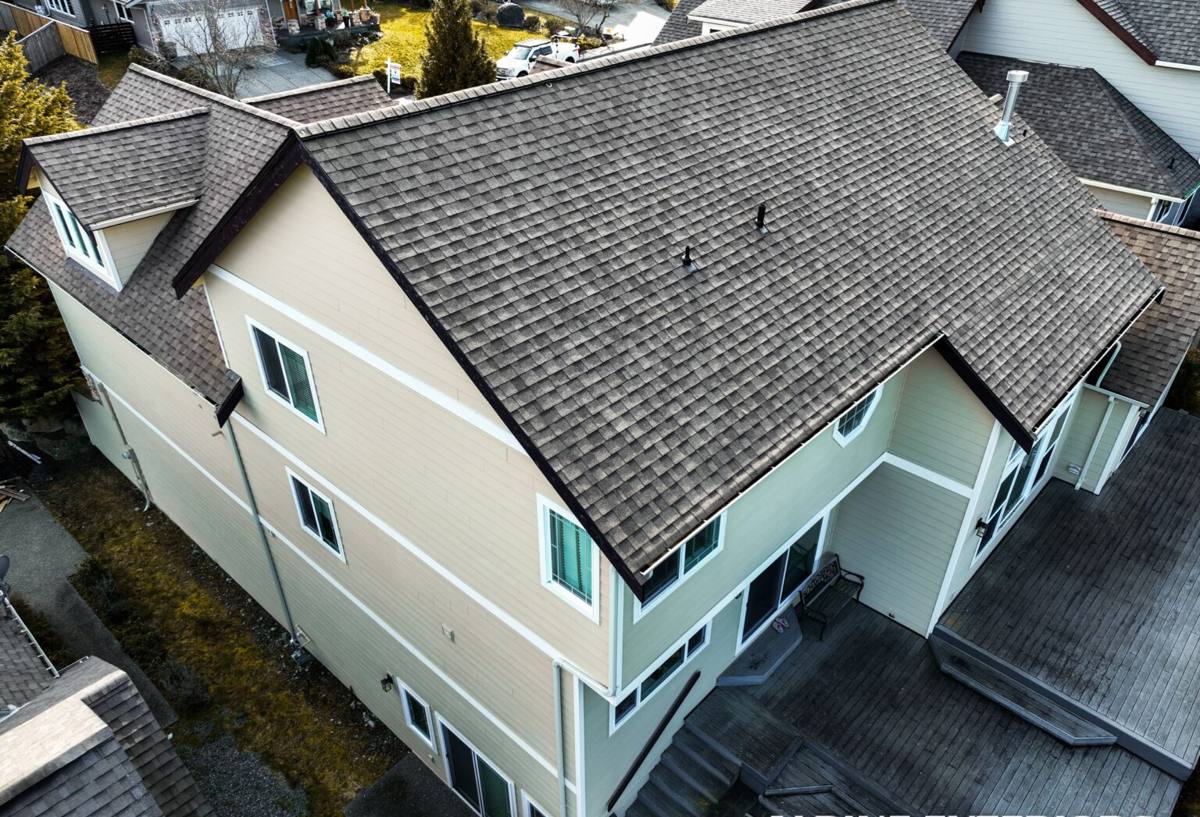
What Custer's Climate Does to a Deck
Three things drive almost every deck problem we see out this way:
Salt Air and Corrosion
Being close to Puget Sound and Georgia Strait means airborne salt settles on everything, including deck hardware. Standard zinc-coated screws and joist hangers corrode faster here than they would further inland, which is exactly the kind of slow failure that doesn't show up until a board is loose or a hanger has rusted through. We spec hardware rated for coastal exposure as a baseline, not an upsell.
Driving Rain
Whatcom County rain doesn't always fall straight down — wind-driven rain gets pushed sideways and up under railings, ledger boards, and stair stringers. Any gap in flashing or a poorly sealed ledger connection becomes a water entry point that rots the house band joist behind it, not just the deck itself.
Moss and Algae
Long wet seasons with limited direct sun, especially on north- and east-facing decks shaded by trees or the house itself, grow moss fast. Moss holds moisture against decking material and turns boards slick and dangerous underfoot. Material choice and board spacing both affect how much moss becomes a chore versus a hazard.
Decking Materials: What Actually Performs Here
There's no single "best" decking material — it depends on budget, maintenance tolerance, and how exposed the deck is. Here's how the common options stack up for a Custer property specifically.
| Material | Moss Resistance | Maintenance | Typical Lifespan |
|---|---|---|---|
| Pressure-treated wood | Low — needs regular cleaning and sealing | Annual wash, re-seal every 2-3 years | 15-20 years with upkeep |
| Cedar | Moderate — natural oils help but fade over time | Cleaning plus periodic oil/stain | 15-25 years with upkeep |
| Composite decking | Good — dense, low-absorption surface | Occasional wash, no sealing | 25-30+ years, mfr. warranty backed |
| PVC/capped polymer | Best — fully sealed surface, nothing to absorb | Rinse as needed | 25-30+ years, mfr. warranty backed |
For a shaded Custer lot near trees or on the north side of a house, we usually steer homeowners toward composite or capped polymer boards, since the surface doesn't absorb moisture the way wood fiber does, which means less moss and less slip risk. For an open, sunnier lot, a well-maintained cedar or treated-wood deck can still make sense and costs less up front — we'll tell you honestly which one fits your site and your budget rather than pushing the more expensive option by default.
Why We Don't Push Basic Wood as the Default
Standard pressure-treated wood is a legitimate, budget-friendly choice, but it's also the material most sensitive to the wet-and-moss cycle common here. It needs consistent cleaning and re-sealing to keep water from wicking into the grain, and skipping even one maintenance cycle in a wet year can let rot get a foothold, especially at ground contact points and fastener holes. We'll still build with it when that's the right call for the budget — we just make sure homeowners know the maintenance commitment going in, rather than finding out three years later.
What a Correctly Built Deck Includes
Regardless of decking material, the structure underneath is what determines whether a deck lasts 10 years or 30. In a climate like ours, these details aren't optional extras:
- Coastal-rated fasteners and hardware — stainless or heavy-duty coated screws, bolts, and joist hangers to resist salt-air corrosion
- Proper ledger board flashing — a continuous, correctly lapped flashing system where the deck meets the house, so wind-driven rain can't track behind it
- Joist tape or butyl sealant on top of every joist to keep standing water from soaking into the wood from above
- Adequate board spacing for drainage and airflow, which also reduces moss buildup
- Footings set below frost depth and on stable, well-drained soil — Custer's mix of soil types means we check this per site, not by assumption
- Proper post-to-beam and beam-to-joist connections using rated structural hardware, not toe-nailing
- Ground clearance and airflow underneath the deck to keep humidity from stalling under the structure
Skipping any one of these doesn't fail the deck immediately — that's exactly what makes it a problem. It shows up as soft framing, a leaning post, or a rotted ledger years down the road, usually after the moss has already made the surface unpleasant to use.
Railings, Stairs, and Coastal Exposure
Railings and stair stringers take the most direct weather exposure on most decks, since they're vertical and catch wind-driven rain from the side. Wood railings need the same maintenance commitment as wood decking, while metal or composite railing systems hold up with less upkeep but cost more initially. Stair stringers in particular are worth building with rot-resistant material or treated lumber with sealed cut ends, since a compromised stringer is a safety issue, not just a cosmetic one.
Whatcom County building code sets specific requirements for railing height, baluster spacing, and stair geometry — we build to code as a floor, not a target, since these details are what keep a deck safe for kids and guests, not just compliant on paper.
Our Process for Custer Deck Projects
1. On-Site Assessment
We walk the property, check sun exposure, drainage, soil conditions, and how the deck will tie into the house. For replacement projects, we also check the condition of the existing ledger connection and framing, since that often reveals issues the homeowner didn't know about.
2. Design and Material Selection
We talk through decking material, railing style, layout, and any features like built-in seating or multi-level design, matched to your budget and how exposed the site is to moss and moisture.
3. Permitting
Most new decks and many replacement decks require a permit through Whatcom County. We handle that process so you don't have to track down forms or inspection scheduling yourself.
4. Construction
Framing first, with every structural connection and flashing detail installed to the standard outlined above, then decking, railings, and stairs. We don't cut corners on the parts that are hidden once the deck is finished, because those are the parts that determine how long it lasts.
5. Final Walkthrough
We walk the finished deck with you, cover basic care for whatever material you chose, and answer any questions before we consider the job done.
A Quick Pre-Build Checklist
Before you commit to a deck project, it helps to think through these points:
- How much direct sun does the deck location get, and how shaded will it be by trees or the house?
- Are you comfortable with annual cleaning and periodic sealing, or would a low-maintenance material serve you better long term?
- Does the deck attach to an exterior wall that may need siding or flashing repair before the ledger goes in?
- What's the realistic use — daily family space, occasional entertaining, or a small utility deck?
- Do you want railings that match existing exterior trim or hardware finishes?
- Is there a slope or drainage issue in the yard that affects footing placement?
Why a Local Crew Matters for This Job
A deck built by a crew that hasn't worked in Custer before might use standard hardware specs and standard flashing details that work fine in a drier climate but fall short here. We already know how the salt air, the rain patterns, and the moss season in this part of Whatcom County treat outdoor structures, and we build to that reality instead of a generic spec sheet. That means fewer surprises during the build, fewer callbacks after, and a deck that's still solid well past the point where a corner-cut version would need major repair.
We also know the local permitting process and inspection expectations, which keeps the project moving instead of stalling on paperwork we've never dealt with before.
Get a Straight Answer for Your Property
Every lot in Custer is a little different — sun exposure, soil, how close you are to the water, what's already attached to the house. Rather than guessing at material and structural specs from a general page like this one, the most useful next step is having us look at your specific site. Reach out for a free, no-pressure estimate using the form below, and we'll give you a straight assessment of what your deck project actually needs.