 Lynden Siding
 Building Decks for Laurel Homes in Whatcom County
Laurel sits in a part of Whatcom County where a deck earns its keep almost every month of the year. Between the rain that settles in for weeks at a stretch, the salt-tinged air drifting in from the Strait, and a moss season that can start creeping across shaded lumber before you've even had your first cookout, a deck out here is under more pressure than the same structure would face in a drier inland climate. We build and repair custom decks for homeowners throughout the Laurel area, and most of what separates a deck that lasts twenty-plus years from one that's rotting at the ledger board in eight comes down to decisions made before the first board is ever cut.
This page covers what we've learned building decks specifically for this stretch of Whatcom County — the materials that hold up, the details that matter most, and what our process looks like from first call to final walkthrough.
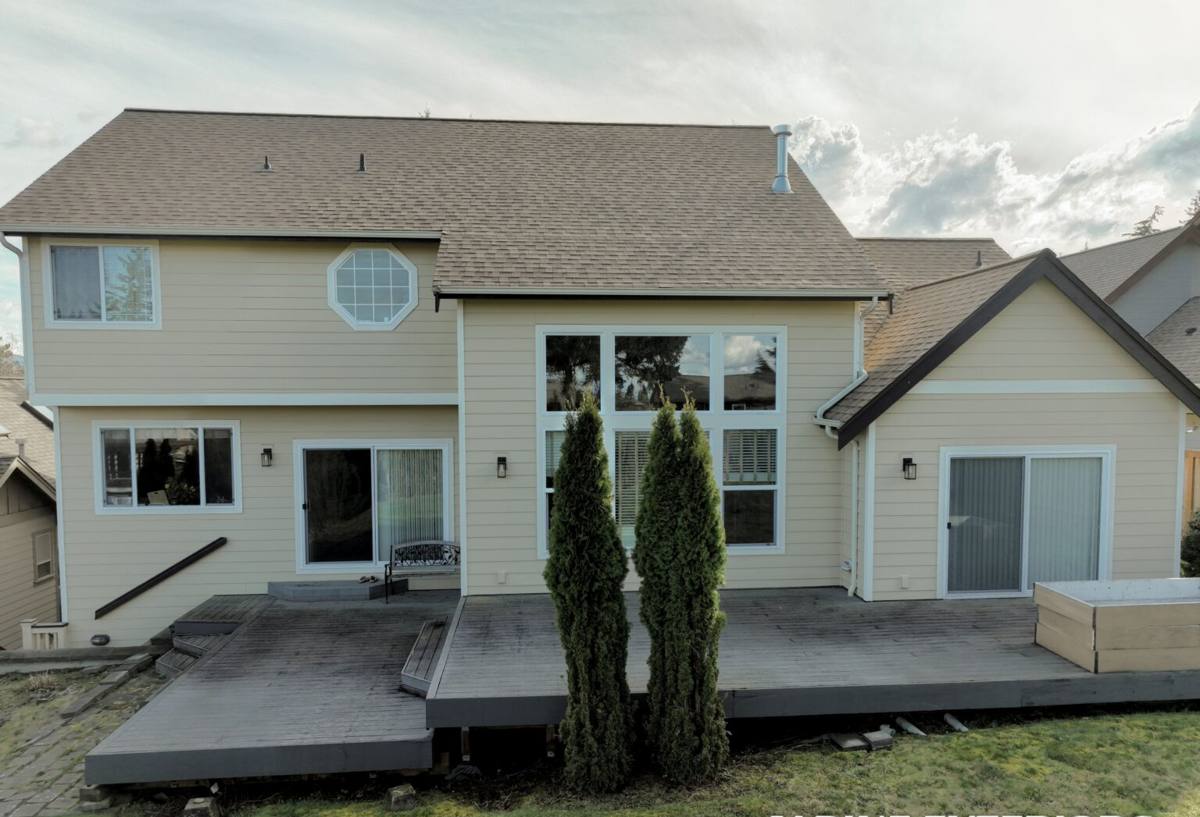
What Laurel's Climate Actually Does to a Deck
It's worth being specific about the forces at work, because generic deck-building advice often misses what's relevant here.
Sustained Moisture
Laurel gets long stretches of steady, driving rain rather than short heavy downpours. That matters for deck design because water doesn't just fall on a deck here — it sits, blows sideways under railings, and gets driven into joints and fastener holes over days at a time. Framing and connections that aren't properly flashed and sealed stay wet far longer than they would in a climate with quick storms and long dry spells in between.
Moss and Organic Growth
Shaded decks, north-facing decks, and anything tucked under overhanging trees will grow moss and algae here, often within the first year if the surface isn't detailed to shed water and dry out. Moss holds moisture against the decking surface, which accelerates rot in wood products and can make composite and even some capped products slippery if they're not cleaned periodically.
Salt-Influenced Air
Whatcom County's proximity to the water means fasteners, hardware, and railing systems face more corrosion pressure than they would further inland. Standard hardware that would be fine in a dry eastern-Washington climate can start showing rust streaks on a Laurel deck within a few seasons if it isn't rated for the exposure.
What a Correctly Built Deck Needs Out Here
Given all that, a deck built for Laurel isn't just "a deck" — it's a deck engineered around moisture management first, aesthetics second (though the two aren't in conflict when it's done right).
- Ledger board flashing that fully sheds water away from the house rim joist, not just a bead of caulk
- Joist tape or cap protection on all structural framing to keep end grain and fastener penetrations from wicking water
- Corrosion-resistant, code-rated fasteners and structural hardware throughout — not just at visible connections
- Proper board spacing and airflow underneath the deck so surfaces can actually dry between rain events
- Decking material chosen with this specific moss and moisture load in mind, not just for upfront cost
- Railing and post connections detailed to avoid standing water pockets where hardware sits
Choosing the Right Decking Material for This Climate
There's no single "best" decking material — there's a best material for a given budget, sun exposure, and maintenance appetite. Here's how the common options actually perform under Laurel's conditions.
| Material | How It Handles Our Climate | Maintenance | General Cost Range |
|---|---|---|---|
| Pressure-treated wood | Affordable and strong, but end grain and cut edges need re-sealing regularly or moisture works in fast | Annual cleaning and periodic sealing/staining | Lowest upfront cost |
| Cedar | Naturally rot- and insect-resistant, but still needs finish maintenance to resist moss staining and graying | Regular cleaning, refinishing every few years | Mid-range |
| Composite decking | Strong moisture resistance and consistent performance; still needs periodic washing to keep moss and algae from taking hold on shaded boards | Low — occasional cleaning | Higher upfront, lower lifetime maintenance |
| Capped composite / PVC | Best resistance to moisture absorption and staining in a shaded, damp environment; premium option | Lowest — mostly rinsing | Highest upfront cost |
For decks in shadier parts of Laurel, or on the north side of a house where sun never really hits the boards, we lean homeowners toward composite or capped composite options — the moisture and moss resistance pays for itself over time in reduced cleaning and refinishing. For open, sun-exposed decks, a well-detailed wood deck can perform very well and costs less to start.
Structural Details We Don't Skip
A deck can look finished and still be a slow-motion problem underneath. These are the details we won't shortcut, regardless of budget pressure, because they're the difference between a deck that ages gracefully and one that needs structural repair in year six or seven.
Ledger Attachment and Flashing
This is the single most common failure point on decks we're asked to repair in this region. If the ledger board isn't flashed correctly to direct water away from the house framing, moisture gets trapped between the ledger and the rim joist and rot sets in where you can't see it until the deck starts to feel spongy or pull away from the house.
Footings Set Below Frost and Drainage Depth
Footings need to be sized and set appropriately for our soil and moisture conditions, with concrete work that accounts for how saturated the ground can get during our wetter months.
Fastener and Hardware Selection
We use fasteners and structural connectors rated for exterior, corrosion-prone environments — not the cheapest box available. Given the salt-air exposure in this part of the county, this isn't optional if you want twenty-plus years out of the structure.
Our Process for a Laurel Deck Project
1. On-Site Assessment
We walk the site, look at sun and shade exposure, drainage patterns, and how the deck will tie into the house. This is where we flag anything specific to your lot — a shaded corner that'll need extra attention for moss, a downspout that dumps near the footing area, that kind of thing.
2. Design and Material Selection
We talk through layout, railing style, and decking material with your budget and maintenance preferences in mind, being straightforward about the tradeoffs covered above rather than upselling the most expensive option by default.
3. Permitting
Most deck projects of meaningful size require a permit through Whatcom County or the applicable local jurisdiction. We handle that process as part of the job so you're not left navigating it alone.
4. Construction
Framing, flashing, and structural work come first and get inspected before decking goes down. We don't cover up structural work before it's been done right — that's the part that determines whether the deck lasts.
5. Final Walkthrough
We walk the finished deck with you, cover basic care and cleaning specific to the material you chose, and make sure everything meets what was discussed at the start.
Practical Checklist Before You Start a Deck Project
- Know your sun/shade exposure — it drives both material choice and how often the deck will need cleaning
- Ask any contractor specifically how they flash the ledger board — it's the most common failure point locally
- Confirm what fastener and hardware grade is being used, given our salt-air exposure
- Decide upfront how much annual maintenance you actually want to do — this should drive material choice more than sticker price alone
- Ask whether the quote includes permitting, or whether that's a separate step you need to manage
- Get the footing and framing plan explained in plain language before construction starts
Why Hire a Crew That Already Works in Laurel
Deck-building advice that works in a dry climate can be actively wrong here. A crew unfamiliar with Whatcom County's rain patterns, moss pressure, and salt exposure may build something that looks great at handoff and starts showing problems within a couple of seasons — moss creeping across shaded boards, hardware rusting through, or a ledger connection that was never properly flashed for how much water actually hits it here. We work in this climate every week, not occasionally, and we build with the specific failure points we see on local repair calls in mind from the first framing decision.
If you're planning a new deck or need an honest look at whether an existing one needs repair or replacement, we're glad to come take a look. Reach out for a free, no-pressure estimate using the form below.