 Lynden Siding
 Windows Built for the Way Deming Actually Weathers
Deming sits back in the Nooksack River valley, close enough to the foothills that winters run damp and shaded, and close enough to the coast that the same marine weather systems that push salt-laced air across Whatcom County still reach inland to soak siding, trim, and window frames for months at a time. Add driving rain that comes in sideways during a fall or winter blow, and a moss season that can run from October well into spring, and you've got a climate that is genuinely hard on windows — not because any one storm is dramatic, but because the moisture never really lets up.
Most window problems we find in this area aren't from one bad storm. They're from years of water finding a small gap, sitting there, and slowly rotting the wood or corroding the hardware around it. A custom window job done right in Deming has to plan for that reality from the first measurement, not just pick a window off a shelf and hope the install holds.
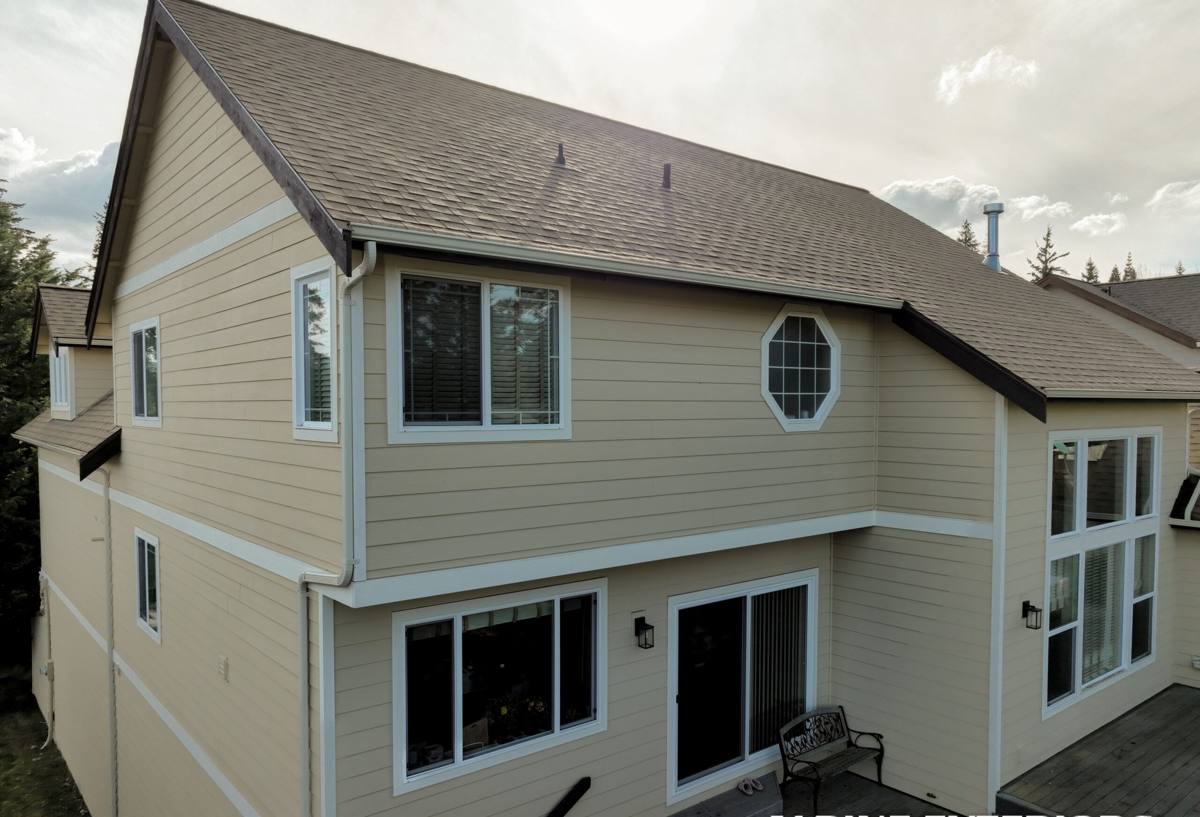
What "Custom" Actually Means Here
"Custom" gets used loosely in this trade. For us, on a Deming home, it means two specific things:
Custom-sized, not just custom-ordered
Older farmhouses, additions, and remodels in this area rarely have perfectly square, standard-dimension openings. Settling, older framing methods, and decades of moisture cycling mean an opening that measures 35 7/8" on one side and 36 1/4" on the other is common, not rare. A true custom window is manufactured to the actual opening — not forced into a stock size with extra shimming and caulk trying to make up the difference.
Custom-detailed for the exposure
A window on the weather side of a house facing the prevailing rain needs different flashing and sealant detailing than one tucked under a deep eave on the leeward side. We look at each opening's actual exposure — sun, wind-driven rain direction, roof overhang, nearby trees and shade — and adjust the install detail accordingly. That's the part of "custom" that actually protects the house long-term.
Signs Your Current Windows Are Losing the Fight
Homeowners usually call us for one of two reasons: a window is visibly failing, or they're doing a broader remodel and want windows addressed while walls are already open. Either way, these are the signs worth acting on before they turn into a bigger repair:
- Fogging or a hazy film between the panes of a double-pane window — the seal has failed and the insulating gas is gone
- Soft or spongy wood at the sill or the bottom corners of the frame
- Paint that keeps bubbling or peeling in the same spot no matter how often it's redone
- Visible moss or dark green-black staining building up on the sill, brickmold, or trim below the window
- Drafts you can feel with a hand near the frame on a windy day
- Windows that are hard to open, close, or lock — often a sign the frame has shifted or swelled
- Water staining on interior drywall or trim below or beside a window after a heavy rain
Any one of these on its own might just need a repair. Several together, especially on an older window, usually means the frame or the flashing behind it has been compromised and a like-for-like patch won't hold for long.
Frame Materials — What Actually Holds Up in This Climate
We get asked constantly which material is "best." The honest answer is that it depends on budget, the home's style, and how much upkeep you're willing to do. Here's how the common options actually perform in a damp, moss-prone, marine-influenced climate like ours:
| Material | Moisture Behavior | Maintenance | Best Fit |
|---|---|---|---|
| Vinyl | Won't rot, but sealant joints and corner welds are the weak point over time | Low — occasional cleaning, no painting | Budget-conscious replacements, rental or resale-focused homes |
| Fiberglass | Excellent — dimensionally stable, doesn't swell or shrink with moisture | Low | Homes wanting long service life with minimal upkeep |
| Wood, factory-clad exterior | Good if the cladding and flashing are done correctly; interior wood still needs protection | Moderate | Traditional or historic-style homes where wood interior trim matters |
| Solid wood, site-finished | Poor without disciplined upkeep — the most vulnerable to our rain and moss season | High — regular repainting/sealing required | Restoration projects where matching original detail is the priority |
| Aluminum | Doesn't rot but conducts cold and can condense; thermally broken versions perform better | Low | Modern or commercial-style builds |
For most Deming homes doing a straightforward replacement, we steer people toward vinyl or fiberglass because they take the moisture exposure out of the equation almost entirely. We'll still install site-finished wood windows when that's the right call for the house — a period-correct remodel, for instance — but we're upfront that it comes with a real, ongoing maintenance commitment in this climate, not a one-time cost.
How We Approach a Window Job in Deming
1. On-site assessment, not a phone quote
We walk the exterior and interior of every window being replaced. That includes checking the sill and framing for hidden rot, noting the exposure direction, and looking at how the existing flashing (or lack of it) has been performing.
2. Precise measurement
Each opening is measured individually — width, height, and diagonal, at multiple points. We don't assume openings match each other even in the same wall.
3. Flashing and water management first
This is the step that actually determines whether a window lasts 10 years or 30 in this climate. Proper flashing tape, a correctly lapped weather-resistive barrier, and a sloped sill pan to direct any incidental water back outside are non-negotiable on every install, regardless of window brand or price point.
4. Setting and sealing the window
The window is shimmed level and square, fastened per the manufacturer's specifications (not generic guesswork), and sealed with exterior sealant rated for our climate's temperature and moisture swings — not a generic caulk that will crack and separate within a season or two.
5. Interior and exterior finish work
Trim, casing, and any siding or brickmold disturbed during the install gets finished properly, not just patched. This is also where we catch and address any moss or algae staining on adjacent trim before it's sealed back up.
6. Final walkthrough
We test every operable window for smooth function and check the seal by eye and by hand before we consider the job done.
Mistakes We See From Rushed or Out-of-Area Installs
A lot of the repair calls we get in the Deming and greater Lynden area trace back to a handful of recurring shortcuts:
- Skipped or improvised flashing — relying on caulk alone to keep water out instead of a proper flashing system behind the trim
- Stock-size windows forced into out-of-square openings, leaving gaps hidden behind trim that let moisture in slowly
- No sill pan, so any water that does get past the window sits directly on bare framing instead of draining back out
- Wrong sealant for the exposure — a bead that looks fine on installation day but hardens and cracks after one wet Whatcom County winter
- Ignoring existing rot and installing a new window over compromised framing, which just hides the problem for a year or two
None of these show up on install day. They show up two, five, or ten winters later — which is exactly why the install detail matters more than the window brand printed on the sticker.
Keeping Custom Windows Performing Long-Term
A well-installed window in this climate still benefits from basic upkeep. This is the maintenance rhythm we recommend to Deming homeowners:
- Rinse pollen, dirt, and early moss growth off sills and frames a couple times a year, especially heading into fall
- Check exterior caulk lines annually for cracking or separation, particularly on south- and west-facing windows that take the brunt of wind-driven rain
- Keep gutters and downspouts clear so overflow isn't running down the wall and pooling at window heads
- Trim back vegetation and tree cover near windows to reduce shade and moisture retention — the same conditions that grow moss on a roof will grow it on a sill
- Operate and lubricate hardware (locks, hinges, tracks) periodically so components don't seize from disuse
- Address any bubbling paint or soft trim immediately rather than waiting — it's far cheaper to fix a small spot of rot than to replace a whole sill
Why It Matters That We Already Work in Deming
Whatcom County isn't one uniform climate. A window installed the same way on a coastal Bellingham lot and a wooded, valley-floor lot in Deming won't age the same way — different sun exposure, different shade cover, different wind patterns off the river valley. Because we work this specific area regularly, we've seen how different exposures on Deming and Lynden-area homes actually perform over years, not just on install day. That shapes real decisions: where we add extra flashing attention, which sealants hold up best through our wet season, and when a homeowner is better served by a lower-maintenance material than the one they originally had in mind.
It also means we're not learning the region on your project. We're not guessing at how a north-facing sill under heavy tree cover behaves through a Whatcom County winter — we already know, because we've serviced homes with exactly that exposure.
Getting Started
If you're dealing with a failing window, planning a remodel, or just want an honest read on whether your current windows are worth repairing versus replacing, we're happy to take a look. The estimate is free, there's no pressure, and you'll get a straight answer about what your home actually needs — use the form below to get started.