 Lynden Siding
 Building a Deck That Actually Holds Up in Birch Bay
Birch Bay sits right on the water, and that changes what a deck has to survive compared to one a few miles inland in Lynden. Salt-laden air corrodes fasteners and hardware faster than it does anywhere else in Whatcom County. Wind off the water drives rain sideways into ledger boards and framing that a typical deck design assumes will only get rained on from above. And the long stretch of gray, damp months here means moss and algae get a head start on any surface that doesn't shed water and dry out quickly. A deck built to a generic spec sheet will show its age in Birch Bay within a few seasons. A deck built for this specific environment won't.
We build and replace decks for homeowners along the bay and throughout Lynden, and the difference in approach is real, not marketing. It comes down to fastener choice, ledger flashing, board spacing, and a few decisions most crews don't think twice about until they've seen what salt air and moss do to a deck that wasn't built for it.
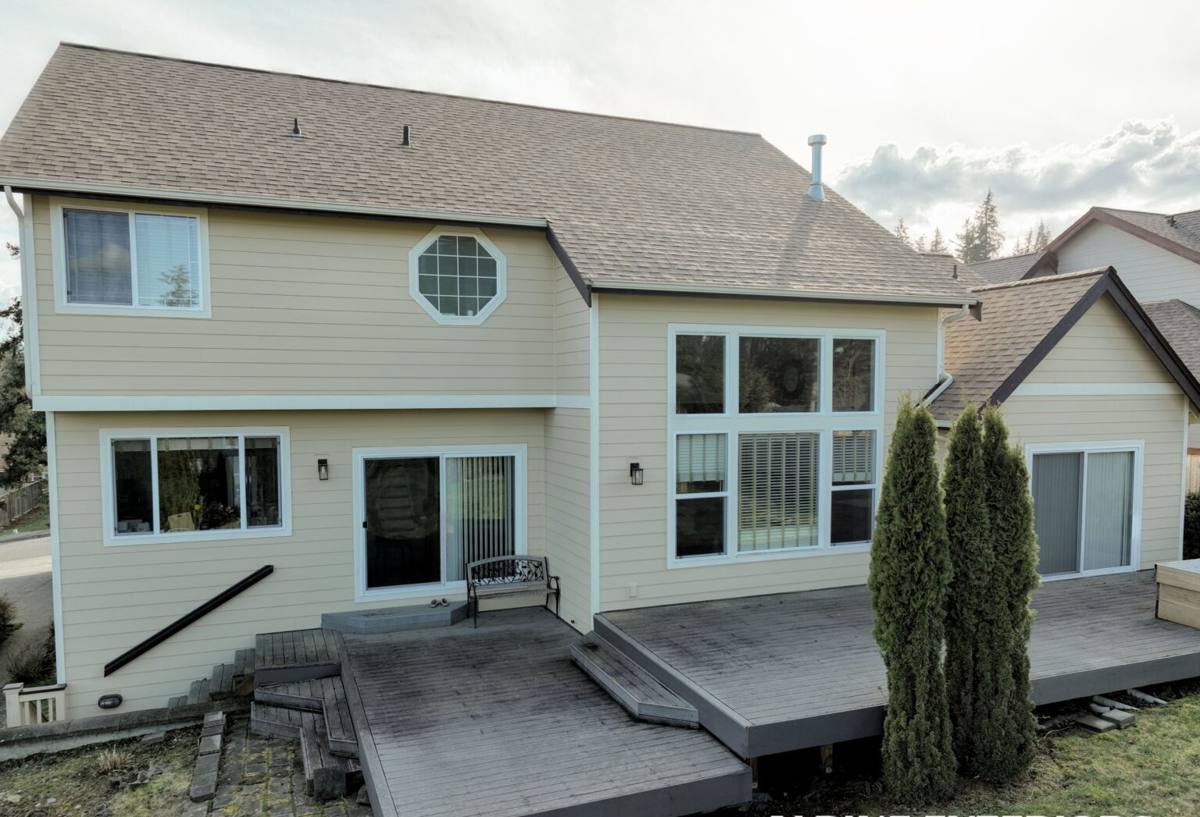
What the Birch Bay Climate Does to a Deck
Salt Air and Corrosion
Proximity to saltwater accelerates corrosion on anything metal — screws, joist hangers, bolts, and railing hardware. Standard hot-dip galvanized fasteners can start showing rust streaks and pitting well before they would inland. Stainless steel costs more up front but is the honest answer for anything within a mile or so of the water, especially structural hardware you can't easily inspect once decking is installed over it.
Wind-Driven Rain
Rain in Birch Bay rarely falls straight down. Wind off the water pushes it sideways, which means the ledger board connection (where the deck attaches to the house), rail post bases, and any exposed end grain take on more moisture than a sheltered inland deck would ever see. Flashing details that would be "good enough" elsewhere aren't good enough here — water finds the gap and it finds it fast.
Moss, Algae, and Slow Drying
Whatcom County's long wet season means surfaces that don't get much direct sun or airflow stay damp for extended stretches. That's exactly the condition moss and algae need. Tight board spacing, poor under-deck ventilation, and shaded northern exposures all make it worse. It's not just a slip hazard — sustained moisture against wood or composite decking shortens its life.
Getting the Fundamentals Right
A deck that holds up here isn't about exotic materials. It's about getting ordinary decisions right, consistently, in a way that accounts for the environment:
- Ledger board flashing that actually sheds water away from the house band joist, not just a strip of tape and hope
- Fasteners and structural hardware rated for the level of corrosion exposure your specific lot has — closer to the water means a higher standard
- Joist tape or a similar barrier on top of framing lumber so standing water doesn't sit against end grain and fastener heads
- Board spacing that allows for drainage and airflow, not tight-fit aesthetics that trap moisture underneath
- Post bases set above grade and away from standing water, with hardware that won't wick moisture up into the post
- Adequate under-deck ventilation so the framing has a chance to dry out between storms instead of staying damp for weeks
Decking Material Options for a Bay-Facing Lot
There's no single "right" material for every deck — it depends on your budget, how much upkeep you want to do, and how exposed your lot is to wind and salt spray. Here's how the common options actually compare in this environment:
| Material | Upkeep in this climate | Honest trade-offs |
|---|---|---|
| Pressure-treated lumber | Needs regular cleaning and re-sealing to resist moss and moisture | Lowest upfront cost; shortest interval before it needs attention if neglected |
| Cedar | Naturally moisture- and insect-resistant, but still needs periodic sealing near the water | Good look and feel; softer wood shows wear from foot traffic and weather faster than composite |
| Composite decking | Low — no sealing or staining, occasional wash to clear moss film | Higher upfront cost; quality varies a lot by brand, and installation sensitivity (gapping, fastening) matters more than with wood |
| PVC decking | Lowest — fully synthetic, doesn't absorb moisture | Highest upfront cost; can look and feel less like wood, though newer product lines have closed that gap |
We'll walk you through what makes sense for your specific lot — a deck tucked behind the house with some wind break is a different call than one facing open water. We don't push a single product on every job because the right answer genuinely depends on exposure and how much maintenance you're willing to do.
What a Correct Deck Build Actually Involves
Design and Layout
We look at sun exposure, prevailing wind direction, drainage on your lot, and how the deck will actually get used before finalizing layout. In Birch Bay specifically, we also factor in how much direct salt spray or wind exposure the site gets — a deck on the leeward side of the house doesn't need the same hardware spec as one facing the water directly, though we still build to a consistent standard.
Framing and Structure
This is where most of the long-term durability decisions get made, and it's also the part that's invisible once the decking boards go down. Proper footing depth for our soil and frost conditions, ledger attachment done correctly the first time, and hardware matched to the exposure level are non-negotiable regardless of what decking material sits on top.
Decking, Railing, and Finish Details
Board spacing, fastener pattern, railing post attachment, and stair details all get finished to the same standard as the framing underneath. We also flag drainage or ventilation issues under the deck footprint before we close it up — much easier to fix before boards go down than after.
Permits and Inspection
Deck work typically requires a permit, and we handle that process as part of the job rather than leaving it to you. Whatcom County and local jurisdictions inspect footings and framing before decking goes on — that inspection step exists for a reason, and skipping it (or hiring someone who skips it) is how problems get buried under a finished deck instead of caught.
Repair, Replacement, or New Build?
Not every Birch Bay deck needs to be torn out and started over. If the framing is sound and the problems are limited to surface decking, railing, or a few soft spots, targeted repair or a decking replacement over solid framing can make sense. But if the ledger connection has been letting water in for years, or joists show soft spots from sustained moisture, patching the surface just buys a little time before the same problems resurface. We'll tell you honestly which situation you're in — we'd rather lose a bigger job than talk you into full replacement you don't need, or into a repair that won't hold.
Why a Crew That Already Works This Area Matters
Building decks in Birch Bay isn't fundamentally different work than building one anywhere else in Whatcom County — but the margin for error is smaller. A crew that hasn't dealt with salt air corrosion, wind-driven rain against a ledger board, or moss taking hold on a shaded deck will make the same generic assumptions that lead to callbacks in two or three years. We've built and repaired decks along the bay and throughout Lynden, and we bring that context to every estimate — what hardware spec actually holds up here, where water tends to find its way in, and what upkeep schedule is realistic for your specific site.
Quick Checklist If You're Comparing Contractors for a Birch Bay Deck
- Do they ask about your lot's exposure to wind and salt spray, or quote the same spec for every job?
- Do they specify fastener and hardware grade in writing, not just "we use good materials"?
- Do they mention ledger flashing and under-deck drainage without you having to ask?
- Are they pulling the required permit and scheduling framing inspection, not skipping it?
- Can they explain the maintenance schedule for whatever material you choose, honestly?
What This Means for Your Project
A deck in Birch Bay is a long-term structure exposed to a genuinely tougher environment than most of Whatcom County sees. Getting the framing, flashing, and hardware right the first time costs more upfront than cutting corners, but it's the difference between a deck that needs attention in year three and one that's still solid well past a decade in. Whether you're planning a new deck, replacing decking on sound framing, or dealing with a deck that's showing its age, we'll give you a straight assessment of what your project actually needs.
If you're planning a deck project in Birch Bay or anywhere around Lynden, reach out for a free, no-pressure estimate — use the form below and we'll walk the site and give you a straight answer on what it needs.