 Lynden Siding
 Deck Repair for Maple Falls Homes
Maple Falls sits up in the foothills east of Lynden, and decks out here live a different life than decks closer to town. More tree cover means more shade, more falling debris, and boards that stay damp long after the rain has stopped. Add in Whatcom County's driving winter rain and the salt-laden air that moves in off the Sound, and you've got a climate that's genuinely hard on outdoor wood and fasteners. We've repaired enough decks in this area to know the difference between a deck that needs a few boards swapped and one with a structural problem hiding under the surface.
This page is about deck repair specifically — not full rebuilds, not new construction. If your deck is structurally sound but showing its age, or if something feels soft, loose, or off when you walk on it, this is the service that gets it back to solid and safe without paying for a full replacement you don't need.
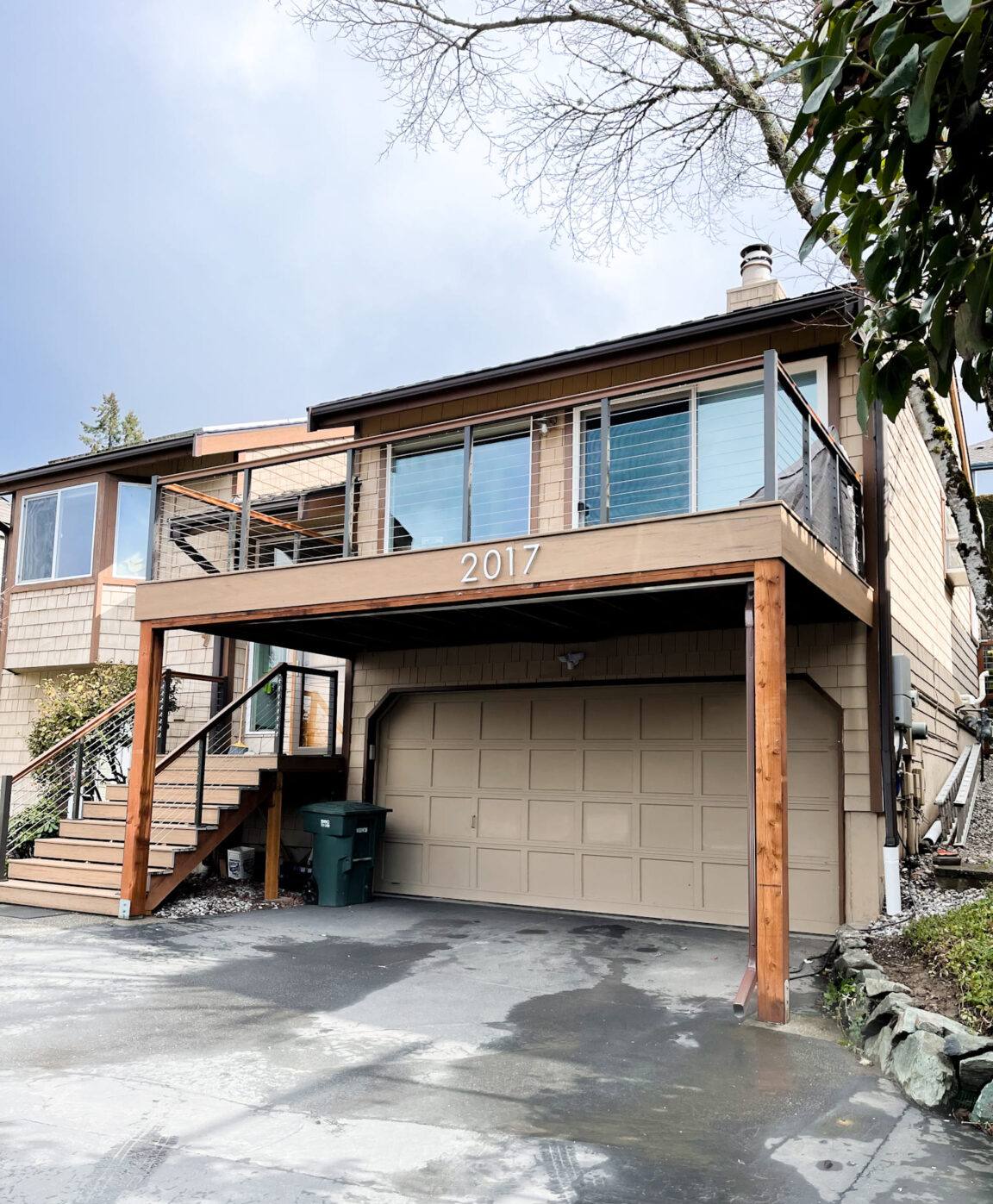
Why Maple Falls Decks Wear Differently
A deck built in an open, sunny yard dries out between storms. A deck tucked under fir and cedar trees, which describes a lot of Maple Falls properties, doesn't get that chance. Shade keeps moisture sitting on the boards and in the joints longer, which is exactly what wood rot and moss need to get established. Needles and leaf litter collect between deck boards and in corners, holding water against the wood like a wet sponge instead of letting it drain.
Whatcom County's long, wet stretch from fall through spring compounds this. Decks here don't get a real drying-out period the way they might in a drier climate. By the time moss has taken hold on the surface, there's a good chance moisture has already been working on the wood underneath for longer than it looks.
What We Look For First
On every repair call, we check the same things before touching a single board: how the deck is fastened to the house, whether water has been getting behind the flashing, the condition of the framing underneath, and whether the boards themselves are still structurally sound or just cosmetically worn. Surface staining or a little moss doesn't mean a deck is failing. Soft spots, spongy framing, or rust streaking around fasteners usually does.
Signs Your Deck Needs Repair, Not Replacement
Most decks don't fail all at once — they show warning signs first. Catching these early is usually the difference between a repair bill and a replacement bill.
- Boards that feel spongy, spring back slowly, or flex more than they used to
- Nails or screws backing out, or dark staining rings around fasteners
- Gaps opening up between boards, or boards cupping and warping
- Moss or green film building up faster each year, especially on shaded sections
- A railing post that wiggles, or stairs that feel less solid than they used to
- Visible gaps, rust, or dark streaking where the deck attaches to the house
- A musty smell coming from underneath the deck
If you're only seeing one or two of these and the framing checks out solid, repair is almost always the right call. It's when several of these show up together, especially around the ledger board or main support posts, that we start talking about how much of the structure is actually still sound.
What a Proper Deck Repair Involves
A deck repair that only replaces what's visible from the top can leave the actual problem untouched. A repair done right starts underneath and works up.
Structural Framing
Joists, beams, and posts take the real load. We check for rot, checking, and fastener corrosion, and confirm the connections at the house and at the footings are still doing their job. Any framing member that's compromised gets replaced — no exceptions, since everything above it depends on it.
Ledger Board and Flashing
The ledger board, where the deck attaches to the house, is the single most common source of hidden damage we find. If flashing was installed poorly, or wasn't installed at all, water gets behind the siding and into the rim joist over time. We correct the flashing detail as part of the repair, not just patch around it, because a repair that leaves bad flashing in place will fail again in a season or two.
Decking Surface
Individual boards that are cupped, split, or soft get pulled and replaced to match the existing decking as closely as possible. We also reset fasteners that have backed out and address any gapping that's letting water and debris collect between boards.
Railings and Stairs
Loose railing posts and worn stair stringers are a safety issue before they're a cosmetic one. We check post attachment points for rot at the base, where moisture tends to sit longest, and rebuild connections to code rather than just tightening what's there.
Repair vs. Replacement: How We Make the Call
Homeowners often assume a deck showing damage needs to be torn out entirely. That's frequently not true. The table below outlines how we generally think through the decision.
| Condition Found | Repair | Replacement |
|---|---|---|
| Framing and footings solid, surface boards worn | Usually the right fit | Not needed |
| Isolated rot at ledger or one section of joists | Targeted structural repair | Not needed |
| Rot spread through multiple framing members | Cost approaches replacement | Often the better value |
| Original construction lacked proper flashing throughout | Short-term fix only | Recommended for long-term reliability |
| Decking material discontinued or badly mismatched | Partial board swap looks patched | Full deck surface replacement |
| Overall cost | Lower, scoped to actual damage | Higher, but resets the clock |
We'll always tell you honestly which column your deck falls into. There's no benefit to us talking you into a full replacement if a repair will hold up, and there's no benefit to patching something that's going to need the same fix again next winter.
Wood, Composite, and What We Recommend for Repairs
What your deck is built from affects how we repair it and what to expect going forward.
Pressure-treated lumber is the most common decking material we see on older Maple Falls decks. It's affordable and easy to match for spot repairs, but it needs regular sealing to keep moisture out, especially on shaded sections that don't dry between rains.
Cedar holds up well against moisture and has natural rot resistance, but it's softer and shows wear from foot traffic and debris faster than treated lumber. Matching weathered cedar boards during a repair takes more care to get the color and grain looking consistent.
Composite decking resists rot and doesn't need sealing, which is appealing given how long our wet season runs. Our standard on composite repairs is to match the exact board profile and color line when possible, since composite boards from different production runs or manufacturers can vary just enough to be noticeable side by side. When an exact match isn't available, we'll tell you that up front rather than installing something that will stand out.
None of these materials is wrong — they're trade-offs between upfront cost, maintenance, and how the repair will blend with the existing deck. We'll walk you through what fits your situation instead of pushing one option.
Our Deck Repair Process
- On-site inspection. We check the framing, ledger, flashing, decking, and railings, not just whatever's visibly damaged.
- Honest scope and estimate. You get a clear breakdown of what needs repair, what's optional, and what we'd recommend watching but leaving alone for now.
- Structural work first. Any framing, ledger, or flashing issues get corrected before cosmetic work starts, since surface repairs on bad framing don't hold.
- Surface and material matching. Decking, railings, and stairs are repaired or replaced to match the existing deck as closely as the materials allow.
- Final walkthrough. We check the deck with you before we consider the job done, including how it drains and how the repaired sections tie into the rest of the structure.
Keeping a Repaired Deck in Good Shape
A repair holds up longer when it's paired with basic upkeep, especially under tree cover where moisture and debris are a constant issue.
- Sweep needles and leaf litter out from between boards regularly, not just in fall
- Keep nearby branches trimmed back to cut down on shade and falling debris
- Check the ledger board area at the house once a year for staining or gaps
- Reseal wood decking on the schedule recommended for the specific product used
- Address moss when it first appears rather than letting it build up over a season
- Keep gutters and downspouts near the deck clear so runoff isn't draining onto it
None of this is complicated, but it's easy to let slide, and it's usually the difference between a repair that lasts a decade and one that needs revisiting in a few years.
Why It Matters That We Already Work in Maple Falls
Deck problems in Maple Falls tend to follow patterns that aren't always obvious to a crew that mostly works in drier, more open parts of Whatcom County. We know to check shaded sections first, to expect flashing issues on older ledger connections, and to plan around a wet season that doesn't leave much of a drying window. That local experience shows up in fewer surprises during the repair and a better sense of what will actually hold up here long-term, rather than what holds up in a showroom or a different climate entirely.
We also know that a deck repair should fit into how you actually use your outdoor space, not just check a maintenance box. Whether that's getting a deck safe again before summer or getting ahead of damage before it spreads into the framing, the goal is the same: solid work that matches what your home in this area actually needs.
If you've got a deck in Maple Falls that's showing some wear, or you're just not sure whether it needs a repair or something more, we're happy to take a look. Reach out for a free, no-pressure estimate using the form below.