 Lynden Siding
 Deck Repair Around Wiser Lake: Built for the Climate You Actually Have
Wiser Lake sits in a pocket of Whatcom County where trees, water, and shade combine to keep everything a little damper, a little longer, than most of Western Washington. That's good for the scenery and rough on a deck. Between the Nooksack lowlands' driving rain, the long stretch of gray months where surfaces barely get a chance to dry, and the moss that finds a foothold on anything horizontal, decks around Wiser Lake age faster than the same structure would in a drier inland climate. We repair a lot of decks in this specific corner of the county, and the failure patterns are consistent enough that we can usually tell what's wrong before we even get a ladder out.
This page is about deck repair specifically — not full replacement, not general handyman work. If your deck is sound at its bones but showing wear, rot in isolated spots, or safety issues that need fixing before they spread, this is the service that applies.
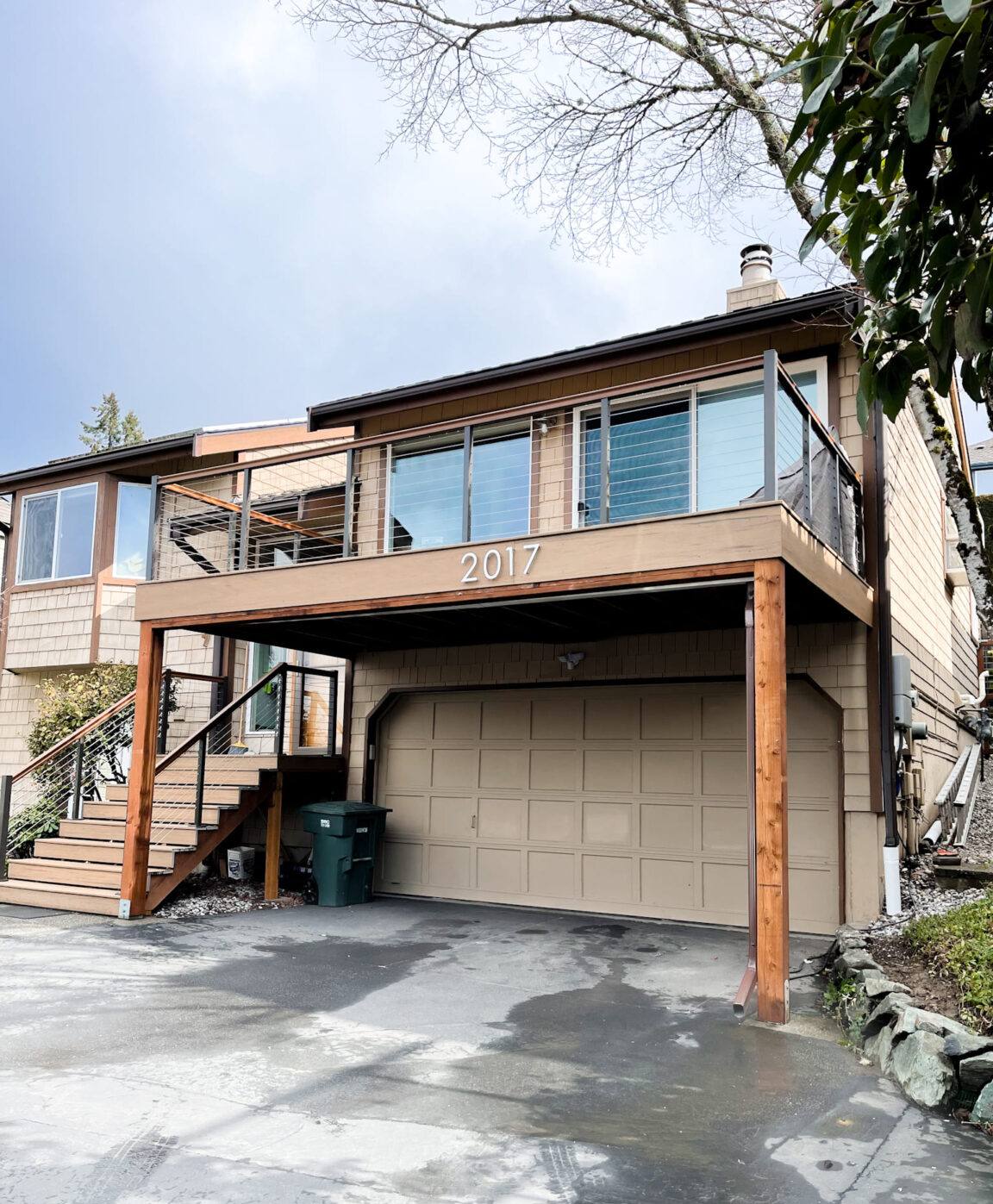
What Lynden's Climate Does to a Deck Over Time
Moisture that never fully leaves
Decks near Wiser Lake sit under more tree cover and closer to standing water than a typical in-town Lynden lot. That means longer dew periods, slower drying after rain, and more days per year where wood stays damp at the surface. Fasteners corrode faster, and any spot where water can pool or get trapped — under a rail post base, behind a ledger board, between deck boards that have swelled tight — becomes a rot starting point.
Moss and organic growth
Moss doesn't just look bad. It holds moisture against the wood surface, breaks down the top layer of fibers, and makes boards slick and unsafe underfoot. Left long enough, a mossy deck board doesn't just need cleaning — it needs replacing, because the surface has already started to degrade.
Freeze-thaw and seasonal movement
Whatcom County doesn't get brutal winters, but it gets enough freeze-thaw cycling to work moisture into small cracks and joints, then expand it. Over several winters, that's often what turns a hairline crack in a post or a slightly loose ledger connection into a real structural problem.
Signs Your Wiser Lake Deck Needs Repair
Most deck failures don't happen suddenly — they show warning signs for months or years first. Here's what we tell homeowners in this area to watch for:
- Soft or spongy spots when you walk across the decking, especially near the house or in shaded corners
- Visible moss, algae, or green-black staining that keeps coming back after cleaning
- Gaps opening up between the deck and the house at the ledger board
- Rail posts that wobble, or a top rail that flexes more than it used to
- Fasteners with rust streaks bleeding down the board, or screw heads that have popped up
- Stair stringers that feel less solid than the rest of the deck
- Boards that have cupped, split, or separated at the ends
- A musty smell coming from underneath the deck
Any one of these on its own might be minor. A few of them together, especially on a deck that's ten-plus years old, usually means it's worth a proper inspection before the next wet season sets in.
Common Problems We Find on Decks Near Wiser Lake
Ledger board rot
The ledger — the board that attaches the deck to the house — is the single most important structural piece on most decks, and it's also the one most exposed to trapped moisture if it wasn't flashed correctly when built. This is a common repair around Lynden generally, but the risk goes up near Wiser Lake simply because things stay wetter longer.
Joist and beam deterioration
Joists hidden under decking can rot quietly for years before a board finally gives. We check these directly rather than assuming the framing is fine just because the surface looks okay.
Rail and post failure
Rail posts bolted or lag-screwed into rim joists are a frequent weak point, especially where the original build used undersized hardware. This is a safety issue, not just a cosmetic one.
Surface board wear
Individual decking boards that have cupped, cracked, or gone soft can usually be replaced in place without touching the rest of the structure — this is often the most cost-effective repair on the list.
Repair vs. Replace: How We Help You Decide
Not every deck problem calls for a full rebuild, and we don't push replacement when a targeted repair will hold up. The table below covers the general factors that steer that decision.
| Factor | Leans Toward Repair | Leans Toward Replacement |
|---|---|---|
| Framing condition | Joists and beams are solid, damage is isolated | Rot or damage is widespread through the structure |
| Age of deck | Under 15-20 years, built to a reasonable standard | Older deck nearing the end of typical service life |
| Ledger connection | Ledger is sound, flashing just needs attention | Ledger itself has significant rot |
| Scope of damage | A few boards, one rail section, isolated fasteners | Damage spread across most of the deck surface |
| Code compliance | Structure meets current safety basics | Original build has undersized footings or connections |
We'll always give you a straight answer on which side of that line your deck falls on, including the honest cost trade-off if repair now means you're likely doing more work again in a few years.
What a Correct Deck Repair Actually Involves
A repair that just replaces the boards you can see, without checking what's underneath, tends to fail again within a season or two in a climate like this one. Our approach on Wiser Lake area decks generally includes:
- Full inspection from below. We check joists, beams, the ledger connection, and post bases from underneath the deck, not just what's visible from the top.
- Moisture and rot mapping. Soft spots get probed to find the actual extent of damage, since rot often spreads further than the surface staining suggests.
- Flashing and fastener check at the ledger. Given how often this is the root cause locally, we treat it as a mandatory check on every repair, not an upsell.
- Targeted structural fixes first. Any framing, post, or connection issue gets addressed before cosmetic work, since surface repairs on top of a weak structure don't hold.
- Board and hardware replacement. Damaged decking, rail components, and corroded fasteners are replaced with materials matched to the rest of the deck where possible.
- Drainage and airflow correction where needed. If the original design trapped water — tight board spacing, poor grading underneath, blocked ventilation — we'll flag it and offer options to fix the underlying cause, not just the symptom.
Materials: What We Use for Repairs
For wood decks, we typically match repairs to the existing material — pressure-treated framing lumber for structure, and cedar or matching decking for visible boards, since mixing species can lead to uneven weathering and finish issues down the road. For composite decking, board replacement requires sourcing the correct profile and often the correct color lot, since composite colors can shift slightly between production runs.
Where a homeowner is open to it, we'll sometimes recommend upgrading specific failure-prone components during a repair — for example, swapping standard fasteners for coated, corrosion-resistant hardware, or adding proper flashing tape at the ledger where none existed originally. These are small changes that meaningfully extend the life of the repair given how much moisture this area sees, and we'll explain the reasoning rather than just adding them to the invoice.
Why a Crew That Already Works Wiser Lake Matters
Deck problems here follow patterns that aren't identical to a dry, open-sun lot in town. A crew that works this specific area regularly already knows which framing details tend to fail first in the shade and moisture around the lake, what county permitting expects for structural repair work, and how to sequence a repair so it isn't undone by the next wet season before it's even cured. That local repetition is worth more than general deck experience alone — it's the difference between a repair that's guessing and one that's informed by what actually breaks in this specific pocket of Whatcom County.
It also means less time spent diagnosing and more time fixing. We're not learning the local conditions on your project.
Our Process, Start to Finish
We keep the repair process straightforward and low-pressure:
- Free on-site inspection, including checking underneath the deck, not just a walk-around on top
- Honest assessment of whether you're looking at a repair or something bigger, explained in plain terms
- A written estimate that breaks down what's being fixed and why
- Scheduled work with minimal disruption to your yard and routine
- A final walkthrough so you know exactly what was done and what to watch going forward
Keeping a Repaired Deck in Good Shape
Once a deck is repaired, a little seasonal upkeep goes a long way in this climate. Clearing debris and moss buildup before it sets in for the winter, keeping gutters and downspouts directing water away from the deck footprint rather than onto it, and doing a quick visual check of the ledger and post connections once a year will catch small issues before they turn into another repair call. We're happy to point out what to watch on your specific deck during the inspection, since every property around Wiser Lake handles drainage and shade a little differently.
If your deck near Wiser Lake is showing any of the warning signs above, or it's just been a while since anyone looked at it from underneath, we're glad to come take a look. The estimate is free, there's no pressure to sign anything on the spot, and you'll walk away with a clear picture of what your deck actually needs. Use the form below to get started.