 Lynden Siding
 Deck Replacement Built for Deming's Weather
Deming sits in the Whatcom County foothills, close enough to the Nooksack River and the marine air moving in off the Salish Sea that decks here take a beating most homeowners underestimate. It isn't one dramatic storm that wrecks a deck — it's the slow grind of driving rain, shade from surrounding fir and cedar, and a moss season that can stretch from October well into spring. A deck that looks fine in July can be hiding rot by the time you pull up a board in February.
We're a Lynden-based crew, and Deming is inside the area we actually work — not a job we drive in for once and never see again. That matters more with decks than almost any other exterior project, because a deck is a structure, not just a surface. Get the framing, flashing, and fastener choices wrong and you won't know it until the wood starts to fail underneath.
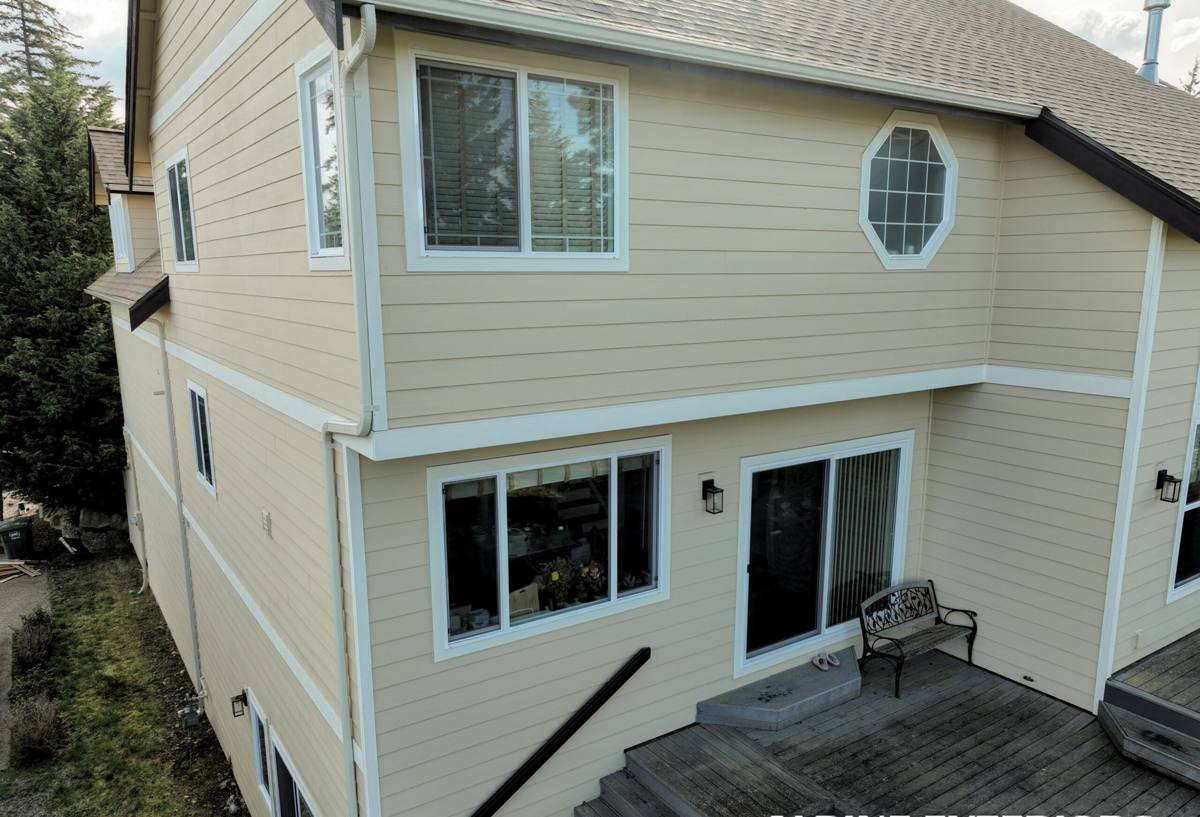
Why Decks Fail Faster in This Part of Whatcom County
Most deck failures we find in the Deming area come down to moisture that never gets a chance to dry out. A few things stack up locally to make that worse than in a drier climate:
- Extended damp season. Long stretches of drizzle and overcast days mean wood surfaces stay wet longer between dry spells, so any exposed end grain, fastener hole, or ledger gap has more time to absorb water.
- Shade and tree cover. Decks tucked under mature trees dry more slowly and collect organic debris — leaves, needles, seed pods — that trap moisture against the boards.
- Moss and algae growth. A damp, shaded deck surface is exactly what moss wants. Beyond making boards slippery, moss holds water against the wood far longer than bare decking would.
- Marine-influenced air. Whatcom County's proximity to the Salish Sea keeps humidity higher year-round than inland Washington, which slows drying and accelerates corrosion on lower-grade fasteners and hardware.
None of this means a deck in Deming can't last decades. It means the build has to account for these conditions instead of using generic, big-box specs that were never designed for this climate.
Signs a Deming Deck Needs Replacement, Not a Repair
Not every tired-looking deck needs a full tear-off. But some problems are structural, and no amount of sanding or staining fixes them. Here's how we sort it out on a walkthrough:
Repair is usually enough when:
- A handful of boards are cupped, cracked, or splintering but the frame underneath is sound
- Railings are loose but posts and framing aren't rotted
- The deck just needs cleaning, moss removal, and refinishing
Replacement is the honest answer when:
- A screwdriver sinks easily into the ledger board, joists, or posts — that's rot, not just weathering
- The deck feels springy or bouncy when you walk on it
- Multiple support posts show base rot where they meet the ground or a concrete footing
- Flashing at the house connection is missing, rusted, or was never installed correctly
- The deck was built without proper ledger-to-house fastening — a common shortcut on older or owner-built decks
That last point matters more than people expect. A significant share of deck collapses nationally trace back to a ledger board that was never properly bolted and flashed to the house rim joist. If we find that during an inspection, we're going to tell you honestly, even if the boards on top look fine.
What a Correct Deck Replacement Actually Involves
A deck replacement isn't just swapping old boards for new ones. Done right, it starts from the ground up:
Footings and posts
We check existing footings for frost depth, size, and condition. In this soil and climate, undersized or shallow footings are a common shortcut on older decks, and they're the reason a deck can start leaning or settling unevenly over time.
Framing and joists
Joist spacing gets matched to your decking material and expected loads — composite and PVC decking often call for tighter joist spacing than solid wood. We use fasteners and hardware rated for exterior, high-moisture exposure, not standard interior-grade hardware that corrodes within a few wet seasons.
Ledger attachment and flashing
This is the single most important structural connection on an attached deck, and it's the one most often done wrong on older builds. Proper ledger flashing keeps water from getting behind the board and into your home's rim joist and framing — a slow leak here can cause rot you won't see until it's extensive.
Decking surface
Whether you go with wood or composite, board spacing, airflow underneath, and proper ventilation all affect how fast the deck dries out after our long wet stretches. A deck built tight against the house with no airflow underneath will trap moisture no matter what material sits on top.
Choosing a Decking Material for Deming's Climate
There's no single right answer here — it depends on your budget, how much upkeep you want to do, and how the deck sits relative to shade and moisture. Here's how the common options actually perform in this climate:
| Material | Moisture Performance | Maintenance | Typical Lifespan |
|---|---|---|---|
| Pressure-treated wood | Good if sealed regularly; end grain and fastener holes are vulnerable points | Annual cleaning and re-staining/sealing recommended | 15-20 years with upkeep |
| Cedar | Naturally moisture- and insect-resistant, but still needs sealing in this climate | Periodic cleaning and refinishing to maintain appearance and protection | 15-25 years with upkeep |
| Composite decking | Doesn't rot, but capped composites still need airflow underneath to shed surface moisture and resist mold/moss | Occasional washing; no staining or sealing | 25-30+ years, manufacturer-dependent |
| PVC decking | Fully synthetic, doesn't absorb water; performs well in persistent damp conditions | Low — occasional washing | 25-30+ years, manufacturer-dependent |
In a shaded, moisture-prone yard, we often steer homeowners toward composite or PVC simply because it removes the moss-and-rot risk from the equation. On an open, sunnier lot, a well-maintained wood deck can still be a great, more budget-friendly choice — it just asks more of you in upkeep.
Our Deck Replacement Process
We keep this straightforward, and we don't pressure anyone into a bigger project than they need:
- On-site inspection. We check the framing, ledger connection, footings, and posts — not just the surface boards — so you know exactly what's driving the recommendation.
- Honest scope and estimate. If repair is genuinely enough, we'll say so. If it's a full replacement, we'll walk you through why and what it includes.
- Material selection. We go over wood versus composite versus PVC options based on your budget, sun exposure, and how much maintenance you want to take on.
- Permitting. Deck replacements involving structural changes typically require a Whatcom County building permit; we handle that process rather than leaving it to you.
- Demo and rebuild. Old decking and, where needed, framing comes out; footings, posts, and ledger connection are corrected before new decking goes down.
- Final walkthrough. We go over the finished deck together before calling the job done.
Permits and Code Considerations in Whatcom County
Attached decks above a certain height, or any deck involving structural framing changes, generally fall under building permit requirements in Whatcom County. Guardrail height, stair geometry, and ledger attachment all have code requirements that inspectors check specifically because they're the details most often skipped on informal or owner-built decks. We pull permits and schedule inspections as part of the job rather than treating it as an extra step — it protects you if you ever sell the house, and it's the difference between a deck that's actually safe and one that just looks finished.
What It Costs to Replace a Deck in This Area
Every deck is different, so we won't quote a number without seeing the site, but the main cost drivers are consistent:
| Factor | Why It Affects Cost |
|---|---|
| Deck size and shape | More square footage and complex angles mean more framing, cutting, and labor |
| Height off the ground | Taller decks need more substantial posts, bracing, and often guardrails plus stairs |
| Decking material | Composite and PVC cost more upfront than wood but less over time in maintenance |
| Framing condition | If posts, joists, or footings need replacing rather than just the surface, cost rises accordingly |
| Attachment type | A deck attached to the house with proper ledger flashing takes more care than a freestanding deck |
| Site access | Tight side yards or sloped lots common in this area can add time for material handling and equipment |
We'd rather give you a real number from an actual site visit than a range that doesn't mean much once we see your specific deck.
Why a Crew That Already Works Deming Matters
Anyone can put down decking boards. What's harder to get right without local experience is building for the conditions this part of Whatcom County actually produces — the shade patterns, the extended damp season, the moss, the humidity that comes off the Salish Sea. A crew that's used to working across the Lynden and Deming area knows to check the ledger flashing first, to size footings for what this ground and climate demand, and to talk you through material trade-offs honestly instead of upselling whatever's easiest to install.
Being local also means we're not a stranger if something needs a look a few years down the road. That accountability shapes how we build the first time.
A Few Maintenance Habits That Extend Any Deck's Life Here
- Sweep leaves and debris off the deck regularly, especially in fall
- Clean moss and algae off the surface before it has a chance to spread
- Reseal wood decking on a regular schedule — don't wait until it looks gray and dry
- Keep gutters and downspouts clear so runoff isn't draining directly onto or under the deck
- Check the ledger flashing and any visible framing once a year for early signs of moisture damage
If your deck in Deming is showing its age, or you just want an honest opinion on repair versus replacement, we're happy to come take a look. The estimate is free, there's no pressure, and you'll get a straight answer either way — just fill out the form below to get started.