 Lynden Siding
 Asphalt Shingle Roofing Built for Deming's Climate
Deming sits in the wetter, more tree-covered stretch of Whatcom County, where homes take a different kind of beating than roofs closer to open water or the interstate corridor. Long stretches of overcast, driving rain, heavy tree cover, and damp shade that never fully dries out between storms all add up to conditions that a generic roofing job isn't built for. Add in the salt-tinged air that moves through the broader Puget Sound region and settles into every corner of Whatcom County, and you've got a climate that asphalt shingles can absolutely handle — but only if they're specified, installed, and maintained with that climate in mind.
We install asphalt shingle roofs on homes in and around Deming regularly, and the patterns repeat: moss creeping in from the north-facing slopes, gutters loaded with needle litter, and roofs that were installed correctly for a drier climate but never accounted for how long this area stays wet. This page covers what an asphalt shingle roof actually needs to hold up here, how we approach the install, and why it matters that the crew on your roof already knows this area.
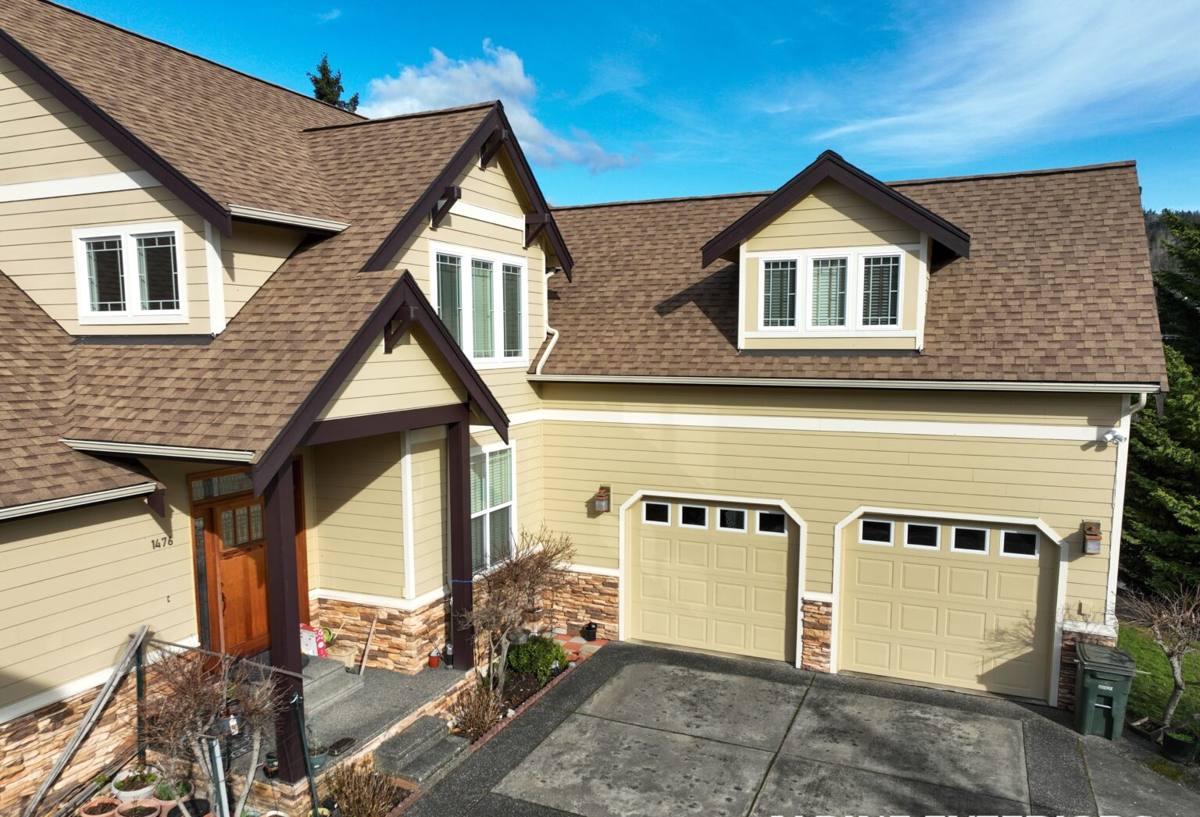
Why Local Climate Changes the Job
Asphalt shingles are one of the most forgiving, cost-effective roofing materials made, and they perform well almost anywhere in the country. But "well" depends on the install matching the environment. In Deming, three climate factors drive almost every roofing problem we get called out for:
Extended Moss Season
Tree cover and persistent moisture mean moss isn't a once-a-year nuisance here — it's a season that can run much of the year on shaded roof planes. Moss holds water against the shingle mat, lifts tabs, and accelerates granule loss. A roof that isn't detailed to shed moisture quickly, and isn't protected with the right materials on vulnerable slopes, will show moss and premature wear years before it should.
Driving Rain and Wind-Driven Moisture
Storms in this part of Whatcom County don't always fall straight down. Wind-driven rain finds its way under loose or under-nailed shingles, around poorly flashed penetrations, and into any gap in the underlayment. A roof that would be fine in a calmer climate can leak here if the flashing and underlayment details aren't done right.
Salt Air and Corrosion
Even set back from the water, homes throughout this region see slow corrosion on exposed metal — flashing, fasteners, vent stacks, and gutter hardware. Cheap or mismatched metal components corrode faster than the shingles around them, which is often where a "20-year roof" starts leaking at year eight.
What a Correct Asphalt Shingle Install Actually Involves
A shingle roof is a system, not a single product. Every layer has a job, and skipping or shortcutting one is where most premature failures start — especially in a climate like Deming's that doesn't give a roof much room for error.
- Deck inspection and repair — soft, rotted, or delaminated sheathing gets replaced before anything goes back on, not covered up.
- Ice-and-water or synthetic underlayment — full underlayment coverage, with extra protection at eaves, valleys, and low-slope transitions where wind-driven rain collects.
- Drip edge on all edges — not just the eaves. This is a common shortcut we see on older roofs in this area, and it's a direct path for water to get under the deck.
- Properly lapped, corrosion-resistant flashing — at every wall intersection, chimney, skylight, and vent penetration.
- Balanced attic ventilation — intake at the eaves, exhaust at the ridge, sized to the attic volume. Without this, moisture gets trapped under the deck and rots it from the inside.
- Manufacturer-spec nailing — correct nail count, placement, and pattern for the wind zone, not just "enough to hold it down."
None of this is unusual or exotic. It's the baseline. The difference in Deming is that skipping any one of these items shows up faster — usually as moss colonizing a shaded slope, a slow leak at a valley, or shingles that curl and shed granules years ahead of schedule.
Signs Your Deming Roof Needs a Closer Look
Because moisture damage often starts under the shingles before it's visible from the ground, it helps to know what to check for from the yard, the attic, and up close if it's safe to do so.
- Moss or dark streaking concentrated on north-facing or shaded slopes
- Granules collecting in gutters or at downspout outlets
- Shingle tabs that look lifted, curled, or cupped
- Soft or spongy spots when walking the roof (best left to a professional to check)
- Daylight visible through the roof deck from inside the attic
- Rust staining around vent stacks, flashing, or fasteners
- Sagging or uneven roof planes, especially over porches or additions
- Interior ceiling stains, especially after a heavy rain
One or two of these items don't necessarily mean a full replacement is due — sometimes it's a repair or a maintenance visit. But left alone through another wet season, small issues in this climate compound quickly.
Our Asphalt Shingle Roofing Process
1. On-Site Inspection and Honest Assessment
We start on the roof and in the attic, not just with a drive-by look. We check deck condition, ventilation, flashing, and how the existing roof has handled moisture over time. You get a straight answer on whether you need a full replacement, a targeted repair, or nothing at all yet.
2. Tear-Off and Deck Prep
We remove old roofing down to the deck rather than layering over it — layering traps moisture and hides deck damage, which is a bad trade-off in a climate this wet. Any damaged sheathing is replaced before anything new goes down.
3. Underlayment and Flashing
This is where most of the long-term performance in a climate like Deming's actually comes from. Full underlayment coverage, reinforced protection at valleys and eaves, and properly lapped flashing at every penetration and wall intersection — done in the sequence that actually sheds water, not just covers the deck.
4. Shingle Installation
Shingles go down to manufacturer spec — correct exposure, nailing pattern, and starter course detail. We use products rated for the wind and moisture conditions this area actually sees, not the cheapest option that technically meets code.
5. Ventilation Check
We confirm intake and exhaust airflow is balanced for the attic. This step gets skipped more often than it should, and it's a major factor in how long a roof deck stays dry and sound underneath the new shingles.
6. Cleanup and Final Walkthrough
Magnetic sweep for nails, full site cleanup, and a walkthrough where we explain what was done and what to expect from the roof going forward — including basic moss and gutter maintenance for this climate.
Choosing the Right Shingle for a Damp, Shaded Climate
Not every asphalt shingle product handles moss and moisture the same way. Here's how the common options compare for a property like a Deming home with meaningful tree cover:
| Shingle Type | Typical Lifespan | Moss/Algae Resistance | Best Fit |
|---|---|---|---|
| 3-Tab Asphalt | 15–20 years | Lower unless algae-resistant (AR) rated | Budget-conscious re-roofs on sunnier, less shaded slopes |
| Architectural (Laminate) Asphalt | 25–30 years | Good, especially with AR granules | Most Deming homes — better wind rating and thicker mat |
| Impact-Rated Asphalt | 25–30+ years | Good with AR granules | Properties with heavy debris fall from tree cover |
We generally steer homeowners in tree-shaded parts of Whatcom County toward architectural shingles with algae-resistant (copper-infused) granules. They cost more up front than 3-tab, but on a shaded roof they push back the timeline for moss growth by years, which matters more here than it does on an open, sun-exposed lot.
Moss, Algae, and Realistic Long-Term Maintenance
No shingle is moss-proof — AR granules slow moss and algae growth, they don't stop it permanently, especially on roof planes that stay shaded most of the day. Realistic maintenance in this climate looks like:
- Keeping overhanging branches trimmed back to reduce shade and debris
- Clearing gutters and valleys of needles and leaf litter before the wet season builds up
- Gentle, low-pressure moss treatment rather than pressure washing, which strips granules and shortens shingle life
- A periodic visual check of flashing and vent boots, since these fail before the shingle field usually does
We're straightforward about this with every homeowner: a well-installed, AR-rated shingle roof in a climate like Deming's still needs occasional upkeep. Anyone who tells you a roof here is fully maintenance-free isn't giving you the full picture.
What Affects the Cost of an Asphalt Shingle Roof in Deming
Pricing varies by roof, but the same handful of factors move the number up or down on most jobs in this area:
| Factor | Why It Matters Here |
|---|---|
| Roof size and pitch | Steeper pitches and cut-up rooflines take more labor and material |
| Deck condition | Rot from long-term moisture exposure means more sheathing replacement |
| Shingle grade | 3-tab vs. architectural vs. impact-rated changes both material cost and lifespan |
| Access and tree cover | Tight access or heavy overhead branches can add setup and cleanup time |
| Ventilation upgrades | Adding or correcting intake/exhaust venting is often needed on older Deming homes |
| Flashing and valley detail | Complex rooflines with multiple valleys and penetrations take more time to detail correctly |
We give a written, itemized estimate before any work starts, so you know exactly what's driving the number rather than a single lump-sum figure.
Why It Matters That We Already Work in Deming
A roofing crew that mostly works in drier, more open parts of the region can still do competent work — but they're less likely to instinctively catch the details that matter in a shaded, damp climate: where moss is going to collect, which slopes need extra underlayment protection, and how the local moisture pattern differs from a roof twenty miles away in flatter, more open terrain. Working regularly in and around Lynden and greater Whatcom County means we're not guessing at how this climate treats a roof over time — we've seen it, repaired it, and adjusted our process around it.
That local familiarity also means faster response if something needs a look after a storm, and a crew that stands behind its work because we're not driving in from out of the area for a one-off job.
Get a Straightforward Estimate
If your roof is showing moss, wear, or you're just due for a look before the next wet season sets in, we'll come out, walk the roof, and give you an honest read on what it needs — repair, maintenance, or replacement. There's no pressure and no obligation. Use the form below to request a free estimate.