 Lynden Siding
 Metal Roofing Built for Laurel's Weather, Not Just Any Roof
Laurel sits in that stretch of Whatcom County where marine air off the Salish Sea meets low farmland and a lot of shade trees, and that combination is hard on roofs. Homes here deal with driving rain that comes in sideways during winter storms, salt-tinged air that speeds up corrosion on the wrong fasteners and flashing, and a moss season that can run eight or nine months out of the year on anything with consistent shade or north-facing exposure. A metal roof handles all three of those problems better than most other materials, but only if it's specified and installed correctly for this specific climate. A metal roof installed the way it might be done in a drier inland county will show problems here within a few years — usually moss buildup at seams, fastener corrosion, or moisture trapped under the panels.
This page is about metal roofing specifically for Laurel and the surrounding area, not a general overview of the product. If you're comparing metal to composition shingle or deciding between panel types, this is the detail that actually matters for a house in this part of the county.
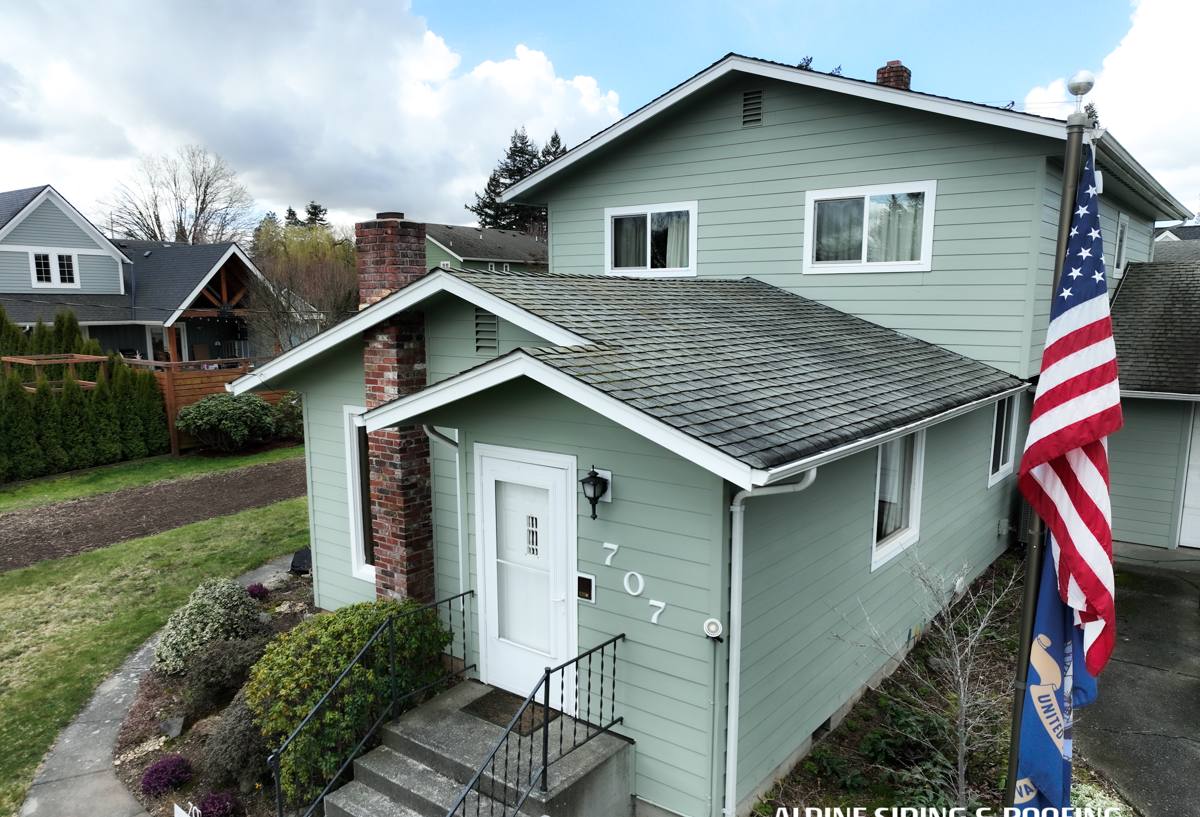
What Laurel's Climate Actually Does to a Roof
Moss
Moss doesn't just sit on a roof looking bad — it holds moisture against the surface, works into seams and fastener penetrations, and on some materials it accelerates granule loss or surface breakdown. On a metal roof, moss growth is usually a sign of a panel profile or slope that isn't shedding water and debris the way it should, or of overhanging trees creating shade that never fully dries out.
Driving rain
Wind-driven rain in this area doesn't just fall straight down — it gets pushed sideways under eaves, around chimneys, and into any flashing detail that was cut corners on. Metal roofing sheds bulk water extremely well, but the vulnerable points are always the same: valleys, penetrations, and where the roof meets a wall or dormer.
Salt air
Whatcom County isn't oceanfront, but proximity to the Sound and prevailing marine air still carries enough salt content to matter over 20-30 years, especially for homes on higher ground or more open exposure. The metal itself usually isn't the weak point — the fasteners, flashing, and any dissimilar-metal contact points are. Uncoated or mismatched steel screws on an aluminum panel, for example, will corrode faster here than they would in a dry inland climate.
Panel Options and How They Perform Locally
Not every metal roofing product performs the same way under moss pressure and heavy rain. Here's how the common options compare for a Laurel-area home:
| Panel Type | Moss Resistance | Best Use | Trade-Off |
|---|---|---|---|
| Standing seam (concealed fastener) | Best — no exposed penetrations for moss or moisture to enter | Steep or shaded roofs, long-term low-maintenance homes | Higher material and labor cost |
| Exposed-fastener panel (corrugated/ribbed) | Good, but fastener washers need periodic inspection | Shops, outbuildings, budget-conscious main roofs | Fasteners are the weak point over time and need re-torquing or replacement eventually |
| Metal shingle/shake panels | Moderate — more seams and overlaps than standing seam | Homes wanting a traditional look with metal durability | More detail work at install, slightly more places for debris to catch |
For most Laurel homes with any tree coverage or shaded roof planes, we lean toward standing seam because it gives moss and moisture the fewest places to get a foothold. That said, exposed-fastener panels are a legitimate, more affordable option on simpler roof geometries or outbuildings where long-term low maintenance matters less.
What a Correct Installation Actually Involves
The panel itself is maybe half the job. The rest is detail work that either holds up to Whatcom County winters or doesn't:
- Ice-and-water shield or a full synthetic underlayment at eaves, valleys, and penetrations — not just felt paper
- Proper ventilation at ridge and soffit so moisture from inside the home doesn't condense against the underside of the panels
- Corrosion-matched fasteners and flashing — no mixing steel screws with aluminum panels, or vice versa
- Closed or vented closure strips at ridges and eaves sized for the actual panel profile
- Kick-out flashing anywhere a roof plane meets a wall, so water is directed into the gutter instead of behind the siding
- Panel layout planned to minimize seams in valleys and around chimneys or skylights, where most leaks actually originate
Skipping any one of these doesn't usually cause an immediate failure — it causes a slow one, showing up as a leak, corrosion streak, or moss colony two to five years down the road. That's the trap with a rushed or underbid metal roofing job: it looks fine at handoff.
Moss Prevention Once the Roof Is In
A correctly installed metal roof resists moss far better than shingle, but "resists" isn't "immune." A few things keep it that way:
Zinc or copper strips near the ridge let trace metal wash down the roof face with rain and discourage moss growth without harsh chemical treatments. Keeping tree limbs trimmed back from the roofline reduces shade and debris buildup, which is often the bigger factor than the roofing material itself. And a simple annual rinse-down — not pressure washing, which can damage seams and coatings — clears organic buildup before it gets a chance to establish.
We're upfront that no roof in this climate is maintenance-free forever. Metal just needs far less of it, and less often, than composition shingle in the same conditions.
Our Process for a Laurel Metal Roofing Project
We start with an on-site assessment — not a drone photo estimate — because moss patterns, shade exposure, and existing flashing condition tell us a lot that a satellite image doesn't. From there:
- We evaluate whether a tear-off or overlay makes sense for the existing roof deck and code requirements
- We walk through panel profile and color options based on your roof's slope, shade exposure, and how the home is used
- We give you a written scope covering underlayment, ventilation, flashing details, and fastener spec — not just "metal roof installed"
- We schedule around Whatcom County's weather windows, since metal panel installation goes faster and seals better in dry conditions
- We do a final walk-through covering ventilation, warranty paperwork, and basic care so you know what to expect year one versus year ten
Cost Factors for a Metal Roof in This Area
Metal roofing costs more upfront than composition shingle, and the range depends on more than square footage:
| Factor | Why It Matters Here |
|---|---|
| Panel type | Standing seam runs higher than exposed-fastener panel, largely due to labor time on seams and trim |
| Roof complexity | Valleys, dormers, and chimneys all add flashing detail — common on older Laurel-area farmhouses and additions |
| Tear-off vs. overlay | Removing old roofing adds cost but lets us fix decking issues moisture may have already caused |
| Ventilation upgrades | Older homes often need ridge or soffit vent work added, which affects long-term moisture performance |
| Access and pitch | Steeper or harder-to-access roofs take longer and require more safety setup |
We'd rather walk your specific roof and give you real numbers than quote a per-square-foot range that doesn't hold up once we're actually on the ladder.
Why a Crew That Already Works Laurel Matters
Laurel isn't a big commercial market — it's a mix of long-time farm properties, newer builds, and homes tucked back under tree cover. A crew that already works this area knows which roof lines tend to hold moss, which older homes were built without adequate ventilation, and how permitting and inspection typically go with Whatcom County for a re-roof. That local familiarity shortens the guesswork on your project and helps us plan around the actual weather patterns here rather than generic seasonal assumptions.
It also means we're not driving in from out of the area for warranty callbacks or a maintenance check years later. If something needs a look, we're already working nearby.
Questions to Ask Before You Sign
Whoever you hire for a metal roof in this climate, these are worth asking directly:
- What underlayment is spec'd at valleys and eaves, and is it more than standard felt?
- Are the fasteners and flashing matched to the panel material to prevent galvanic corrosion?
- Is ridge and soffit ventilation included or being evaluated as part of the job?
- What's the plan for existing moss or organic buildup on the current roof before tear-off?
- Is the warranty from the manufacturer, the installer, or both — and what does each actually cover?
If you're weighing metal roofing for a home in Laurel or anywhere around Lynden, we're happy to walk the roof, talk through panel options honestly, and give you a straightforward written estimate — no pressure, no upsell. The form below is the easiest way to get that started.